| Author |
 Replies: 5,918 / Views: 201,147 Replies: 5,918 / Views: 201,147 |
|
|
|
CCF Master Historian of Commemorative Coins
 United States
12515 Posts |
The 2004 Lewis and Clark Bicentennial silver dollar was issued to commemorate the 200th anniversary of the expedition that vastly improved the understanding of the geography of the land included in the Louisiana Territory (purchased from France). It also improved the knowledge of the region's natural resources and native inhabitants. The Expedition actually formed peaceful relationships with dozens of Native American nations/tribes - unfortunately, such good relationships were generally not permanent. The Expedition covered over more than 8,000 miles over a 28-month period between May 14, 1804 and September 23, 1806. The Expedition traveled through what would become the states of Illinois, Missouri, Kansas, Nebraska, Iowa, North Dakota, South Dakota, Montana, Idaho, Washington and Oregon. For a good overview of the Lewis and Clark Expedition, check out this informative piece from History.com Lewis and Clark Expedition. The obverse of the commemorative silver dollar depicts the famed explorers standing together beside a stream, discussing and planning the day's exploration; Lewis (right figure) is seen pointing into the distance and Clark (left figure) is depicted holding his rifle and his journal. A forest is seen in the background. The design was created by US Mint Medallic Artist Donna Weaver; she also developed the design's sculpt. On the reverse is seen a pair of feathers meant to represent the Native Americans encountered during their journey along with the reverse design of the "Indian Peace Medal" used during Thomas Jefferson's administration. The original silver medals were given to Native American chiefs and other important representatives by those representing the US Government as a token of friendship and peace. Among the reverse's design elements are 17 stars which represent the 17 States in the Union at the time of the Lewis and Clark Expedition. US Mint Medallic Artist Donna Weaver was responsible for the reverse design and sculpt - she designed and sculpted both sides of the coin! 2004 Lewis & Clark Bicentennial Silver Dollar  For a discussion of the Lewis and Clark "Coinage & Currency Set", see: - 2004 Lewis & Clark Coinage & Currency SetFor other of my posts about commemorative coins and medals, see: Commems Collection.Collecting history one coin or medal at a time! (c) commems. All rights reserved.
|
|
Moderator
United States
195004 Posts |
Excellent!  |
|
CCF Master Historian of Commemorative Coins
United States
12515 Posts |
To commemorate the 300th Anniversary of the birth of Benjamin Franklin and to celebrate his "historic contributions to the development of our Nation in a number of fields: government, business, science, communications, and the arts." (Public Law 108-464), the US Congress authorized a two-coin commemorative program in his honor. The program consisted of two silver dollars, one with a "Younger Franklin Image" and the other with an "Older Franklin Image." Based on the designs selected for the coins, the "Younger Image" coin became known as the "Scientist" coin, and the "Older Image" piece as the "Founding Father" coin. Franklin Trivia: Franklin is the only Founding Father to sign the Declaration of Independence (1776), the Treaty of Alliance, Amity, and Commerce with France (1778); the Treaty of Peace between England, France, and the United States (1782) and the US Constitution (1787). These four documents are generally considered by historians as those that were critical to the formation of the United States.The "Founding Father" silver dollar is the coin of interest here; it makes minor use of one or more stars on each of its sides. On the obverse, a single star separates the inscriptions "BENJAMIN FRANKLIN TERCENTENARY" and "LIBERTY" seen encircling the central portrait of an older Franklin. Three stars are incorporated into the reverse design, again as separators, splitting the legend, motto and denomination "UNITED STATES OF AMERICA" / "E PLURIBUS UNUM" / "ONE DOLLAR" respectively. At the center of the reverse is seen a reproduction of the obverse of the Continental Currency "dollar" of 1776. (I use quotation marks around "dollar" because there is evidence indicating that the piece was never authorized as a coin, and therefore was actually a medal that was used by some as a dollar coin based on its size.) The design depicts the sun shining down on a sundial (an early time keeping device) with the Latin inscription "FUGIO" ("I Flee") and the English "MIND YOUR BUSINESS" - combined, the two are meant to represent the advice: "Time flies, so mind your business." Noted collector, numismatic historian and author, Eric Newman, believes the "EG" initials with the Latin "FECIT" (he made) indicate that Elisha Gallaudet made the original coin engravings; Benjamin Franklin is thought to have created the design for the piece. US Mint Sculptor-Engraver Don Everhart is credited with designing and sculpting the obverse; US Mint Sculptor-Engraver Donna Williams created the coin's reverse. 2006 Benjamin Franklin "Founding Father" Silver Dollar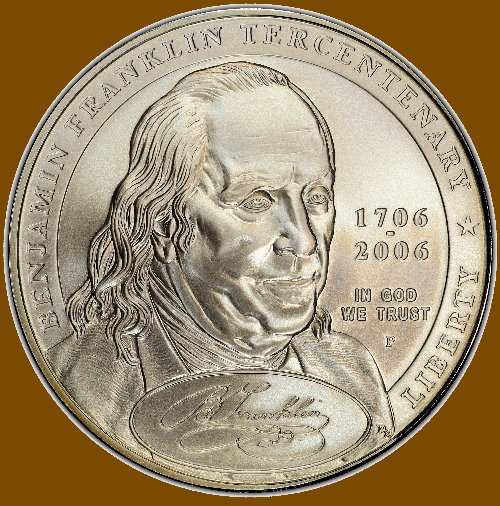 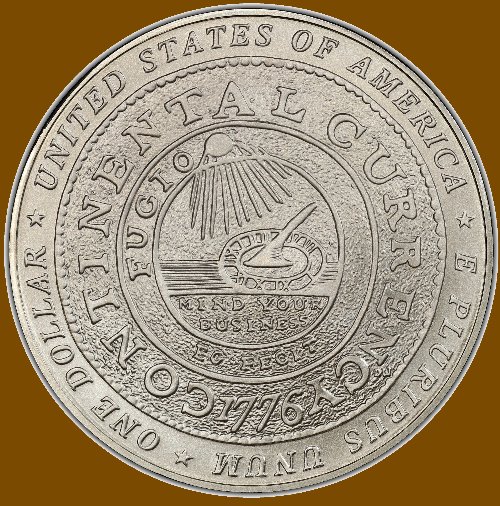 Collecting history one coin or medal at a time! (c) commems. All rights reserved.
|
|
Moderator
United States
195004 Posts |
Nice example! Quote:
I use quotation marks around "dollar" because there is evidence indicating that the piece was never authorized as a coin, and therefore was actually a medal that was used by some as a dollar coin based on its size. Very interesting! I expect there may be a future topic expanding this story. |
|
CCF Master Historian of Commemorative Coins
United States
12515 Posts |
The 2006 San Francisco Mint silver dollar was struck to mark the centennial of the San Francisco earthquake of 1906 and the ability of the Old San Francisco Mint Building ("The Granite Lady") to survive the quake and continue operations after the quake to aid in the devastated city's recovery. The San Francisco Mint was established by an Act of Congress in July 1852; the Act was signed into law by US President Millard Filmore. The Mint was created to facilitate the conversion of miners' gold extracted during the California gold rush into metallurgically refined and more easily used/negotiated/valued coins (vs. unrefined dust and/or nuggets). The Building that survived the 1906 quake was not the first Mint Building in San Francisco. The first proved to be too small to handle the volume of work necessary, and so a larger, more capable building was constructed; it was built between 1869 and 1874. Old San Francisco Mint Building - The Granite Lady - After the 1906 Earthquake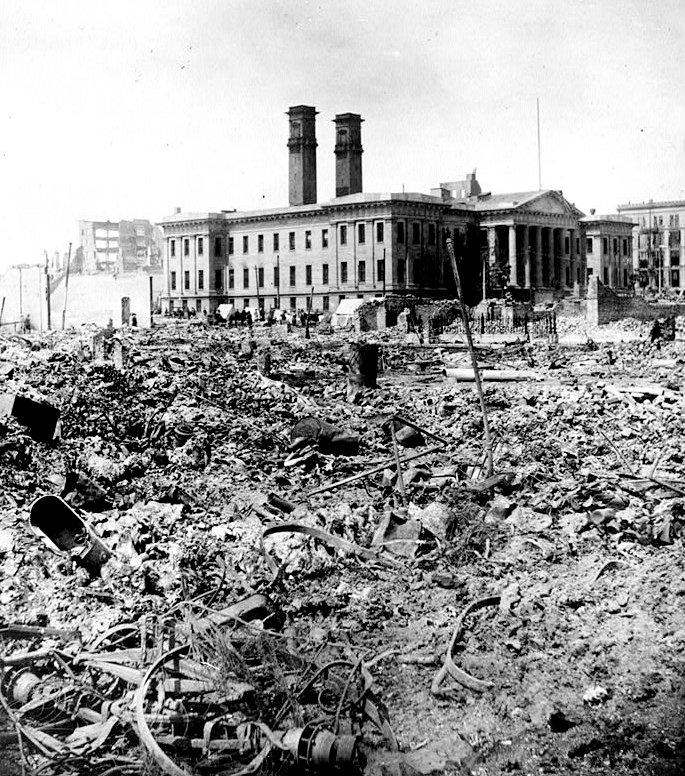 (Image Credit: Library of Congress, Prints and Photographs Division (www.loc.gov/pictures). Public Domain.) (Image Credit: Library of Congress, Prints and Photographs Division (www.loc.gov/pictures). Public Domain.)The 2006 coin's obverse depicts the Second San Francisco Mint Building ("The Granite Lady"); it is adapted from the design of a previous US Mint medal. The Mint's role is helping the city recover is made clear by the inclusion of the inscription: "INSTRUMENTAL IN SAN FRANCISCO'S RECOVERY" along the bottom of the design. The medal and obverse of the coin were the work of US Mint Sculptor-Engraver Sherl J. Winter. The coin's reverse reproduces the reverse of the famous Morgan Dollar; San Francisco produced some of the strongest and lustrous strikes of the series. As on the original coin, two stars are used to separate "UNITED STATES OF AMERICA" from "ONE DOLLAR". The six-pointed stars are found at approximately the 4 o'clock and 8 o'clock positions. The original design was the work of George Morgan; the design was prepared for the 2006 commemorative coin by one or more members (uncredited) of the US Mint's engraving team. 2006 Old San Francisco Mint Building Silver Dollar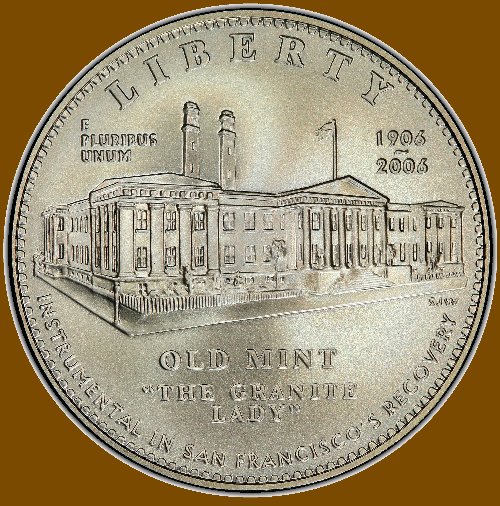 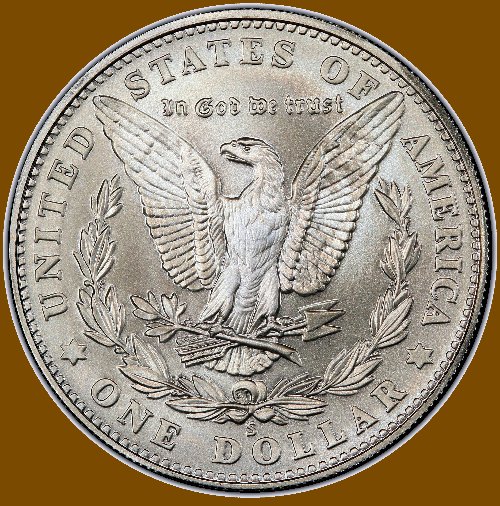 Collecting history one coin or medal at a time! (c) commems. All rights reserved.
Edited by commems
12/15/2021 08:58 am
|
|
Moderator
United States
195004 Posts |
Fantastic! |
|
CCF Master Historian of Commemorative Coins
United States
12515 Posts |
In 2007, the 50th Anniversary of the desegregation of Little Rock Central High school was marked with a commemorative silver dollar. Little Rock Central High School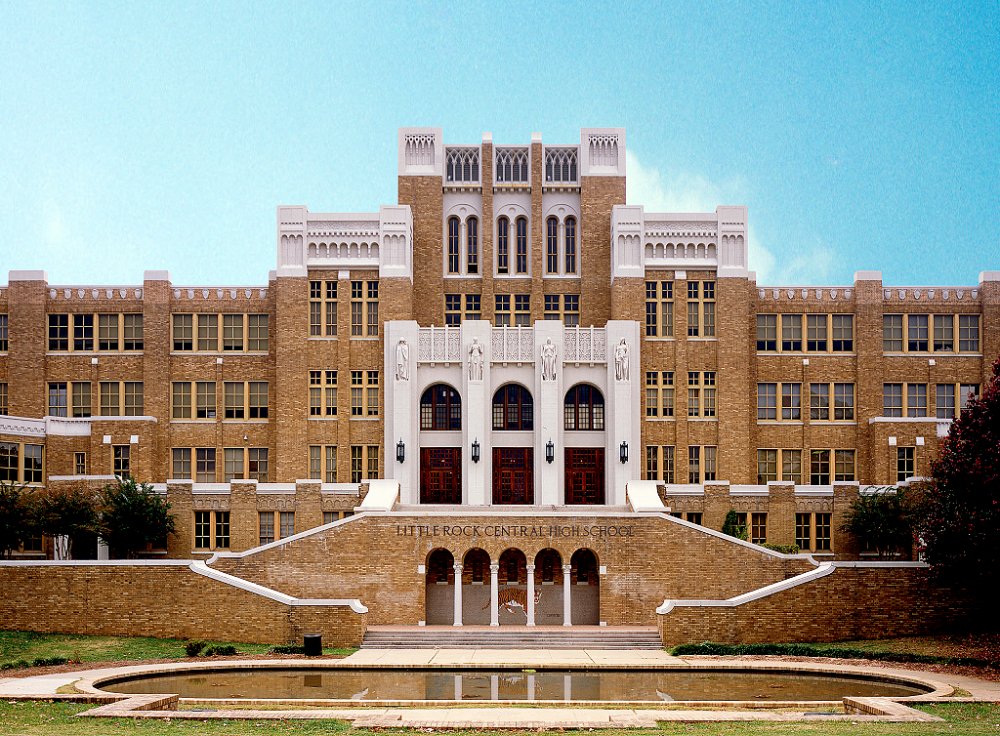 (Image Credit: Libary of Congress, Prints and Photographs Division. (www.loc.gov/pictures. Public Domain.) (Image Credit: Libary of Congress, Prints and Photographs Division. (www.loc.gov/pictures. Public Domain.)On September 4, 1957, nine African-American students (the Little Rock Nine) arrived to attend classes at the all-white Little Rock Central High School, but the Arkansas Governor, Orval Faubus, called upon members of the Arkansas National Guard to prevent them from entering. Later in September, under orders from US President Dwight David Eisenhower, Federal troops escorted the students into the school. The students had enrolled as a test of the recent Supreme Court decision, Brown v. Board of Education. that ruled that it was unconstitutional to segregate schools based on race. The nine students were: Jean Brown, Elizabeth Eckford, Ernest Green, Thelma Mothershed, Melba Patillo, Gloria Ray, Terrence Roberts, Jefferson Thomas and Carlotta Walls. The Little Rock Nine received a Congressional Medal of Honor in 1998 for "risk[ing] their lives to integrate Central High School in Little Rock, Arkansas, and subsequently the Nation" and for "sacrific[ing] their innocence to protect the American principle that we are all 'One Nation, under God, indivisible'." The coin's obverse design, in a horizontal center cutout, depicts the nine students (basically from the waist down), being accompanied by an armed Federal soldier as they walked to Little Rock Central High School in 1957. Nine stars are included in the design (just above the cutout), each representing one of the nine African-American students. Richard Master, part of the US Mint's Artistic Infusion Program was the designer; US Mint Sculptor-Engraver Charles L. Vickers created the design's sculpt. The reverse design presents a view of Little Rock Central High School (circa 1957); US Mint Sculptor-Engraver Don Everhart was responsible for the design and sculpt. The school building was designated a National Historic Site in 1998 and is currently open to visitors; the site is managed by the National Park Service. 2007 Little Rock Central High School Desegregation Silver Dollar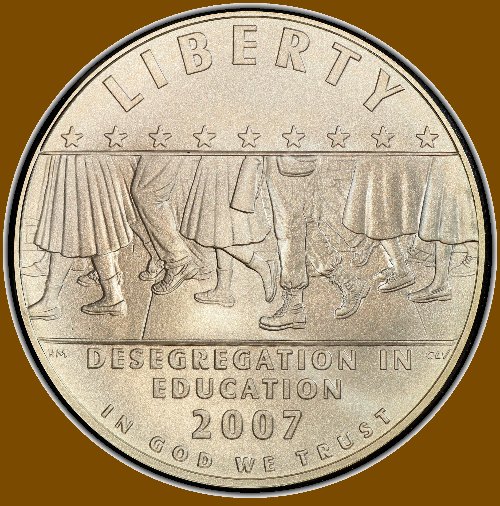  Collecting history one coin or medal at a time! (c) commems. All rights reserved.
|
|
Bedrock of the Community
United Kingdom
18647 Posts |
Great coins, commems, and fascinating history! |
|
Moderator
United States
195004 Posts |
Excellent example and great history! |
|
CCF Master Historian of Commemorative Coins
United States
12515 Posts |
@NumisRob / jbuck: Thanks much! I'm glad you are enjoying the background on the coins I'm presenting.
Collecting history one coin or medal at a time! (c) commems. All rights reserved.
|
|
CCF Master Historian of Commemorative Coins
United States
12515 Posts |
The American Eagle Foundation of Tennessee (AEF) was the beneficiary of the 2008 three-coin Bald Eagle Commemorative Coin Program. The program included a CuNi Clad Half Dollar, a Silver Dollar and a Gold Half Eagle. The American Eagle Foundation "is dedicated to inspiring the global community to guard and protect the Bald Eagle and all birds of prey." (AEF web site, https://www.eagles.org/)The coins were struck to celebrate "the recovery and restoration of the American bald eagle, the national symbol of the United States, to America's lands, waterways, and skies and the great importance of the designation of the American bald eagle as an ''endangered'' species under the Endangered Species Act of 1973..." (Public Law 108-486) Thankfully, as a result of strong and widespread conservation efforts, the bald eagle recovered and was removed from the endangered list 35 years later, on June 25, 2008 during a ceremony in Washington, DC. This post will focus on the Clad Half Dollar of the program. The coin's obverse design depicts two baby eaglets in their nest along with an as-yet-unhatched Bald Eagle egg. A star separates "LIBERTY" from "2008" near the top rim; the single star is not used symbolically. The design was created by freelance artist Susan Gamble; her design was modeled for coinage by US Mint Medallic Artist Joseph Menna (in 2019, Menna was promoted to Chief Engraver). (Note: The US Mint dropped the Sculptor-Engraver title about 15 years ago, transitioning to the "Medallic Artist" job title.)The primary design element of the reverse design is the Bald Eagle named Challenger; the eagle was named in honor of the US space shuttle (STS-51-L) that exploded shortly after its launch in 1986. The design's stars are found in the field of the US Flag that is presented behind Challenger. The design is the work of US Mint, Artistic Infusion Program artist Donna Weaver; US Mint Sculptor-Engraver Charles L. Vickers created the sculpt of the design - Vickers was hired by the Mint under the previous job title. Challenger was raised by humans after being rescued as an eaglet following a storm. It subsequently imprinted on its human caretakers to the extent that it was not able to be successfully released into the wild (two attempts were made). Between 1993 and 2019, a specially-trained Challenger could be found flying free at national anthem ceremonies for Major League Baseball (MLB) games, National Football League (NFL) games, College football games, NASCAR races and a variety of special events including college graduations, groundbreaking events and dedication ceremonies. In 2019, Challenger retired from making free flights at events, but continues to make "gloved" appearances with his handlers. 2008 Bald Eagle CuNi Clad Commemorative Half Dollar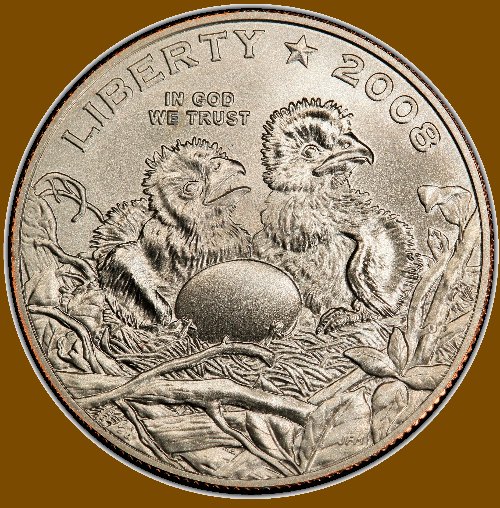 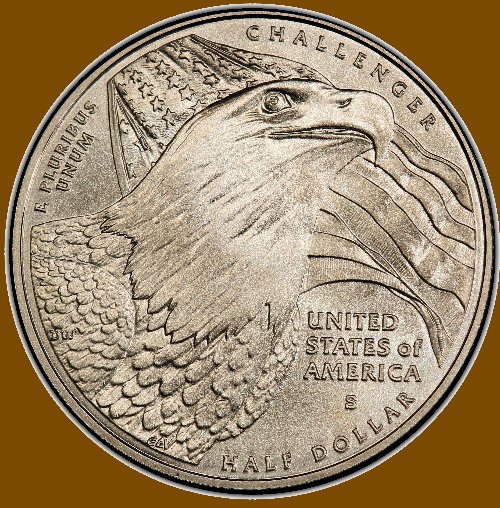 Collecting history one coin or medal at a time! (c) commems. All rights reserved.
Edited by commems
12/17/2021 09:36 am
|
|
CCF Master Historian of Commemorative Coins
United States
12515 Posts |
The Silver Dollar from the 2008 Bald Eagle three-coin program also features stars - they are included within the coin's reverse design. The coin's obverse features an adult bald eagle gliding over a lake, likely in search of food. Eagle are generally found in wetlands that provide access to fish - a diet staple of the eagle. In the background is depicted a tree-lined coast with mountains behind; the trees appear to be pine. Artistic Infusion Program (AIP) Master Designer Joel Iskowitz was the artist responsible for the design; US Mint Sculptor-Engraver Don Everhart modeled the design. The reverse design presents the Great Seal of the United States, as it was from 1782-1841. The Seal presents a heraldic eagle with the US Shield on its breast. The eagle holds arrows in its left talon and an olive branch in its right - the combination symbolizes that the US desires peace but stands ready to defend itself. Held in the eagle's beak is a banner/ribbon upon which is inscribed "E PLURIBUS UNUM" - "Out of Many, One." Above the eagle is seen a sun burst within which is a constellation of 13 stars that represent the original 13 States of the Union. The design and sculpt were prepared by US Mint Sculptor-Engraver Jim Licaretz. Why the Seal from 1782-1841? It was in 1782 that the Bald Eagle was adopted as the National Bird and incorporated into the new nation's official Seal; it has been symbolic of the US ever since. Its use on the coin recalls the icon's beginning and helps illustrate the United States' important and long-term link with the Bald Eagle. As noted in my post about the 2008 Bald Eagle CuNi Clad Half Dollar (above), the American Eagle Foundation of Tennessee (AEF) was the beneficiary of the 2008 three-coin Bald Eagle Commemorative Coin Program. (See my previous post for more about the AEF.) 2008 Bald Eagle Silver Commemorative Dollar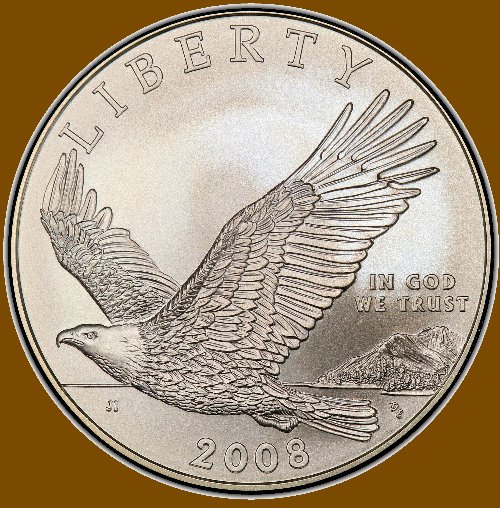 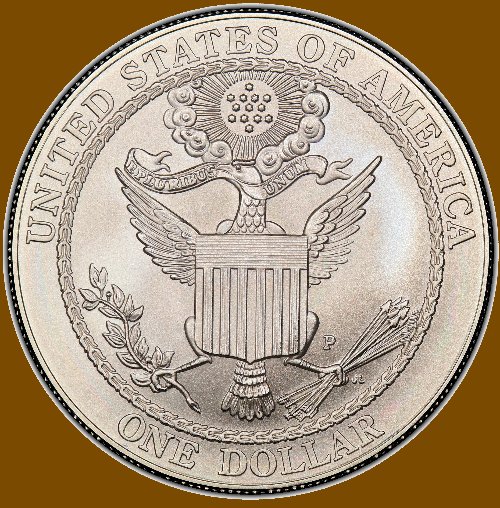 Collecting history one coin or medal at a time! (c) commems. All rights reserved.
|
|
CCF Master Historian of Commemorative Coins
United States
12515 Posts |
The third coin of the 2008 Bald Eagle three-coin program is the Gold Half Eagle. As with the Silver Dollar, the coin's stars are found within its reverse design. The coin's obverse design depicts a pair of young Bald Eagles perched on a branch in a natural setting; one eagle is fully at rest, the other has its wings outstretched. The design complete a "life cycle of the Bald Eagle" theme for the program's obverse designs: eaglets on the Half Dollar, young eagles on the Half Eagle and adult Bald Eagle on the Silver Dollar. US Mint Artistic Infusion Program Master Designer Susan Gamble created the coin's obverse design; it was sculpted by US Mint Sculptor-Engraver Phebe Hemphill. On the coin's reverse is depicted the current version of the Great Seal of the United States; it is based on a 1903 engraving. Combined with the Seal found on the Silver Dollar, it completes a "Then and Now" look at the Great Seal and the Bald Eagle it features. Though a number of details differ between the two Seals, the most obvious change involves the presentation of its stars. In the modern rendition of the Seal, the constellation of stars is presented in a tighter ring of clouds with de-emphasized rays vs. within a dominant radiating sun burst (as seen on the original 1782 Seal). Other easily-seen changes include the addition of multiple olives to the olive branch on the updated Seal - there are, symbolically, now 13 in total - and the new form of the eagle's upswept wings. US Mint Sculptor-Engraver Don Everhart handled the design and sculpt. As mentioned in my previous posts about the coins of the 2008 Bald Eagle commemorative program, the American Eagle Foundation of Tennessee (AEF) was the beneficiary. The surcharges collected from the sale of the coins (~$7.8 million) were used to initiate the AEF Bald Eagle Grant Program; 75% of the collected surcharges (~$5.8 million) were directed to the annual Grant Program which awards grants to support bald eagle recovery efforts across the US. The balance of the funds were used in various ways to further the work of the AEF, including education, rehabilitation, conservation and repopulation initiatives. (See my previous two posts (directly above) for more about the AEF and the 2008 Bald Eagle Commemorative Coin Program.) 2008 Bald Eagle Commemorative Gold Half Eagle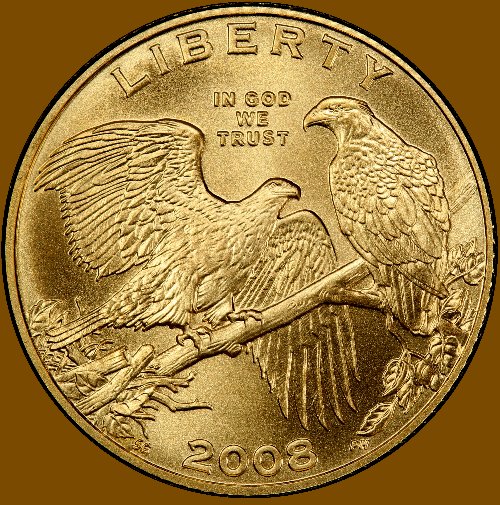 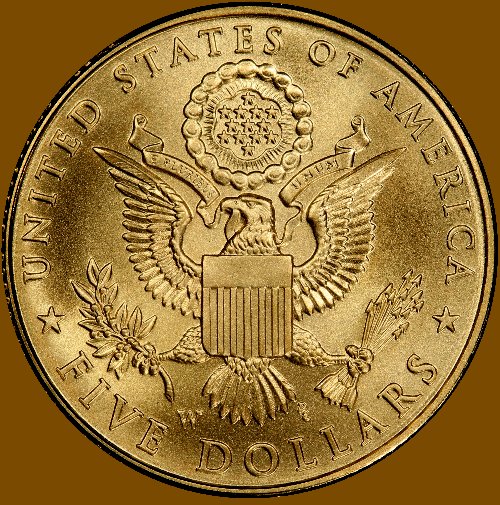 Collecting history one coin or medal at a time! (c) commems. All rights reserved.
Edited by commems
12/18/2021 07:30 am
|
|
CCF Master Historian of Commemorative Coins
United States
12515 Posts |
The 2010 Boy Scouts Centennial Silver dollar incorporates stars in its design courtesy of the Boy Scouts emblem/logo depicted on its reverse. The Boy Scouts of America was founded in 1910 by William Dickson Boyce, an entrepreneur and newspaper + magazine publisher. Boyce had such a positive experience with a local Boy Scout while on a trip to England in 1909 that he founded the Boy Scouts of America shortly after his return. (The Boy Scouts organization was founded in England in 1907 by Lord Robert Baden-Powell.) A few short years after its founding, in 1916, the Boys Scouts of America (BSA) received a Federal Charter - something it maintains to the present day, Over its 100 years, the BSA grew to encompass scout troops across the country and involved more than 111 million people (child and adults) in its programs. In 2010, the BSA had 2.8 million youth members and 1.1 million adult leaders. From the US Mint web site: "The mission of the Boy Scouts of America is "to prepare young people to make ethical and moral choices over their lifetimes by instilling in them the values of the Scout Oath and Law." Every day across our Nation, Scouts and their leaders pledge to live up to the promise in the Scout Oath—"On my honor I will do my best, To do my duty to God and my country and to obey the Scout Law; To help other people at all times; To keep myself physically strong, mentally awake, and morally straight"—and the Scout Law, according to which a Scout is "Trustworthy, Loyal, Helpful, Friendly, Courteous, Kind, Obedient, Cheerful, Thrifty, Brave, Clean, and Reverent."On its obverse, the Silver Dollar features three youth members of the BSA. Seen in the foreground is a male Cub Scout, a female Venturer is presented midground and an African-American male Boy Scout is seen in the background. All of the figures are shown saluting. The intent of the design was to illustrate the modern BSA's diversity. Artistic Infusion Program (AIP) artist Donna Weaver was responsible for the obverse design; US Mint Sculptor-Engraver Jim Licaretz handled the design's modeling. The coin's reverse presents the BSA emblem/logo. The foundation of the emblem is the fleur-de-lis. It symbolizes heading in the best direction in life / following the path pf a good Scout. The stars seen on the left and right segments of the fleur-de-lis represent Truth and Knowledge. The eagle surmounted on the fleur-de-lis is symbolic of the US' freedom with the Shield it wears representing the fact that a Scout should stand ready to defend such freedom. The US Shield includes the traditional 13 stars that represent the original 13 US States. So, in total, the reverse design incorporates 15 stars. The design and sculpt were the work of US Mint Sculptor-Engraver Jim Licaretz. Boy Scouts of America Emblem/Logo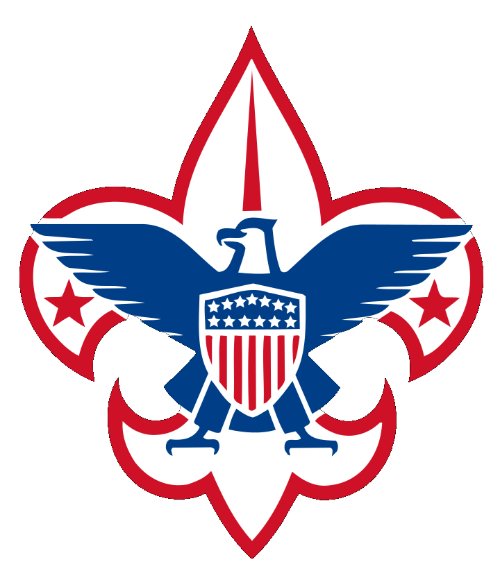 (Image Credit: Courtesy of the Boy Scouts of America. Fair use.2010 Boy Scouts Centennial Silver Dollar (Image Credit: Courtesy of the Boy Scouts of America. Fair use.2010 Boy Scouts Centennial Silver Dollar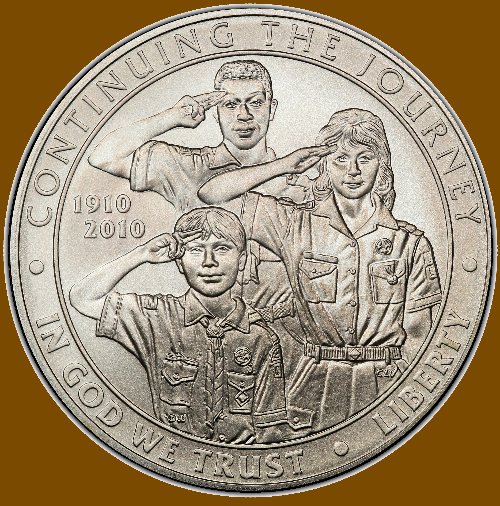 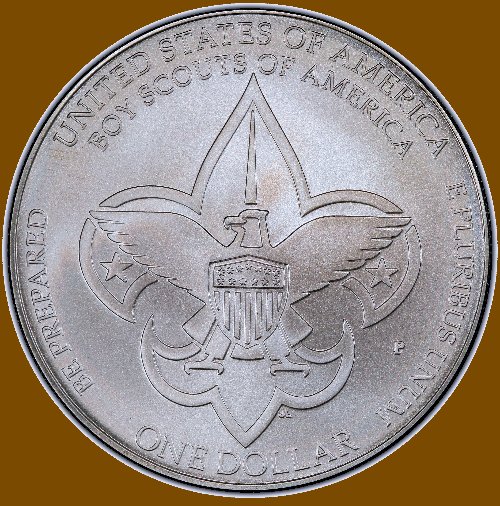 For a related "What If?" Scouts coin story, check out: - 1986 Scouts AnniversaryCollecting history one coin or medal at a time! (c) commems. All rights reserved.
Edited by commems
12/18/2021 12:48 pm
|
|
Moderator
United States
195004 Posts |
Outstanding examples! Of these, the Eagle dollar is my favourite.  |
| |
Replies: 5,918 / Views: 201,147 |
To participate in the forum you must log in or register.
 
- 1780 2 Escudos - Straight Grade ?
- Need Help Identifying Coin/Jeton, Possibly 15th Century
- Guess The Grade On A CACG 1951-S Roosevelt Dime
- 1957-D LWC BIE Ldb4-1957-D-074 4-Dm
- Need Help Identifying This Ancient Nummus, Follis, Ae4?
- 1955 Lebanon - 10 Piastres W/Peeled Lamination
- 1945 S LWC Improper Alloy Mix And Rim Ding Or Cud?
- Wilma Mankiller P 2022
- Token: The E S CO One S
- Brass Token: 6 (Or 9) Star And Arch
- 1976 Bicentennial Half Dollar Struck On Fragment, 1.61 Grams, CAC MS-63
- Video ANA Academy: Amazing Morgan 1878 By Victor J. Michonski | Dwight N. Manley Numismatic Library
- When You See Your Favorite Bank Teller's Number Flash Across Your Cell Phone
- 1967 Lincoln Cent - Memorial Has A Curtain?
- What Are The Grades Of These Three Dimes?
- Constantius II With Write Up From Seller.
- US Mint Releases Special Enduring Liberty Half Dollars With "09-11-01" Privy Mark Into Circulation
- 1799 Draped Bust Dollar, PCGS MS-66, Top Pop
- Undated Jefferson Nickel, 95% Off Center Error, NGC MS-66
- Found Two Morgans This Weekend, Couldn't Find Any Mint Marks?
Disclaimer: While a tremendous amount of effort goes into ensuring the accuracy of the information contained in this site, Coin Community assumes no liability for errors. Copyright 2005 - 2026 Coin Community Family- all rights reserved worldwide. Use of any images or content on this website without prior written permission of Coin Community or the original lender is strictly prohibited.
Contact Us | Advertise Here | Privacy Policy / Terms of Use
|
| Coin Community Forum |
© 2005 - 2026 Coin Community Forums |
| It took 0.86 seconds to rattle this change. |
 |
|





 First Page
 Previous Page


 Posted 12/14/2021 09:19 am





