| Author |
 Replies: 16 / Views: 5,106 Replies: 16 / Views: 5,106 |
|
Pillar of the Community
United States
6193 Posts |
Bought this one as a counterfeit, but I'm not that familiar with Mercury dimes and can't say what the problem is. Wrong mint mark type or location from a glued on job? Help or opinions welcome as I like to put correct label on type of problem with my counterfeit coins. 1916-D Mercury dime - listed counterfeit asking why? 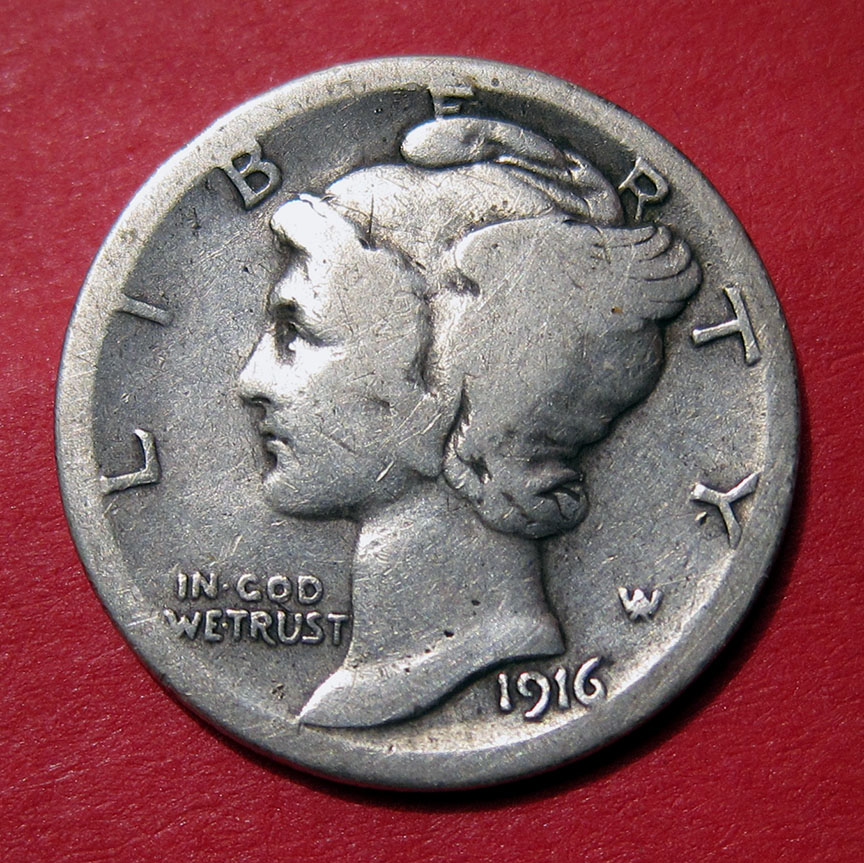 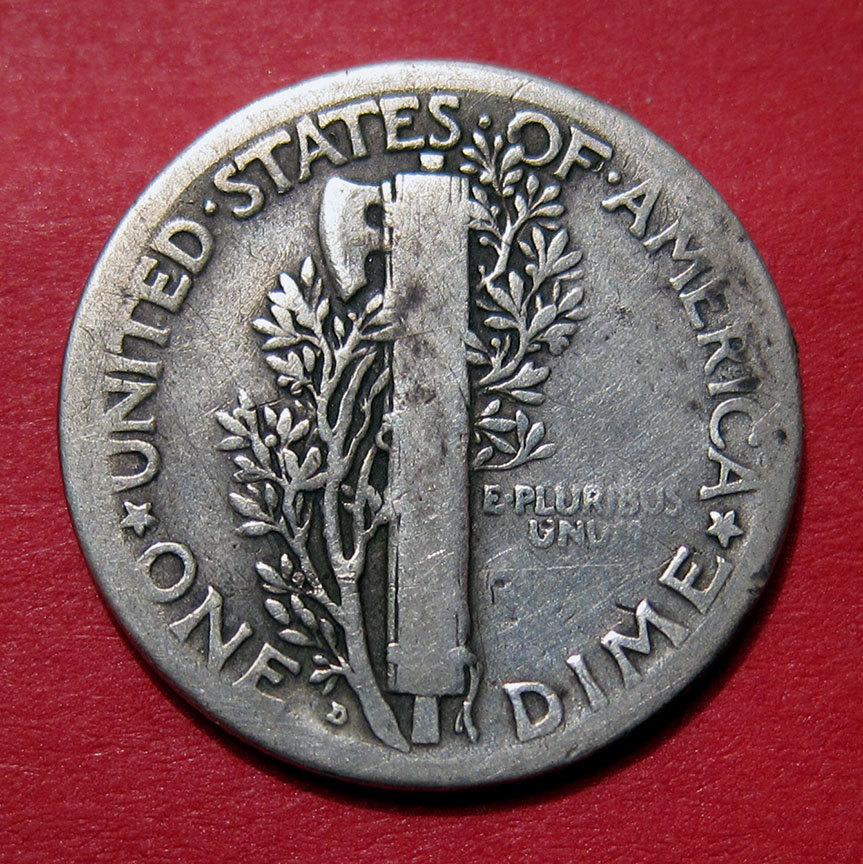 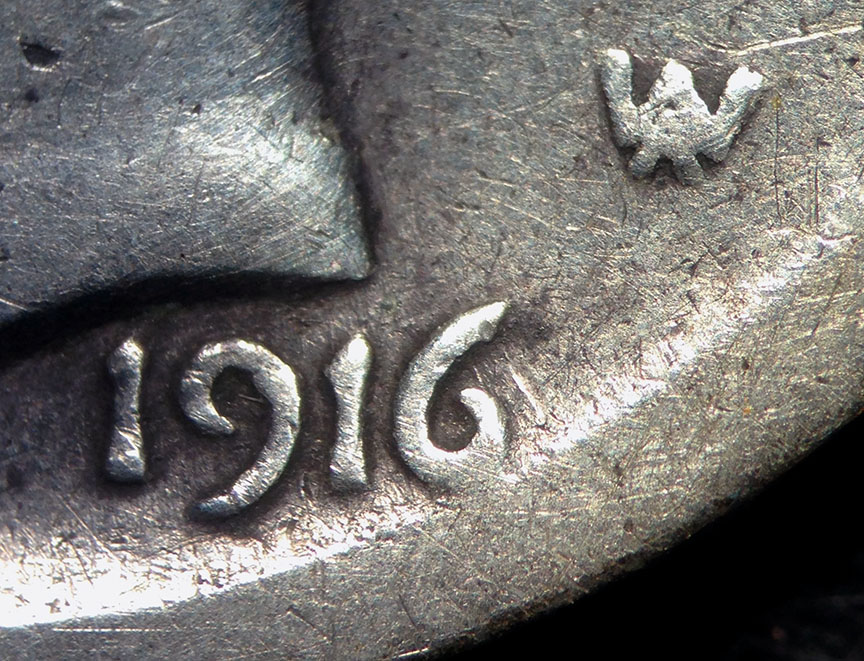 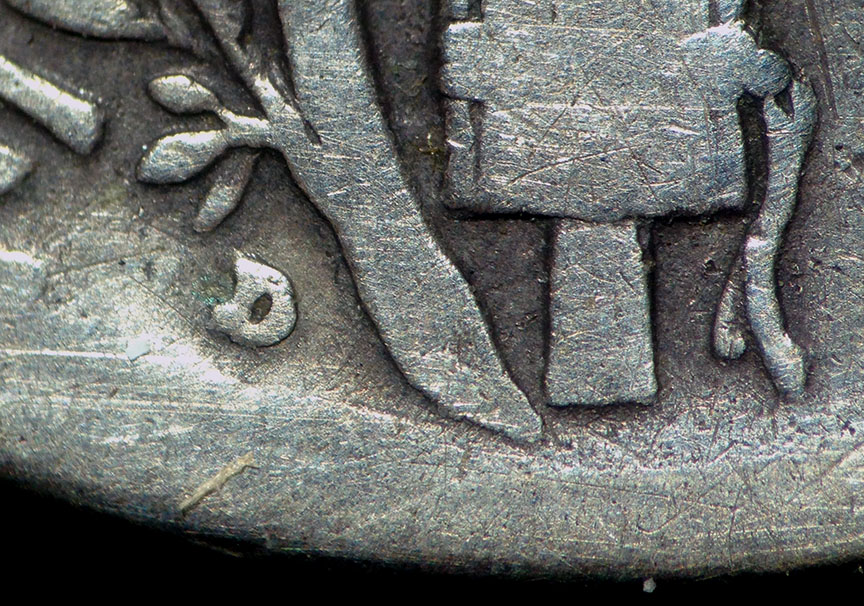 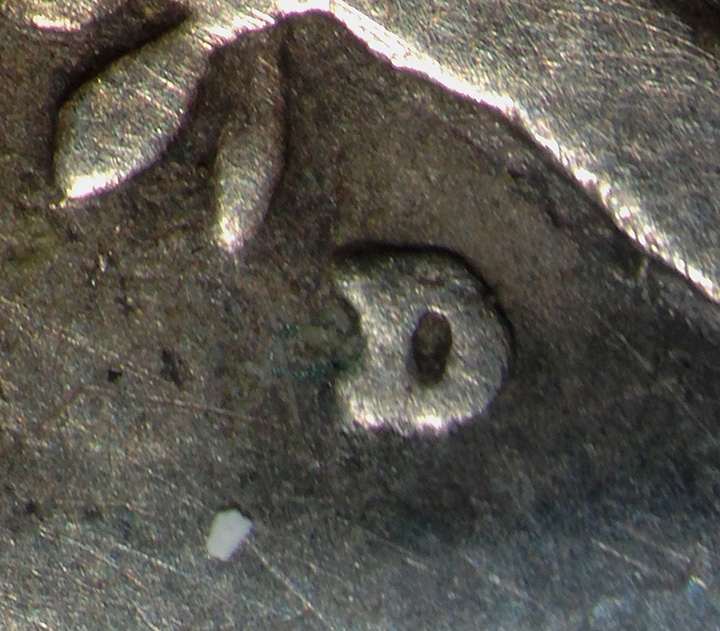 |
|
|
|
Bedrock of the Community
United States
94367 Posts |
From what I understand, the D is way too low relative to the leaf above and not slanted correctly.  Edited by Coinfrog
09/13/2019 8:56 pm
|
|
Bedrock of the Community
Australia
21789 Posts |
264,000 genuine examples produced.
That means that only two or three dies for the reverse may have been used.
That means only 2 or 3 varieties for the position of the 'D'.
If a 1916 D master hub was used for all of the working dies, then no variation for the position of the 'D',
and only minor differences (if any at all) in the shape of the 'D'.
I am not familiar with the 1916 D dime, but what I have written above could be a basis for investigation.
I do note, however, when you look a the range of Google images for the 1916 D dime, the search throws up quite a few very worn examples. If you want to hide the dishonest work of a coin faker, that is easy to do, by masking that dishonest work with wear.
|
|
Bedrock of the Community
United States
94367 Posts |
Got it. This remains a fake because of the MM position. I would like to see a graded coin with this MM position. |
|
Bedrock of the Community
United States
10982 Posts |
The D is too strong given the wear on the coin and is misshapen. Here's a genuine piece in G06. 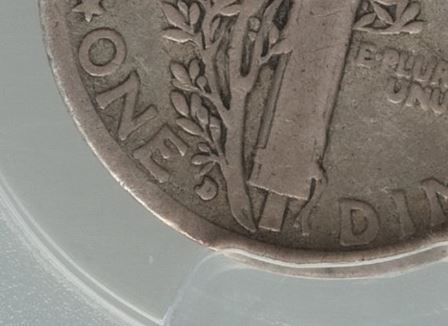 |
|
Pillar of the Community
 United States
6193 Posts |
So this is sounding like an added mint mark issue. Really appreciate the input as I collect counterfeits and like to know how they were produced if at all possible.
|
|
Bedrock of the Community
United States
94367 Posts |
Note the position of the MM on the genuine example relative to the lower leaf compared to the proposed example.
|
|
Valued Member
United States
441 Posts |
Here are 3 photos of 3 genuine 1916D's that I cropped. They were taken from the PCGS Coinfacts App. Hope this helps! -Chris 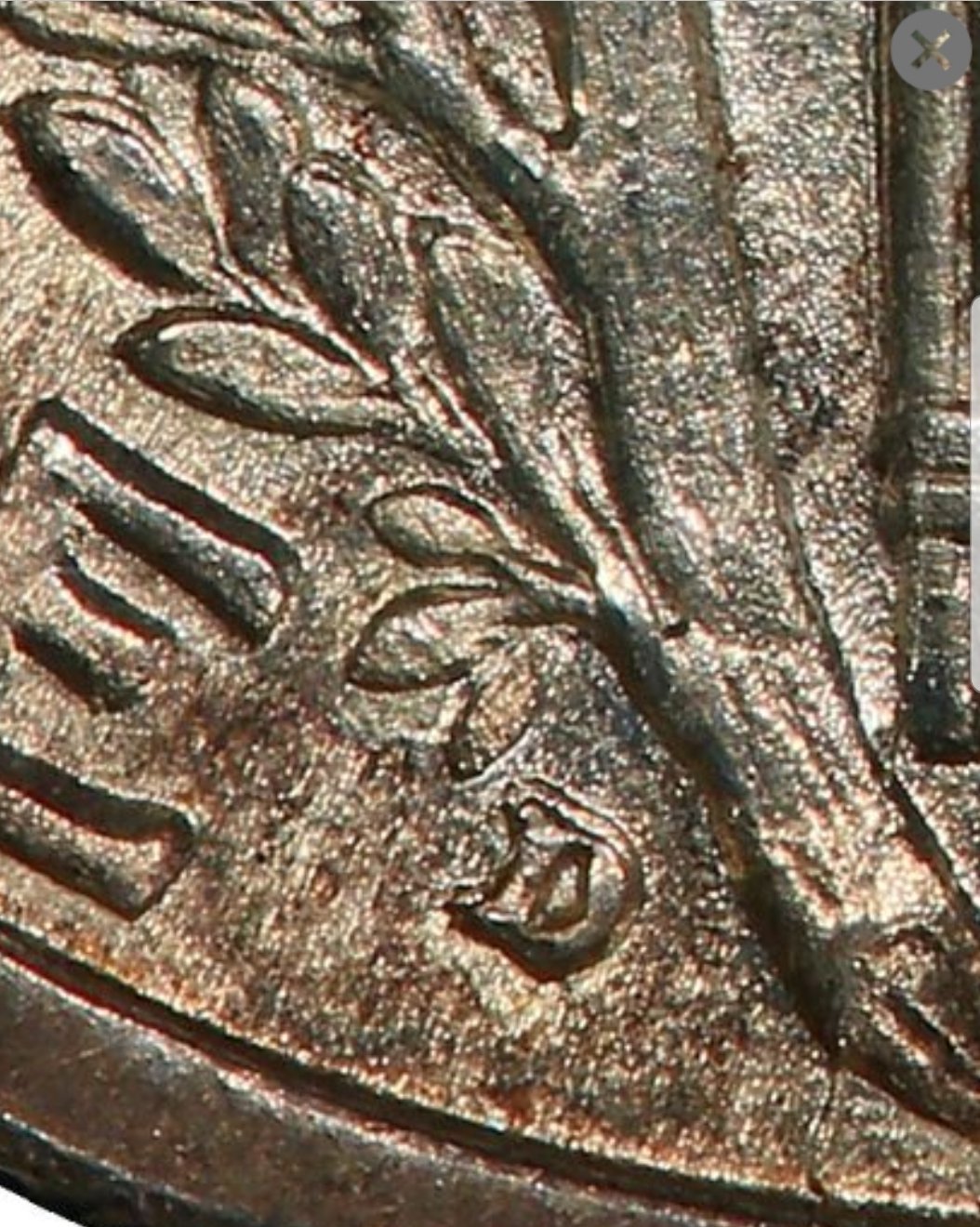 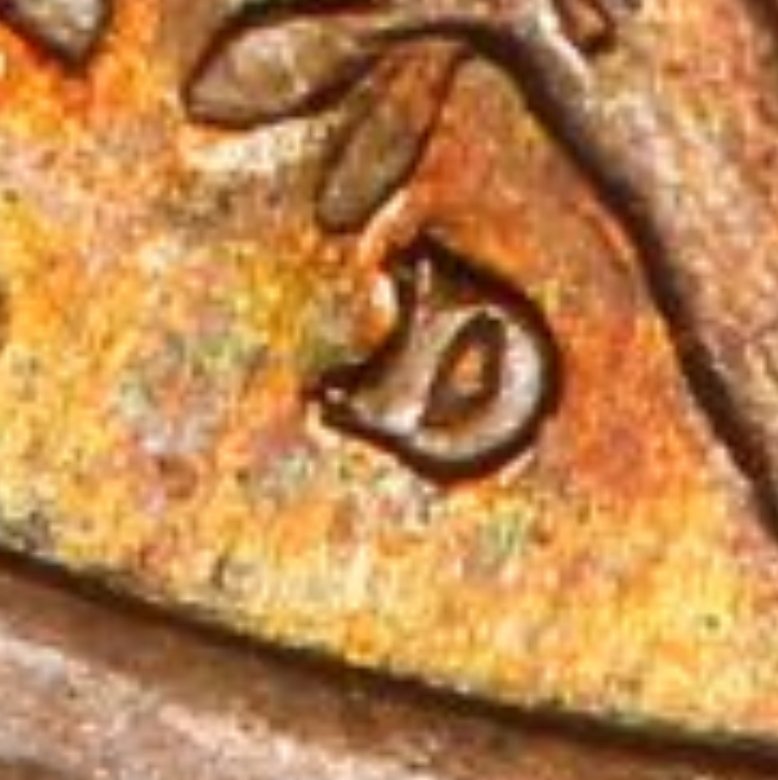 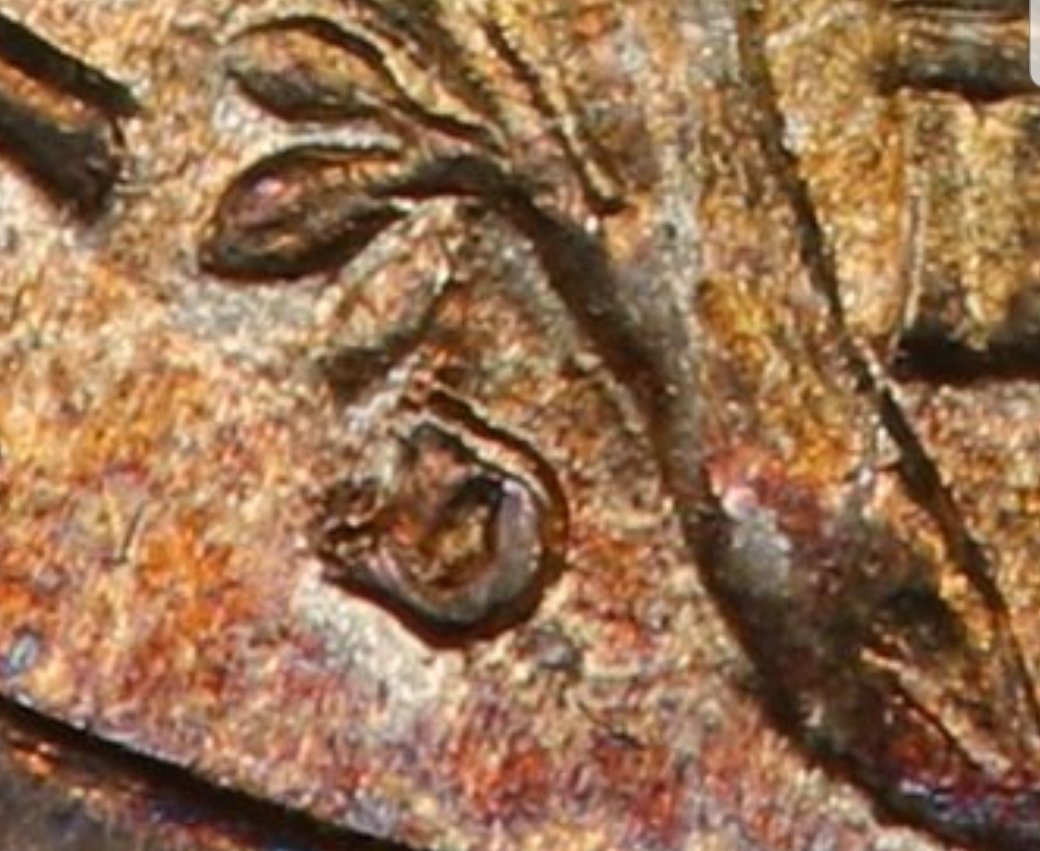 |
|
Moderator
 United States
34532 Posts |
Another slabbed example showing mintmark location: 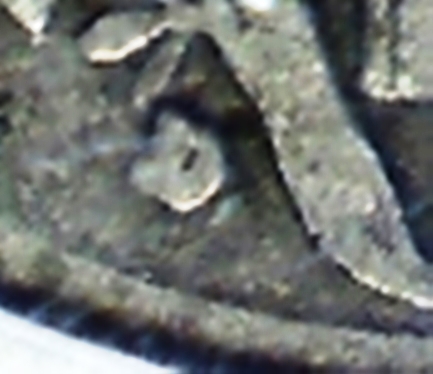 "If you climb a good tree, you get a push."
-----Ghanaian proverb
"The danger we all now face is distinguishing between what is authentic and what is performed."
-----King Adz
|
|
Bedrock of the Community
Australia
21789 Posts |
With these three pictures and taking working die wear in to account, there is not really any variation in the shape of the 'D', or it's position.
It must be considered that they may have came off the same die, but is not necessarily the case. They could have originated off the same incuse hub.
What we need is some info on how the working dies were produced.
As I said earlier, I am not familiar with the '16D, perhaps a member can confirm if the 'D' mm's were placed on each working die.
|
|
Bedrock of the Community
United States
17884 Posts |
There were 4 reverse dies used for the 16 D, all using the same mintmark punch, two of them have RPM's.
|
|
Bedrock of the Community
United States
20753 Posts |
Quote:1916-D Mercury dime - listed counterfeit asking why? Kind of curious. Who said counterfeit? Where was this listed as that? |
|
Valued Member
United States
272 Posts |
 I am with just Carl on this one maybe you need to find a better counterfeit example of the 16d and that one can go in my book. Am merely a rookie but mm and date looks good. |
|
Bedrock of the Community
United States
20753 Posts |
And again I am curious as to who said fake?
|
|
Bedrock of the Community
United States
78273 Posts |
|
|
Bedrock of the Community
Australia
21789 Posts |
In consideration of the fact that the 1916 D is one of the most faked, it fair to ask the question that the OP has asked.
That a single punch was used for all four dies of the 1916 D dime and the mint mark was included on the punch,
the technique to find if the OP's coin is fake is to :
1. look for tiny details around the base of the mm, looking for tooling to remove signs of the attachment of the 'D',
2. look for tiny variations in the shape of the 'D',
3. look for any variation of the 'D' that is not consistent with a genuine example.
I will leave it to others who will read this thread and examine the pictures, then submit an opinion.
I feel sure that the OP would appreciate our opinions.
|
| |
Replies: 16 / Views: 5,106 |










 Posted 09/13/2019 8:56 pm


