











 Posted 10/19/2019 08:34 am


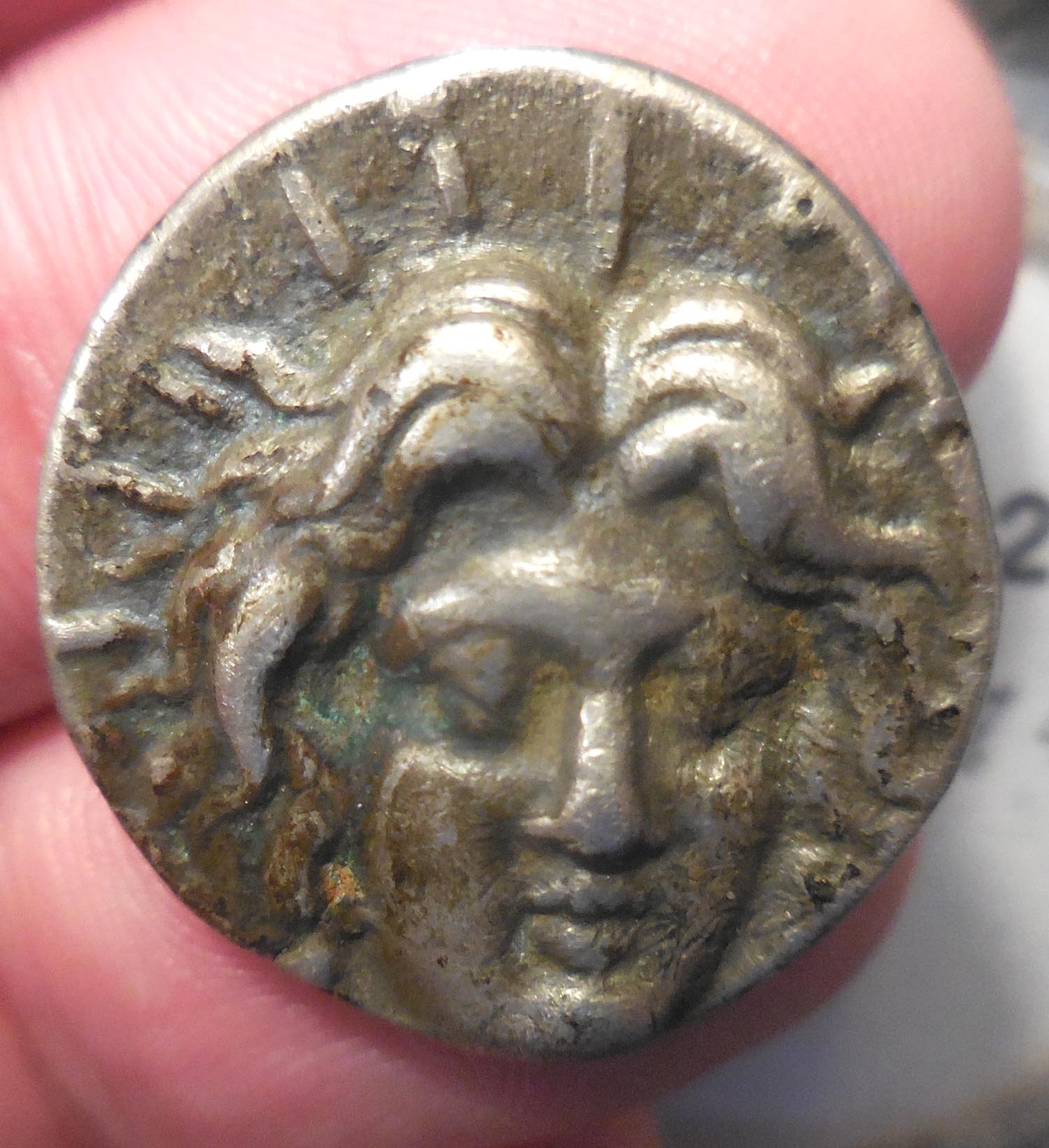
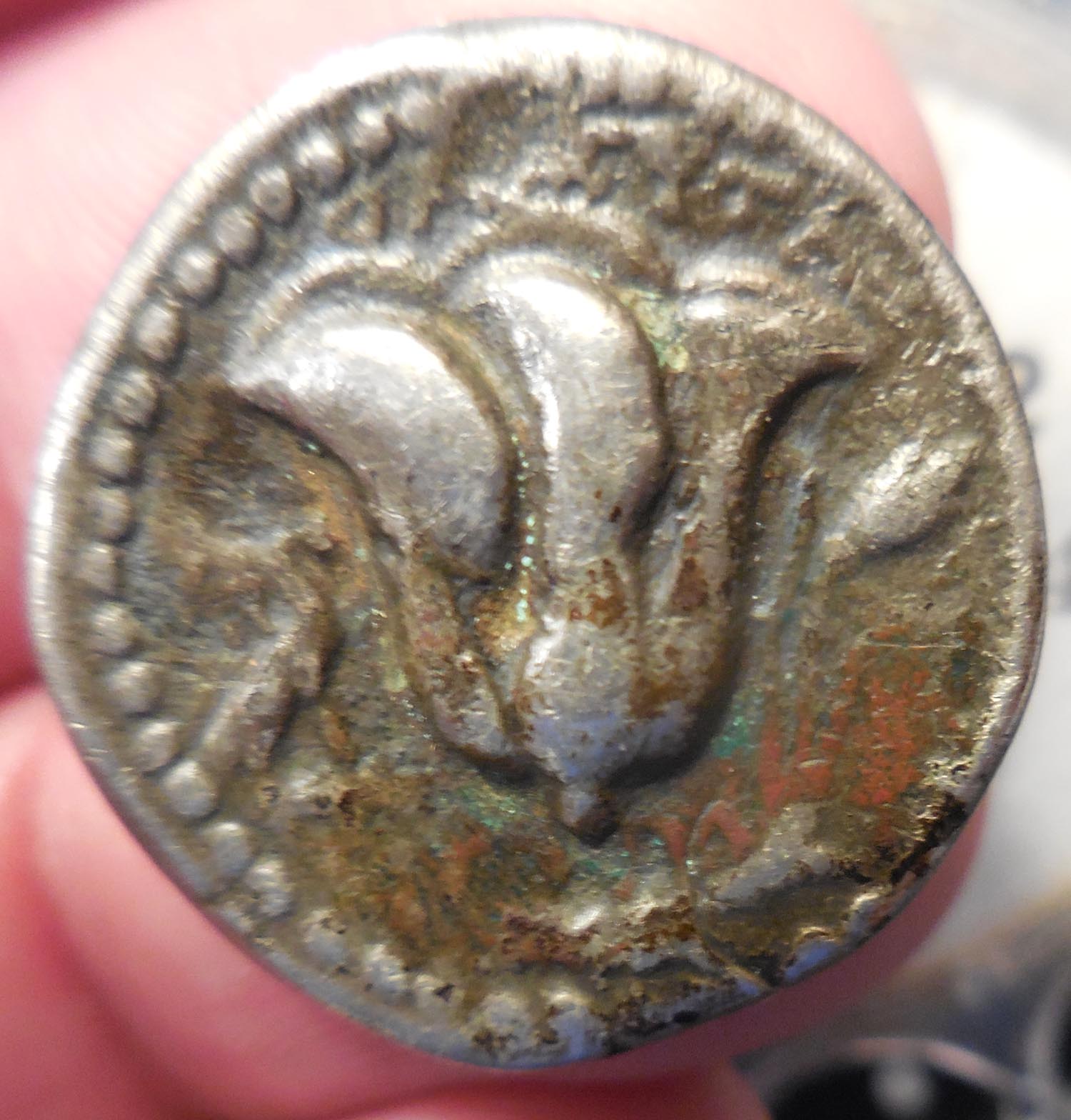
Looks like a tourist copy, maybe even silver plated.
Diameter OK for a Rhodian tetradrachm, but as you have suggested by innuendo, weight is too low.
You are right. It should be around 13.2 grams.
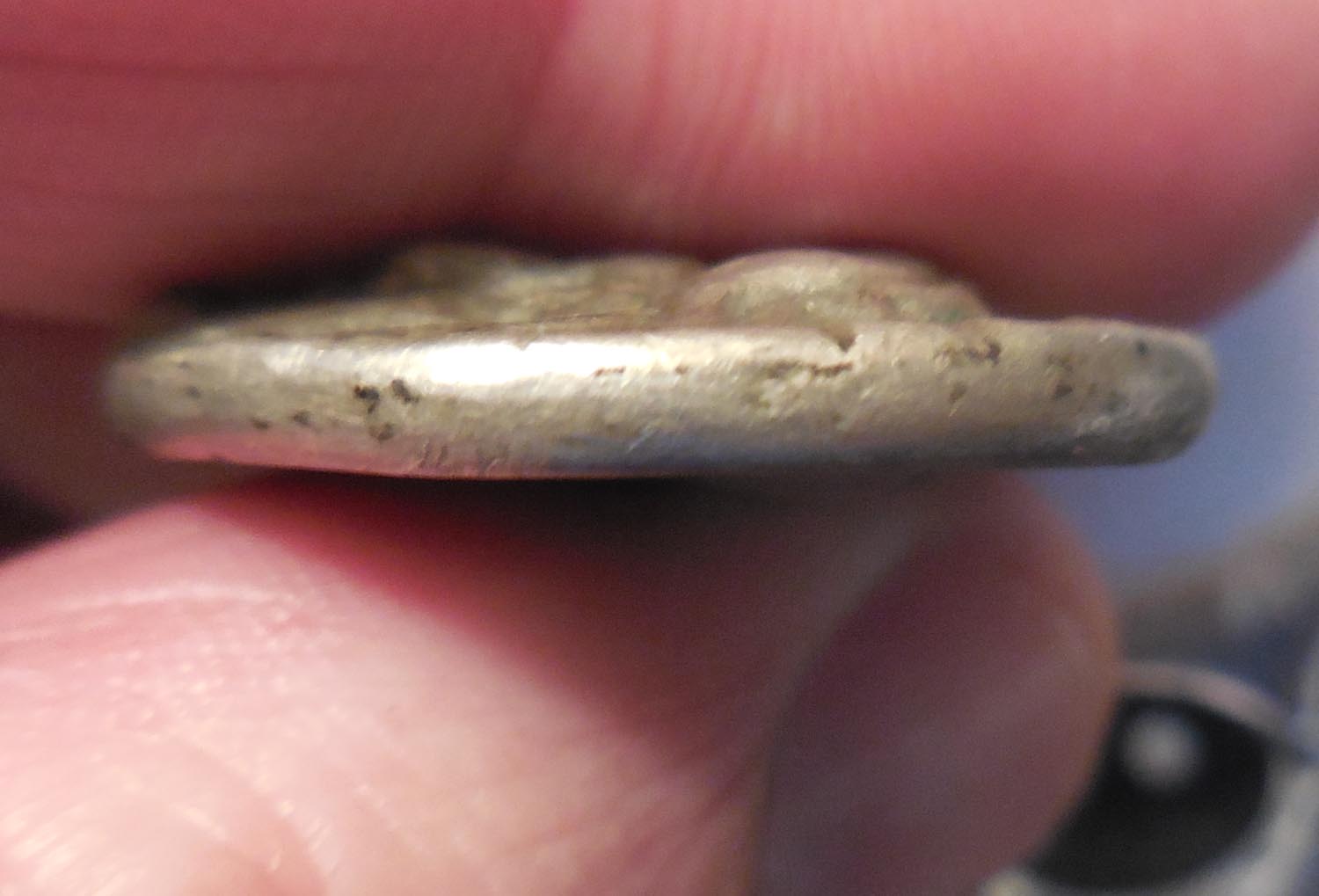
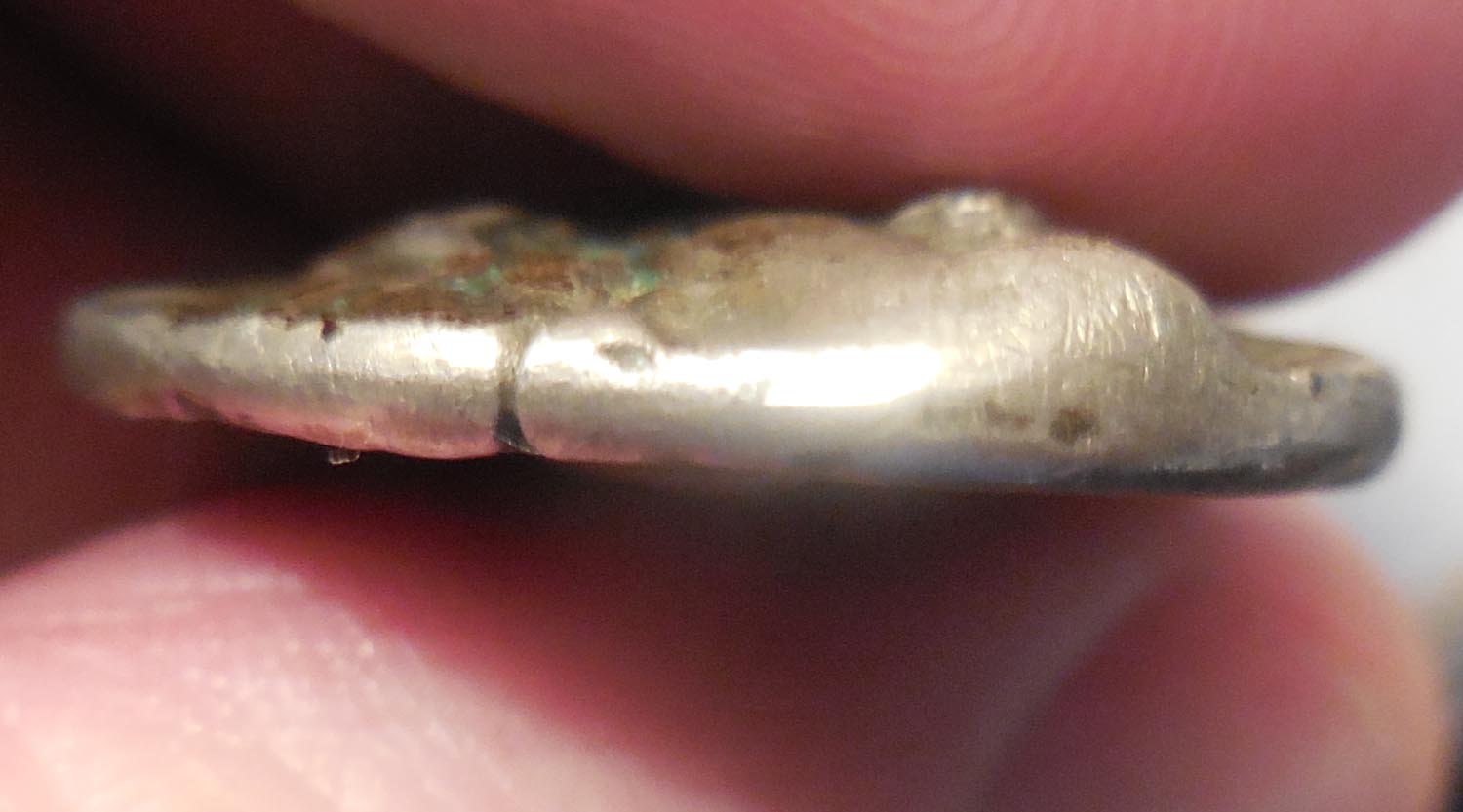
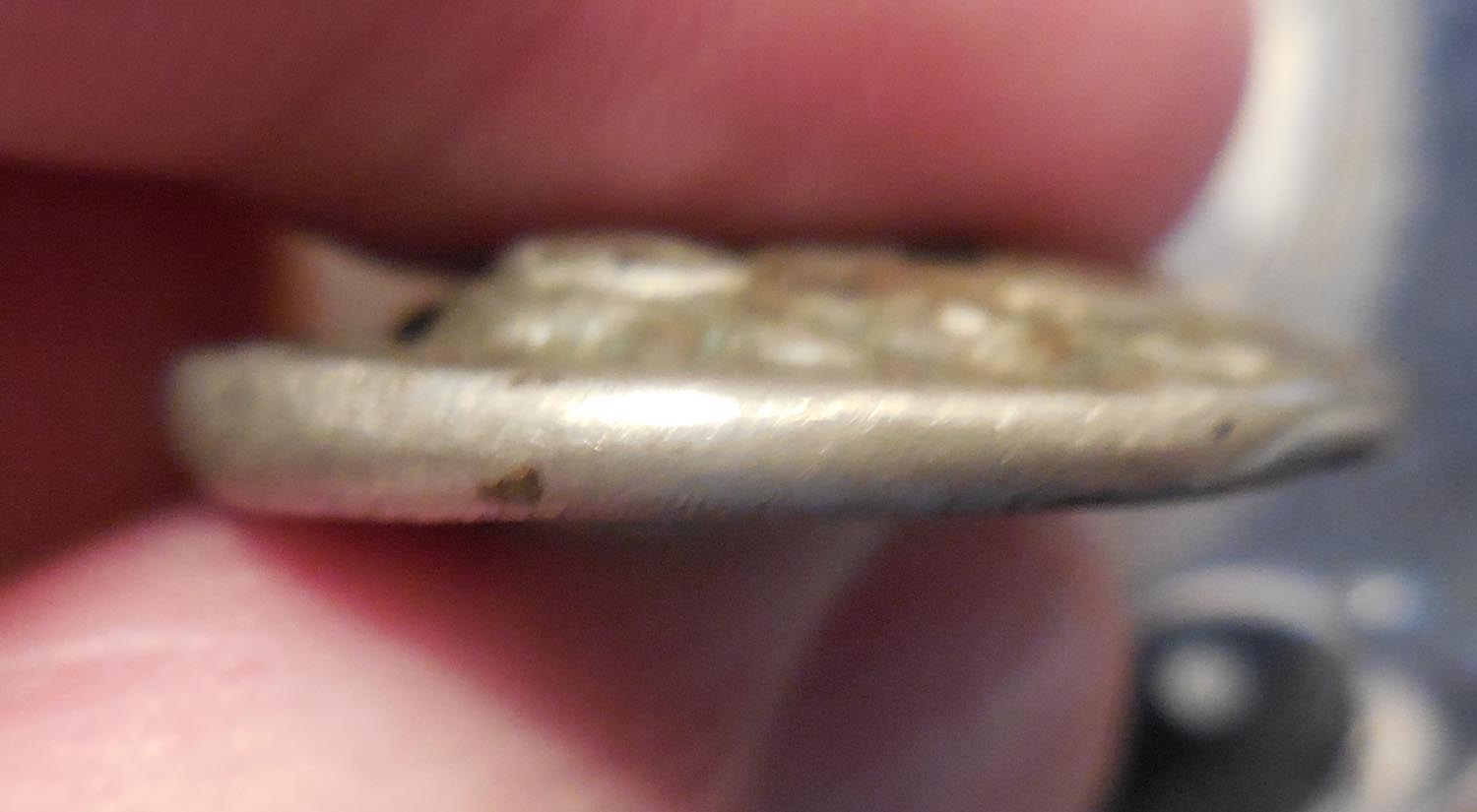
Edge OK, but filled redial edge cracks suggest cast, most probably by lost wax investment casting.
Injection sprue probably on the surface of the coin, not the edge, (mostly filed off, then tapped flat), maybe at the end of the ray above the head of Helios.
Always the easiest way of picking fakes, (either ancient or modern), is to consider a different method of manufacture from the original. (Otherwise known by the Victorian antiquarians as 'fabric').
Provenance? Where did it come from?
Then, you go looking through a modern digital fake data base.
Diameter OK for a Rhodian tetradrachm, but as you have suggested by innuendo, weight is too low.
You are right. It should be around 13.2 grams.
Edge OK, but filled redial edge cracks suggest cast, most probably by lost wax investment casting.
Injection sprue probably on the surface of the coin, not the edge, (mostly filed off, then tapped flat), maybe at the end of the ray above the head of Helios.
Always the easiest way of picking fakes, (either ancient or modern), is to consider a different method of manufacture from the original. (Otherwise known by the Victorian antiquarians as 'fabric').
Provenance? Where did it come from?
Then, you go looking through a modern digital fake data base.


