| Author |
 Replies: 45 / Views: 4,609 Replies: 45 / Views: 4,609 |
|
|
|
Pillar of the Community
United States
4425 Posts |
Would the 1984 doubled ear be reclassified? That's just centrally located doubling. Where are you drawing the line?
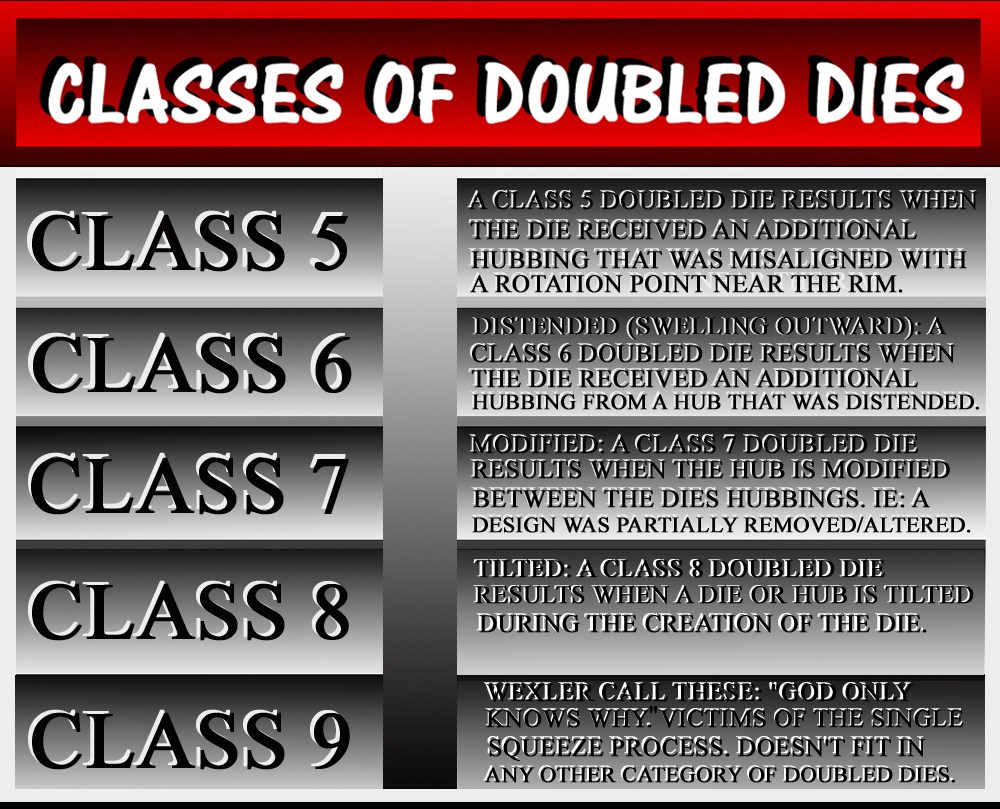
I was trying to say that the single-squeeze Class VIs don't actually fit into Class VI, they should be in a different, possibly new, class. I was agreeing with you in that they aren't actually Class VI doubled dies.
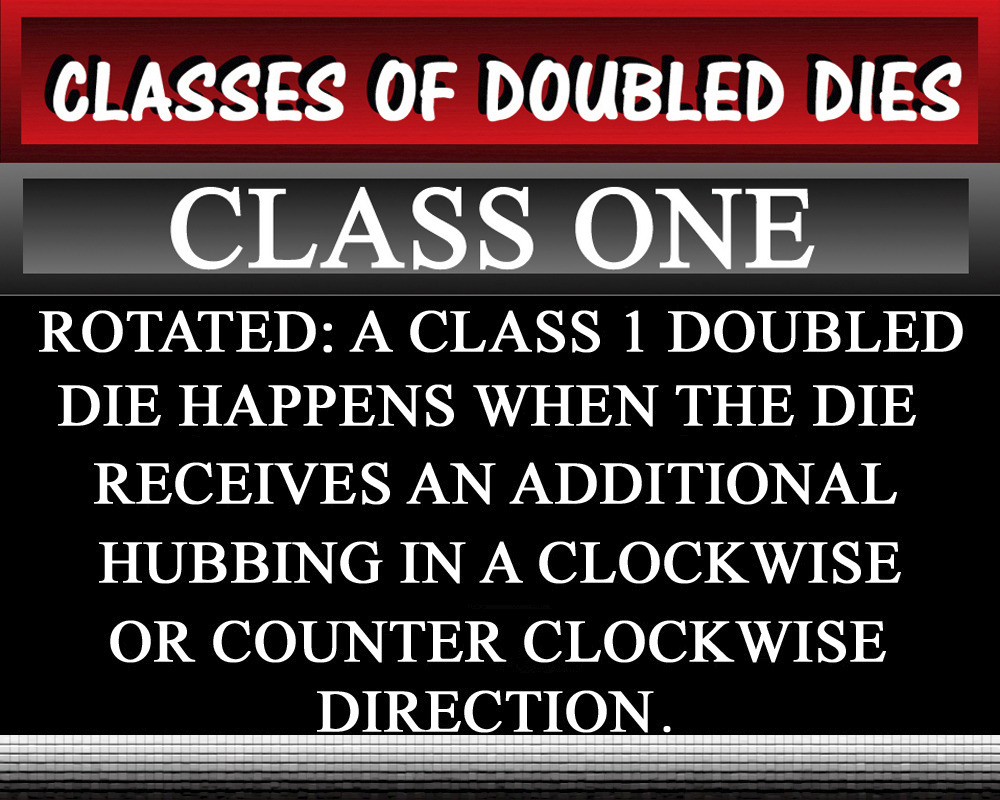
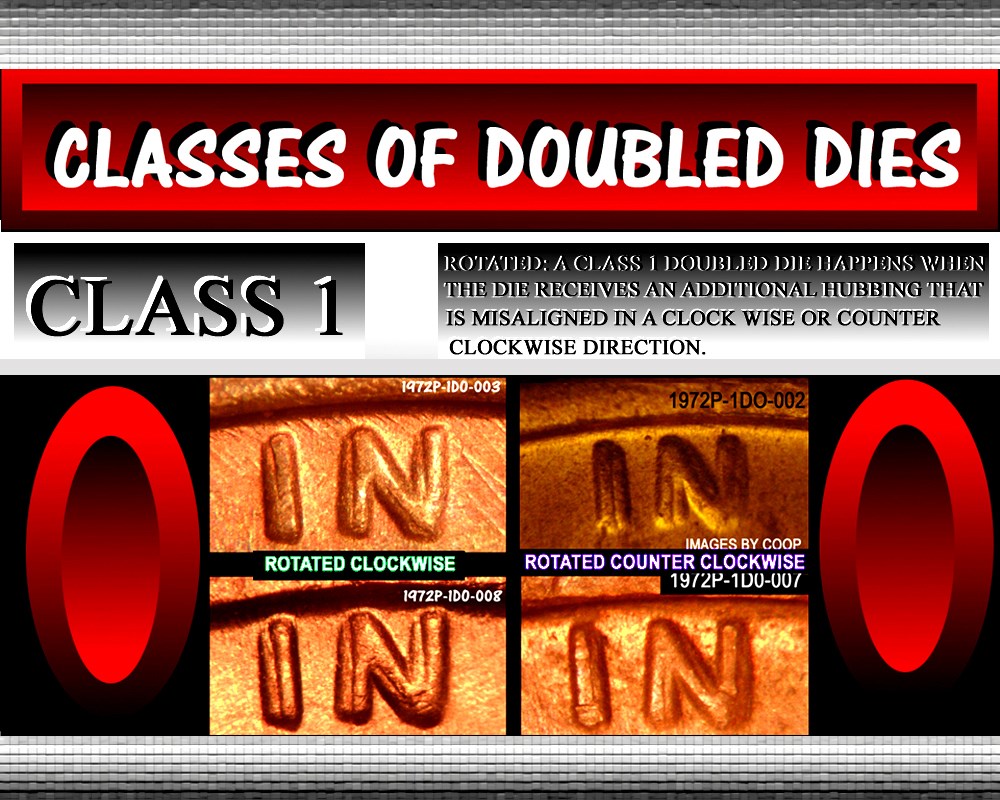
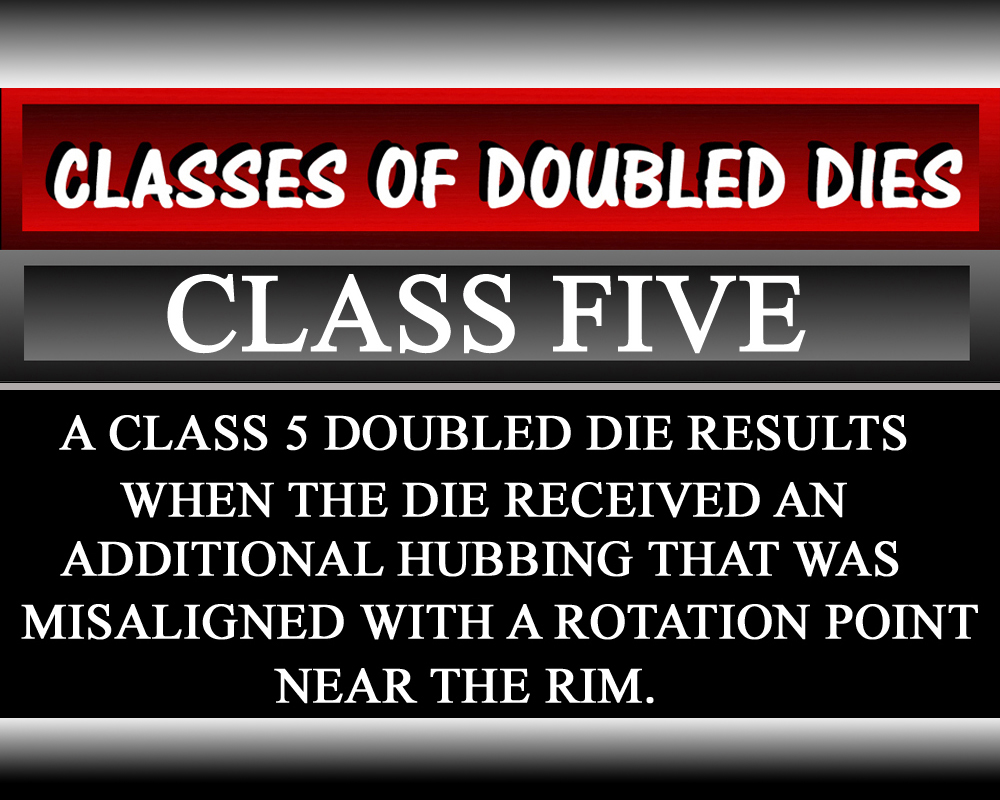
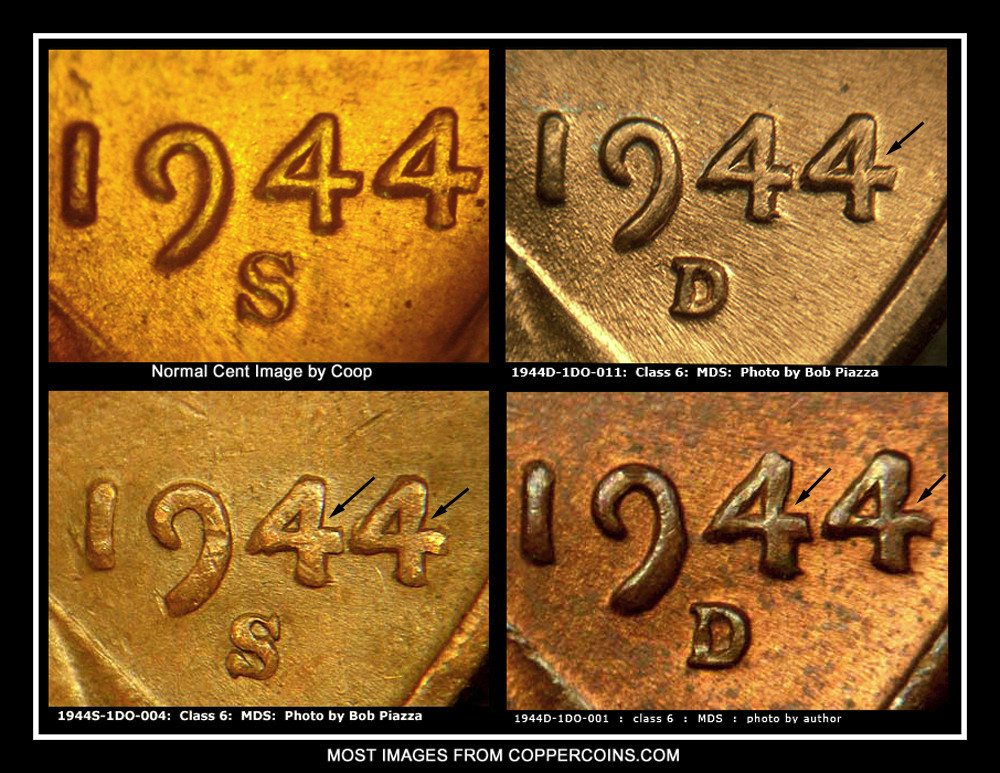
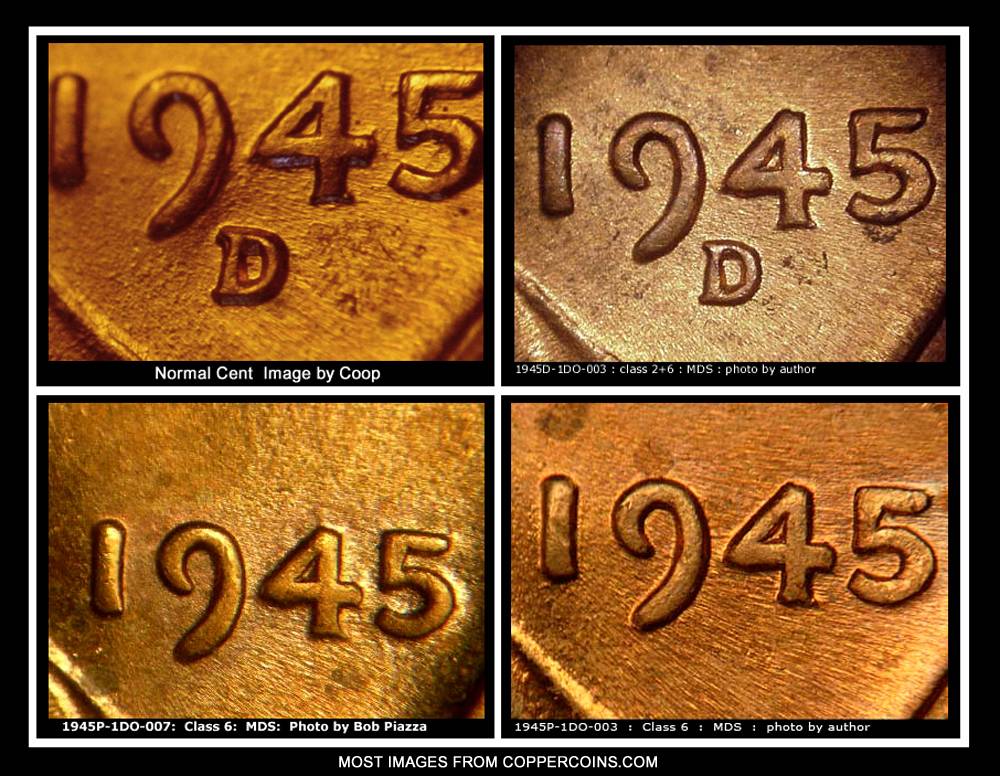
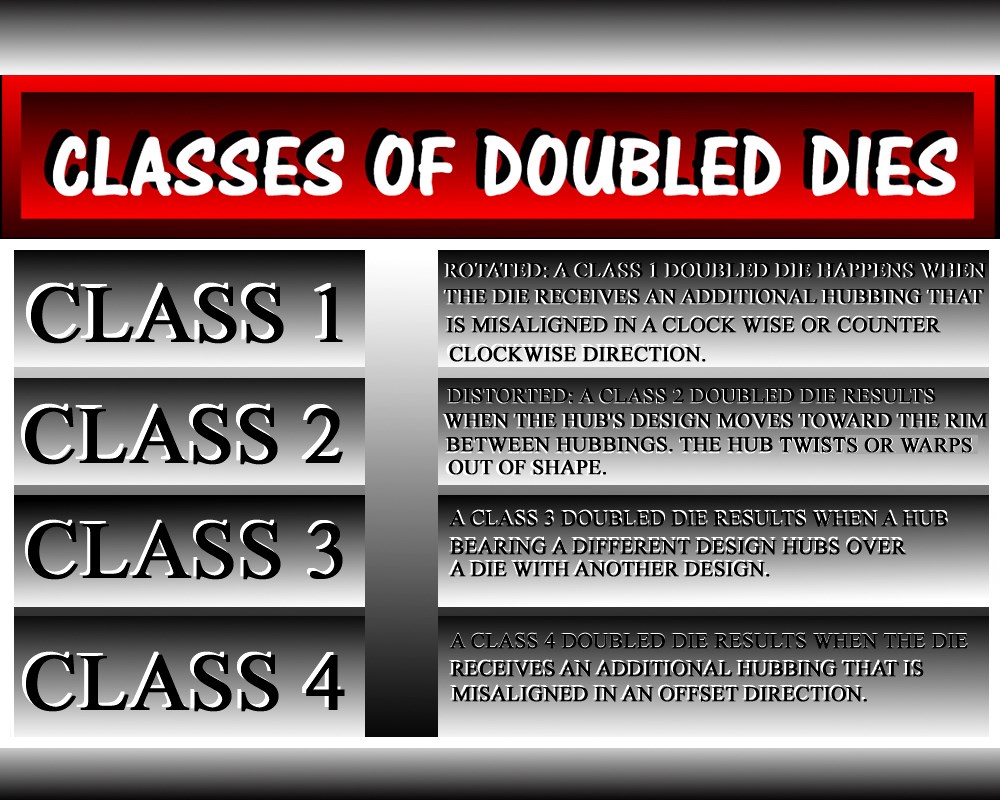
I think the fundamental issue here is that you believe that a doubled die can only occur if a die is hubbed multiple times intentionally (like in the multiple-squeeze era) but there was an unintentional offset, rotation, or annealing issue causing doubling. I believe that multiple hubbings with one of those issues is possible even when multiple hubbings are not intended. If the working hub is tilted while being pressed into a die blank it will snap into place. That movement can cause a partial secondary hubbing. That is the theory every reference I can find has for the creation of this minor doubling. Because it is a secondary hubbing, it is a doubled die!
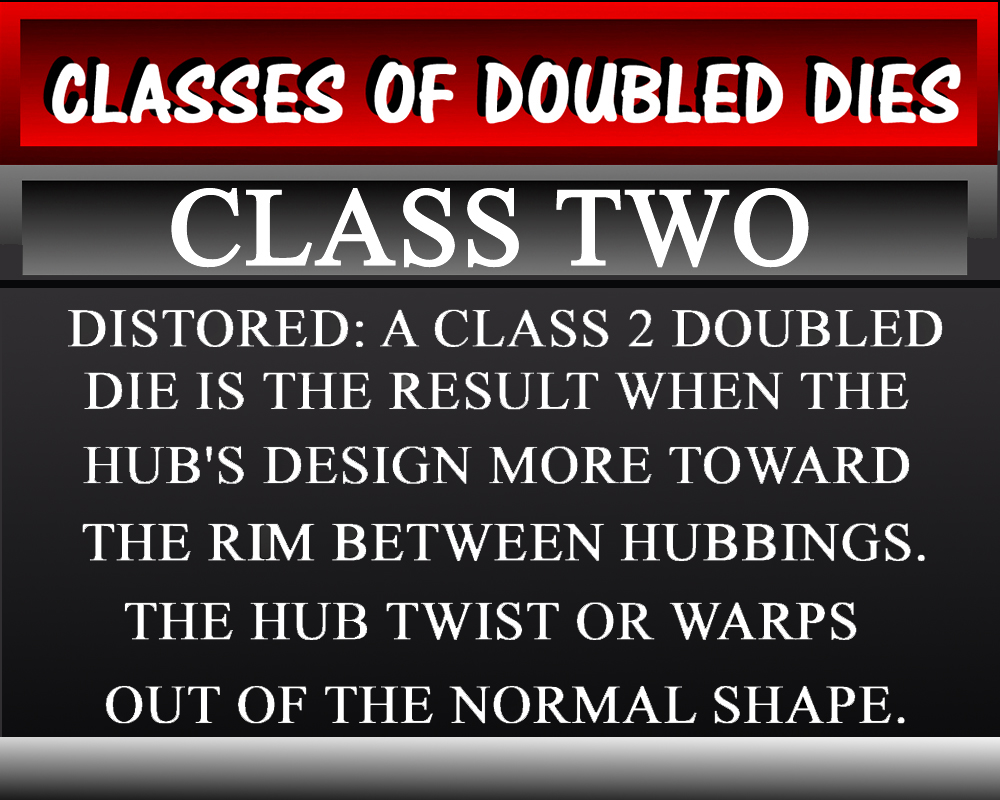
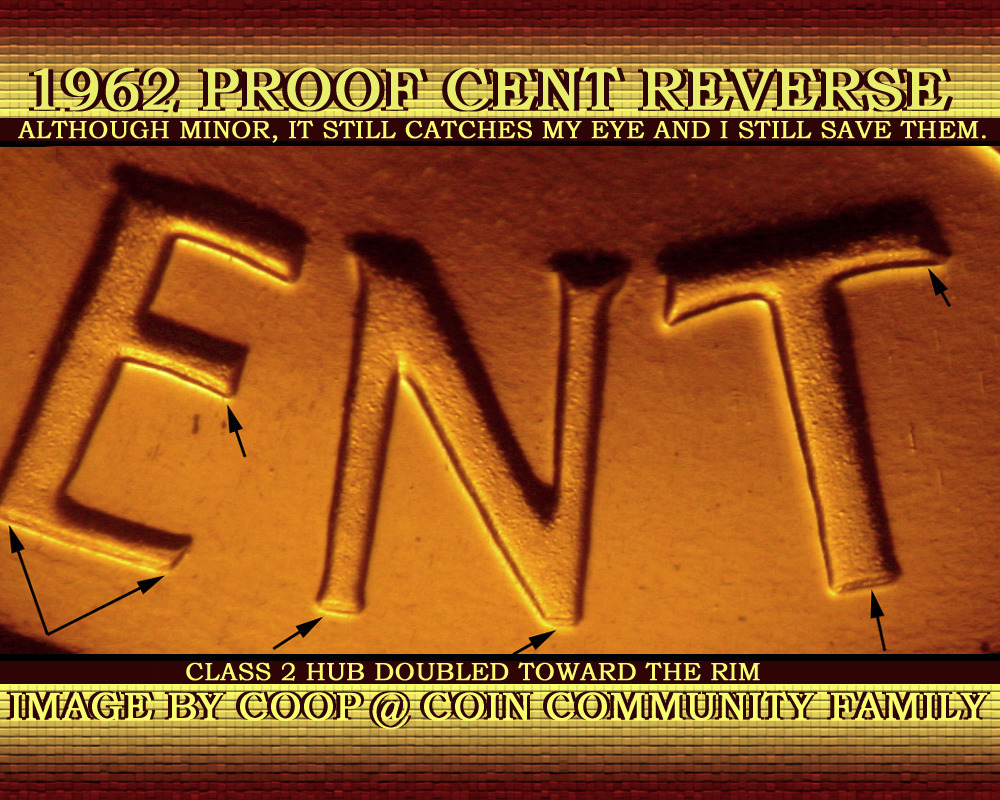
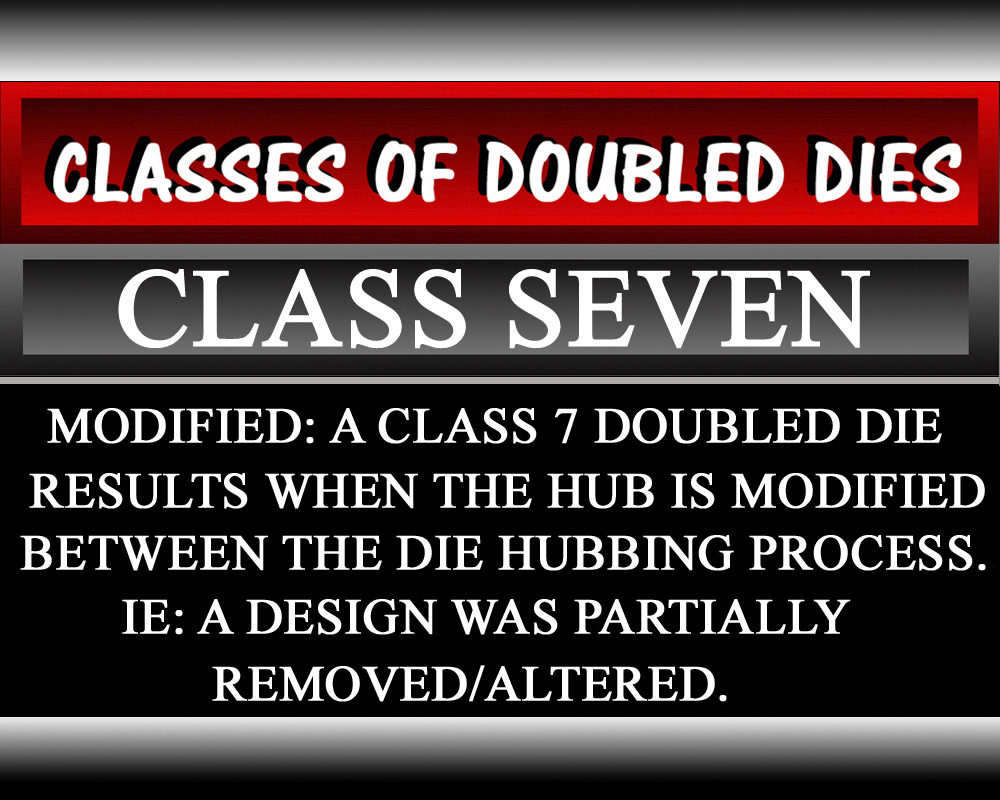
Doubled die is a broad label. They aren't caused by one thing, like my earlier example, Class I and Class VI DDs are caused by something different (rotation and annealing issue) but are both labeled doubled die. What they all have in common is that the doubling is made during the creation of a working die that involved the working hub making two or more impressions onto the die blank. The argument that they aren't caused by the same thing means they're not a doubled die doesn't work that well because of that. You'll have to prove that it's not caused by a secondary hubbing, because that's what a doubled die is.
Edited by Tanman2001
10/23/2019 2:32 pm
|
|
Bedrock of the Community
United States
17884 Posts |
Quote:
Now the dies produced by single-squeeze might have these flaws, replicating them per each strike, that die was NOT a product of multiple hubbings. True it is not the result of multiple hubbings, but the doubled image IS in the die, the die shows doubling, so the coin struck from it can be said to come from a doubled die. |
|
Rest in Peace
United States
18456 Posts |
I agree 100% everything that USSID18 is trying to put across to all CCF members .  |
|
Pillar of the Community
 United States
5029 Posts |
I had visions of another "famous" ranter when I started reading, and that brought a smile to my face  Like it or not your rant is not changing things. Reach out to those that can actually make some change if you are concerned. Have this discussion with them and be open to what they have to say - you may learn something.  OR simply don't worry about it and collect what you consider "true" doubling and let others collect what they want. oriole pretty much summed it up: Quote:
Likes or dislikes are very subjective, like beauty.
All of us are nut cases as far as non-collectors are concerned |
|
Pillar of the Community
United States
1161 Posts |
Edited by CoinTheTerm
10/23/2019 4:26 pm
|
|
Pillar of the Community
United States
5029 Posts |
The ranter I refer to was gone before you started here I believe  However, a good rant tends to put a smile on my face so I will pay more attention for some of yours. |
|
Pillar of the Community
United States
1161 Posts |
Nice lol scorpu I won't let you down Edited by CoinTheTerm
10/23/2019 4:46 pm
|
|
Bedrock of the Community
United States
62064 Posts |
Edited by coop
10/23/2019 6:11 pm
|
|
Pillar of the Community
 5464 Posts |
Tanner got my point, the others have now denigrated into the accusatory mode of me "bashing" the experts.....that was never the intent. The sole purpose is just to point out the facetiousness of a lot of these newer "errors", which really aren't. The 1984 Doubled ear is indeed a hubbing outcome, so no, apples and oranges again. For sake of this discussion lets say 1996 and on is the target dates for what I am referring to. Conder made the point too, it could REMOTELY be considered "hub" doubling as the die "chattered" when it was made, thereby imprinting on the die. That would then effectively replicate coin upon coin so I will give you that one. My point tho is still on the squeeze method, central areas such as "column doublings. There seems no end to all that are "discovered, and far too many variances among these to be multiple dies being affected. When that chatter occurs during use, anything can happen....that is the flaw, not a doubled error. . The "hobby" has fallen into calling common machining flaws as super-dooper errors, and a short trip through ebay land shows just how far it has gone beyond reason. |
|
Bedrock of the Community
United States
62064 Posts |
Edited by coop
10/23/2019 6:22 pm
|
|
Pillar of the Community
United States
4425 Posts |
Quote:
Conder made the point too, it could REMOTELY be considered "hub" doubling as the die "chattered" when it was made, thereby imprinting on the die. That would then effectively replicate coin upon coin so I will give you that one. That's the current explanation for the doubled columns. Quote:
far too many variances among these to be multiple dies being affected. I'm not sure what you mean. Wouldn't there being so many variations mean it is a die-by-die issue rather than a master die/hub or working hub issue? Do you think this is a striking issue? Because that can easily be debunked by finding multiple coins struck with the same die having identical doubling. I'm just not getting what you think the alternative is. If not a doubled die, then what? Machining flaw isn't specific whatsoever, or is that a term that means something specific that I just don't know. |
|
Pillar of the Community
5464 Posts |
Quote:
All of us are nut cases as far as non-collectors are concerned. We are all freakin nuts! Guaranteed if you tell your friends, relatives or casual acquaintances you're a coin collector, 99.5% of them will look at you like you have three stinkin heads. Actually, it's the same way I look at someone who tells me they collector stamps!! LoL!! Hey, the next time you're at a coin show or coin club, take a good look around you at some of those people! That's not me!  |
|
Pillar of the Community
United States
3207 Posts |
I find visible-to-the-eye Machine Doubling a more interesting form of doubling than modern center doubling. Some Machine Doubling can be rather extreme and quite stiking, no pun intended. I assembled a full year set, the business strike years, of machine doubled Kennedy halves. That's the easiest set to complete. The smaller coins are tougher. |
|
Pillar of the Community
United States
768 Posts |
Whew! That was a lot to digest but as a new collector I like the hunt and I like the fact that I can ask for identification of a DDO or DDR here on CCF and be told that ITS NOT A MATCH so I can continue the hunt!! As a retired soldier, married with kids hobbiest who finds relaxation and satisfaction when I DO find a cataloged or indexed DDO or DDR and I really don't care what class it is......I sleep better! I Appreciate the lesson on physics of metal Movement from strike and heat and I agree with those that said; let the guys or gals that love collecting DDO / DDR in every class collect them and you that find it trivial or NOT A REAL DDO / DDR, DON'T collect them! Thanks everyone that has helped me on CCF, you are very appreciated! God bless you All! Sarge |
|
Bedrock of the Community
United States
17884 Posts |
The reason the class 9 doubled dies are typically almost always close to the center of the coin is because the die blank is not flat but rather cone shaped so as the hub is squeezed it first makes contact with the hub and begins forming at the center. this is basically the only time the die blank could shift (Later in the squeeze too much of the die and hub would be locked together for it to shift). So if it shift it will be while the center portions are being formed so that is where the doubling will occur.
|
| |
Replies: 45 / Views: 4,609 |








 First Page


 Posted 10/23/2019 3:14 pm