This one is a YUGE Pass....
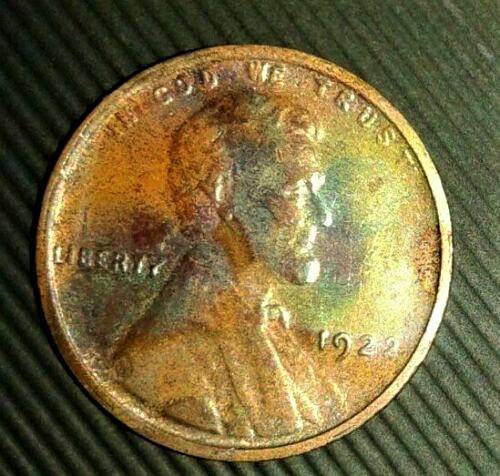
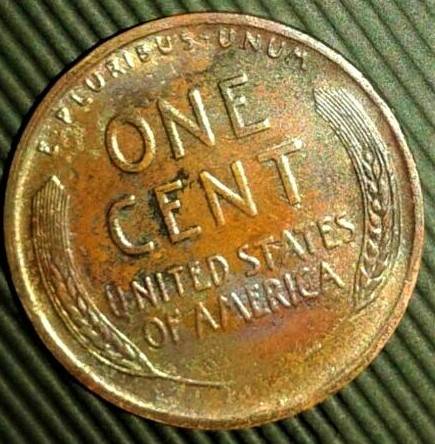
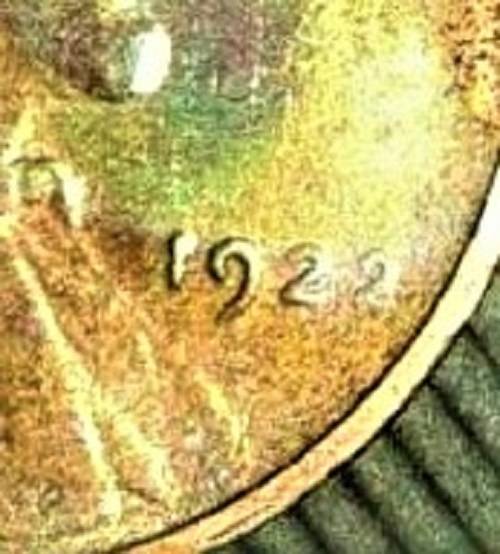
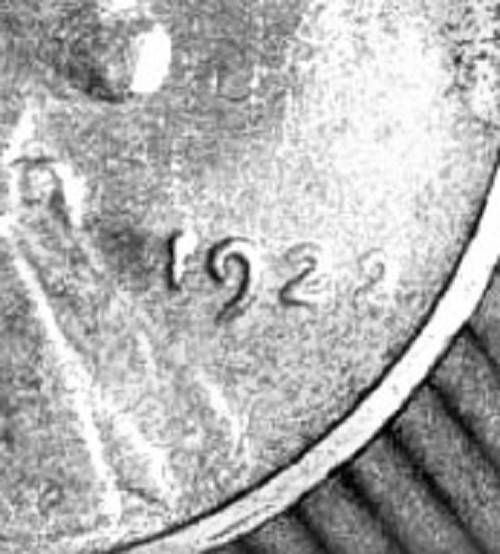
Yes All...last night I looked at a lot of comparisons. I concur with all of you the '2' was not even close. The 'L' was also suspect as noted by Zurie/westernsky. But again, you were all 100% correct. You guys saved me serious coin on this one, had I bidded it up. Plus I got to see what these four sets of Dies that were used should show on the various 1922 series. Very interesting. Much appreciated.
edweather....I already posted the other not so stellar 1922 potential 'No D' Lincoln under the modern coins and errors section. That one is not gradable IMO, and more a project to 'maybe' clean up to at least have a 1922 No D (if it is a No 'D'...and I have never cleaned a coin by the way), but got that one for pocket change. It does look authentic though on Obverse, but weak Reverse, so? Stained to. So you can see it if you like.
Though being a tattle-tale is abhorrent to me, in this case I make an exception. I am reporting it as a fake because no one should get caught unaware and waste their hard earned money on this coin. It is anathema. Even if seller is oblivious to this fact.
AND...I had NGC look at the toned 1922 in this thread for authenticity via their on-line service. An excellent service for these kinds of questions, not having to commit to a purchase before a Pro review. I knew you guys were right by the way, but I was curious what they would say. This was their unsurprising reply:
--------------------------------------------------------
An NGC expert has reviewed your request for this listing:
1922
Lincoln Wheat cent Key Date Tone Die#2
no mint mark RESULTS:
Authenticity Opinion: Likely Not Genuine
Grade Opinion: N/A
ORDER DETAILS:
Order Number: ER2148993
Order Date (EST): 12/9/2019
Purchase Price: $5
Thank you,
NGC
----------------------------------------------------------
And just an FYI for other comers, or members like me, 'Pebble of the Community'....this is from "The
Lincoln Cent Resource":
All 1922 weak D or No D coins fall into one of 7 categories:
1. Die Pair #1 Weak D (Weak Reverse)
2. Die Pair #1 No D (Weak Reverse)
3. Die Pair #2 No D (Strong Reverse) also called 1922 Plain
4. Die Pair #3 Weak D (Weak Reverse)
5. Die Pair #3 No D (Weak Reverse)
6. Die Pair #4 Weak D (Weak Reverse)
7. Die Pair #4 No D (Weak Reverse)
Below is an explanation of how to classify the four Die Pairs:
Die Pair #1:

The easiest way to classify Die Pair #1 is the Jogging Die
Crack running from L in Pluribus through O in One.
However, this die crack is not always present. Also, be
aware that there exists a 1922 D variety with a straight die
crack in the same location.
The second 2 in date is weaker than the first 2.
The first T in Trust is more distinct than the other letters.
Furthermore, the T, U, and T in TRUST are stronger than
the R and S.
WE is very mushy.
Reverse is very weak, usually with no lines in the wheat ears.
Mintmark ranges from Weak to No D.
Die Pair #2:
Absolutely no trace of a D
Second 2 in date is sharper than the first 2.
All letters in TRUST are sharp.
WE is only slightly mushy.
L in LIBERTY butts up against the rim.
Reverse is sharp with nice wheat lines.
Die pair #3:
Second 2 in date is weaker than first 2.
TRUST is weak but sharper than IN GOD WE.
L in LIBERTY butts up against the rim.
The reverse is slightly rotated counterclockwise
Reverse is weak -- lower left part of O in ONE begins to
spread into the field as the die deteriorates. Reverse looks "wavy"
Mintmark ranges from Weak to No D.
Die Pair #4
"The front of Lincoln's coat from about 4 o'clock to 5 o'clock
appears to merge into the rim whereas Dies 1-3 all have a
regular pronounced gap between the coat
and rim. This merging is responsible for Die 4's nickname,
"coattails." The reverse is noted for its weak high point detail,
similar to Die 1 and Die 3."











 Posted 12/09/2019 12:19 am


