| Author |
 Replies: 7,432 / Views: 408,845 Replies: 7,432 / Views: 408,845 |
|
|
|
Pillar of the Community
United States
9395 Posts |
1691 -- Archbishopric of Salzburg, 3 kreuzer:   |
|
Pillar of the Community
4628 Posts |
That is ebautiful, very realistic portrait of the priest. Some fine coins in this era.
|
|
Pillar of the Community
 Sweden
2124 Posts |
France 1691, ecu, Louis XIV, Rennes (9). 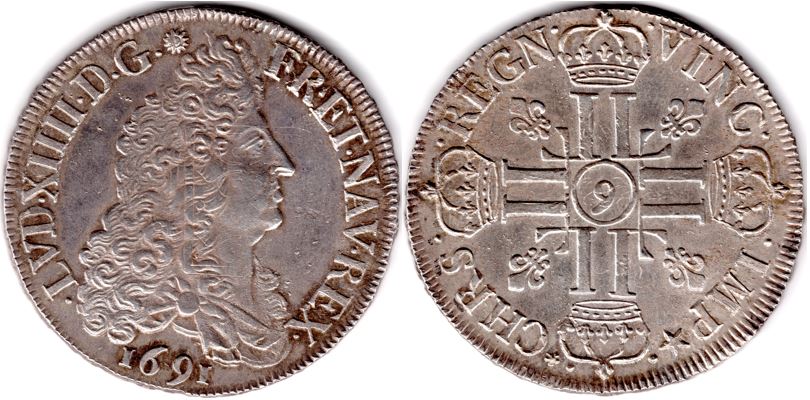 A coin from the 1st restrike, performed 1690-93. Traces of the host coin are visible: The French royal coat of arms with fleur-de-lis right across the king's face. Old ecus were paid 3 livres 2 sols; the new ecus were valued at 3 livres 6 sols. The difference of 4 sols went to the Treasury, as a way to improve the strained state finances. A couple of years later, the operation was repeated and these coins were overstruck once more, with a new design (see my 1693 post). And some years later, again ... and again ... each time shaving off a few sols to the Treasury for the trouble. |
|
Pillar of the Community
United States
8061 Posts |
Quote:
That is a bautiful, very realistic portrait of the priest. Saint Rupert, the first bishop of Salzburg in the late 8th century. He is pictured holding a salt cellar (along with a bishop's crozier) because, according to legend, he also revived the moribund salt industry there, which helped propel the city to prominence in medieval times. It's hard to think of a place (outside of Rome) that used their patron saint's image for so long, and so consistently as Salzburg. 1691 Duchy of Brabant 1 Liard (hardly as pretty as that Salzburg coin) 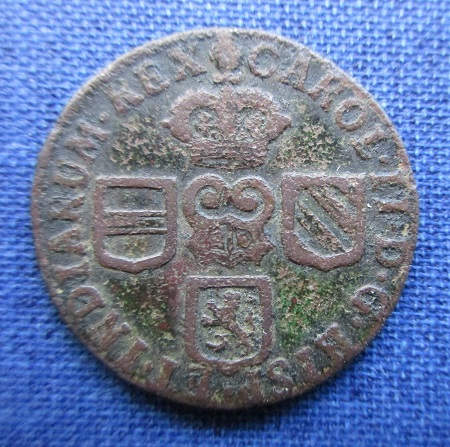 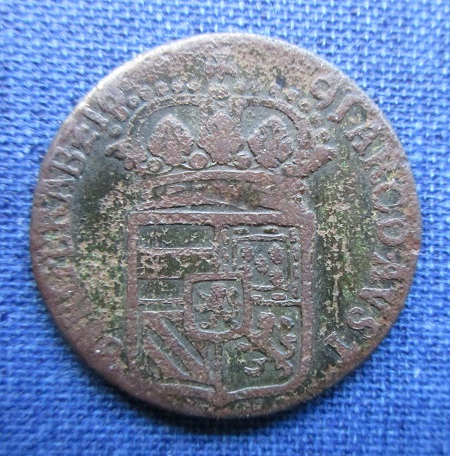 Edited by tdziemia
12/15/2020 07:44 am
|
|
Moderator
 United States
34563 Posts |
Here is a 6 Stuiver from the Netherlands Province of Groningen dated 1691 AD: 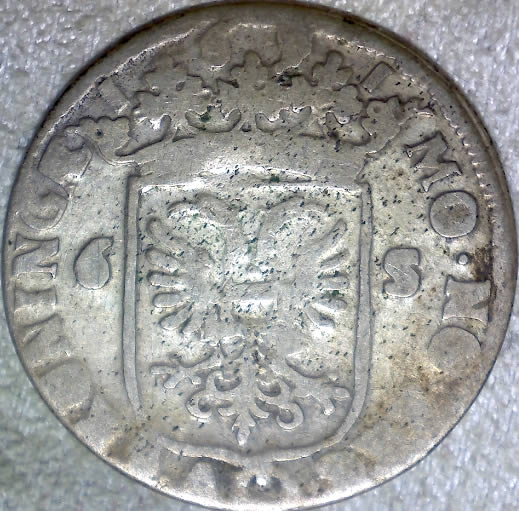 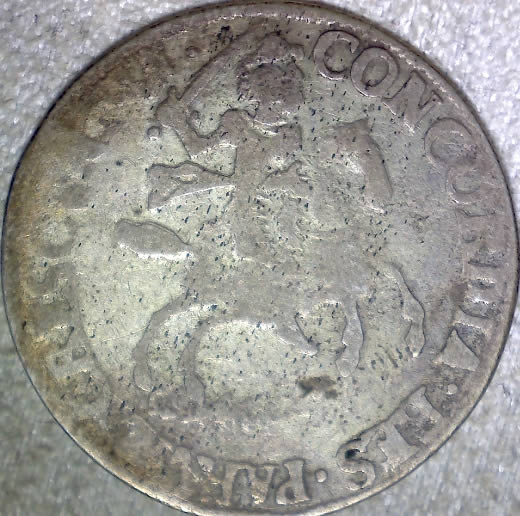 "If you climb a good tree, you get a push."
-----Ghanaian proverb
"The danger we all now face is distinguishing between what is authentic and what is performed."
-----King Adz
|
|
Bedrock of the Community
United States
12057 Posts |
For 1690, here is an interesting historical and (in)famous Half Crown of James II/VII, of the type commonly known as 'Gun Money.' The premise was that when the would-be King James was made King of Ireland after winning the War of the Two Kings, his issues would be redeemable for their equivalent value in silver and gold coinage. Unfortunately for James, William III's victories at Derry, the Boyne, and ultimately Aughrim put a stop to all that nonsense, and those troops and citizens loyal to James were left holding the bag, so to speak, with a bunch of irredeemable brass tokens worth nowhere near their face value in terms of metal content. To be fair, James did successfully besiege Limerick, but had to surrender it again a year later via treaty. The harsh and often repressive Protestant government and Church leadership in Ireland soon enacted the notorious Penal Laws and refused to legitimize or recognize the treaty negotiated at Limerick. The many and varied hardships endured by the Irish Catholics over the next hundred years, before the Laws were mostly annulled, can be seen -- as with the First Nine Years' War one hundred years prior -- as one of the origins of the Troubles which would plague Ireland for the next two centuries thereafter... The denomination is listed on the reverse as XXX, i.e. 30 pence (= 2/6 or a Half Crown.) 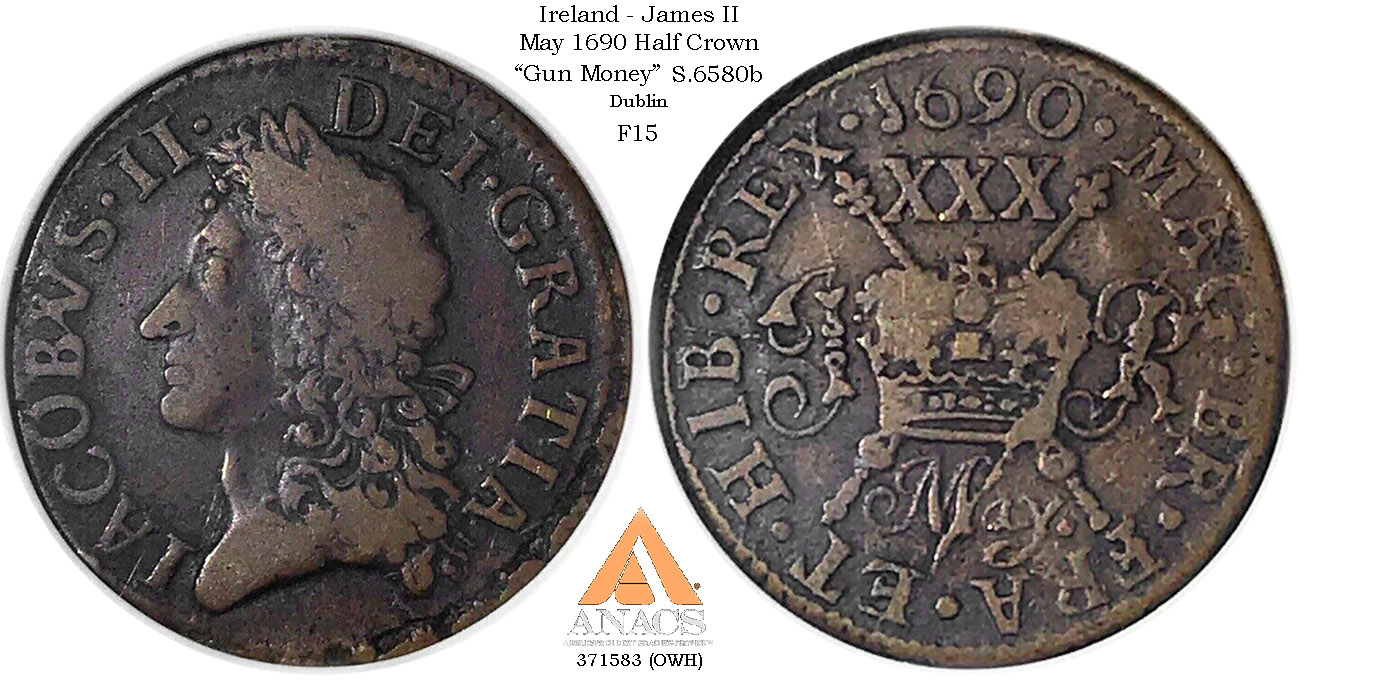 Member ANA - EAC - TNA - SSDC - CCT #890 "Most of the things worth doing in the world had been declared impossible before they were done." -- Louis D. Brandeis Edited by paralyse
12/16/2020 03:04 am
|
|
Pillar of the Community
United States
2643 Posts |
Here is my badly worn version, which I pulled out of a junk box. A favorite find. Which raises a question, did they circulate in trade--in certain circles--well after the failure of James' invasion?   |
|
Pillar of the Community
United States
9395 Posts |
1690 -- Kingdom of Hungary, 15 krajczar: 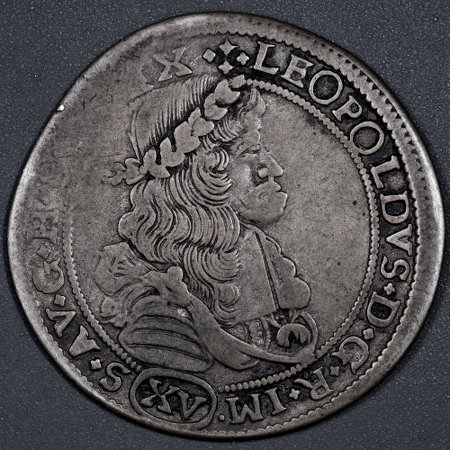 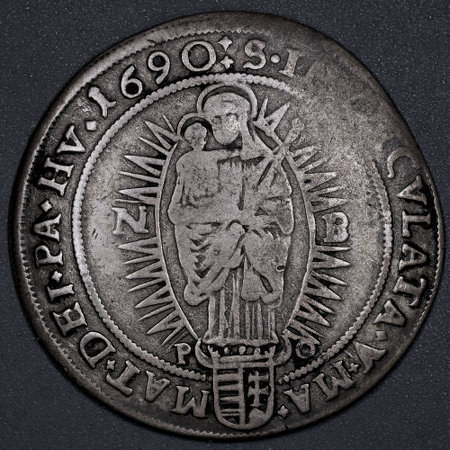 |
|
Pillar of the Community
Sweden
2124 Posts |
France 1690, louis d'or, Louis XIV, Paris (A). 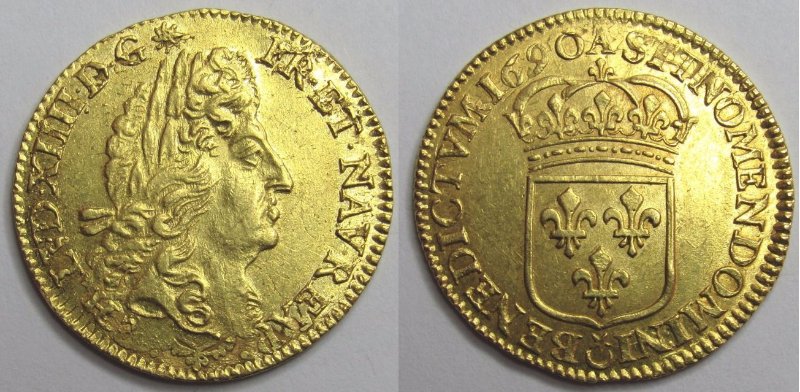 From the 1st restrike, performed 1690-93, with traces of the host coin visible, in particular under the king's bust. In 1689, France was in dire need of more money to finance the costly military adventures. The Nine Years' War began in 1688, following on nearly a decade of mismanaged French finances that had left the Treasury almost empty. To fill it up, the public would have to contribute, and restriking of coins (called reformation in French) was one way. It was implemented in 1690, when it became mandatory to bring old coins to the mint and have them overstruck with a new design. Old louis d'ors were paid 11 livres 12 sols; the new ones were valued at 12 livres 10 sols. The difference of 18 sols went to the Treasury. Reformations of gold and silver coins was just one way to improve finances. Another measure was to force the public to bring all objects of gold and silver above a certain weight to the mints for minting into coins (at a cost, that went to the Treasury). Failure to do so was punished severely. The king himself got rid of furniture, candelabra and other silver objects to a value of 2.5 million livres. Still, this was not enough and chaotic times were to follow the coming decades. Another five restrikes would be made until 1723. |
|
Pillar of the Community
United States
8061 Posts |
I don't think I've seen a reforme gold coin before. Wonderful!, with the "evidence" in a place that doesn;t detract from the beauty of the coin. 1690 Brunswick-Luneburg-Calenberg 1/3 Thaler 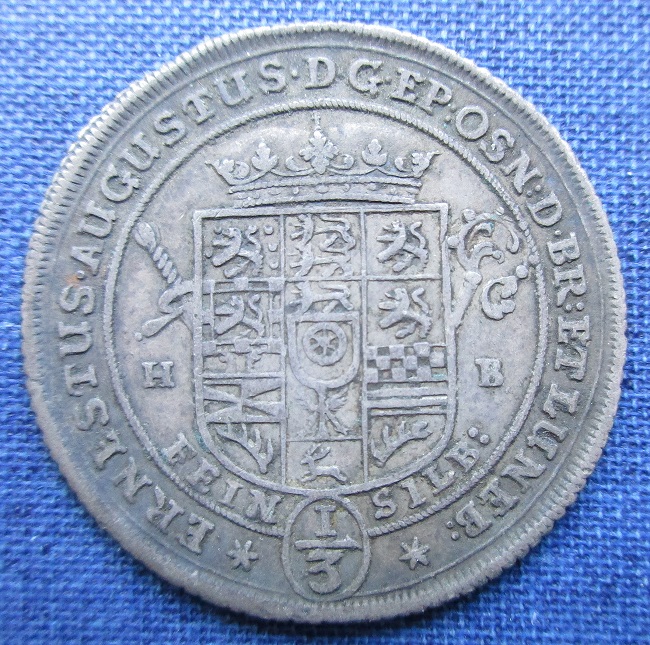 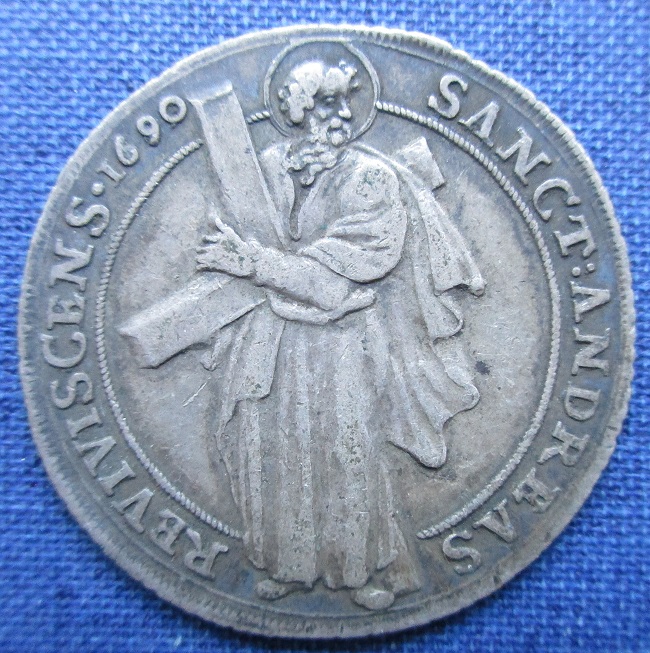 |
|
Moderator
United States
34563 Posts |
Some great coins posted today! Here is a 1/12 Thaler from the German State of Brandenburg-Prussia dated 1690 AD. 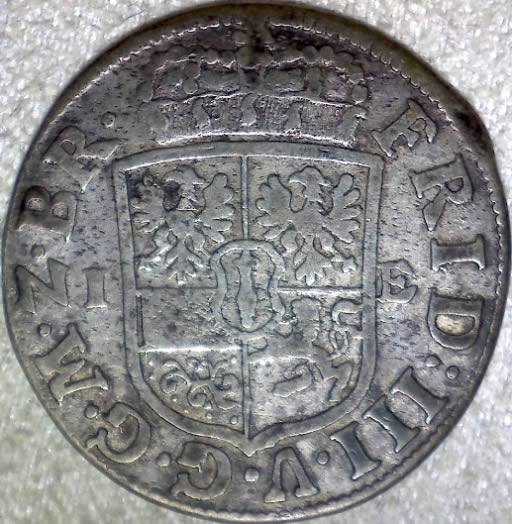 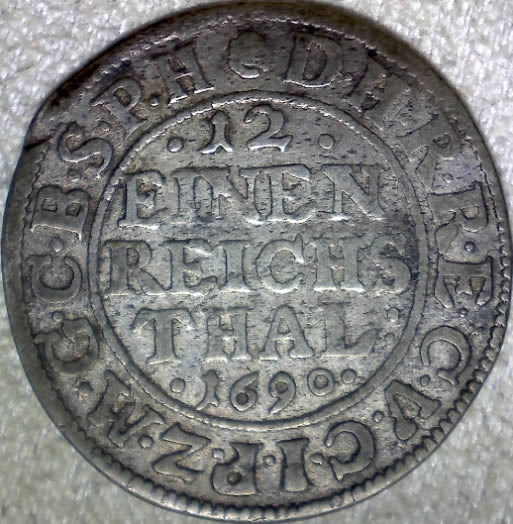 "If you climb a good tree, you get a push."
-----Ghanaian proverb
"The danger we all now face is distinguishing between what is authentic and what is performed."
-----King Adz
|
|
Pillar of the Community
United States
2244 Posts |
A neat tidbit about Gun Money - it actually has the month of issue as well as the year. For instance, paralyse's half crown was minted in May 1690. There were also sixpence and shillings issued in the series.
|
|
Bedrock of the Community
United States
12057 Posts |
Indeed, and as the war went on, the quality of both the metal (cannons, church bells, statues, fittings, and anything else brass or bronze) and of the struck coins declined noticeably. Generally speaking (but not always) the earlier coins are worth less than the later ones, e.g. May vs. Oct(obe)r For 1689 here is a "Wildman" 6 Mariengroschen from Brunswick-Wolfenbüttel. At that time, 6 Mg = 1/6 Thaler. Rudolf August and Anton Ulrich were, respectively, the Dukes of Brunswick and Lüneburg. Despite this issue being struck for 14 years, it is a somewhat scarce type. 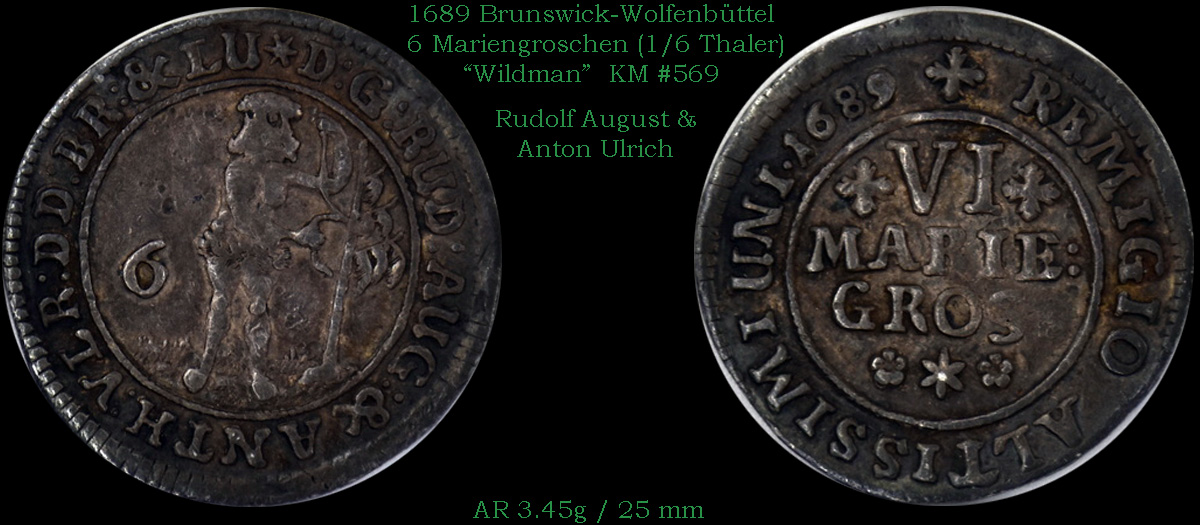 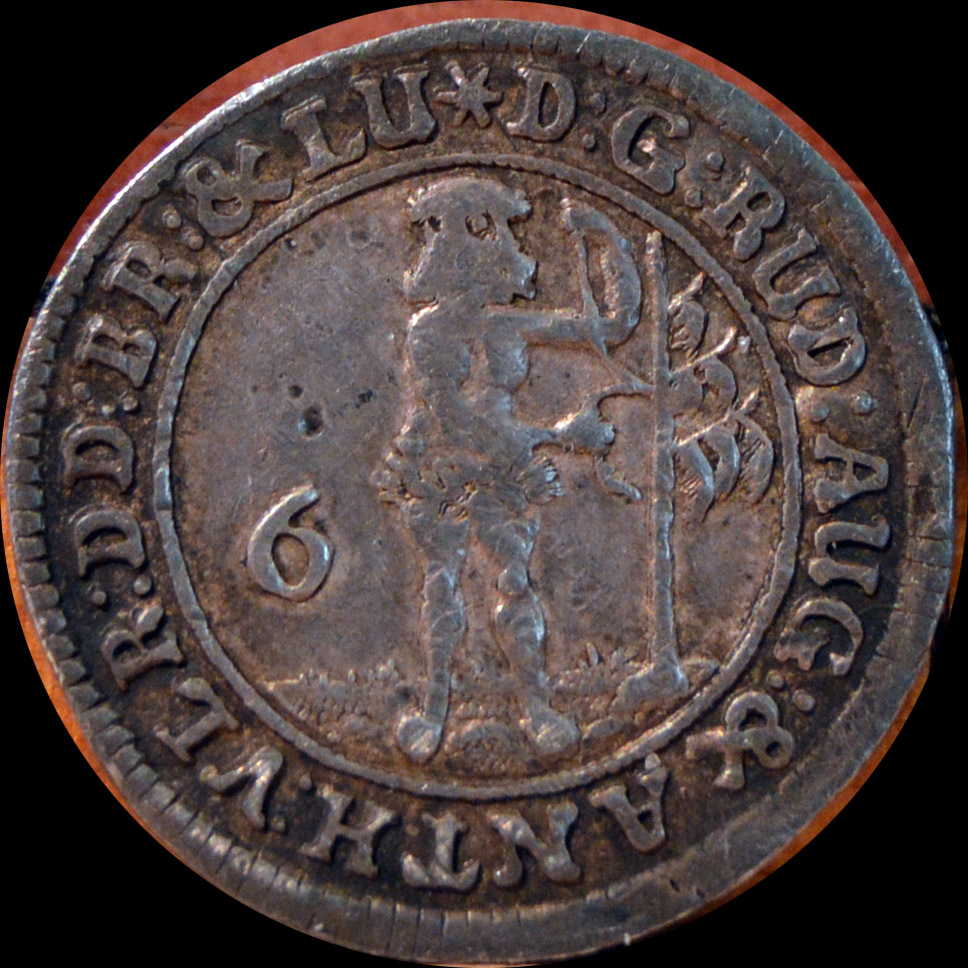 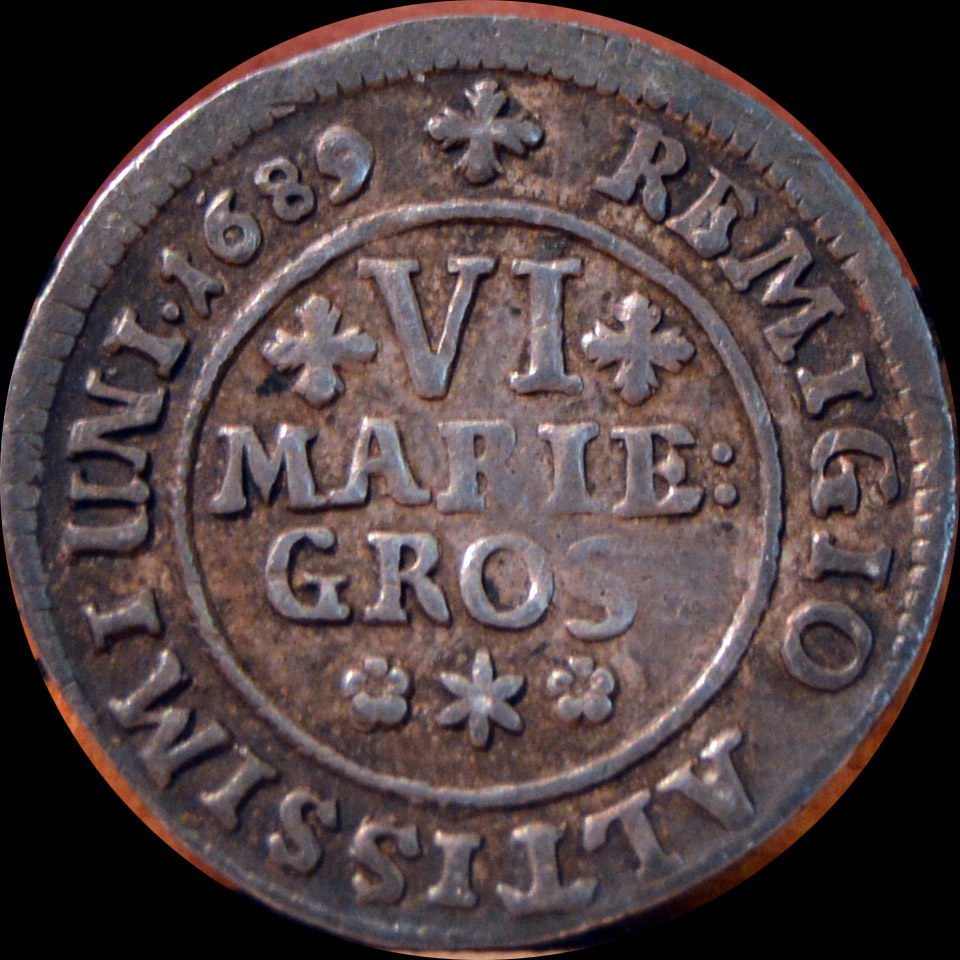 Member ANA - EAC - TNA - SSDC - CCT #890 "Most of the things worth doing in the world had been declared impossible before they were done." -- Louis D. Brandeis |
|
Pillar of the Community
United States
9395 Posts |
1689 -- Duchy of Brunswick-Luneburg-Calenberg, 2 mariengroschen:   |
|
Pillar of the Community
United States
8061 Posts |
Not sure if this qualifies or not under the rules, as it is a coin in my wife's tiny Tudor-Stuart collection, but which I purchased for her.  I'm going with YES  1689 England, Half Crown 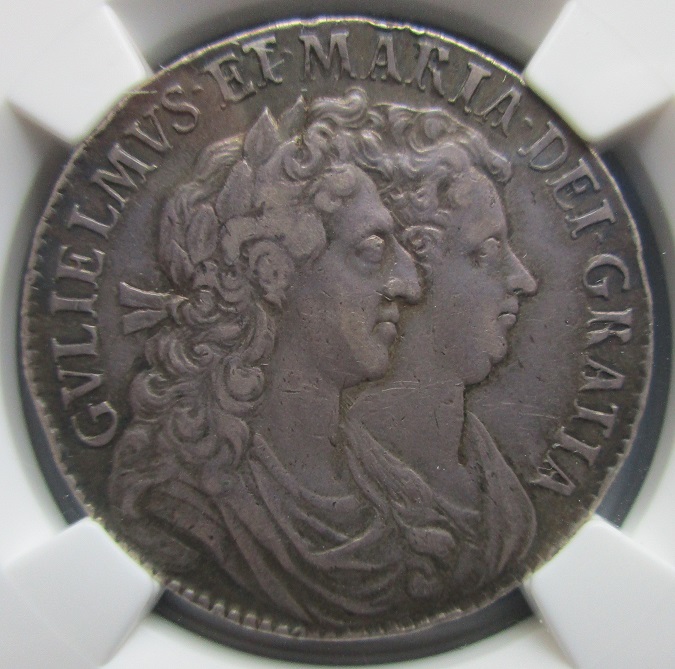 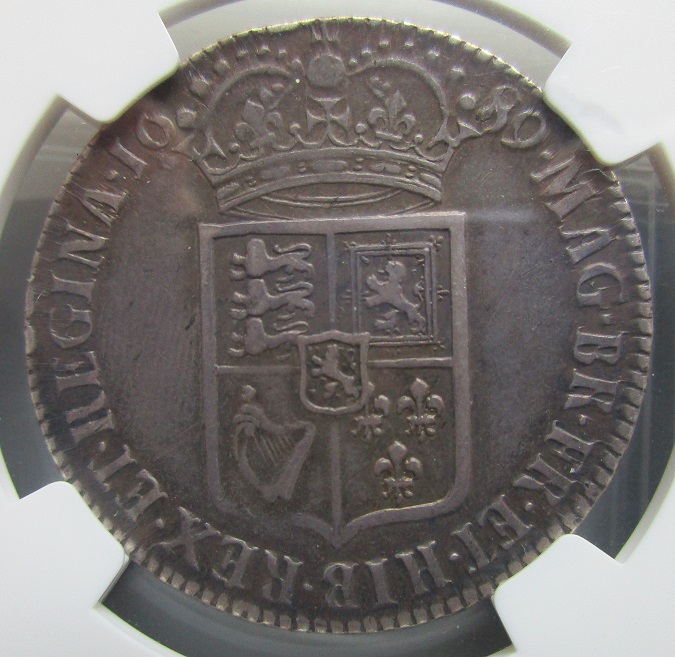 |
| |
Replies: 7,432 / Views: 408,845 |





 First Page
 Previous Page


 Posted 12/15/2020 03:45 am





