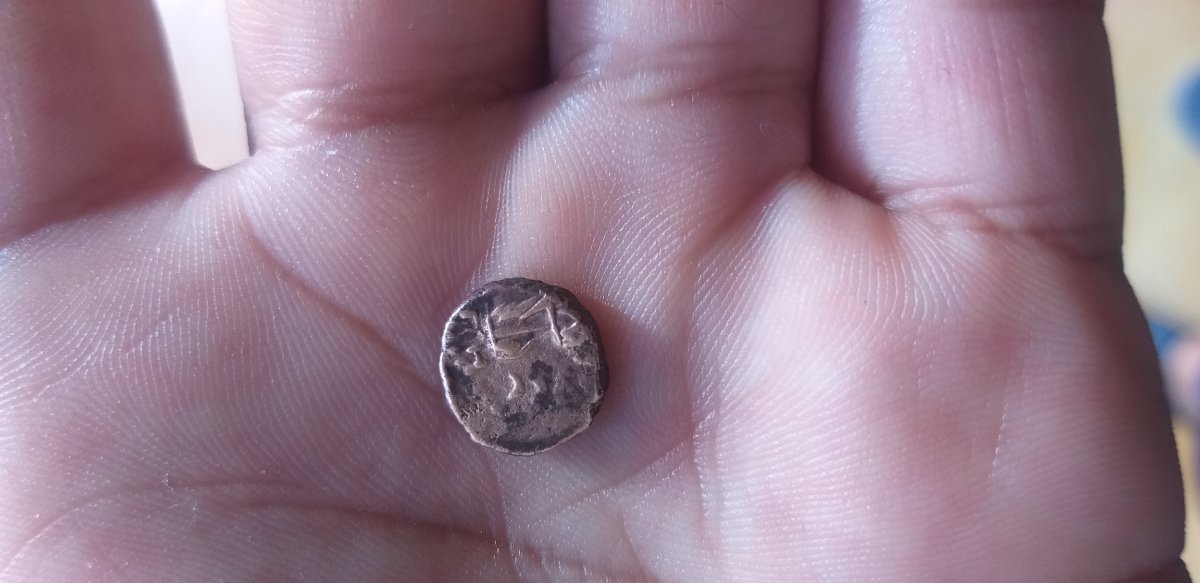
Quote:
Please supply better quality photos that are in focus, cropped properly (one side of a coin at a time)
Those photos... don't appear to have been cropped
at all.
...That said, I think I can work with this.
The obverse legend ends VS PF A[VG], with the VS being just after a break; this immediately excludes Johannes (wrong ending) and Valentinian III (too long), and probably also Theodosius II (again, slightly too long).
The reverse legend ends AVGG, which limits us to relatively few types (AVG and/or AVGGG is much more common).
Let's count them off:
Esty 27, 32, 44, 47, 55, 69, 70, 73.
47 is excluded because it has a facing bust. 69, 70, and 73 are Valentinian III (too long). 27 and 32 are Magnus Maximus (too long).
This leaves Esty
44 (rare) and
55, of Arcadius (only 44) or Honorius; both are
Tesorillo 99 (the Tesorillo page conflates a bunch of similar but probably unrelated types).
As far as I can tell, the mintmark is RM for Rome, which is consistent with type 55 but not 44; so I'm fairly sure that this is probably an example of Tesorillo 99/Esty 55 for Honorius, ca. 410-423 AD. Neat coin!
As a side note, this type (as Tesorillo mentions) had been reported for Avitus; modern research suggests that the reported "Avitus" AE coins are a mix of deliberate counterfeits, misattributed Honorius coins, and
really badly spelled Valentinian III coins, and that Avitus probably never issued any copper.
If you were wondering how did anyone mistake a Honorius coin for Avitus... it's coins like your example.
With a little wishful thinking it's perfectly possible to imagine it reading [AVIT]VS; apparently some common catalogues missed the Honorius option, so people considered "Avitus" to be the only possible reading of the legend (since it's obviously not Johannes or Valentinian III).








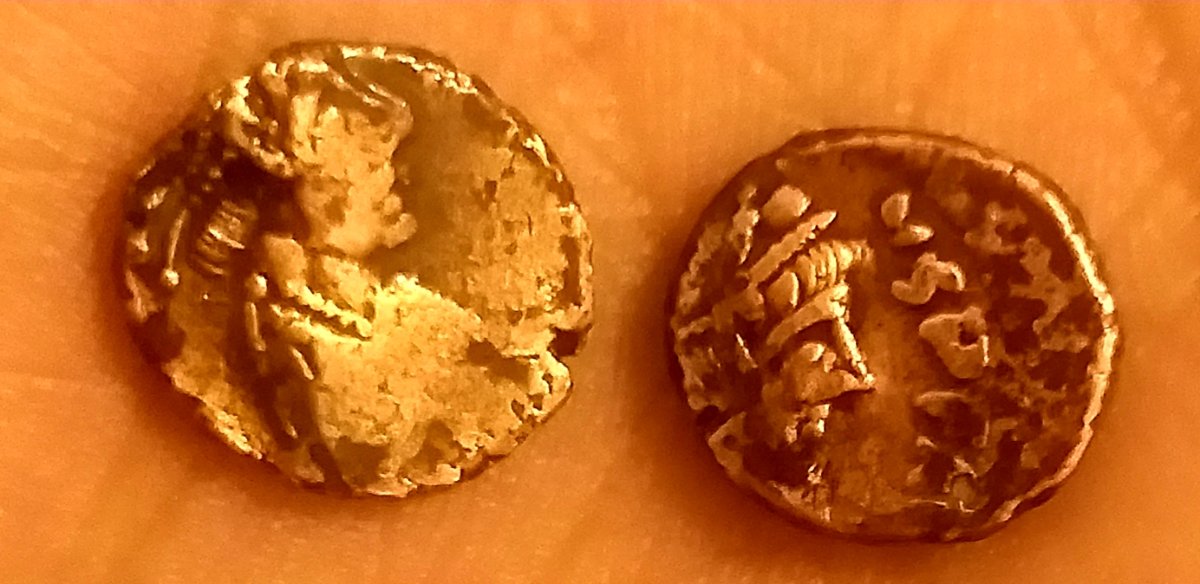
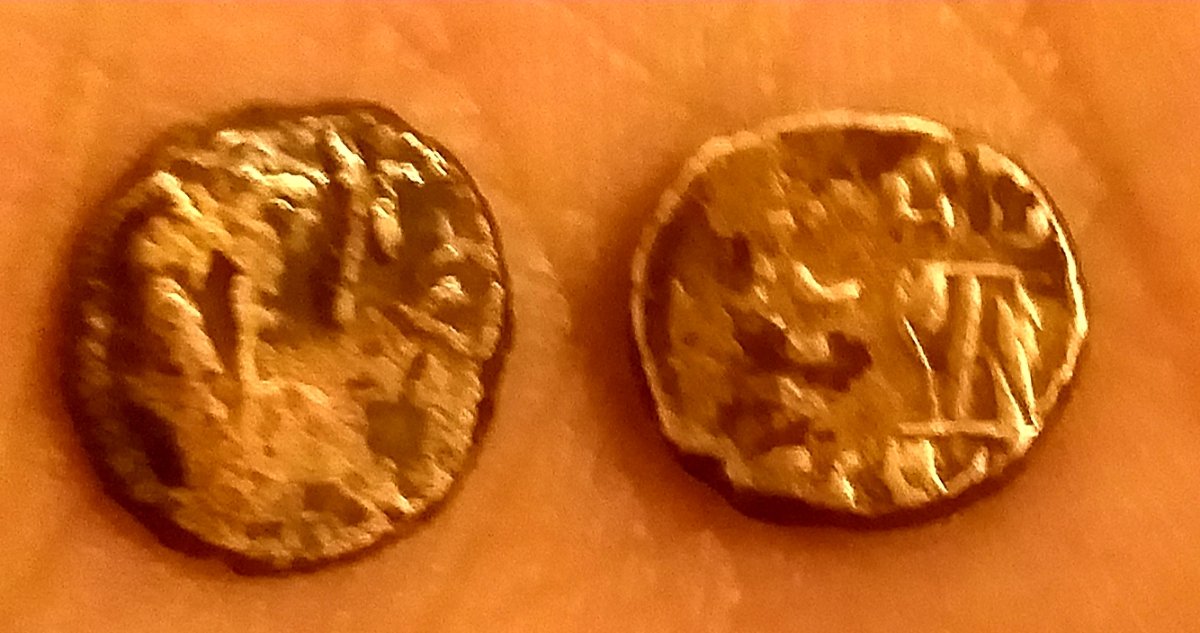


 Posted 01/10/2020 7:10 pm