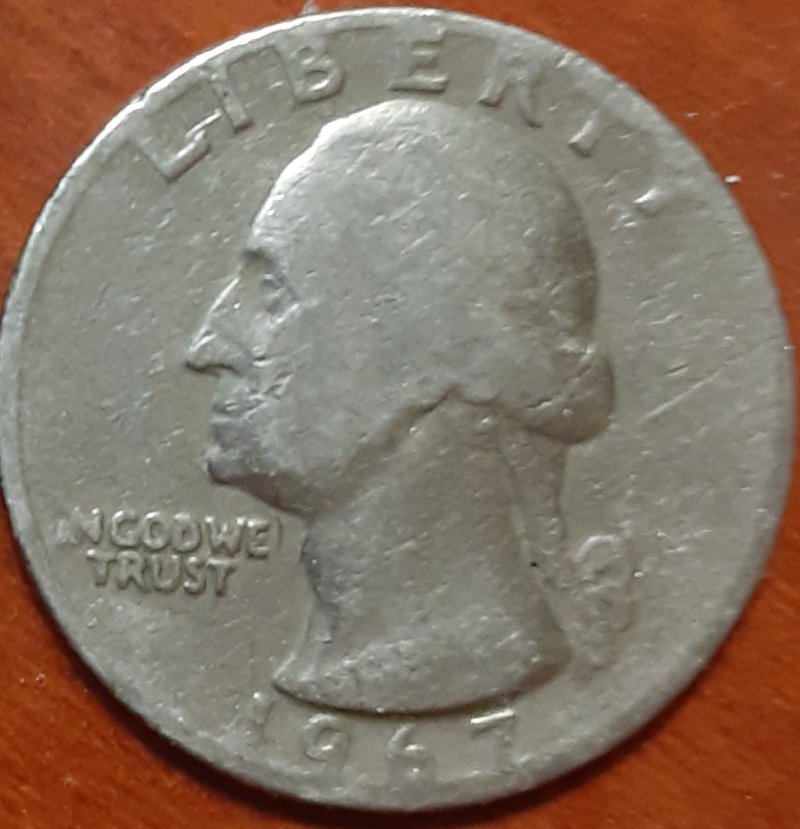
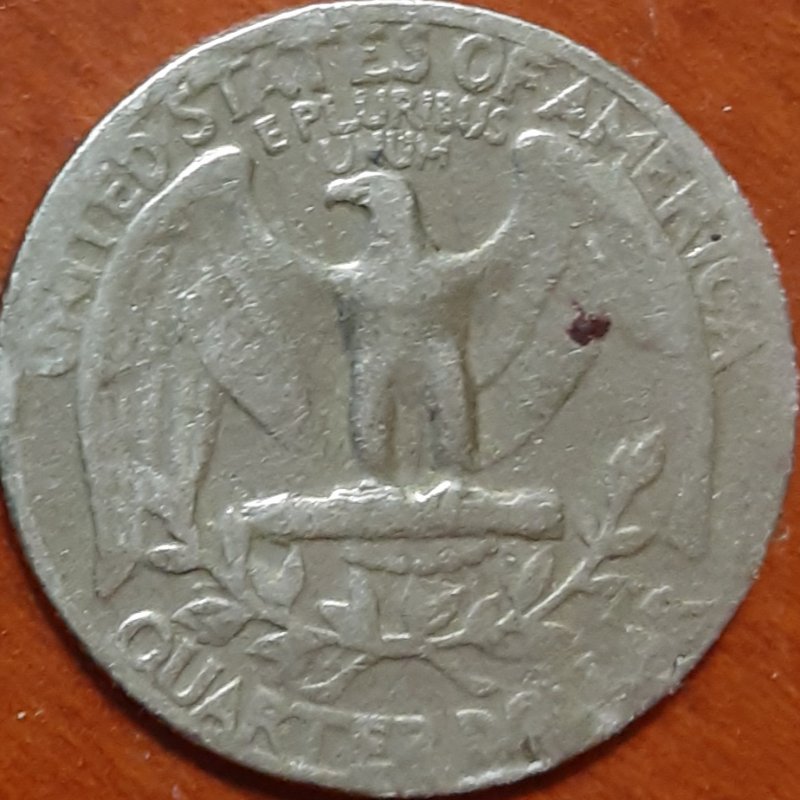
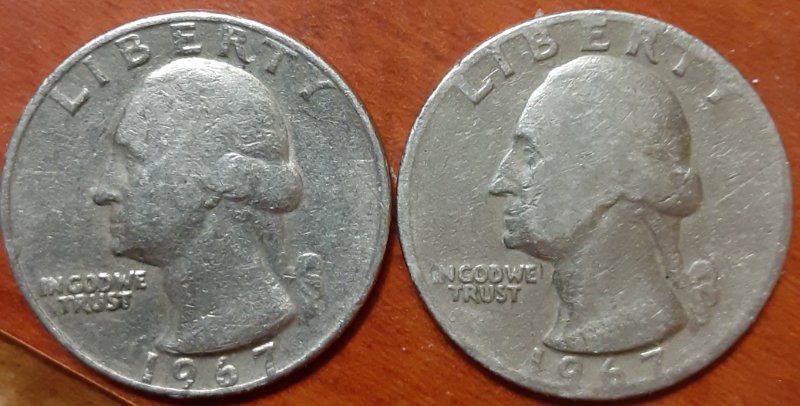
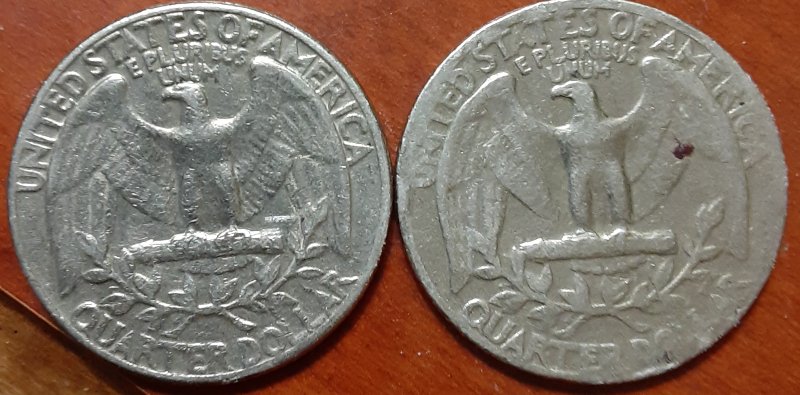
I have no clue what this quarter is made of but comparing it to other quarters, and a '67 in a side by side, it appears to be silver and in a drop test it it definitely has a distinctive high pitch ring to it. It only weighs 5.43 grams....
Spence, yes sir I did check the edge and true to form it is a sandwiched clad quarter. I wish I could get the sound and the actual color in my images but that's the best I could do. I know it doesn't, and probably isn't possible to be a different metal, but this coin defies the obvious I guess. Is it possible in any to be a different metal (metals)? It's definitely odd....
Ok yes remember that the color of clad coins can change with environmental exposure. We regularly see different colored coins that have been buried in acidic soil or hung out in a fountain. Now that we know it is clad, I don't see how it could be anything other than this--I'm not aware of a clad coin being made from a copper core plus one or two layers of silver. But as you say it is kinda cool, so it is easy to continue saving it since the cost of ownership is so low.
"If you climb a good tree, you get a push." -----Ghanaian proverb
"The danger we all now face is distinguishing between what is authentic and what is performed." -----King Adz
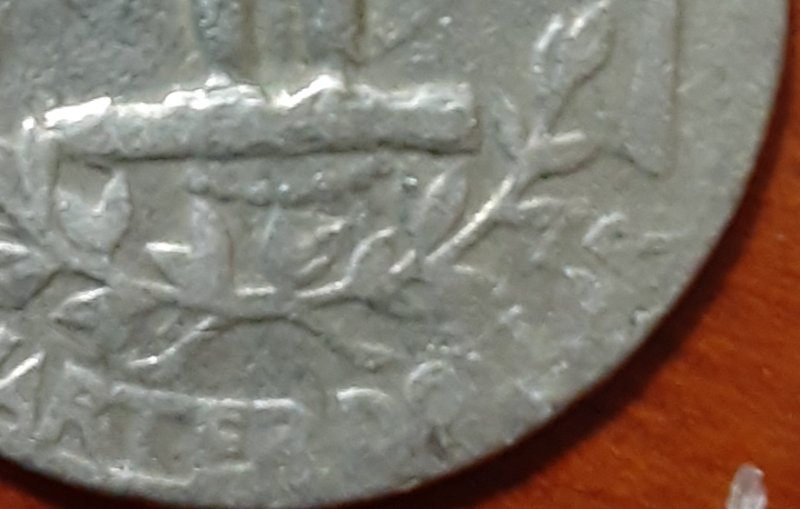
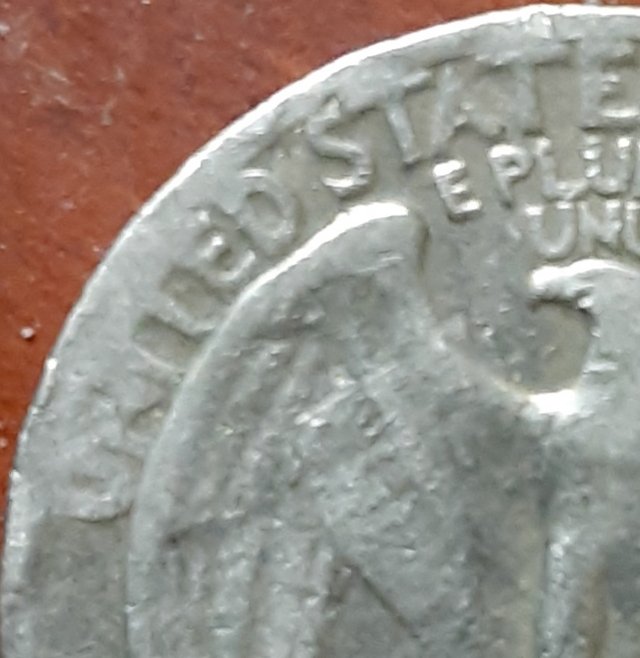
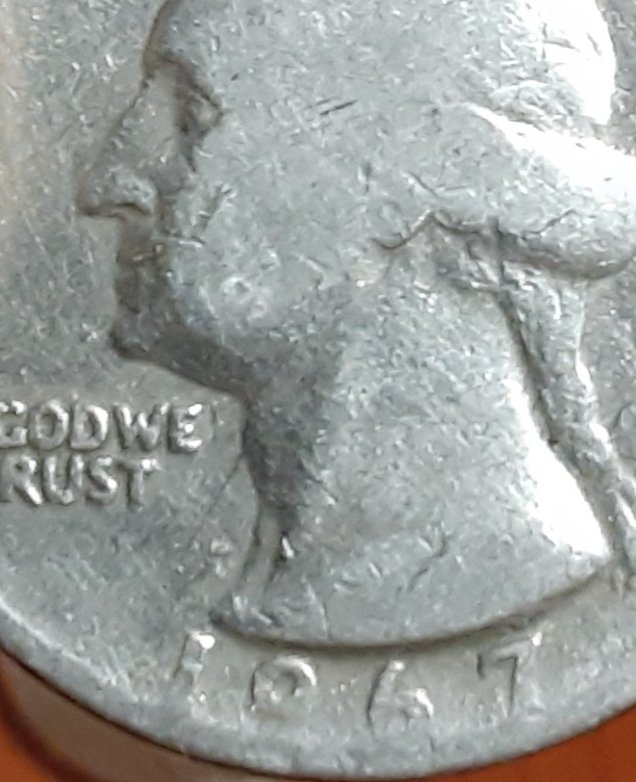
Ive been working all morning taking closeups of a 67 quarter which I also believe is silver. What a coincidence, and yours is very similar to mine. Ill post a few pics. here in a bit in this forum. Mine was very gold toned but since handling it this morning its lost most of that tone. Dont give up until you have it tested. Remember that its nearly impossible to absolutely know for certain a coin isn't silver just by looking at a few photo online. Even if you see a copper colored ring around its edge that doesn't mean it doesn't contain silver. I think someone at the mint likes to copper paint edges some of my quarters (paint job) peels and fall off. Ill post an example of what I'm talking about here in a bit. Ok there are a few photos of my 67 quarter to look at now. Let me know your thoughts.
Silver quarter would weigh 6.25 grams. OP quarter weighs 5.4 grams, on the low side but barely within tolerance for a coppernickel clad coin. 5.4 grams is NOWHERE close to being within tolerance for a silver quarter. OP confirms the edge shows the three layer "sandwich" look of a copper nickel clad quarter. Do we really need to go further?
Oh and it is way too light to be struck on 40% silver half dollar stock too. Figured I had better throw that in before someone said the half dollar stock would show the the three layers on the edge.
Condor101, thinking about it a lot more and sitting back taking in what everyone is saying, I'm going to say I believe the difference in the sound of the coin compared to others would have to be the weight difference. I appreciate everybodies knowledge and input. It's nice to get excited when you see something that looks a little different. Even if it turns out to be normal, it's that excitement like opening a Christmas present when I'm CRH! So hey, hats off to you all and good hunting. There's a lot to be discovered I belive....
Just a random side comment, but I have noticed on a few 1960s clad quarters that some of them have a higher pitched ringing sound, even though it isn't silver. I wonder if there is some sort of alloy impurity that would cause this?
If there really is a sound difference, I wonder if it might be a result of the difference in how the clad layers were bonded.
Today the three ingots have the mating surfaces ground smooth, polished, cleaned, and then placed together, then bonded by VERY high pressure rolling and high pressure rolling as they are rolled into strip.
Back in the early years the ingots were placed together (I don't know if the mating surfaces were ground smooth first) then packed with explosives top and bottom and detonated. Using the explosive force to bond the layers together. (this could result in uneven bonding with some areas being more firmly bonded together than others. That might cause a difference in the ring.
Quote: Back in the early years the ingots were placed together (I don't know if the mating surfaces were ground smooth first) then packed with explosives top and bottom and detonated. Using the explosive force to bond the layers together.
Seriously? That's insane, do you have any videos or pictures of this process?
No pictures, you can google explosive bonding to get an explanation of the process (and there are a few references to its use at by the mint for the early clad coinage) and here is an article from Coin World about some examples of cladding material from the daughter of the man who patented the process (Detaclad) https://www.coinworld.com/news/prec...964-coi.html
Here is a short youtube video that about explosive cladding.
Disclaimer: While a tremendous amount of effort goes into ensuring the accuracy of the information contained in this site, Coin Community assumes no liability for errors. Copyright 2005 - 2026 Coin Community Family- all rights reserved worldwide. Use of any images or content on this website without prior written permission of Coin Community or the original lender is strictly prohibited. Contact Us | Advertise Here | Privacy Policy / Terms of Use












 Posted 04/21/2020 09:11 am


