| Author |
 Replies: 10 / Views: 8,815 Replies: 10 / Views: 8,815 |
|
|
New Member
United States
1 Posts |
Hey everybody, New to the forum, but had a question that I figured you all would be able to answer best. While cleaning my house today, I found a very strange dime that appears to have a bubble on both sides of it. I can't seem to find anything online about a similar error. I'm very curious what caused this and if this is something that is common or not. Here are some pictures. 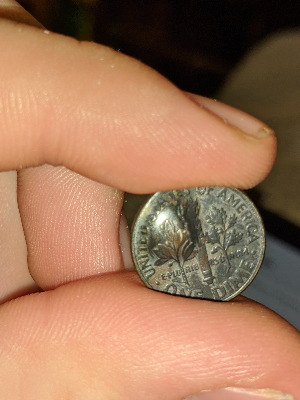 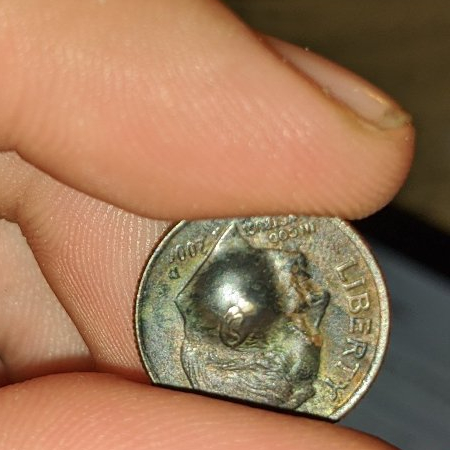 |
|
|
|
Pillar of the Community
United States
4846 Posts |
I believe It's been heated, either the copper underneath the nickel cladding expanded, or an air bubble expanded between the layers and had enough pressure to expand the nickel cladding.
Either way it was done post mint. as you can imagine, a coin that was struck with thousands of pounds of pressure would certainly have had a bubble such as this depressed or burst under the pressure.
|
|
Pillar of the Community
United States
3281 Posts |
|
|
Bedrock of the Community
United States
10635 Posts |
PMD (including fingerprints)  to the CCF!
|
|
Moderator
 United States
34563 Posts |
My vote is that this is a campfire coin.
"If you climb a good tree, you get a push."
-----Ghanaian proverb
"The danger we all now face is distinguishing between what is authentic and what is performed."
-----King Adz
|
|
Bedrock of the Community
United States
94367 Posts |
Good guess, definitely a heat issue. to the CCF! |
|
Pillar of the Community
United States
1359 Posts |
So, not struck on a peanut M&M planchet?...
|
|
Moderator
United States
196278 Posts |
to the Community! |
|
Pillar of the Community
United States
6879 Posts |
|
|
Bedrock of the Community
United States
62064 Posts |
The metals respond to heat differently. On swells more than the other, thus the bubble. People flatten them with a wack of a hammer and they still work in vending machines.
|
|
Bedrock of the Community
United States
17884 Posts |
When the clad stip is prepared the layers are not perfectly flat and very small gas bubbles can get strapped between the layers. When the coin is heated the pressure inside the bubble rises. But typically that doesn't matter because the metal layers are too ridgid for anything to happen. But as the temperature continues to rise the pressure in the bubble keeps increasing and then eventually the metal get hot enough that it reaches a "plastic" stage. Not hot enough yet to melt but not far from that. At this point the gas not has enough pressure to cause the metal to deform and the bubble expands. The result is what you see on this coin. In this case there was a gas bubble trapped on both sides
|
| |
Replies: 10 / Views: 8,815 |
|







 Posted 05/01/2020 12:20 am





