Well, I've developed a new collecting focus: ancient pottery. Not sure how it happened - I've been wearing a protective mask and washing my hands regularly, after all.
(I hope the moderators will be patient with me. While the items here are not coins, they do relate to the "ancient" theme that, along with medieval, defines this corner of CCF's site. Besides, a fair number of ancient coin collectors also collect antiquities - the hobbies are related.)Years ago, I owned a few modest examples of ancient pottery, but sold them off. So, really, this is a revived rather than truly new interest. Unlike my collections of ancient coins and weaponry, this group will not be confined to material from ancient Iran and its environs. However, having said that, I admit that my favorite acquisition thus far (see below) is, indeed, from the same geographical and historical context as many of my weapons: NW Iran from about three thousand years ago: c. 12th - 10th century BC. Making this piece even more special is the fact that it is from the Arthur M. Sackler Collection and is ex-Sotheby's. For those who may not know, Sackler was one of the United States' most preeminent and prolific collectors of Asian and ancient art. I fondly remember spending lots of time in the Sackler Museum at Harvard in the mid-1980's. I've also enjoyed a few visits to the Sackler Gallery at the Smithsonian in D.C. over the years. So, the "Ex-Sackler Collection" designation for one of my pottery pieces is significant. To me it's as meaningful as the "Ex-David Sellwood Collection" labels attached to some of my Parthian coins.
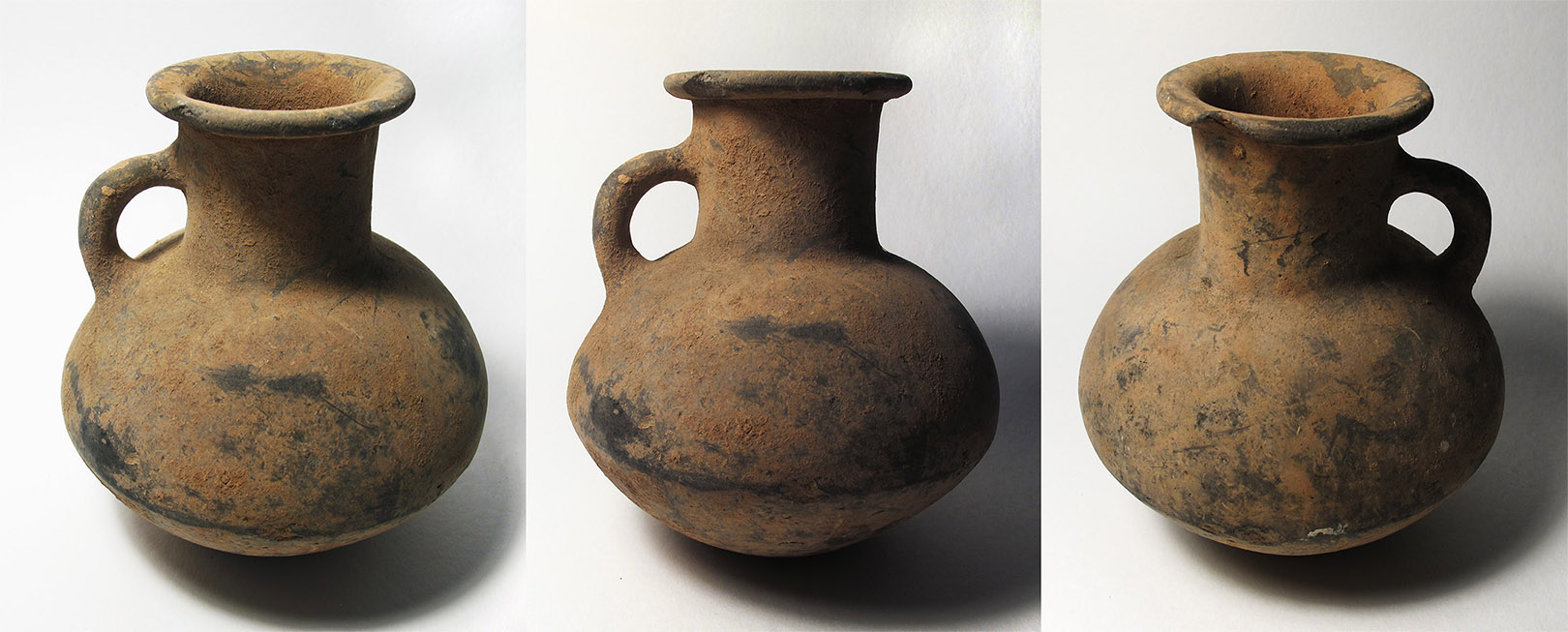
Near Eastern Vessel
NW Iran
12th - 10th century BC
13.97 cm (w) x 15.24 cm (h)
(5.5" x 6")
Description:
Carinated jug with loop handle, rim flake, otherwise intact.
Ex-Arthur M. Sackler Collection
Caveat emptor(!) definitely applies for those who may want to venture into this collecting area: As one legit seller has posted on his site: "The most popular antiquities are often the most widely faked: Egyptian (almost everything), Greek pottery, Roman lamps and glass are good examples. Fakes are detected through experience, research and analysis. Many are instantly recognisable to the experienced collector, but others are not. There are probably now as many fake items in circulation as genuine ones!"
While some may disagree with his last statement there, I strongly suspect his assessment is correct. Clearly, it is a collecting area fraught with challenges. Relying on vetting by trusted, experienced sellers is important. Seeking well-provenanced material is smart. Most of the pieces in my small but growing new collection have solid, and in some cases quite interesting, provenance. One example, in my new Forum gallery but not shown here, is a repaired (from multiple fragments) Roman gray ware bowl, ex-Michael Green Collection, that I recently picked up. It came with site-and-date specific excavation information: it was excavated at Deans Hanger, Towcester, Northamptonshire, England in 1972. It's not often that you can get that kind of specificity with regard to provenance. Another, a Cypriot bowl (shown below), has a hand-written export license number from Cyprus Museum in Nicosia on its bottom, which was recorded prior to its shipping to UK, where it ended up in a private collection in Kent, UK, between the 1960's and 1980's. Another piece, shown among the group below, is from the Marcel Gibrat Collection. It's by far the largest piece I own thus far - and is a favorite. Gibrat was an art restorer/conservator for the Metropolitan Museum of Art. He is remembered as an expert in antiquities, despite only having a sixth-grade education, and as being the only Met restorer without a PhD. He began purchasing antiquities, tribal art, Asian art, and European art beginning in the early to mid-1960s. He collected, restored, bought, and sold high quality items for the better part of three decades, before falling ill and being unable to work in 1992. Two other pieces in my collection, including the bucchero ware Etruscan chalice and the lekythos (both in the group below), are from the estate of an Emmy Award-winning Hollywood set decorator.
The point is, it's preferable and reassuring to acquire pieces with good provenance.
My new gallery is just getting started. I hope to add occasional pieces from time to time, at a relaxed pace. (Same goes for my weapons gallery) The gallery is here, for anyone who may be interested in its modest beginnings:
http://www.forumancientcoins.com/ga...p?album=7377Below are a few nicer examples from the gallery.
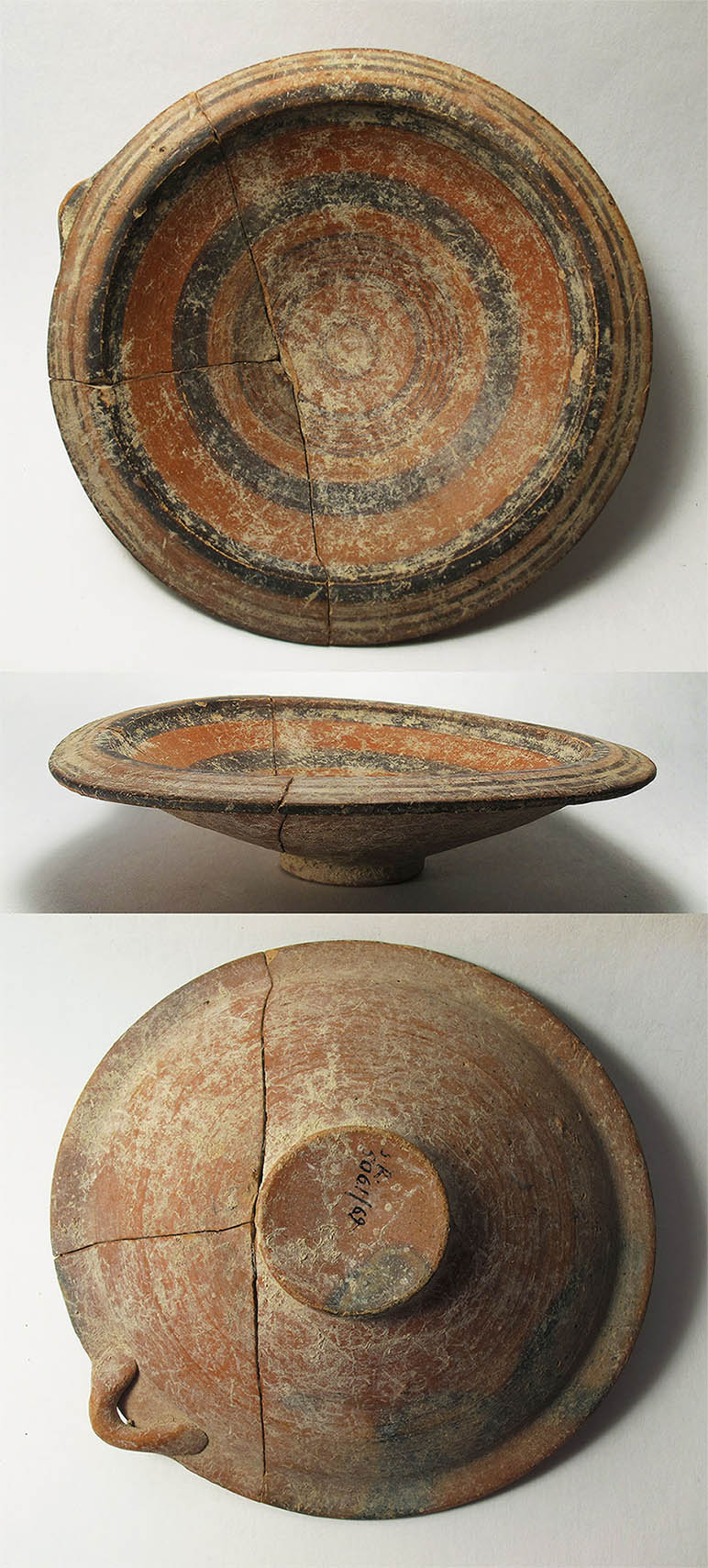
Bowl
Cyprus
Cypro-Geometric III, Early Iron Age
c. 850 - 700 BC
15.8 cm (w) x 3.8 cm (h)
(6 3/16" x 1 1/2")
Description:
A shallow pottery bowl with a single handle, decorated with black painted bands over a red slip surface. Repaired from three pieces, some accretions and minor losses. Underside of base inscribed with an export license reference number from the Cyprus Museum in Nicosia.
Ex-private collection, Kent, UK. Acquired 1960's - 1980's.
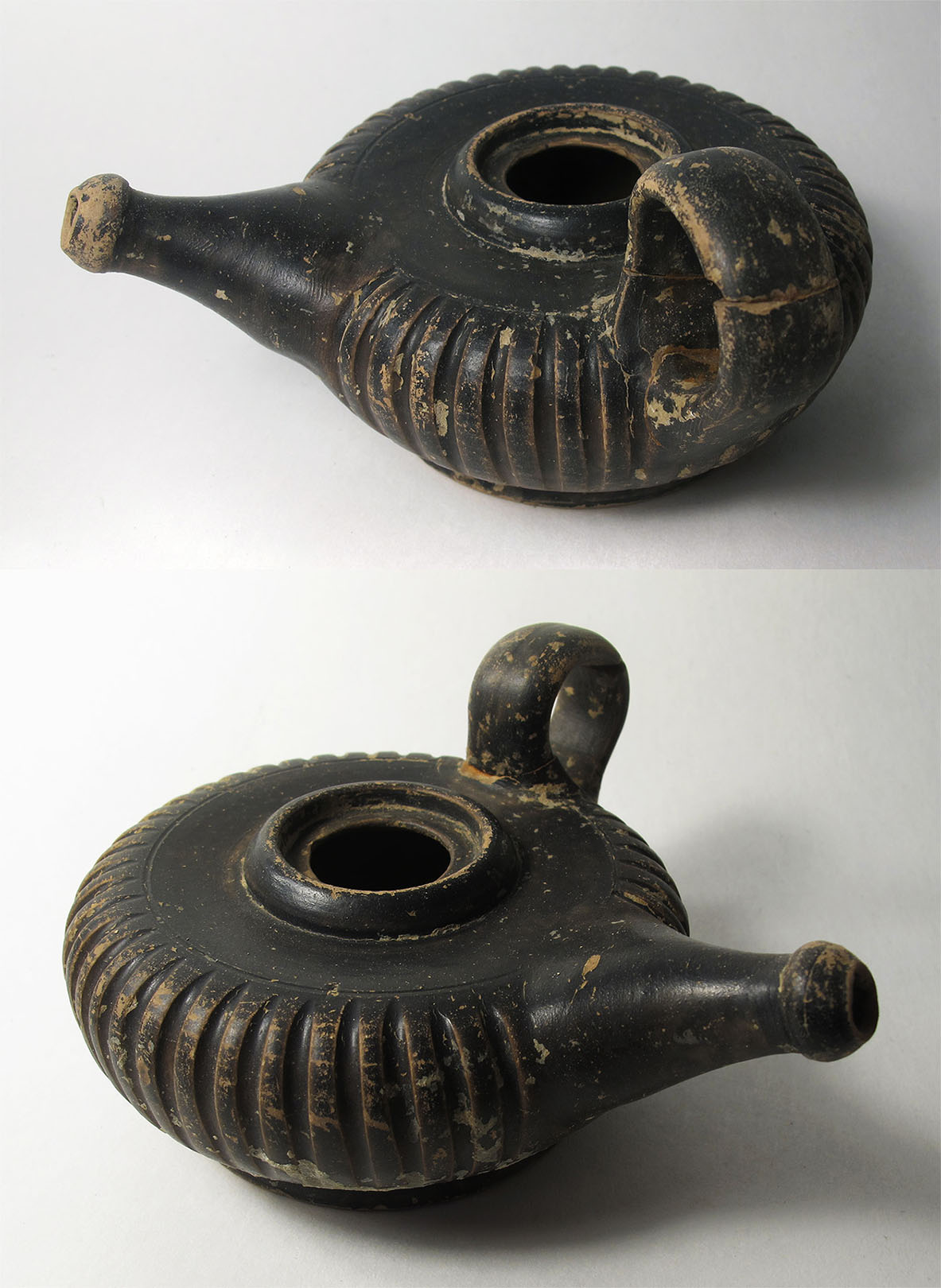
Guttos
Greek
c. 5th - 4th century BC
120 mm (l) x 60 mm (h)
(4 3/4" x 2 3/8")
Description:
Blackware, strap handle (repaired), narrow spout, ribs to the shoulder.
Formerly part of two European collections, the earlier formed mainly in the 1980's.
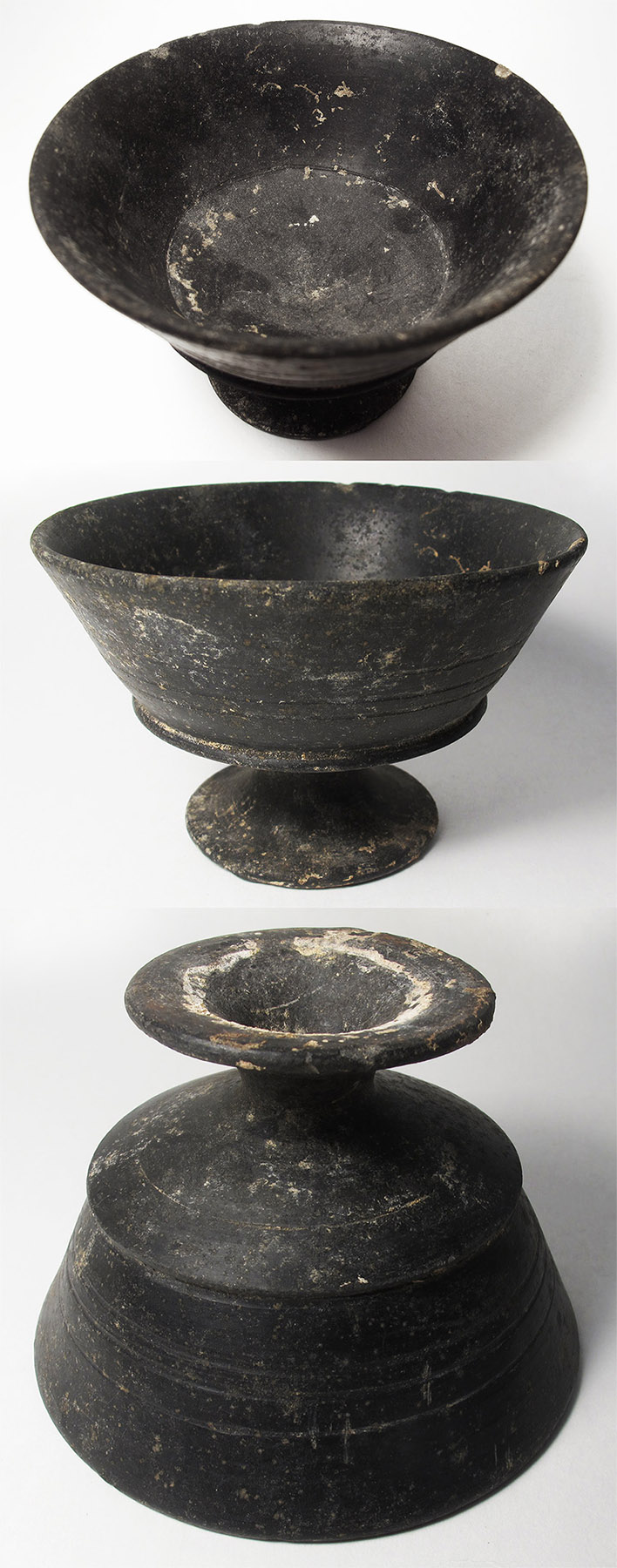
Bucchero Ware Chalice
Etruscan/Etruria (Central Italy)
c. 7th - 6th century BC
12.7 cm (w) x 8.9 cm (h)
(5" x 3 1/2")
Description:
Pedestal foot, pronounced border at bottom of bowl, above which are incised bands.
Ex-Wesley Laws Collection, Palms Spring, CA
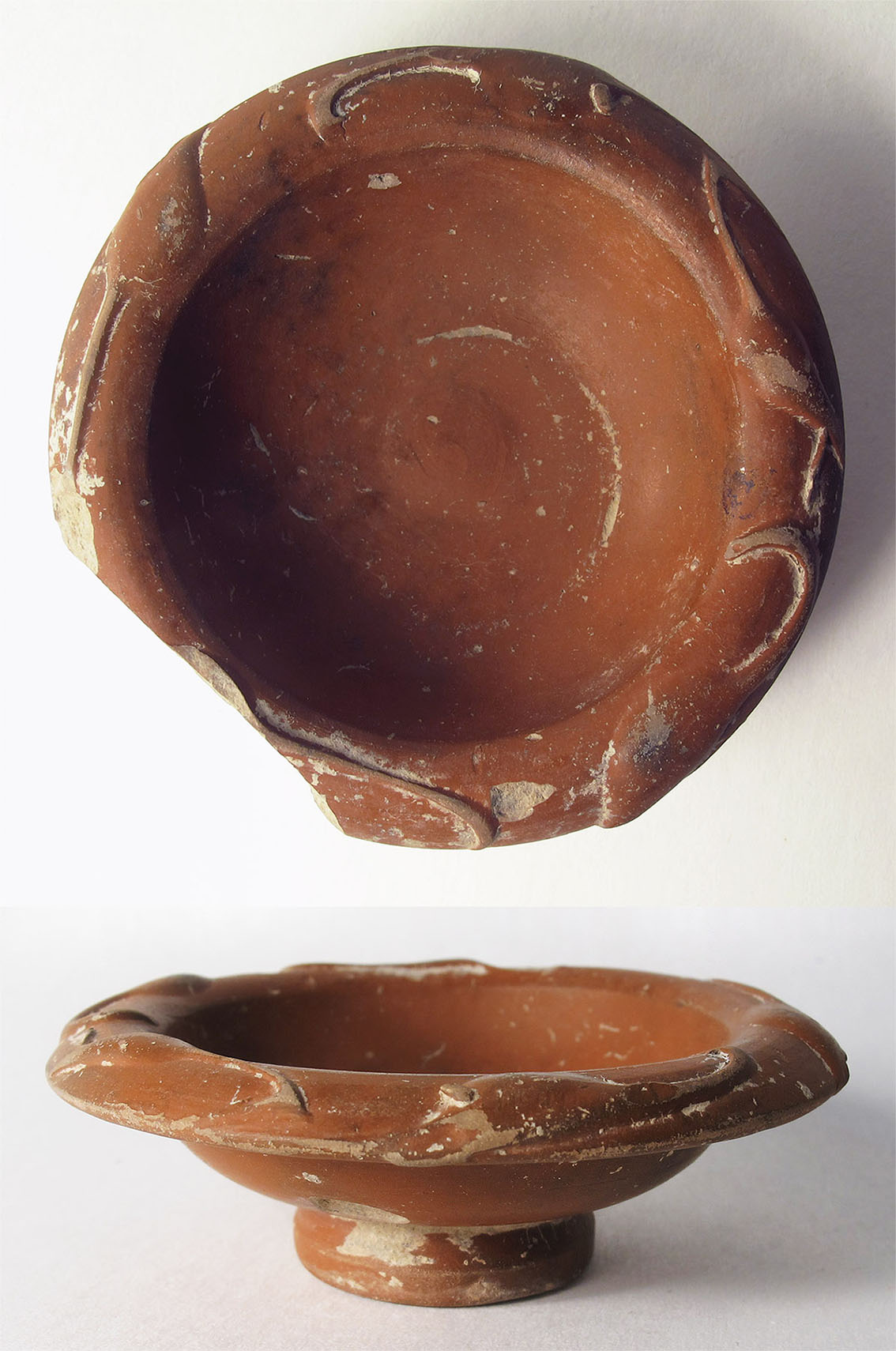
Bowl
Roman
1st century AD
86 mm (w) x 30 mm (h)
(3 3/8" x 1 3/16")
Description:
Red glazed, barbotine decoration around the rim in the form of stylized ivy leaves, loss to one side of rim, chips. Although acquired in North Africa in the first half of the 20th century by earlier collectors (see provenance below), a recognized antiquities expert states, "The bowl is likely of European manufacture and was exported in antiquity to the Roman North African colonies. I say this as the red slip is a little bit finer and glossier than the Roman North African local production (mostly around modern Tunisia). Also, this barbotine decoration was very popular throughout the Roman Empire and therefore widely exported/traded."
Ex. private collection, Paris, France;
inherited and formerly acquired in North Africa during the early to mid-20th century.
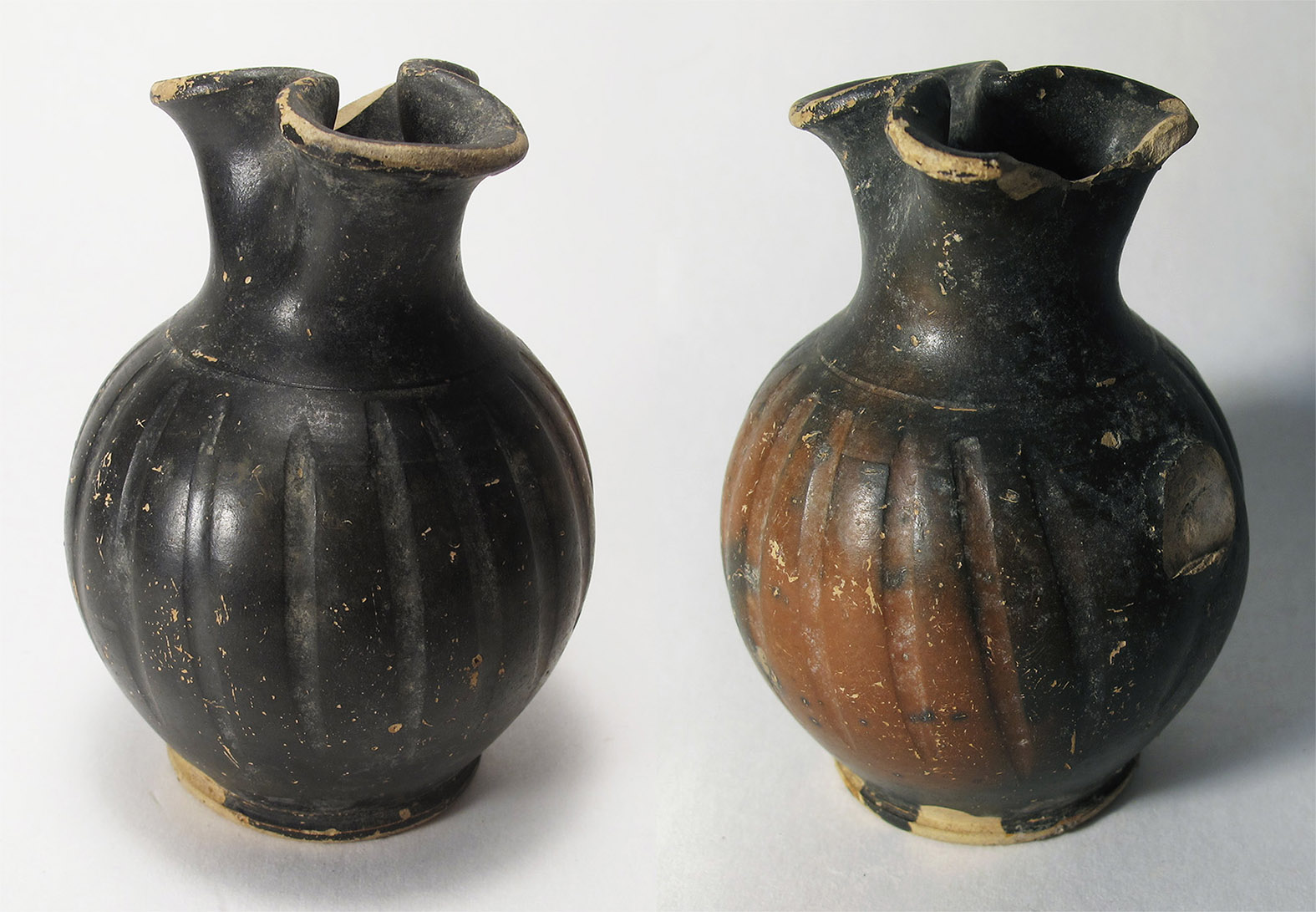
Oinochoe
Greek, South Italy
4th - 3rd century BC
64 mm (w) x 86 mm (h)
(2 1/2" x 3 3/8")
Description:
Black glazed, ribbed body, trefoil mouth, one section slightly misfired in antiquity, handle missing, old collection or archaeological number (G1009) written on bottom.
Ex-private UK collection
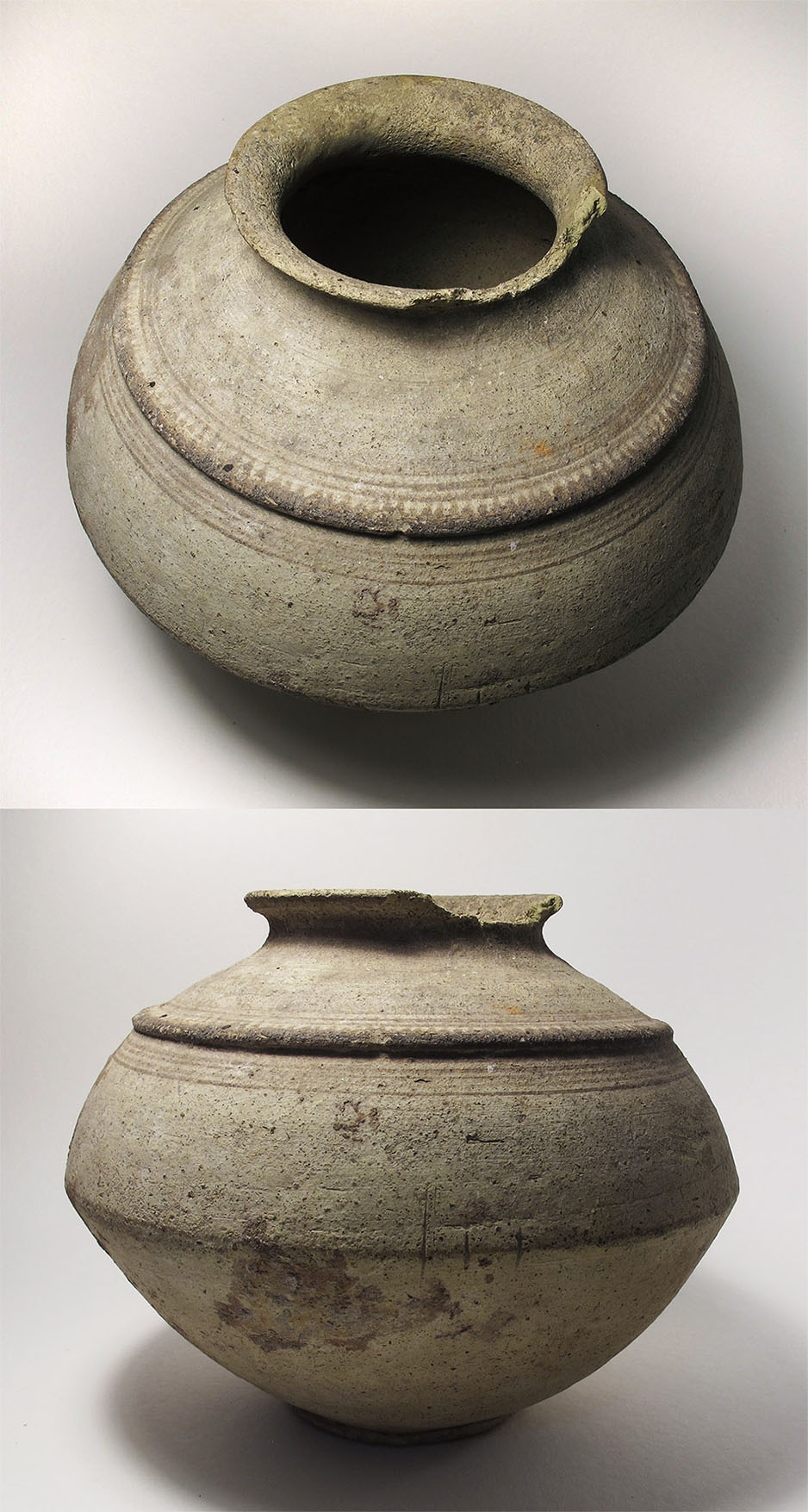
Near Eastern Vessel
c. 1000 BC
24.1 cm (w) x 20.32 cm (h)
(9 1/2" x 8")
Description:
A wide, carinated vessel with raised ridge at shoulder, decorated with horizontal stripes above and below ridge, ridge itself decorated with a pattern of small triangles, losses to rim, small chip at foot, encrustations and gouges, no restorations or cracks.
Ex-Marcel Gibrat Collection
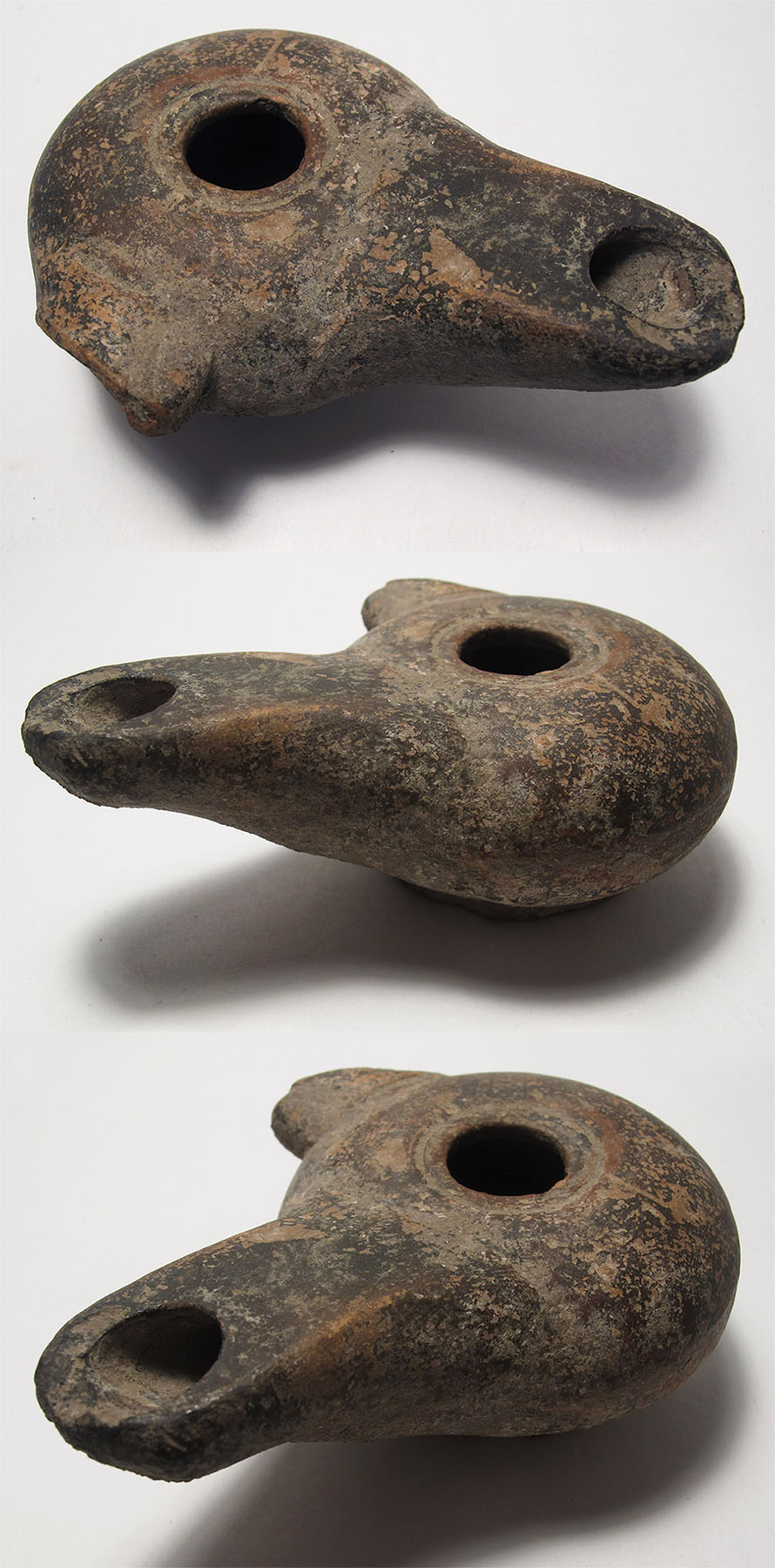
Oil Lamp
Greek
c. 3rd - 1st century BC
7.3 cm (w) x 9.84 (l) x 3.3 cm (h)
(2 7/8" x 3 7/8" x 1 5/16")
Description:
Small circular pedestal base, bulbous circular body, elongated spout, oxidized black glaze.
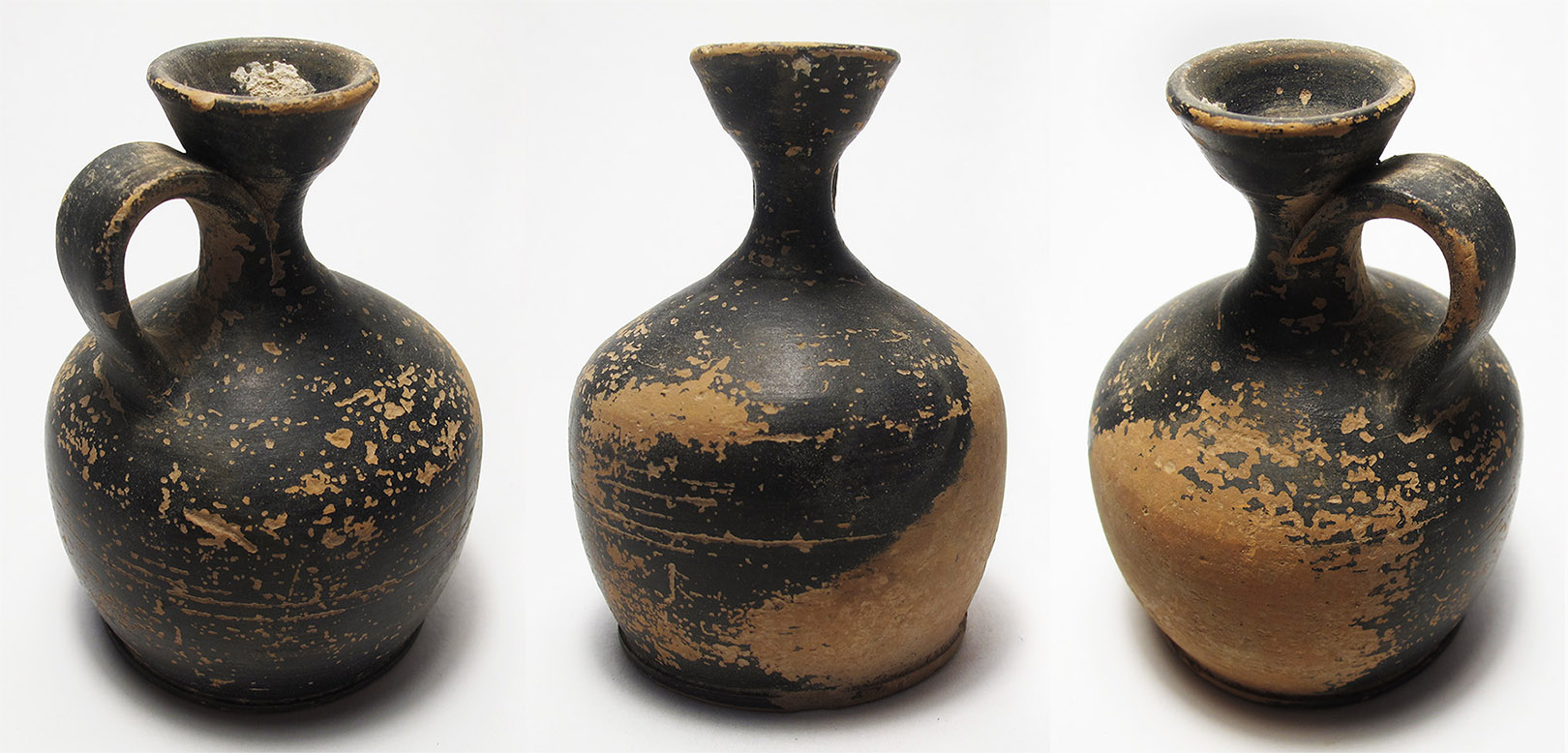
Lekythos
Greek
Late 4th - 3rd century BC
69 mm (w) x 89 mm (h)
(2 3/4" x 3 1/2")
Description:
Blackware, incised horizontal bands, strap handle.
Ex-Wesley Laws Collection, Palms Spring, CA







 Posted 07/18/2020 06:51 am







 .....
.....


