| Author |
 Replies: 11 / Views: 5,867 Replies: 11 / Views: 5,867 |
|
|
New Member
United States
23 Posts |
*** Edited by Staff to clarify topic title. ***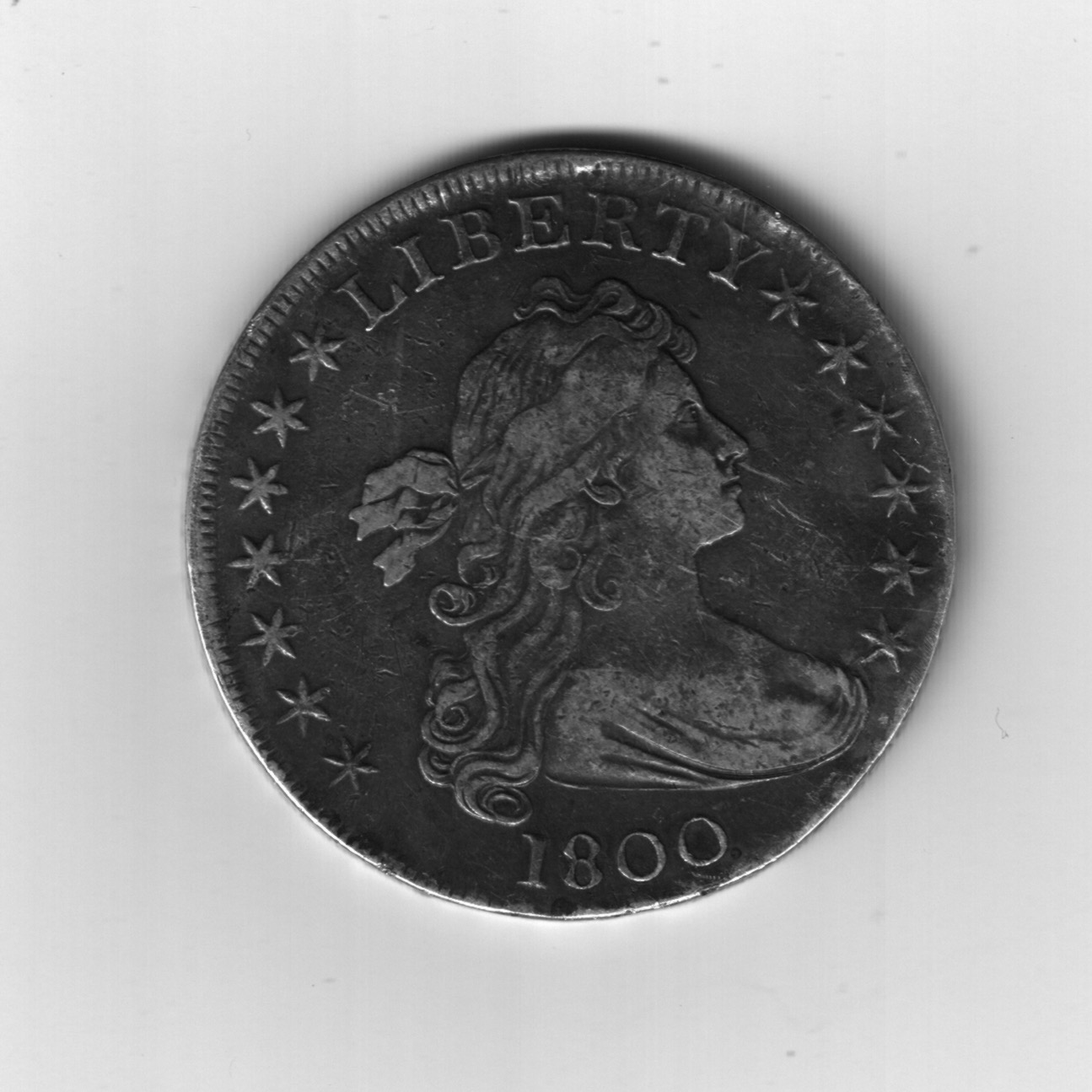 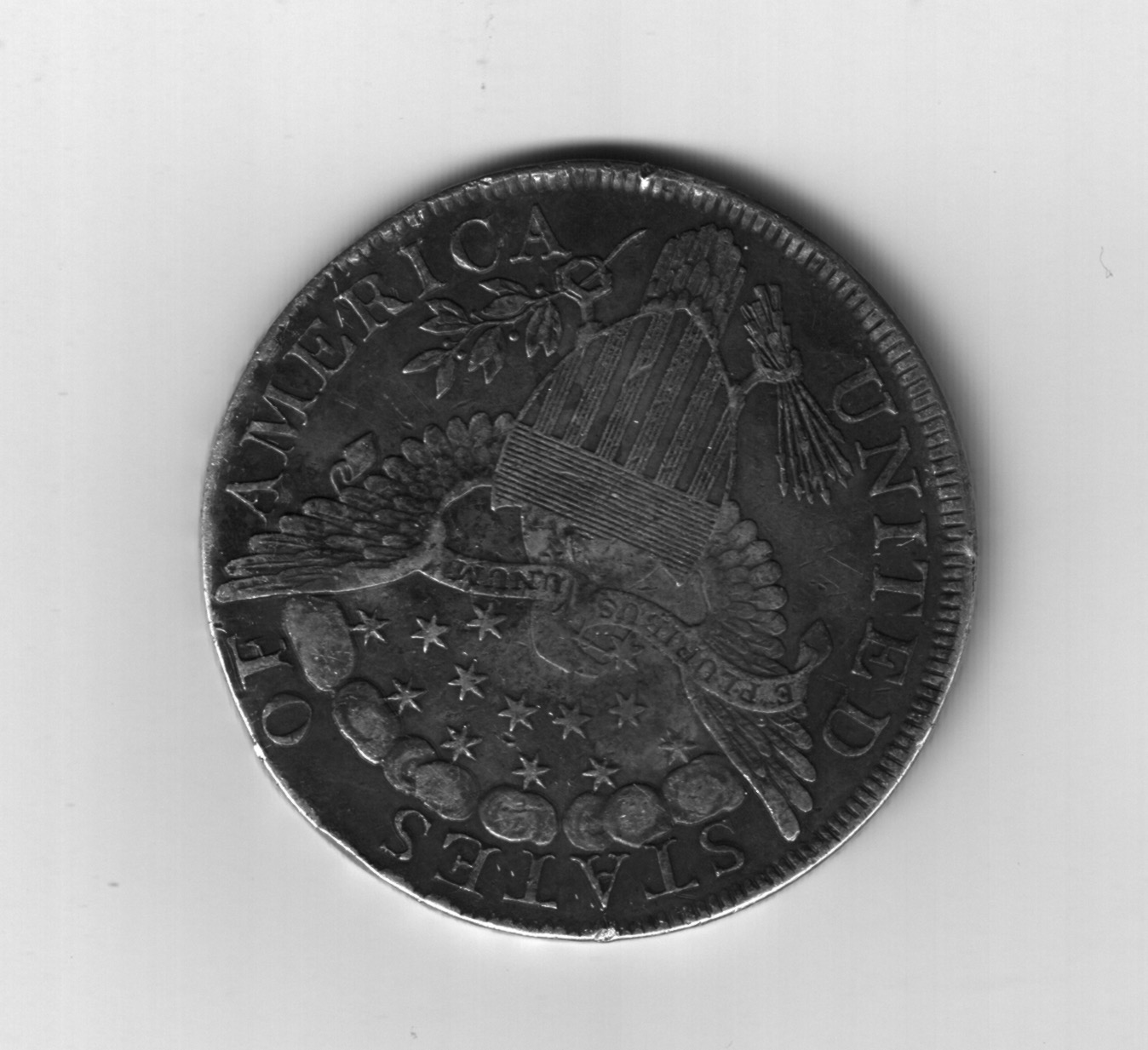 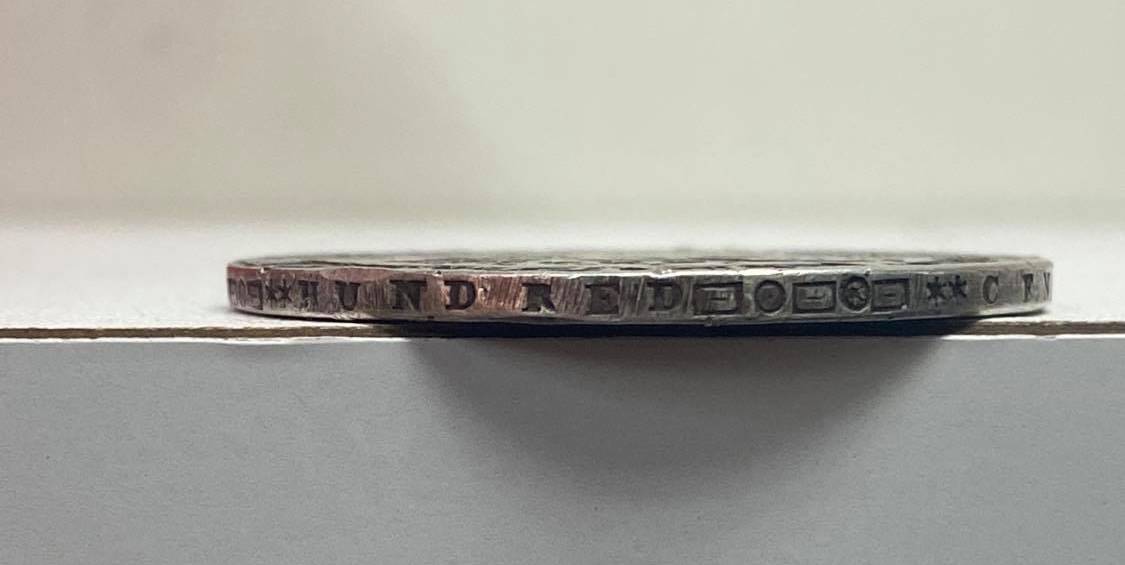
|
|
|
|
Pillar of the Community
United States
3505 Posts |
I believe the only $100 coin ever struck by the US Mint is the modern 1 oz. platinum coin. The edge of the pictured coin should say 100 cents ($1) on the edge.
Edited by nfine
07/27/2020 4:43 pm
|
|
Pillar of the Community
United States
746 Posts |
If real, it is a draped bust dollar.
Tim Hughes
|
|
Pillar of the Community
 United States
5713 Posts |
What is the weight of the coin? This does not look genuine to me because the numbers of the date, some letters, and the stars look too thin. But the rest of the coin looks pretty good.
|
|
Bedrock of the Community
United States
17884 Posts |
Unfortunately he postedthe rev upside down which makes this more difficult (I created a rightside up version but can't get the upload image function to connect) The OP coin  compare to this one 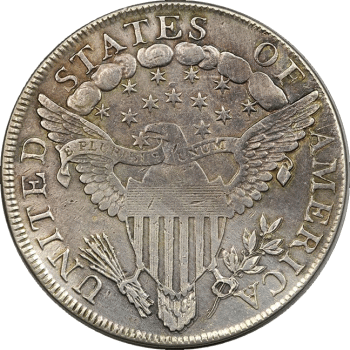 In the second image you will see in the horizontal lines three marks. A diagonal one above the second white stripe from the left. A faint near vertical one between red stripe 3 and white stripe 4. And a nearly horizontal one above the junction of white 5 and red 5. There is also a small hit at the top of red stripe 2 and at the top of red stripe 3. All of these makes also appear on the reverse of the OP coin. It can be a little confusing due to the upside down image. The second image is of a known counterfeit 1802 bust dollar. (From a CoinWeek article by Max Spiegel of NGC.) |
|
Pillar of the Community
United States
5713 Posts |
@Conder, that's very interesting. Here's an upright image of the OP coin. I marked several spots with markings identical to the known counterfeit. But then how do you explain the fact that the letters are shaped completely differently? 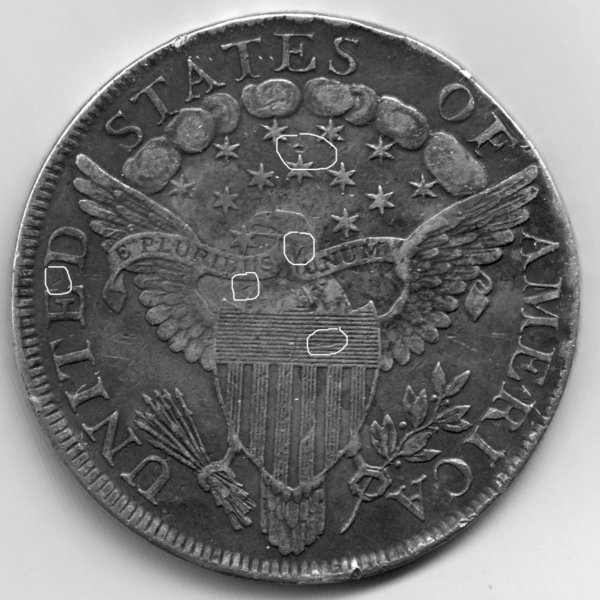 |
|
Bedrock of the Community
United States
17884 Posts |
Shaped differently how? Other than the degree of bifurcation of the uprights I don't really see a difference. That difference could be accounted for by a difference in striking pressure, Or from different dies from the same counterfeit hub (The mint didn't use hubs in the early 1800's). In fact it is remotely possible that the OP coin is real and was the coin used to create the hub/die used to make the fake 1802 and the bifurcations were less prominent on the fake die. I can't guarantee the 1800 is a fake, all I can say is it shares the same features as a known fake from a different year.
These same marks can be found on fakes of other years for this series.
|
|
Pillar of the Community
United States
5713 Posts |
I always thought that the bifurcation at the base of the letters was due to Die Deterioration in a late state die, not striking pressure. But I could be wrong. Regardless, I still lean towards counterfeit because of the thinness of some letters and the numbers of the date. And sharing multiple defects with a known counterfeit is also telling. |
|
Pillar of the Community
United States
992 Posts |
I think it's worth sending in for grading.
|
|
Pillar of the Community
United States
4992 Posts |
Possibly genuine. If counterfeit, it is a high quality one. Note this issue is a $1 coin not $100. $1800 gray sheet value in VF-20 so definitely worth sending to a TPG to verify. Edited by fenton
08/02/2020 10:02 am
|
|
Bedrock of the Community
United States
17884 Posts |
Before you spend the money for grading how about a weight for the coin (in grams two decimal places please) That unmasks a lot of fakes and if the weight is wrong no need to make a donation to a grading service.
|
|
Moderator
 United States
54297 Posts |
Quote:
I think it's worth sending in for grading. Since it is counterfeit, I don't think it would be worth it. |
| |
Replies: 11 / Views: 5,867 |
|







 Posted 07/27/2020 7:06 pm





