| Author |
 Replies: 7 / Views: 1,684 Replies: 7 / Views: 1,684 |
|
|
Press Manager
 United States
1420 Posts |
PCGS - The term numismatics was coined in 1829 from the term numismatic, meaning pertaining to historical coins and coinage which was coined in 1765 from the French word numismatique, which had its unknown origins in the late 1500s. Numismatist, a student of coins and coinage, was coined in 1788 from the French word numismatiste. All of these words stem from the root word in Proto-Indo European (a theorized common ancestor Indo-European language from 4500-2500 BCE) nem, which means to assign, take, or allotment. From nem came the words numisma, a Greek word, or nomisma, the Latin version of the word for current money or coin (ie, what has been sanctioned by custom or use). These words would develop into nummus, which was a denomination of ancient coinage. 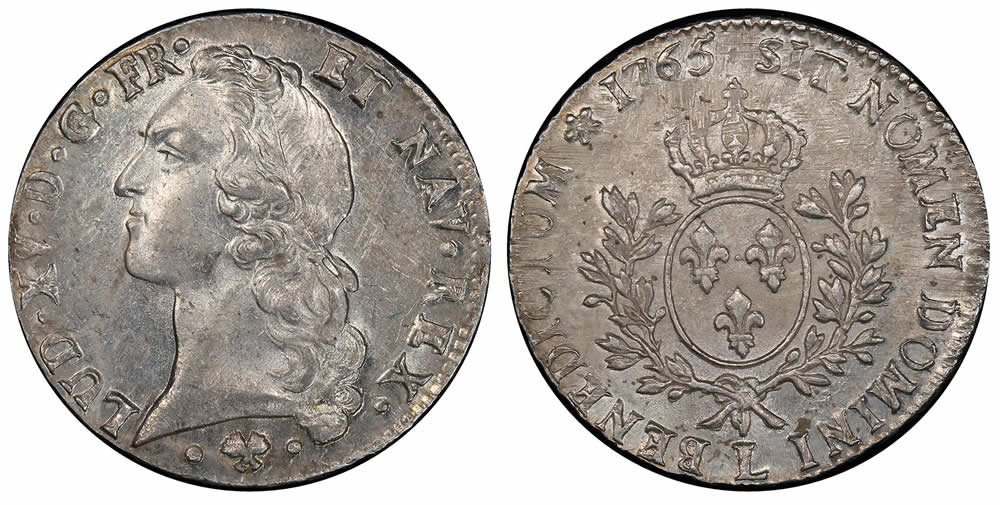 Read the Entire Article Read the Entire Article
|
|
|
|
Pillar of the Community
 United States
8044 Posts |
Nice article! Love learning about the origin of words. Now, can someone tell us when the use of "coin" as a verb began? Because the author understandably enjoys this verb selection in the article, when originate or create could have worked equally well  |
|
Moderator
United States
195053 Posts |
Very interesting!  |
|
Bedrock of the Community
United States
94367 Posts |
|
|
Pillar of the Community
United States
5713 Posts |
Interesting, I never thought about the origin of the word before.
|
|
Moderator
Australia
16979 Posts |
Quote:
Now, can someone tell us when the use of "coin" as a verb began? Because the author understandably enjoys this verb selection in the article, when originate or create could have worked equally well . To coin, a verb with the original meaning to create or strike a coin, has been around for centuries; probably as long as the noun "coin" has existed. You will find its use in the American Constitution (Article 1 sections 8 and 10), for example. In English common law, making a counterfeit coin was a crime, known as "coining". Thus, there was plenty of precedent for "coining" meaning "to make for yourself". In its non-numismatic sense it seems to have originated centuries ago with creating new words and other linguistic changes, as seen in the old now-cliched expression "to coin a phrase". George Puttenham, writing in 1589, noted that young scholars, in an effort to appear sophisticated and educated, "will seem to coin fine words out of the Latin". Shakespeare, in the play Coriolanus (1609), has a character say "So shall my lungs coin words till their decay". Don't say "infinitely" when you mean "very"; otherwise, you'll have no word left when you want to talk about something really infinite. - C. S. Lewis
|
|
Pillar of the Community
United States
8044 Posts |
Nice!  |
|
Moderator
United States
195053 Posts |
Fascinating! Thank you. |
| |
Replies: 7 / Views: 1,684 |
|







 Posted 09/18/2020 10:06 am





