| Author |
 Replies: 16 / Views: 4,154 Replies: 16 / Views: 4,154 |
|
Pillar of the Community
United States
581 Posts |
|
|
|
|
Moderator
 United States
196100 Posts |
An interesting piece. I hope you find an answer soon.
|
|
Pillar of the Community
 United States
581 Posts |
I appreciate the kind words jbuck. They keep me motivated!
|
|
Pillar of the Community
 United States
2843 Posts |
Hi,
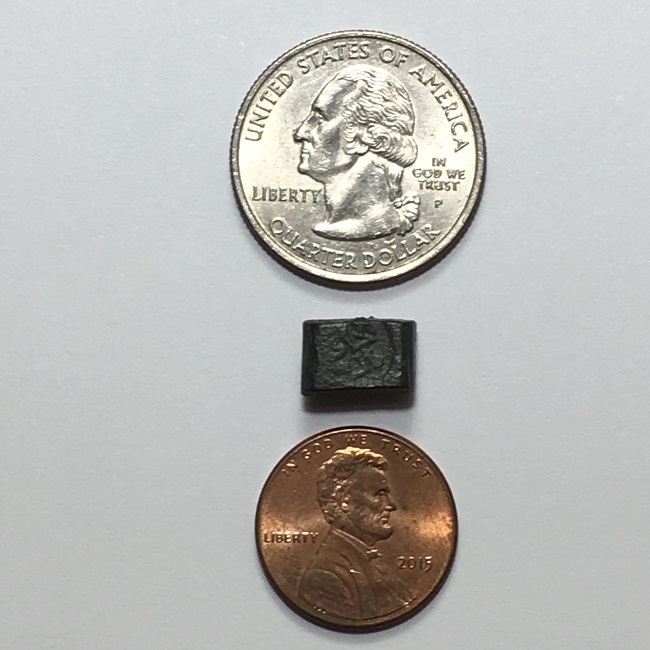
Can you share the weight and diameter?
|
|
Pillar of the Community
United States
7731 Posts |
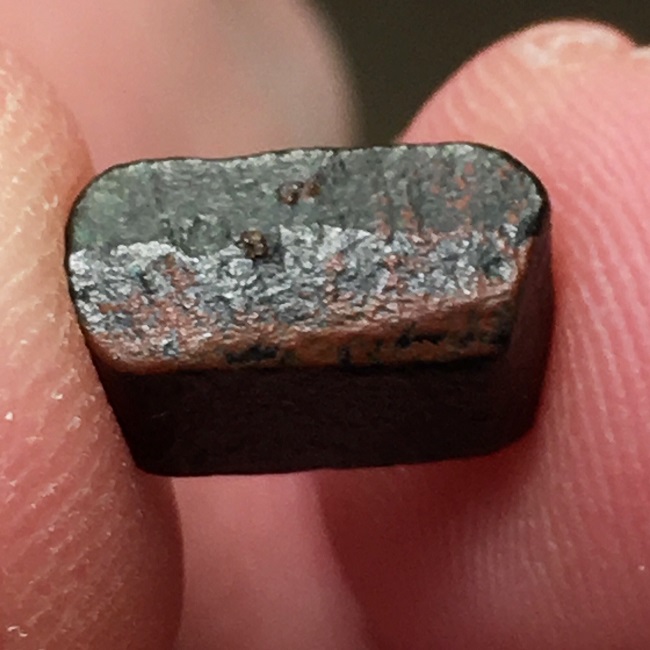
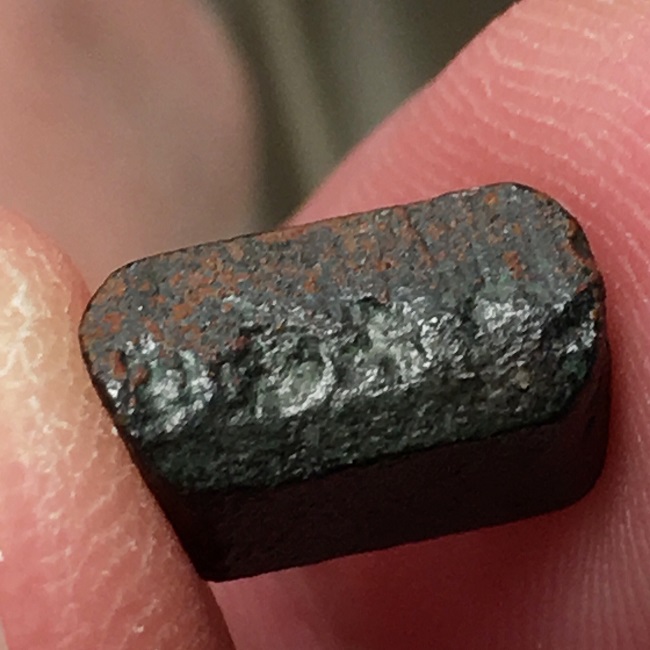
Might be some type of bronze piece that was cut up and used as a substitute for a fractional denomination.
There have been coin shortages throughout history.
|
|
Pillar of the Community
United States
581 Posts |
Great question. I am ballparking these numbers-
18mm diameter
2-3.5 grams weight
And, yes, westernsky you hit the nail on the head. Every time I've looked at it that thought jumps into my head. Looks like it was cut from a larger piece like a slice from a loaf.
|
|
Valued Member
United States
309 Posts |
How much it weighs is the right question to ask. This appears to be a coin weight. Back in the day pan scales were sold in wooden boxes with sets of weights. Those used in finance might come with a set of weights of various sizes that resemble specific coins in circulation. Coin weights may be round or square, and would be filed down to equal the full weight of coins to be valued. Each weight may have punched numbers or design elements of the coins they validate. Back when foreign coins circulated in colonial times, a set of weights with elements of foreign coin design were needed to conduct banking and to determine counterfeits and clipping. Weights for Latin American coins might have crosses, lions and castles as do Latin American coins. To better identify this weight you could compare its weight and what you can make out of the design stamped into it with old foreign gold and silver coin designs and weights to see what matches. It would have been one of a matching set of similar design. See the book on Coin Weights to compare sets by country with this weight.
|
|
Pillar of the Community
United States
2843 Posts |
Quote:
I am ballparking these numbers way off. A US cent is 19mm. Your object is more like 10-12mm. Numista has a filter option by shape. If you haven't already, check there. There are a few items that have so little discernible details that may be similar to yours. |
|
Rest in Peace
United States
1380 Posts |
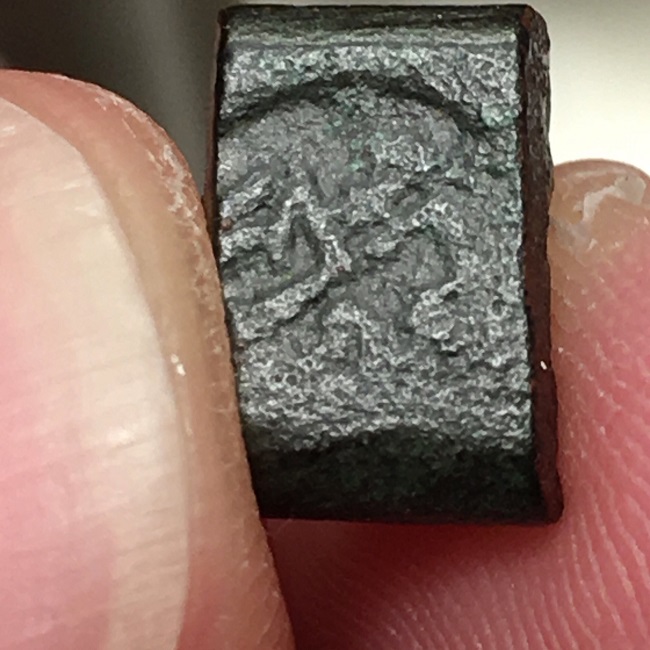
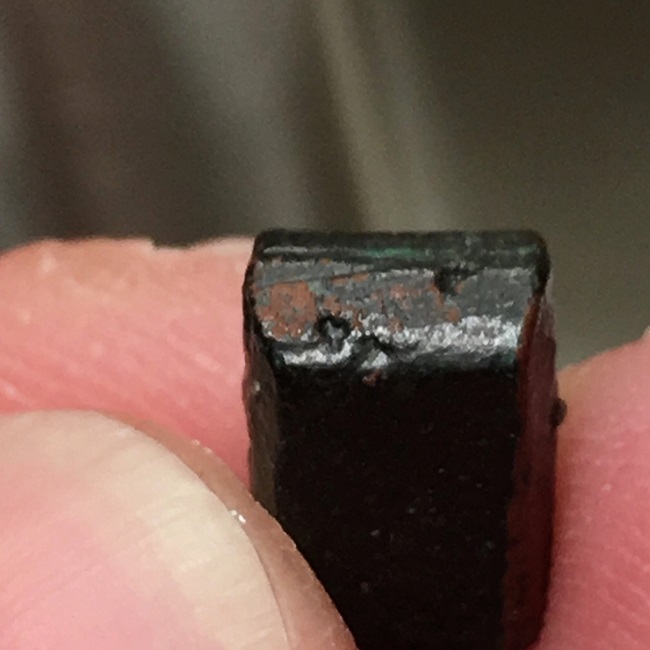
Based on the end pictures, it looks like possibly two wires running through it, which would make me suspect a crimped seal of some type. From a bag of money, ore, food, documents.
|
|
Moderator
United States
34560 Posts |
Good eyes @jgfr. I agree that this might be a bale seal.
"If you climb a good tree, you get a push."
-----Ghanaian proverb
"The danger we all now face is distinguishing between what is authentic and what is performed."
-----King Adz
|
|
Pillar of the Community
United States
1554 Posts |
|
|
Pillar of the Community
United States
581 Posts |
Quote:
How much it weighs is the right question to ask. This appears to be a coin weight. Back in the day pan scales were sold in wooden boxes with sets of weights. Those used in finance might come with a set of weights of various sizes that resemble specific coins in circulation. Coin weights may be round or square, and would be filed down to equal the full weight of coins to be valued. Each weight may have punched numbers or design elements of the coins they validate. Back when foreign coins circulated in colonial times, a set of weights with elements of foreign coin design were needed to conduct banking and to determine counterfeits and clipping. Weights for Latin American coins might have crosses, lions and castles as do Latin American coins. To better identify this weight you could compare its weight and what you can make out of the design stamped into it with old foreign gold and silver coin designs and weights to see what matches. It would have been one of a matching set of similar design. See the book on Coin Weights to compare sets by country with this weight. Excellent suggestion and the subject itself is fascinating. I highly recommend reading Daniel Frank Sedwick's "Introduction to Regulated Coinage of North America and The West Indies In The 1700s". https://www.sedwickcoins.com/ta23/i...ted_gold.pdfIn regards to my specific scenario my best option is to weight the piece on a digital scale. I do not have one of these scales at home but when I visit my LCS tomorrow I will use theirs. |
|
Pillar of the Community
United States
581 Posts |
Quote:
way off. A US cent is 19mm. Your object is more like 10-12mm.
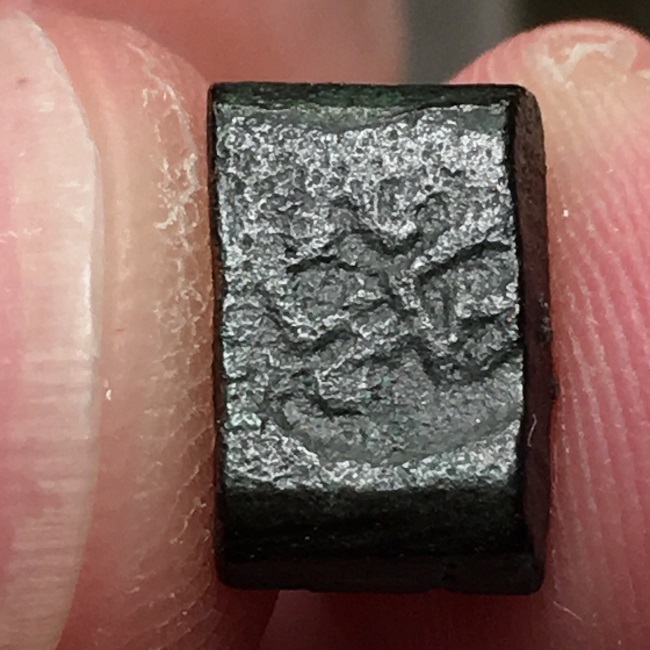
Numista has a filter option by shape. If you haven't already, check there. There are a few items that have so little discernible details that may be similar to yours. My measurement was inaccurate. You are exactly correct BigSilver that it is about 12mm. The best way to describe the shape of this piece is octagonal. I have found a few references on foreign language numismatic websites to rectangular/ingot octagonal coinage that also happen to almost exactly similar in size and weight of this piece. One reference placed these during a period about 500 years ago, and the other reference to a period about 1500-2000 years ago. The areas of circulation were in the "Eastern World" as compared to the "Western World." Lastly, at least one reference stated they were made of lead. Based on my size and weight estimates lead could be feasible. |
|
Pillar of the Community
United States
581 Posts |
Quote:
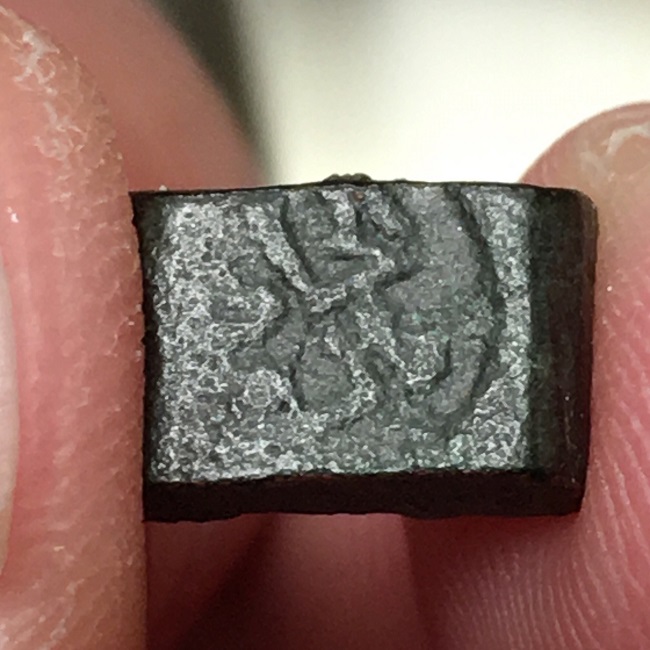
The letters are Arabic. Thank you. Is it possible for you to be more specific? Which letters, number of letters, or anything else that would help? Quote:
Good eyes @jgfr. I agree that this might be a bale seal. A bale seal, and not a bag seal, does make some sense. Where as a bag seals would be churned out by the 1000s and would be identical bale seals were were not. Sugar for example was bagged in a machine that churned out thousands of bags an hour ad fastened them together with an identical seal such as "Brown & Sweet Sugar" bag seals. A bale seal however was used specifically to fasten together huge bales of raw vegetable material such as hemp and flax plants. These seals were applied one at a time by a port inspector for example and gave unique information. Long story short... whereas identical bag seals were produced in the 1000s... the bale seals/flax seals were an individual item... actually touched and applied by an individual. Quote:
Based on the end pictures, it looks like possibly two wires running through it, which would make me suspect a crimped seal of some type. From a bag of money, ore, food, documents. NOTE: This is currently an ongoing and unanswered topic amongst archeologists, academics, historians, etc. concerning these items. Only a VERY small proportion of these seals have holes through them and it is a mystery how, or even if, they were attached to the bales. There is a strong possibility that these were customs tax seals for individual towns. Lots of these seals have parts missing and this may be where the hole was located. Fortunately the piece I have appears to have the holes. In summary and in addition, there's been tens of thousands of lead trading tokens/counters, often designed to be physically divisible, but none known would have the holes. |
|
Pillar of the Community
United States
1554 Posts |
Unfortunately, the forum does not recognize Arabic characters and nothing jumps out immediately as a name or other inscription. I tend to think it's a coin. Some Indian coppers are struck on similar fabric, chiseled from a bronze bar like a Tootsie Roll candy. Secondarily, I would look at locations around the Arabian Sea.
Edited by Kushanshah
09/18/2020 7:38 pm
|
|
Pillar of the Community
United States
1543 Posts |
Quote:
The best way to describe the shape of this piece is octagonal. I wouldn't not call that octagonal. |
| |
Replies: 16 / Views: 4,154 |









 Posted 09/17/2020 09:06 am





