| Author |
 Replies: 10 / Views: 2,361 Replies: 10 / Views: 2,361 |
|
|
Pillar of the Community
Lebanon
507 Posts |
Hello,
Can a coin that should be made of bronze aluminium be made only of bronze by error ?
If yes how to differenciate a circulated bronze aluminium coin from a bronze coin?
|
|
|
|
Bedrock of the Community
United States
12477 Posts |
I suppose being struck on an incorrect planchet would be possible. Comparing the weight of the coin to what it should be is probably the best way to determine if something fishy is going on.
Do you have a specific coin in mind?
In Memory of Crazyb0 12-26-1951 to 7-27-2020
In Memory of Tootallious 3-31-1964 to 4-15-2020
In Memory of T-BOP 10-12-1949 to 1-19-2024
|
|
Pillar of the Community
Canada
5287 Posts |
You would have to do an x-ray analysis to be sure of the composition, if the size and weight are not diagnostic. You definitely cannot reply on the colour to tell you the composition.
|
|
Bedrock of the Community
United Kingdom
18619 Posts |
Quote:
how to differenciate a circulated bronze aluminium coin from a bronze coin? Aluminium-bronze coins are usually yellow in color, like this French coin: 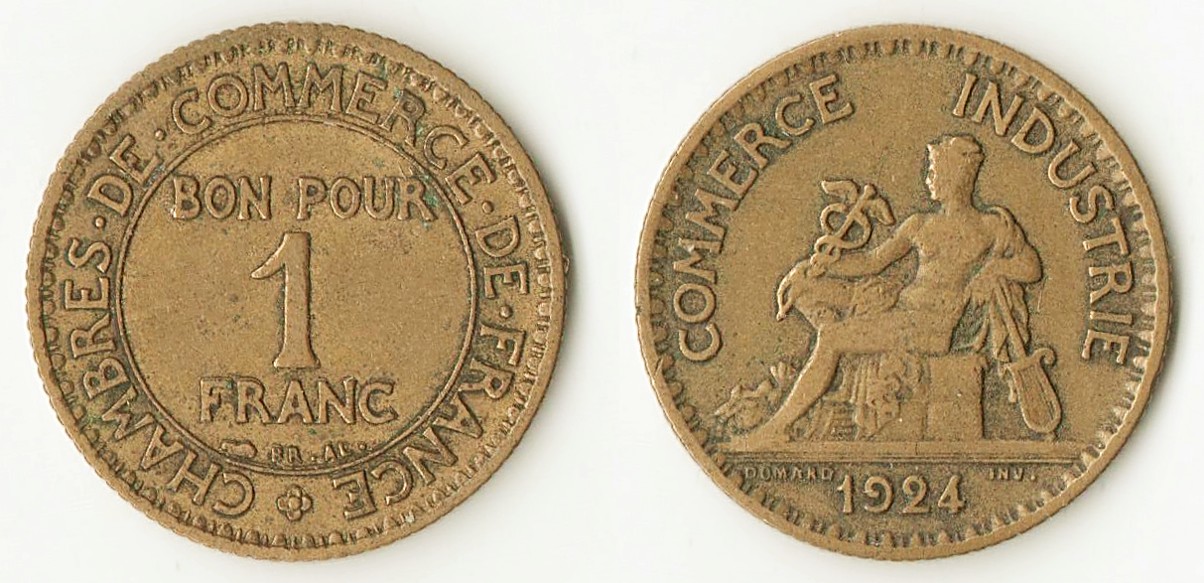 However, coins like that can turn dark brown if subject to environmental damage such as burial in the soil. |
|
Bedrock of the Community
Australia
21789 Posts |
Either of these two cases:
1. Sometimes a wrong planchet in error can result in the wrong alloy.
2. With some World coins, a legal change in the specification for the alloy from bronze (or to) Al/br for a circulating denomination sometimes happens. Same dimensions and design both sides, but an earlier or later date.
Bronze coins tone from red to brown, Al/br coins tone from a shiny golden color to yellow.
The current Australian aluminium bronze coins are golden yellow in color,
the composition is 92% copper, 6% aluminum, and 2% nickel to harden the alloy. Such an alloy is more resistant to corrosion and off color tarnishing.
|
|
Bedrock of the Community
United States
20753 Posts |
I would think testing the weight would be the best method.
|
|
Pillar of the Community
 United States
8038 Posts |
 I can't find the density or SG for typical Al-Br coinage alloys, but since Al is less dense than either tin or zinc, I would expect that a bronze coin made to the same thickness as an Al-Br coin would be at least 3% heavier (i.e., if 5% tin or zinc were substituted by Al this would be the difference). SO if this is a coin with relatively little wear, comparing the weight to the specification should help. Edited by tdziemia
10/11/2020 10:24 am
|
|
Pillar of the Community
 Lebanon
507 Posts |
In fact what make me ask for the difference is this coin , it should be made of aluminum copper , but it look brown to me with black edges , it has the same weight as It should be , so it is an enviromental damage that make it brown? 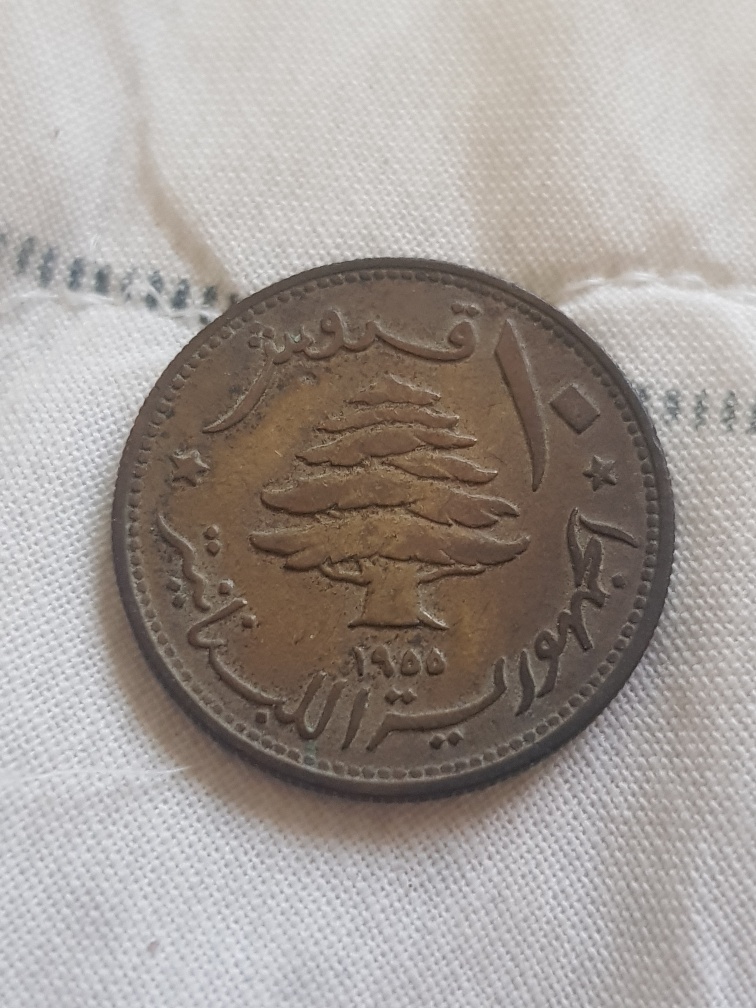 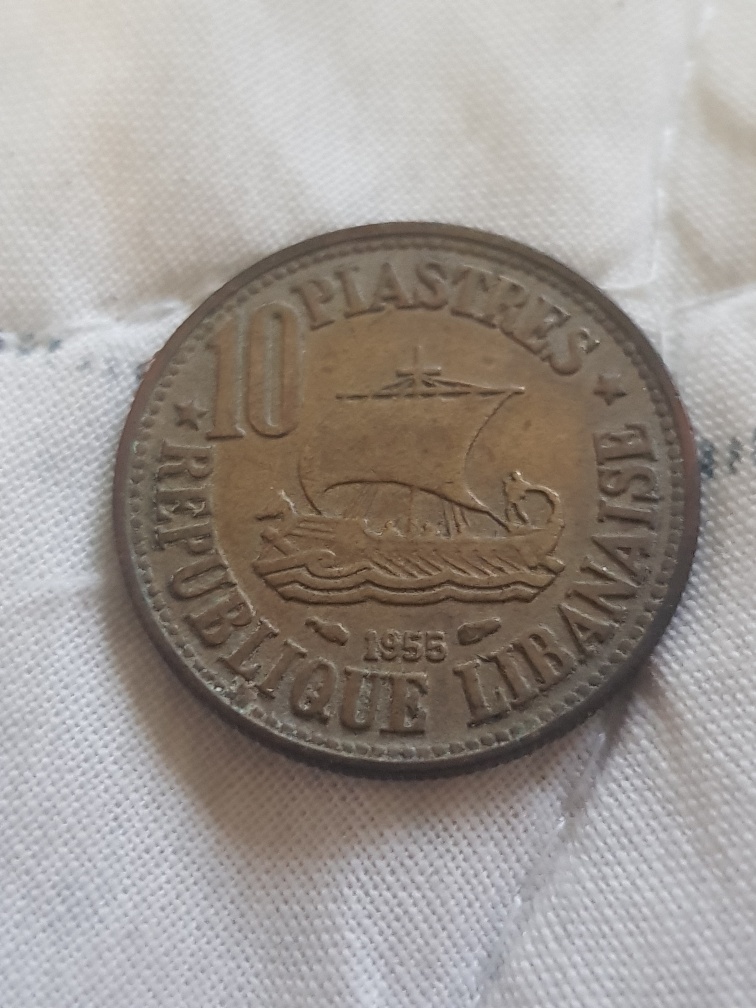 |
|
Pillar of the Community
United States
8038 Posts |
Yes, I think that is the case.
AlBr tarnishes more slowly than copper or bronze, but I have also seen some examples that are dark like this, instead of golden color.
|
|
Pillar of the Community
Lebanon
507 Posts |
thx guys for the valuable infos!
|
|
Bedrock of the Community
Australia
21789 Posts |
Krause World Coins lists four different alloys for the Lebanon 10 Piastres:
1. 1952 Aluminium KM315 (probably a high Si/Al alloy)
2. 1955 Aluminium -bronze KM#22
3. 1955 Aluminium -bronze KM#23 (the coin type shown here)
4. 1961 Copper-Nickel KM#24
5. 1968 to 1975 Nickel brass.
It seems that there could be a great possibility that the different alloy planchets could get mixed up in error. and that would especially apply to the 1955 issue in two different coin types (different designs) most probably from the same Mint outside Lebanon.
|
| |
Replies: 10 / Views: 2,361 |
|






 Posted 10/11/2020 05:38 am





