| Author |
 Replies: 20 / Views: 6,087 Replies: 20 / Views: 6,087 |
|
Press Manager
 United States
1420 Posts |
PCGS - Have you ever looked at modern United States banknotes and wondered when it was that they first became embedded with high-tech anticounterfeiting technology? One need only go back to the 1980s to arrive back at the point in time when U.S. banknotes were little more than simple "paper" and ink. Suffice it to say, even before the 1990s the Federal Bureau of Engraving and Printing was implementing state-of-the-art inking and design technology to stave off counterfeiting efforts. That had been the case since the 19th-century, when the implementation of serial numbers, fine engraving techniques, and cloth-fiber "paper" with red and blue raised lines went a long way in preventing the fraudulent duplication and dispersal of funny money. 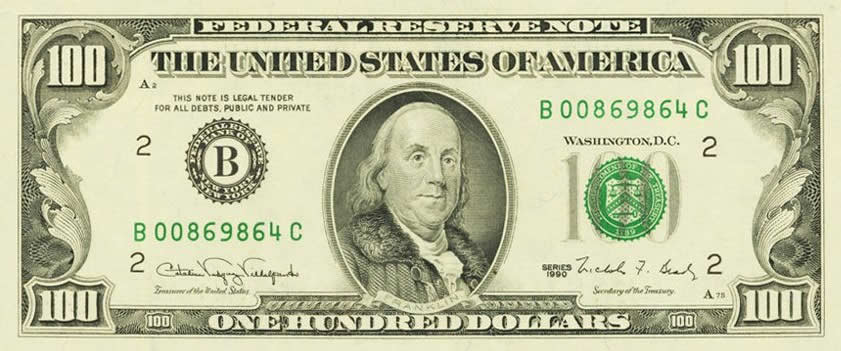
Series 1990 was the first year in which United States banknotes higher than $2 contained security strips and other new anticounterfeiting technology. However, times change, and so did the technology available to the average American - and crafty crook. By the waning years of the 1980s, color printing, computer-based art design software, and ever-broader varieties of paper were widely accessible to typical consumers. Unfortunately, the same technology that helped bring desktop publishing and advanced graphic arts programs to the masses also provided tools that deceitful deviants needed to print convincing but all-out fake money in the proverbial basement. It was clearly time for the United States government to get a step ahead of the tech-savvy criminals. Read the Entire Article
|
|
|
|
Pillar of the Community
United States
4637 Posts |
Interesting and informative. Great information for beginners and a nice refresher for the veteran collectors. I visit my bank maybe two or three times a year buying $2 notes for gifts and while I'm there I always ask if they have any small-portrait $100s. Last year the cashier brought out four examples and this note was in the group. I bought it on the spot and handed the other three back. It scans well and I'd call it a XF+. Not a bad buy for face.  |
|
Moderator
United States
195810 Posts |
Very interesting! I did not know about the previous British attempt at using a security strip. Quote:
Last year the cashier brought out four examples and this note was in the group. I bought it on the spot and handed the other three back. A beautiful example!  |
|
Pillar of the Community
United States
787 Posts |
I saw a 1929 US test bill up for auction with a strip in it. Amazing how many DECADES it took for the technology to catch up! 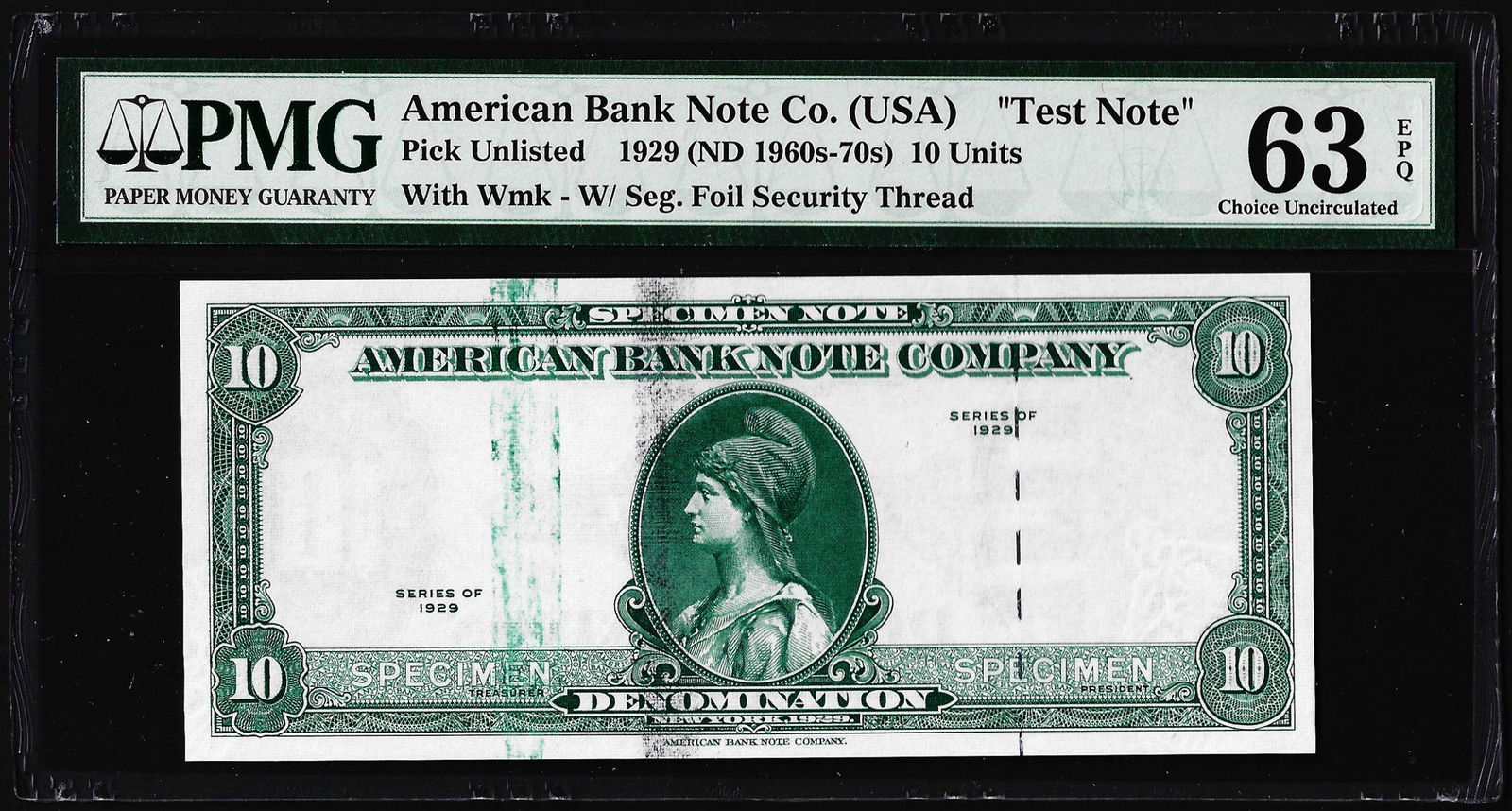 Edited by Nells250
11/12/2020 6:37 pm
|
|
Bedrock of the Community
United States
94367 Posts |
Thanks for that, Nells. Had no idea.
|
|
Pillar of the Community
United States
787 Posts |
I was surprised to see it myself! I often browse through auctions to try and learn through osmosis! I also learned that: Quote:
Crane Currency... Through the late 1900s, the importance of banknote paper at Crane Currency continued to increase as its research into paper-born security yielded the demetallized security thread first used in 1991. ... Crane is still very much local to Massachusetts. They also have a division right across the border in New Hampshire: Quote:
The origins of Crane's Nashua, New Hampshire facility date to the mid-1980's where in the nearby town of Milford, New Hampshire Timothy T. Crane and Paul Cote co-invented the demetallized security thread. This feature was first used in the 1990 series US $100 Federal Reserve Note, and later included in all US banknotes larger than the $2. The ingenuity and security afforded by this invention ultimately saw its adoption in numerous banknotes worldwide.
Today, the Nashua facility continues to produce an array of security threads and all of Crane Currency's MOTION® micro-optic security features utilizing purpose-built equipment engineered and assembled by Crane to meet the modern needs of banknote and security products. I'd like to visit Crane someday but it is a bit of a drive. They supposedly have a museum there. |
|
Moderator
United States
195810 Posts |
Quote:
I saw a 1929 US test bill up for auction with a strip in it. Amazing how many DECADES it took for the technology to catch up! Nice example and very interesting additional information! |
|
Valued Member
United States
338 Posts |
I find these post interesting. Somethings you just don't really think about until.. If I remember correctly when the first strips came out when we were kids, we would pull the strip from the bill.
|
|
Pillar of the Community
United States
1760 Posts |
Now we just need to get rid of cotton fiber-based "paper" and move on to polymer. Australia's new notes are utterly amazing.
|
|
Rest in Peace
United States
2668 Posts |
Nah, they'll make them of something degradable, ala the cent.  |
|
Moderator
United States
195810 Posts |
Quote:
Now we just need to get rid of cotton fiber-based "paper" and move on to polymer. Australia's new notes are utterly amazing. Would be nice, but Crane has too much pull. Same reason why we kept the rag dollar over the dollar coin.  |
|
Pillar of the Community
United States
4637 Posts |
Quote:
Would be nice, but Crane has too much pull. Same reason why we kept the rag dollar over the dollar coin. From what I've read, the preferred choice of a paper dollar over a round-metallic dollar was an overwhelming vote from the public. |
|
Moderator
United States
195810 Posts |
Quote:
From what I've read, the preferred choice of a paper dollar over a round-metallic dollar was an overwhelming vote from the public. I disagree. Opinion polls from the denizens of CCF and other numismatic communities cannot be correlated to the public at large. The general public will use what they are used to using (paper) or what they are given to use instead (coins). Whenever I have polled people outside of our bubble how they felt... the usually give me a dumb stare and a shrug*. This is not to stay they are stupid. They are ignorant at worst, but most of us are highly adaptable to change. Congressional inaction comes for lobbying, not the will of their constituents (which they will claim as their reasoning to distract us from the lobbyists' well funded influence). Personally, getting rid of the rag dollar is a hill I no longer wish to defend. Now, let us talk about getting that rotten Zincoln out of circulation. * I will admit my polling numbers are also too small to represent the public at large, for what that is worth. |
|
Pillar of the Community
United States
4637 Posts |
I wasn't referencing the opinions of numismatic forums. I was referencing a Gallup Poll that showed 53% preferred a dollar bill, 22% preferred a coin and 24% didn't have a preference.
Edited by SteveInTampa
03/19/2021 3:22 pm
|
|
Moderator
United States
195810 Posts |
Link? I would like to see it and keep for future reference.
We have had no shortage of "Dollar Coin v. Dollar Note" polls and topics on CCF. I need to look back through them for any outside references I may have missed or since forgotten.
|
|
Moderator
United States
195810 Posts |
Actually, never mind on the link. I found no shortage of past polls to review, although most of them are quite dated. Now I am reminded why I gave up pushing for change. But still, get rid of the circulating cent. The polls show that one is a loser.  |
| |
Replies: 20 / Views: 6,087 |









 Posted 11/12/2020 10:36 am


