











 Posted 11/14/2020 5:38 pm


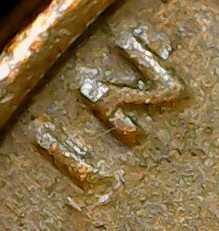
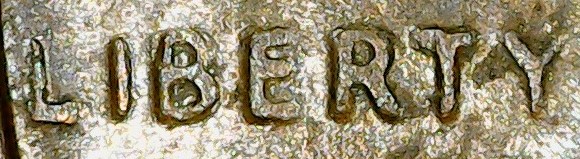
Mostly coin wear and when the coin was struck it had extreme die wear, and a lot of polishing to remove die clashes.
1. First note the condition of the devices? Note how the tops of the devices are flattened? There is no view of a tapered device because of the beating it took in circulation.

Note the top image. That is what the coin could have looked like when it was freshly struck.
2. But the dies that struck your coin is advanced in age. As the numbers of coins are struck, the devices loose the look they had, when the die was fresher and young. So the devices are we moving towards the rims of the coin. The fields were filled with die flow as the die ages. (Wrinkles that show it is an aging die.
3. Die polishing happened. How can I tell that? Remember the first image of the top? That is the size the normal devices should be. But look at them now. They are all shorter because of die polishing. When the fields are polished down (the fields are the outside of the die) they height is reduced.
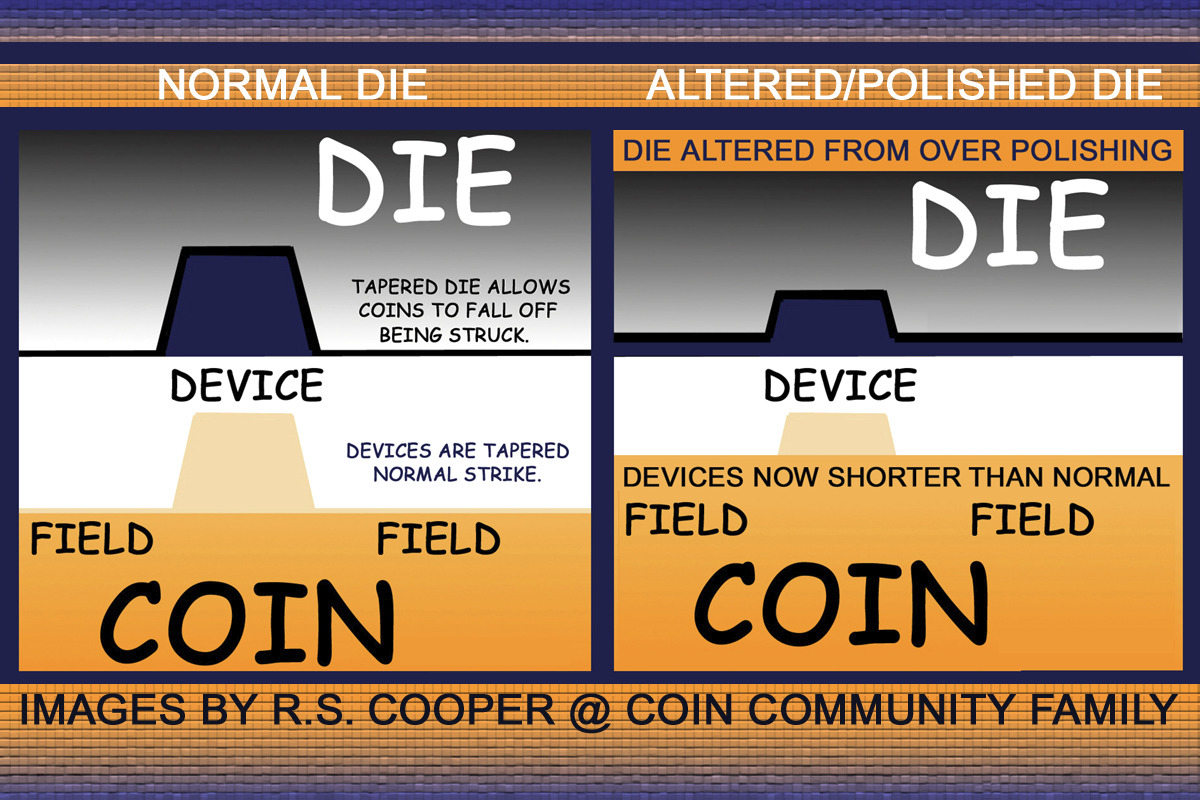
Note on the image. The fields on the bottom of the illustration. When they fields are thinned, not the devices become smaller, shorter in height. So seeing this reduction of overall size of the devices, were my first clue for die polishing.
So there is nothing special about this coin. Just a learning experience, as to how a die ages, what events it goes through and then it is retired when it has reached it usefulness. Hope this helps you see, what I see on your coin.
1. First note the condition of the devices? Note how the tops of the devices are flattened? There is no view of a tapered device because of the beating it took in circulation.
Note the top image. That is what the coin could have looked like when it was freshly struck.
2. But the dies that struck your coin is advanced in age. As the numbers of coins are struck, the devices loose the look they had, when the die was fresher and young. So the devices are we moving towards the rims of the coin. The fields were filled with die flow as the die ages. (Wrinkles that show it is an aging die.
3. Die polishing happened. How can I tell that? Remember the first image of the top? That is the size the normal devices should be. But look at them now. They are all shorter because of die polishing. When the fields are polished down (the fields are the outside of the die) they height is reduced.
Note on the image. The fields on the bottom of the illustration. When they fields are thinned, not the devices become smaller, shorter in height. So seeing this reduction of overall size of the devices, were my first clue for die polishing.
So there is nothing special about this coin. Just a learning experience, as to how a die ages, what events it goes through and then it is retired when it has reached it usefulness. Hope this helps you see, what I see on your coin.


