| Author |
 Replies: 11 / Views: 1,403 Replies: 11 / Views: 1,403 |
|
|
Pillar of the Community
United States
1882 Posts |
What am I doing up? I dunno. I'm gonna say "Fine" for both sides, with the reverse being the better side. Did learn today that 1925 tends to have a weaker strike. Thanks for commenting. 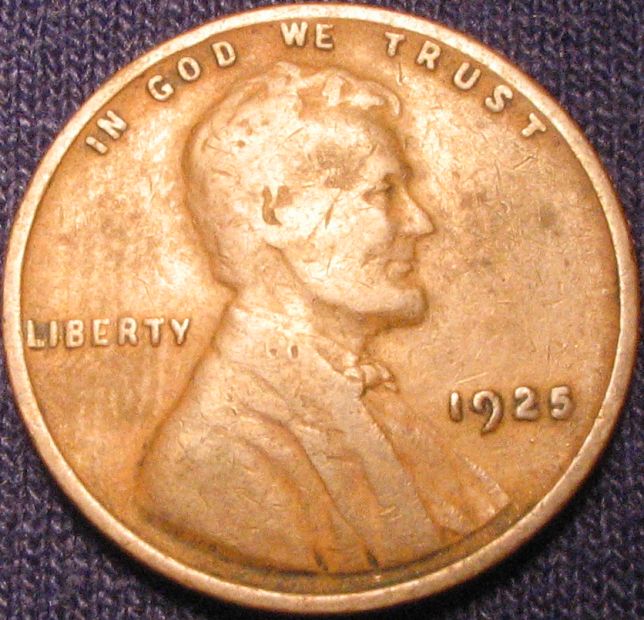 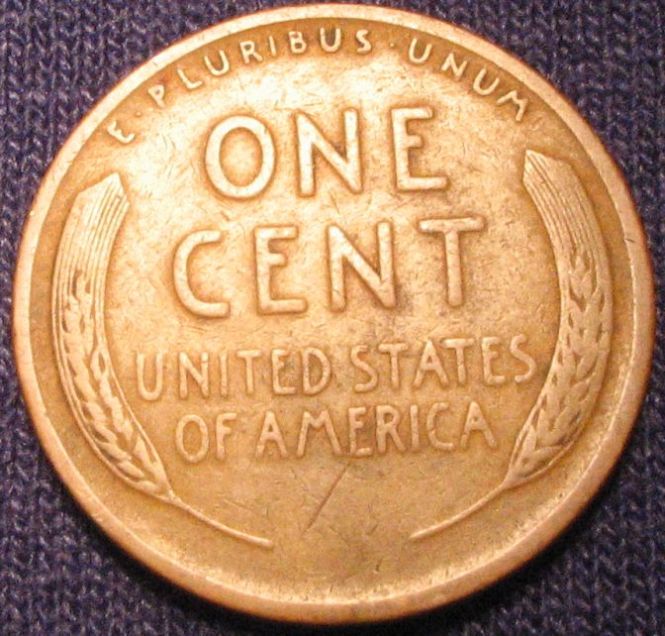 |
|
|
|
Bedrock of the Community
Canada
10743 Posts |
Yeah, Steve, I'm up too.  I'll agree with a Fine grade.  |
|
Moderator
 United States
23731 Posts |
|
|
Bedrock of the Community
United States
20037 Posts |
Who told you the 1925P is known for a weak strike? IMO, that is completely incorrect. The majority of 1925P coins were well-struck and from sharp dies. Excellent examples are so plentiful I'd always pass on LDS (Late Die State) coins.
This coin shows more obverse wear, it is inconsistent with the reverse. There is separation between the cheek and jaw, but not much. The obverse devices indicate a LDS coin. The obverse appears to be about F15-18. The reverse wheat lines are correspond to a VF35 coin. IMO, this coin has to be net graded based on the descrepancy between the obverse/reverse levels of wear. The rims are nice, there's no corrosion or spotting problems and the color is nice and even on both sides.
VF-25
|
|
Pillar of the Community
 United States
1882 Posts |
Thank you,BadThad. In the last couple of days someone posted a link to a book on Lincoln Cents...from google books. I probably misread, misunderstood, or forgot what I read.
I'll find it.
|
|
Pillar of the Community
United States
1882 Posts |
The Complete Guide to Lincoln Cents
That is the source that I had looked at, and of course I was wrong to say that 1925-P's are poorly struck.
The 1925-S's and 1925-D's are considered the poorest coins of the Lincolns, because of worn and eroded dies.
The 1925-P's are generally well struck, but have less detail than 1918 and before...because of wear on the master hub.
Is that information accurate?
Now I would like to see a high grade 1925 and 1918 (or earlier) side-by-side.
|
|
Bedrock of the Community
United States
20037 Posts |
Yes, that is accurate. The S and particularlly the D issues are well known for over-used dies and poor striking pressures. Here's an example from my collection. It's one of my favorite coins because it's pretty much a "worst case scenario" for die wear....this is an AU58 coin: Image Insert: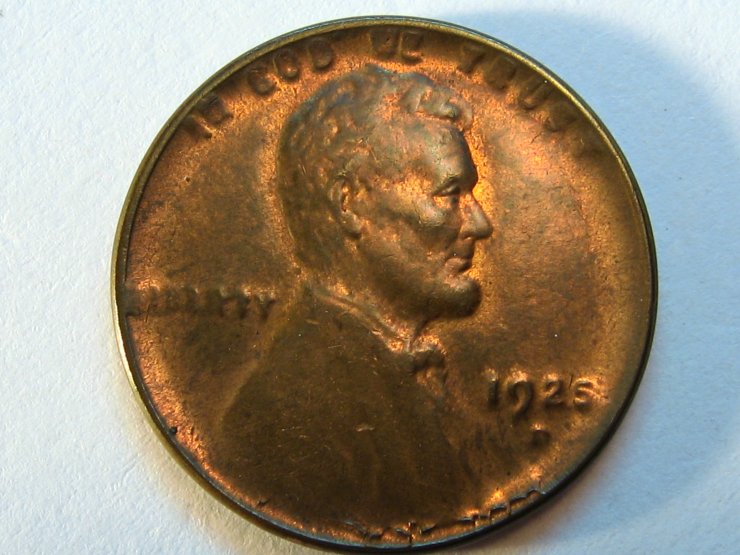 Lincoln Cent Lover!VERDI-CARE™ INVENTOR https://verdi.care/
|
|
Pillar of the Community
United States
1882 Posts |
Cool...the date looks mushy on that coin. Is the mess along the bottom of the obverse caused by a die crack? Or something more ominous than that?
|
|
Bedrock of the Community
United States
20037 Posts |
The lack of features are simply due to a highly over-used die, no cracks. The spot at the bottom is where the metal on the planchet was ripped more than cut by the die.
Lincoln Cent Lover!VERDI-CARE™ INVENTOR https://verdi.care/
|
|
Pillar of the Community
United States
1882 Posts |
Thad, are you saying the planchet was ripped, rather than cut, before the coin was struck?
Is there a separate die in charge of cutting out the planchets, that was also worn out?
( edit )
Just to make sure we're on the same page, I'm asking about the "oozing" effect that runs from about 4:30 to 6 o'clock near the rim of the obverse.
Edited by steve199
12/05/2008 7:32 pm
|
|
Bedrock of the Community
United States
10982 Posts |
The cheek gouge looks nasty in the pic but I'd still go VF20 on your 1925.
|
|
Bedrock of the Community
United States
20037 Posts |
Quote:
Thad, are you saying the planchet was ripped, rather than cut, before the coin was struck?
Is there a separate die in charge of cutting out the planchets, that was also worn out?
( edit )
Just to make sure we're on the same page, I'm asking about the "oozing" effect that runs from about 4:30 to 6 o'clock near the rim of the obverse.
We're talking about the same thing. The cutting edge on that part of the die was very dull and more or less ripped rather than cut (stamped) the design on the coin. This has nothing to do with the preparation of the planchet....those are stamped in an entirely different process. EDIT - This area commonly shows this "ripping" effect on all Lincoln dies that are very badly worn. I've only seen two other Lincolns with this, but they looked almost identical to mine. Edited by BadThad
12/05/2008 8:43 pm
|
| |
Replies: 11 / Views: 1,403 |
|





 Posted 12/05/2008 09:01 am





