| Author |
 Replies: 27 / Views: 7,238 Replies: 27 / Views: 7,238 |
|
|
|
Moderator
 Canada
10478 Posts |
H, like I said, it is not a big secret... dealers and collectors alike whom have been in this hobby for more than a decade, know it...
"Discovery follows discovery, each both raising and answering questions, each ending a long search, and each providing the new instruments for a new search." -- J. Robert OppenheimerContent of this post is licensed under a Creative Commons Attribution-NonCommercial 3.0 Unported License. See: http://creativecommons.org/licenses...0/deed.en_USMy eBay store
|
|
Valued Member
Canada
222 Posts |
In my opinion, coins of this type that are certified today should have a brief summary of the XRF result on the certificate. Otherwise, doubt always tends to remain. And this also applies to rare brass varieties of colonial tokens. Quote:This must be the NGC example. The photo does not scream brass to me, but I assume in hand it is more obvious. https://auctions.canadiancoinsandpa...287/lot/441A The pictures of this coin on the NGC website are more meaningful: 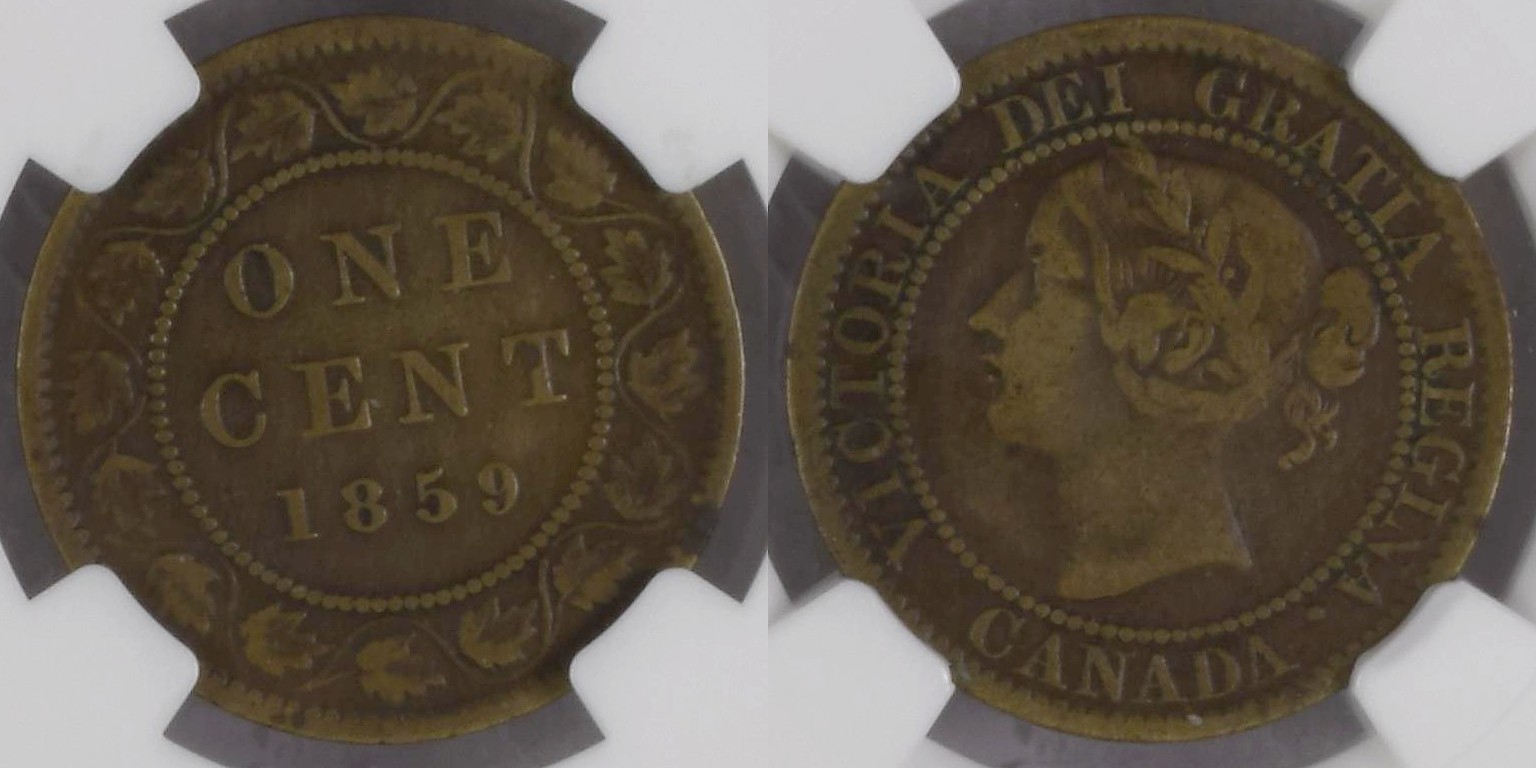 Source: https://www.NGCcoin.com/certlookup/2847086-002/20/I'm sorry if my English isn't perfect... I'm learning a little more every day.
Edited by ainsivalavie
02/09/2021 4:27 pm
|
|
Pillar of the Community
 Canada
5660 Posts |
Except for the excess wear at the edges, which would normally equate to a softer material, the NGC coin just looks like the thousands and thousands of 1859's that I've seen..... just common normal bronze.
|
|
Valued Member
Canada
222 Posts |
Quote:
Okiecoiner: Except for the excess wear at the edges, which would normally equate to a softer material, the NGC coin just looks like the thousands and thousands of 1859's that I've seen..... just common normal bronze. Even if I've already seen bronze coins with this hue, it's not the norm. Maybe it's time to adjust the colors of your screen again  I'm sorry if my English isn't perfect... I'm learning a little more every day.
Edited by ainsivalavie
02/09/2021 10:38 am
|
|
Pillar of the Community
Canada
1505 Posts |
Agreed, a cert or XRF description should be part of the certification process. that would eliminate all guesses. would be interesting to learn  how often TPG's were wrong? |
|
Pillar of the Community
Canada
5660 Posts |
Well, until about 5 years ago, the ICCS test for brass was, from Brian C, to lightly scratch the edge of the coin and take it outside into bright sunlight. If the scratch showed yellow, it was cert'd brass. It had to be outside, because interior incandescent or fluorescent lighting made everything yellowish. I'd love to see the XRF's on some of those coins with that test. I think that the same type of "test" was used in the US TPG's as well before XRF was needed. |
|
New Member
Canada
10 Posts |
I know this is an old thread but I could sure use some guidance. Long story short, I was metal detecting today in a spot that I've found many, many, many old coins. The site is only an acre but I've found coins from as early as 1807. Today I found an 1859. All I've done is gently rinse is with warm water and air dry. I can see it definitely looks yellow, but after reading this thread I'm not so convinced. What can I do to XRF this? Is there a place I can go? I live in the GTA, any help would be greatly appreciated. 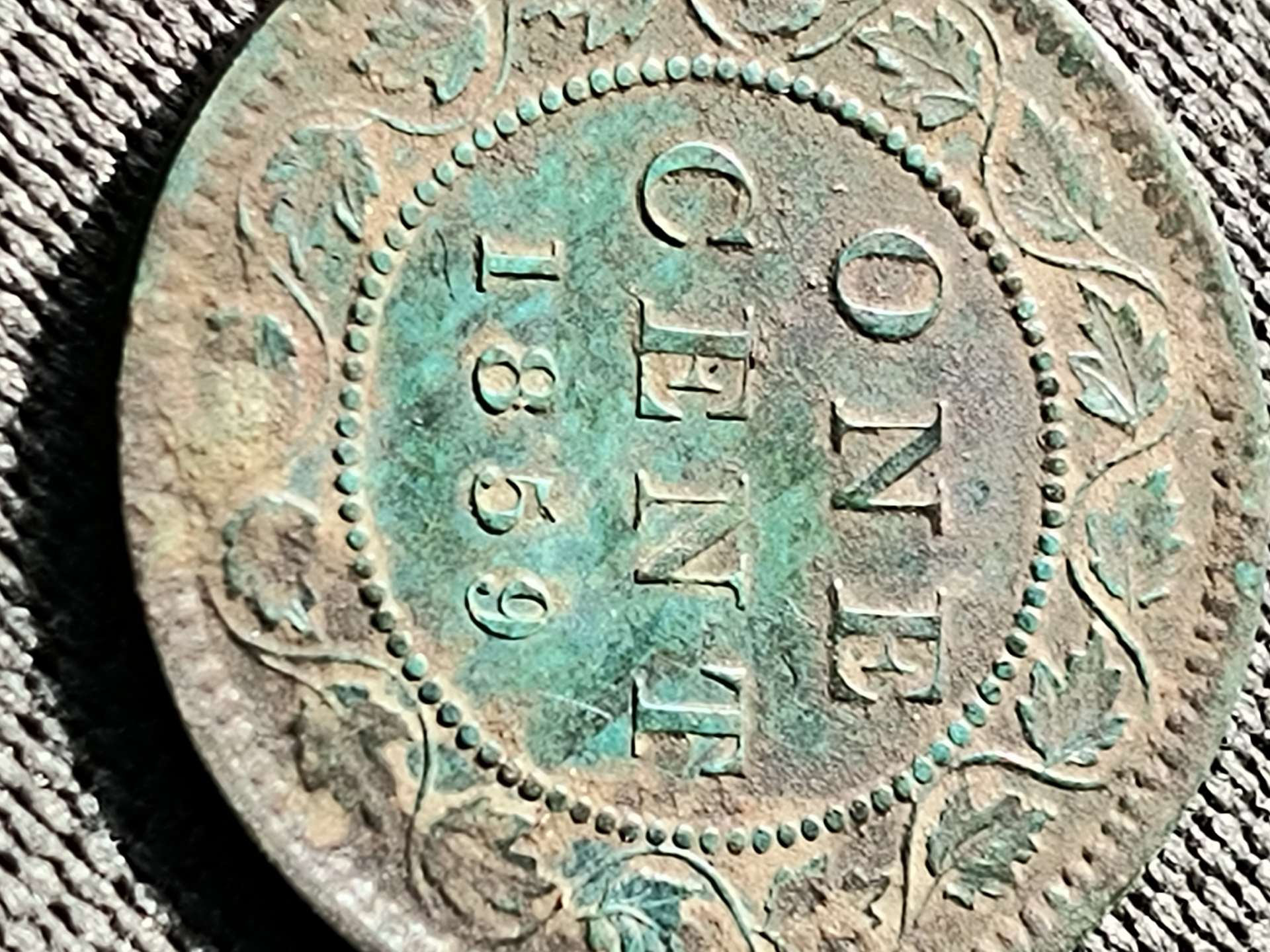 |
|
Pillar of the Community
Canada
5660 Posts |
The acidity in the soil has greatly affected the color and I doubt very much that it's brass. Some dealers may have an XRF, as may some scrap dealers, but those aren't meant for minute copper/tin or copper/zince small alloys. The best thing about your coin is that it doesn't look like there's a vine break at 7. Go to the Haxby site and see if you can ID it. Brass cents were not relagated to one die ... they were mistakes caused by uneven alloy mixture in the crucibles as they poured the molten alloy into ingots to be flattened into thin sheets, from which the planchets are struck. A little portion of one sheet may have a very small section that may test as brass rather than bronze, just like when you pour a glass of juice and a little reidue remains in the bottom of the glass. Since there are small amounts of both zinc and tin in both brass and bronze alloys, it doesn't take much improper mixing to have more Zinc than Tin, making it brass rather than bronze. Planchets struck from the small portion are then mixed with all the other planchets, so one die may possibly strike 2-3 coins and another 2-3 coins. The planchets are all in one large container and mixed with the other 10 million that were struck for '59. I'd guess that there are 40-50 known and I have a friend that has one, complete with the XRF. I helped write the March 2012 research article with 2 others for the CN Journal on brass cents titled "1859 brass cent: modern science addresses a classic numismatic question" where we XRF'd about 500 of our 1000+ 1859 cents, along with 1859/8' and 1858's. It's very neat article and we came to the conclusion that any brass cents were entirely random with no actual die correlation.. We figure, maybe 40-50 brass cents out of the 10 million minted and, because the huge container of 10 million blank planchets weren't relegated to any specific dies, then there may be brass 1858's or 9/8's as well. Of the well over 1000 1859's that we XRF'd, both before and after the RCNA article, we, of course, didn't find any brass cents, though we did find one that XRF'd at 6.29 % tin and another at almost 2% zinc, but it was still bronze. Brass is commonly accepted to be at least 20% zinc, though most commonly around 30%, depending on what type of brass is being made. Good luck finding an XRF that can accurately find the alloy from your heavily corroded 1859. That corrosion almost guarantees an inaccurate XRF. I live in the GTA as well in Burlington. Edited by okiecoiner
02/22/2024 6:16 pm
|
|
New Member
Canada
10 Posts |
After a gently, scrub free bath in the reverse electrolysis tank, I don't think she's as bad as you thought friend... And IMO definitely not just copper... Too yellow. 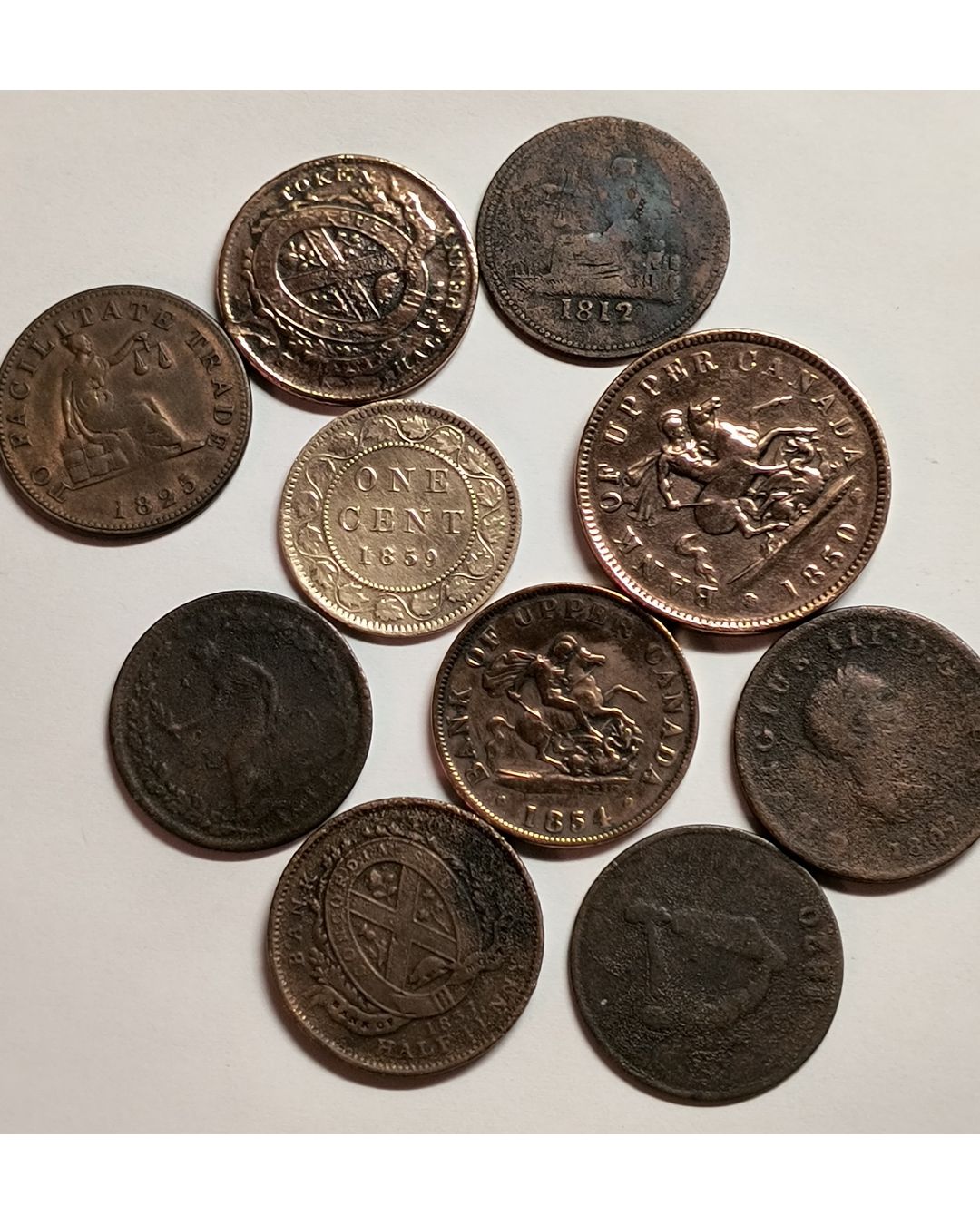 Does this mean I'm coming for a drive so you can put your eyes on it? Haha. Obviously you're way more skilled than me and I would love your opinion. Edited by LarryjrK
02/22/2024 9:04 pm
|
|
Pillar of the Community
Canada
5660 Posts |
No, it's not just copper, it's bronze and there's tin in the alloy. Send me an email with the photo of the coin.
|
|
New Member
Canada
10 Posts |
I'm a brand new member, I'm not allowed to email yet lol. Another suggestion? Thanks btw, your help is amazing. 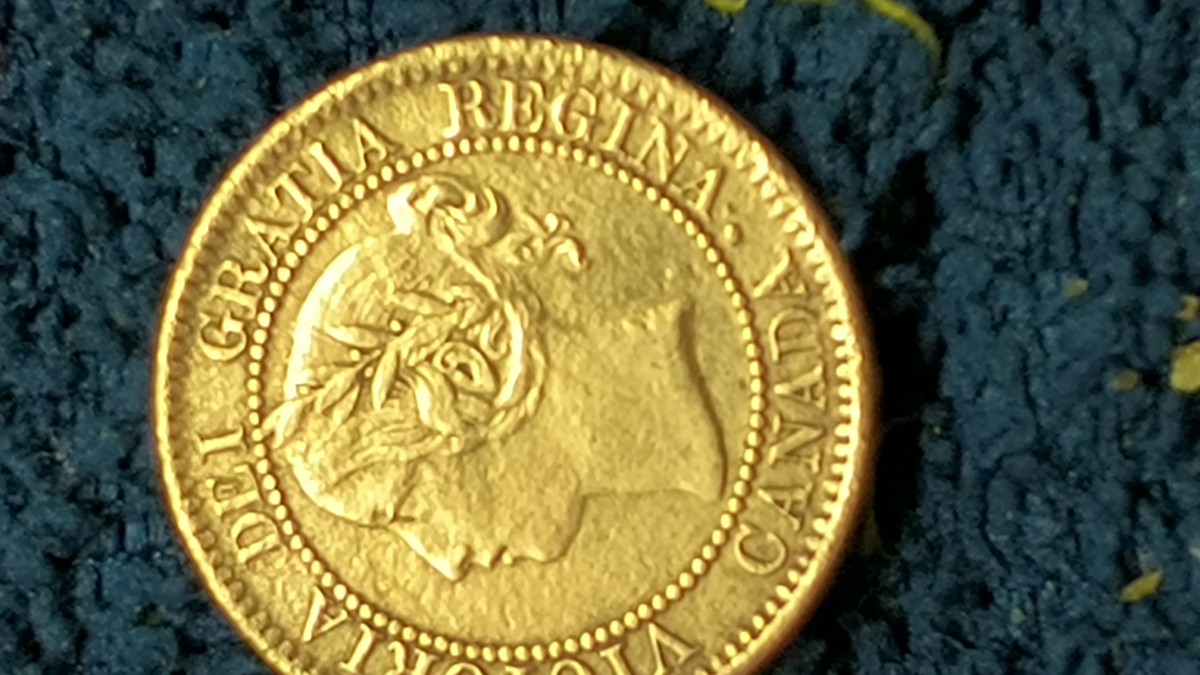 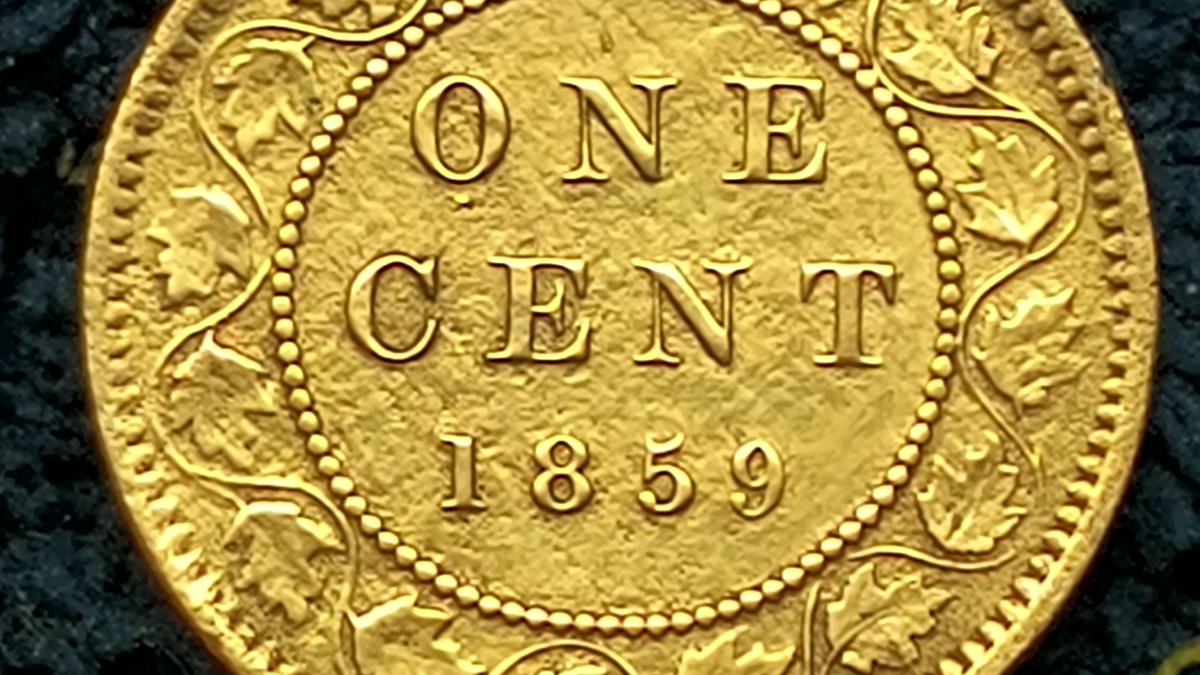 I know you guys here don't know me from Adam, but I do have years of experience with metals, alloys and such. I realise that most of the 59s are bronze.. 95% copper, .04tin and .01zinc, but this coin looks too yellow to be 95% copper IMO SPP-Ottawa... Would love to send you this for testing, I'm feeling lucky Edited by LarryjrK
02/23/2024 12:47 am
|
|
Pillar of the Community
Canada
5660 Posts |
You can turn any 1859 cent the same color with any number of cleaning items under the sink, including bleach, vinegar and any number of others. We've seen many of these before on this and other sites, but there's always the possibility. Answered more fully on a different thread.
Edited by okiecoiner
02/23/2024 08:33 am
|
| |
Replies: 27 / Views: 7,238 |





 First Page


 Posted 02/09/2021 08:10 am


