| Author |
 Replies: 18 / Views: 3,290 Replies: 18 / Views: 3,290 |
|
Pillar of the Community
Canada
1189 Posts |
I have a question regarding incuse devices, and before anyone tells me to use the search function I already have. I have read numerous articles and pretty much every post that has been made regarding incuse devices and I still do not fully understand how a genuine doubled die on incuse devices becomes smaller like Machine Doubling like 90% of the experts/collectors are saying. Nothing adds up, I even went the extra mile and fired up my CAD software and created my own dies just to virtually see for myself how and why the incuse devices would be "thinner" and to my surprise, nothing changed. The same theory of how doubled dies on raised devices is exactly the same as incuse devices, the only difference between the two is the fact one is raised and one is incuse. I DO, however, understand Machine Doubling is a lot more likely on incuse devices due to the die (raised punch) being raised out of the channel (incuse design on the struck coin) after the initial strike and any amount of vibration could knick the edges causing the effect you see like on Machine Doubling. My issue is, how and why does everyone think that genuine hub doubling on incuse devices would be drastically thinner and look more like Machine Doubling. I am more of a "hands-on" type learner, and most of my questions/concerns have been easily solved by simply designing my "issue/curiosity" in CAD software while applying the same basics that the mints (the US, Canada, etc) use to create dies along with using the same methods both mints use for the hubbing processes. Now I don't want anyone to think I am calling out a bunch of experts or collectors and saying they are wrong, I just simply want to figure out how they came to the conclusion that incuse devices would be thinner/smaller if hub doubling is present so that I can be on the same page. The answer I am looking for has been widely avoided, and the ones that have explained I feel they are just going off of a "because that's what I was told" basis and not fully applying the actual minting process, or die making process. Again, this post is not meant to step on anyone's toes, I accept any and all opinions respectfully. I just want to understand 100% accurately, and that has not happened yet. Finding and discovering modern Canadian doubled die varieties since 2018. 2023 Recent Publications: Modern Canadian Doubled Die Varieties - First Edition PDF & Paperback https://www.mcddv.ca - (New Site, Second Edition, Registry & Services coming fall 2026) |
|
|
|
Pillar of the Community
 Canada
1189 Posts |
To further extend my question and explain better. When a master hub (raised) is hubbed to make a master die (incuse) and is not in the correct position during the second blow of the hubbing to create the master die since they are usually hubbed more than once for the best relief possible, then those details get transferred to the working hub and on to working dies, a doubled die is formed. Now if you remove the "working dies" (incuse) that strike the coins, and strike a coin with a working hub that has been doubled like previously, now all of a sudden since it is "incuse" on the coin (raised on the die) it is now apparently Machine Doubling. Makes zero sense. Finding and discovering modern Canadian doubled die varieties since 2018. 2023 Recent Publications: Modern Canadian Doubled Die Varieties - First Edition PDF & Paperback https://www.mcddv.ca - (New Site, Second Edition, Registry & Services coming fall 2026) Edited by JohnWayne007
02/04/2021 08:48 am
|
|
Pillar of the Community
Canada
1189 Posts |
I have also taken into account that single squeeze hubbing removes the "second blow" on newer coins with incuse letters. But even with the single squeeze process, I am failing to understand how devices are "Smaller/thinner" when a doubled die is present.
Finding and discovering modern Canadian doubled die varieties since 2018. 2023 Recent Publications: Modern Canadian Doubled Die Varieties - First Edition PDF & Paperback https://www.mcddv.ca - (New Site, Second Edition, Registry & Services coming fall 2026) |
|
Pillar of the Community
United States
1427 Posts |
I see where you get confused. The hub doesn't get doubled that often, just the die. and when this happens, the hub's positive image is impressed on the die, a hub looks like a normal coin on its face. With this in mind, the incuse devices are incuse on the hub, so they will create a positive image on the die. so lets think of the incuse devices differently. If we assume the lettering is the field, and the surrounding area is the actual device, we would be doubling the surrounding area on the die, not the letters. Make sense?
|
|
Pillar of the Community
United States
1427 Posts |
|
|
Pillar of the Community
United States
1359 Posts |
Nice bottom pic. That looks familiar. On incused devices, its like the field of Lincoln Cents. Trying to figure out how to explain it it.  When the date is doubled like on a Lincoln DDO. The date is wider or bigger because the field is the incused area. The incused part is still the high point on the die like the field on Lincolns. Incused letters would get smaller on a doubled die because the design around it is whats actually doubled. Not the letters because that more-less is the field of the coin. Edited by Kloccwork419
02/04/2021 10:20 am
|
|
Pillar of the Community
United States
4428 Posts |
Quote:
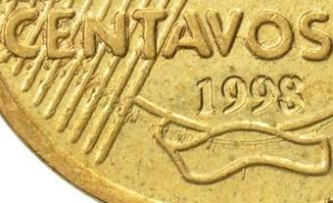
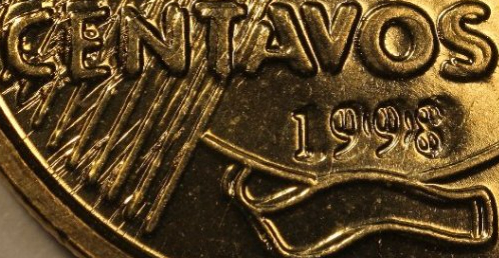
how they came to the conclusion that incuse devices would be thinner/smaller if hub doubling is present so that I can be on the same page. Well, they simply found examples. The incuse date on the Brazilian Centavos pictured above are good examples. So are the major US shield cent doubled die reverses with the incuse E PLUIRBUS UNUM. On both examples, the incuse lettering has decreased in size. I tried quickly making a visual of the process but I don't think it's that great. 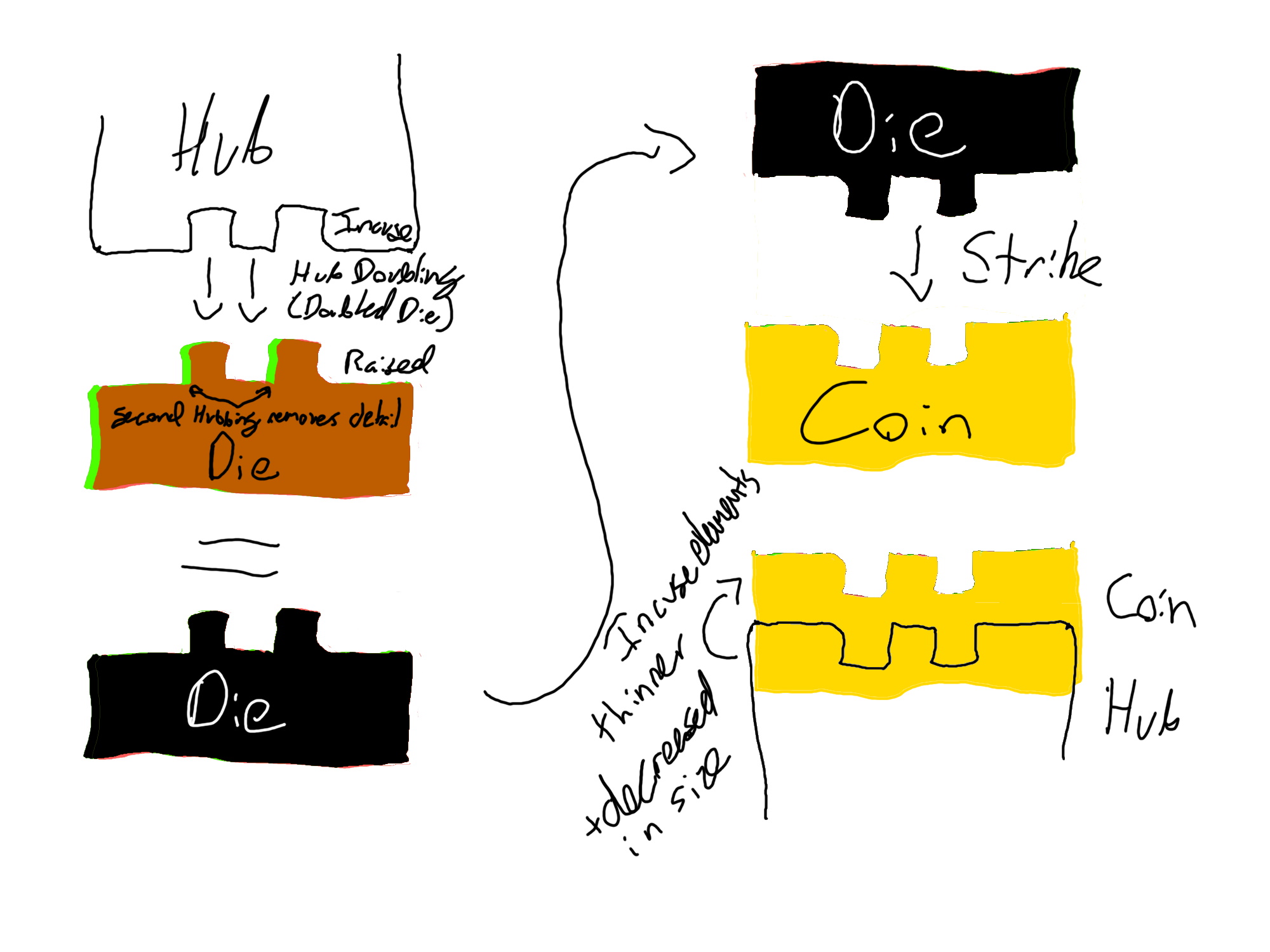 The second hubbing removes the raised detail on the die, which, in turn, become the incuse detail on the coin. Also, I'm curious to see what you did with your CAD software. Seeing that may help us clearly understand what you're think and where you're at. Edited by Tanman2001
02/04/2021 11:36 am
|
|
Pillar of the Community
United States
3003 Posts |
here is what I think happens i am GUESSING there is more then one strike to make a die die gets hit the first time. if the hub (or die?) shifts between the first and second strike, the hub smashes down on part of the raised area on the die. i GUESS I should read up on how they make hubs and dies... stick figure representation: 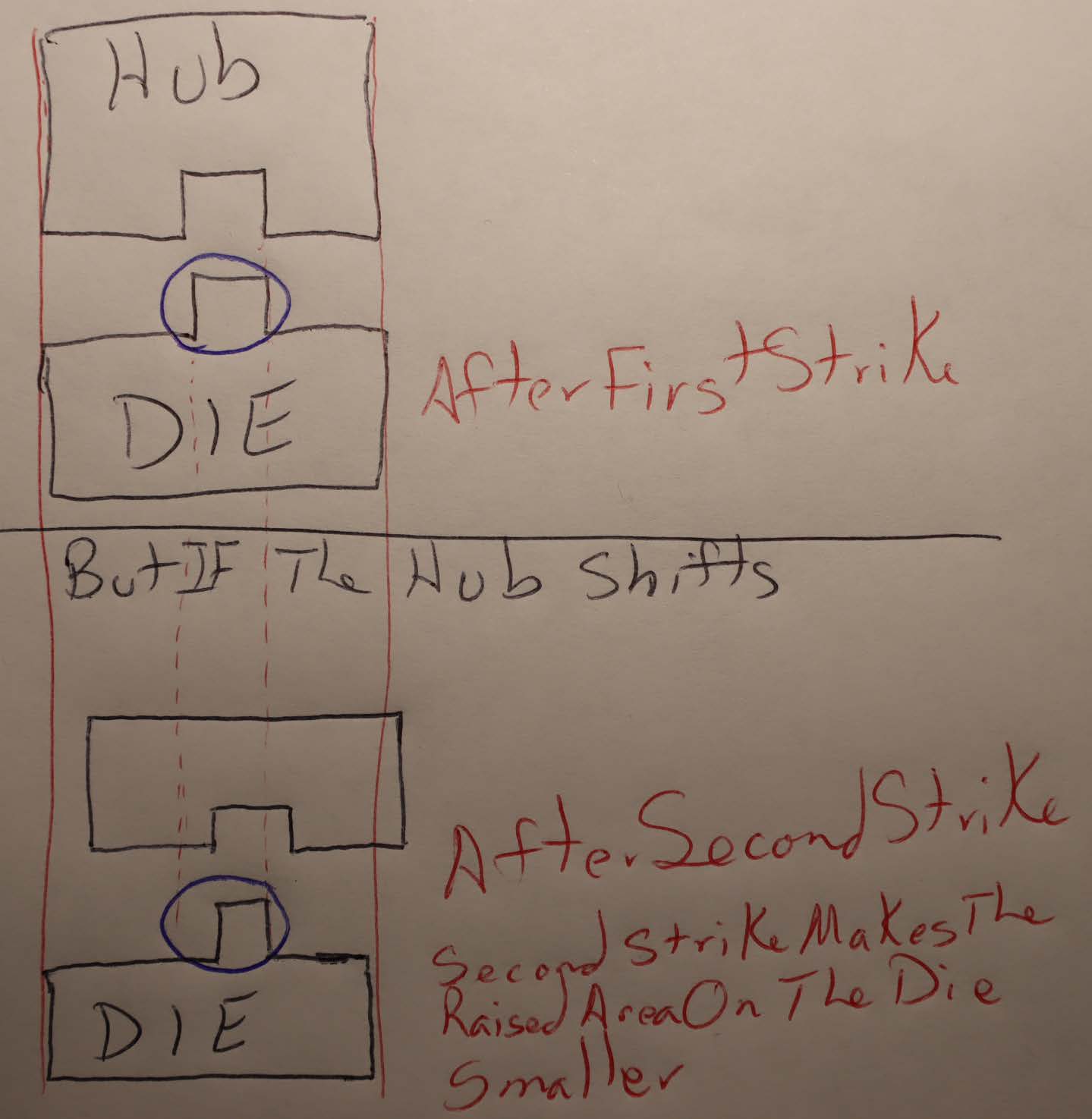 |
|
Pillar of the Community
United States
1427 Posts |
|
|
Pillar of the Community
United States
1667 Posts |
I just blame it on the coin gnomes and call it a day.
|
|
Bedrock of the Community
United States
10635 Posts |
Very interesting!  |
|
Pillar of the Community
Canada
1189 Posts |
Sorry for the delayed response, I spent most of my day in the ER getting a broken nose realigned and couldn't use my computer. Quote:
Also, I'm curious to see what you did with your CAD software. Seeing that may help us clearly understand what you're think and where you're at. Tanman2001, Here you go, fair warning though, this coin I designed when I was daydreaming about what it would be like if Canada still made pennies, it is a crude example that I dident get around to finishing but it serves its purpose for what I use it for. 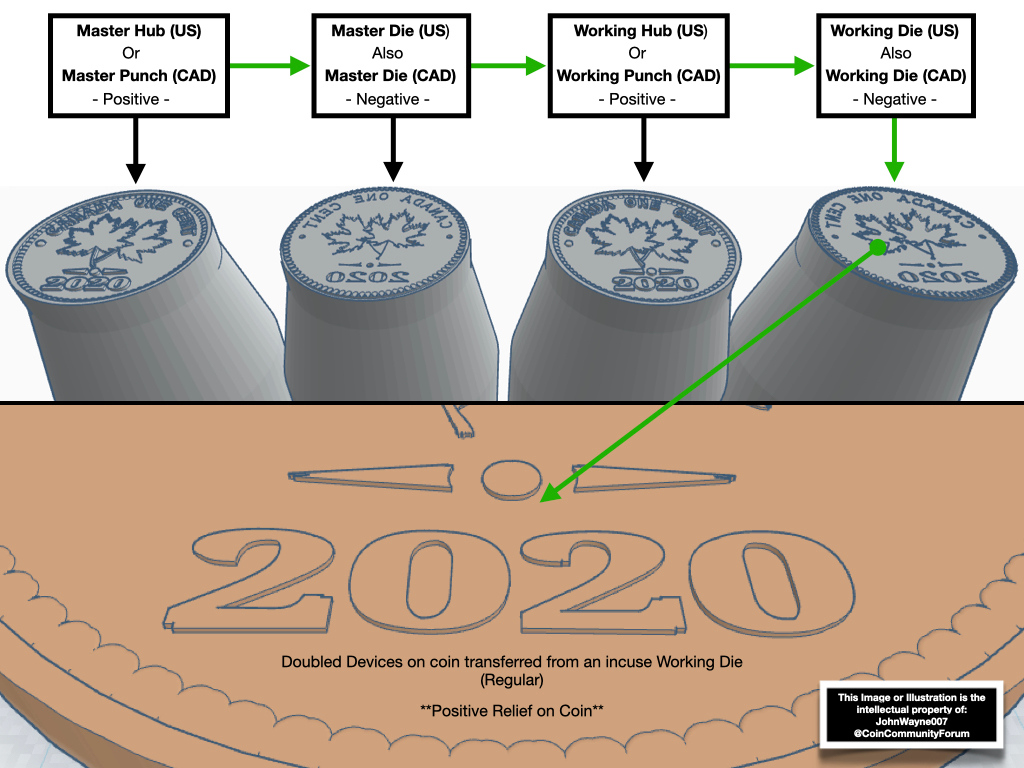 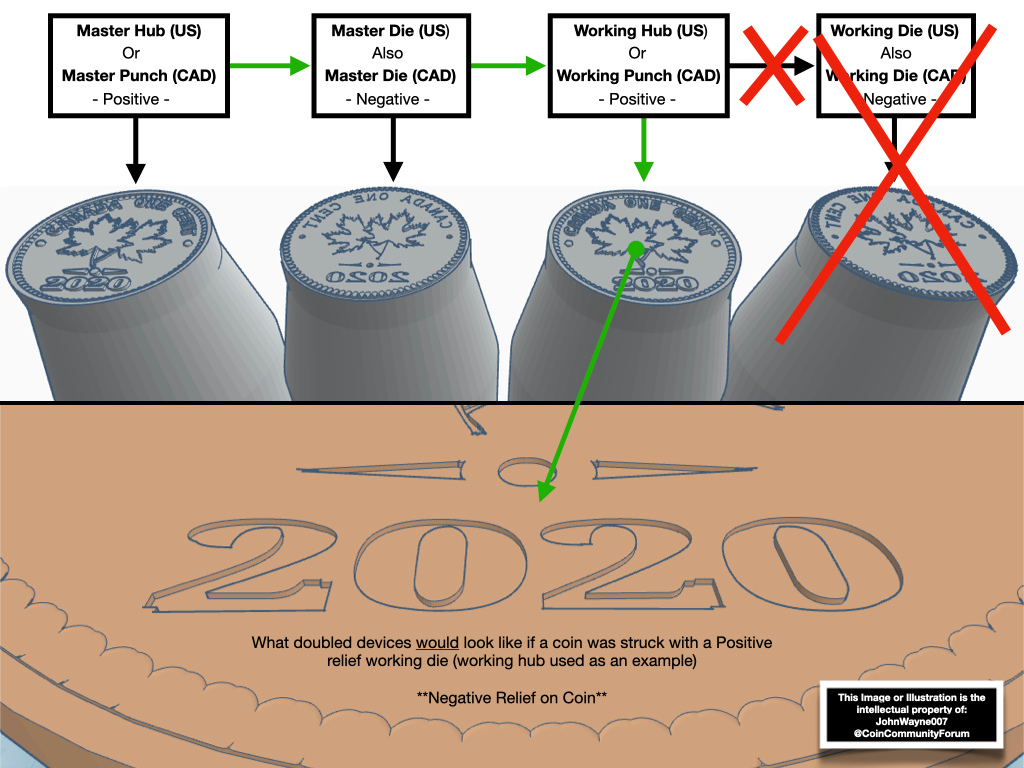 Notice how the "thickness" didn't change at all regardless of devices being raised or incuse. I can manipulate the dies shown in the pictures to be doubled by even the smallest degree in any direction, height, or angle while using what I call "animated hubbing" which is virtually identical to the actual hubbing process just on a computer instead of steel and presses. As I said, I am a hands-on learner, and also very thorough. PS. the working hub used as an example is obviously supposed to be mirrored (date backwards on the working hub) but for this purpose, I didn't bother to mirror it as I'm sure most already knew that. Finding and discovering modern Canadian doubled die varieties since 2018. 2023 Recent Publications: Modern Canadian Doubled Die Varieties - First Edition PDF & Paperback https://www.mcddv.ca - (New Site, Second Edition, Registry & Services coming fall 2026) Edited by JohnWayne007
02/05/2021 01:10 am
|
|
Pillar of the Community
United States
1427 Posts |
No, the working hub is not mirrored, and I am not sure how you got the doubling on the 1st die, but the hubbing would cut at the devices like Machine Doubling because the way that Incuse devices double is the same way Machine Doubling does. |
|
Bedrock of the Community
United States
62064 Posts |
The example is flawed because the hub doubling is not on the Master hub, it is normal. These are doubled dies. These are created on the working die from the working of the working hubs misalignment during the die creation. The example I'm showing is on the single squeeze process. The first kiss before the hub pressure makes a mark on the inside devices, then full pressure adjusts the position. Thus the center areas are affected, but the rest of the devices, are cancelled out by the hub. Thus the Bar cents were the first examples of this. A spread on the raised devices.  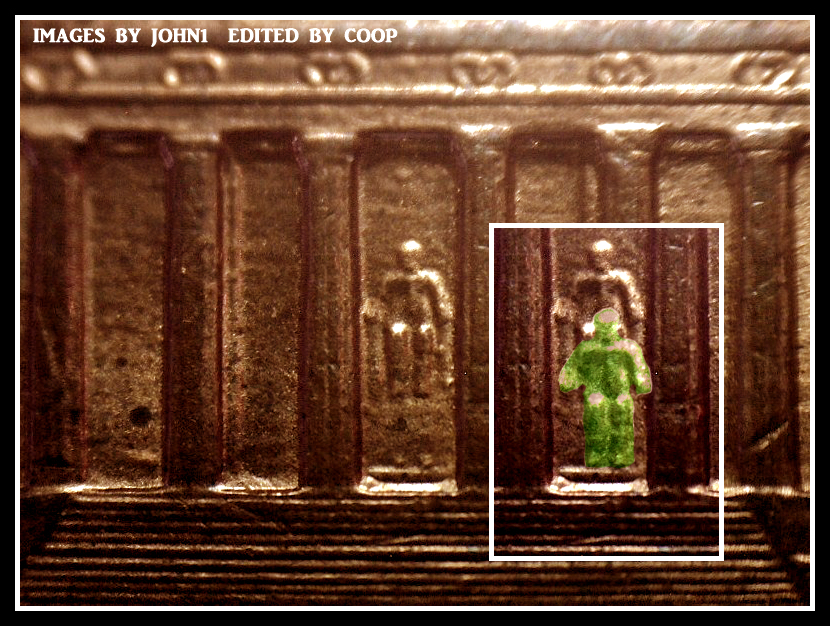  Thus when the rotation was incorrect, it moves during the full pressure. (rotated statue) 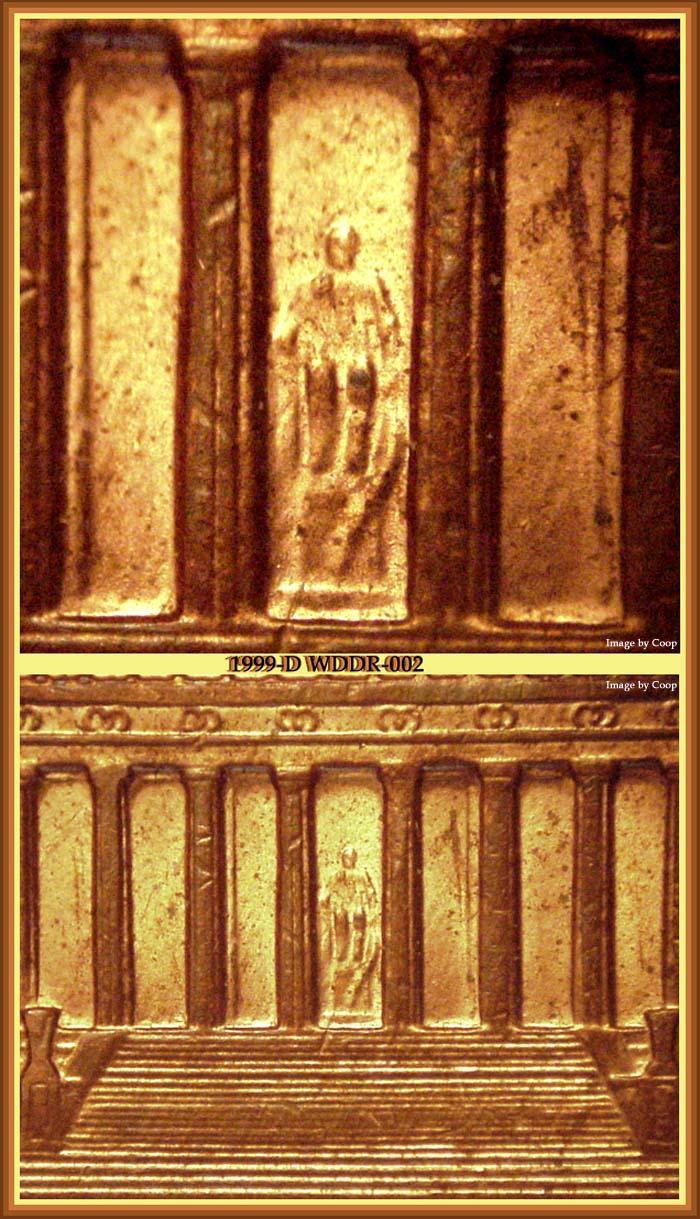 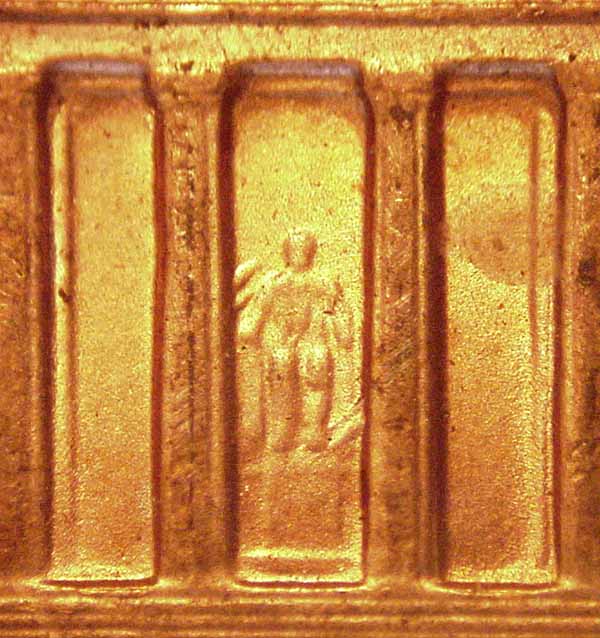 Note how just a certain area is affected on these raised devices. http://varietyvista.com/01e%20LC%20...3PDDR001.htmNote on this die we see both raised and incuse devices affected on the DDR? Raised devices enlarged, incuse devices reduced in size. Same on all other DDR's that are raised. The central area is affected: )).jpg) 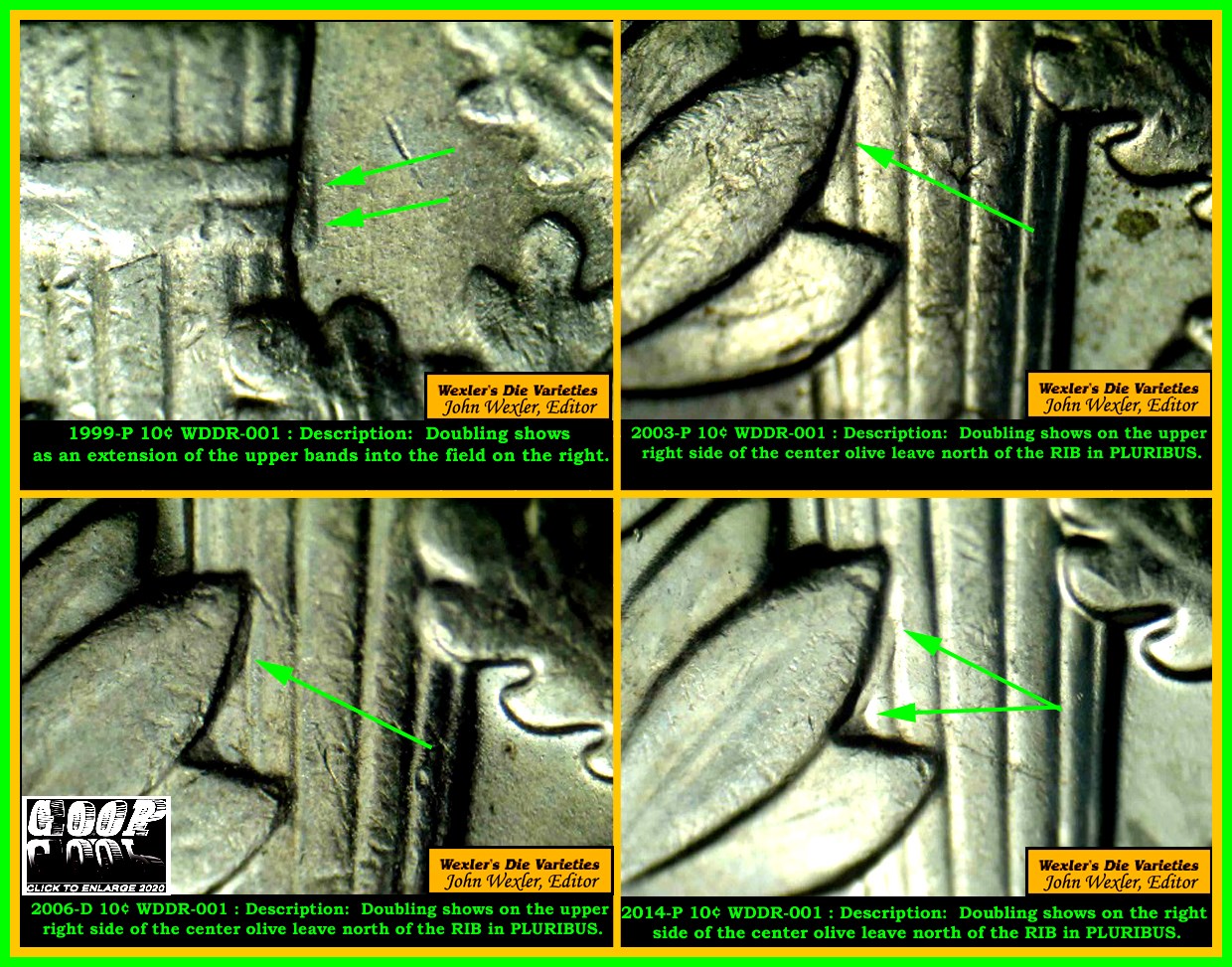 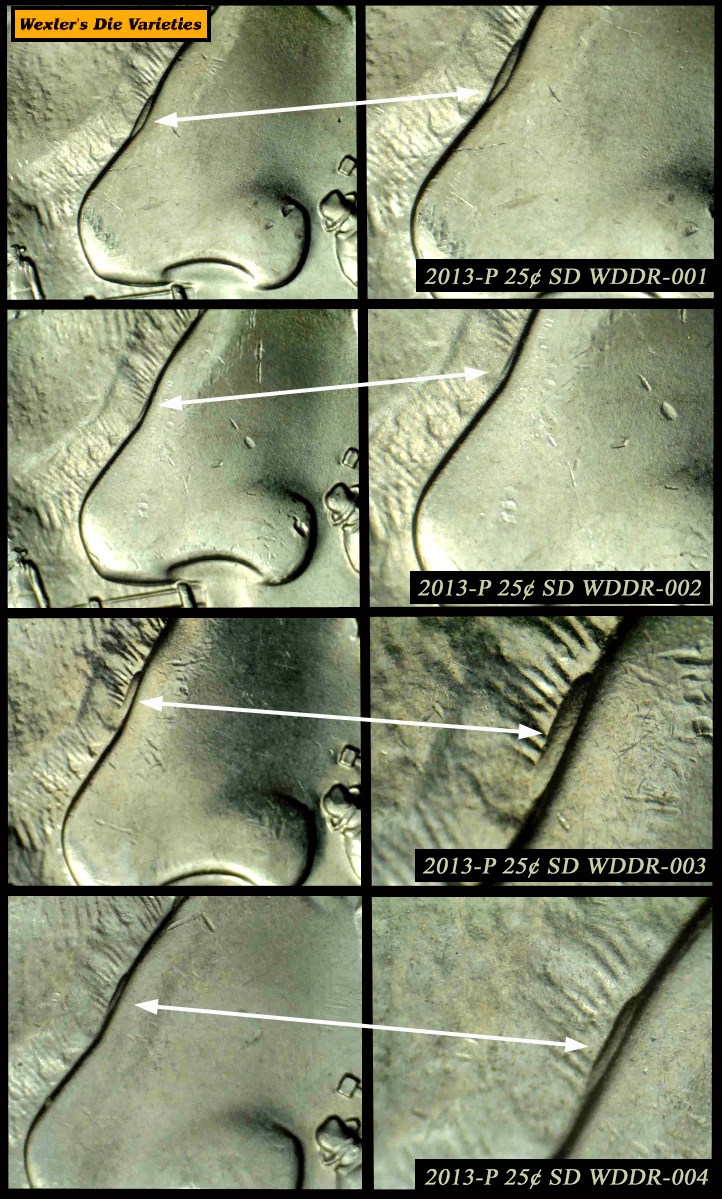 Incuse devices formed differently on the doubled dies:   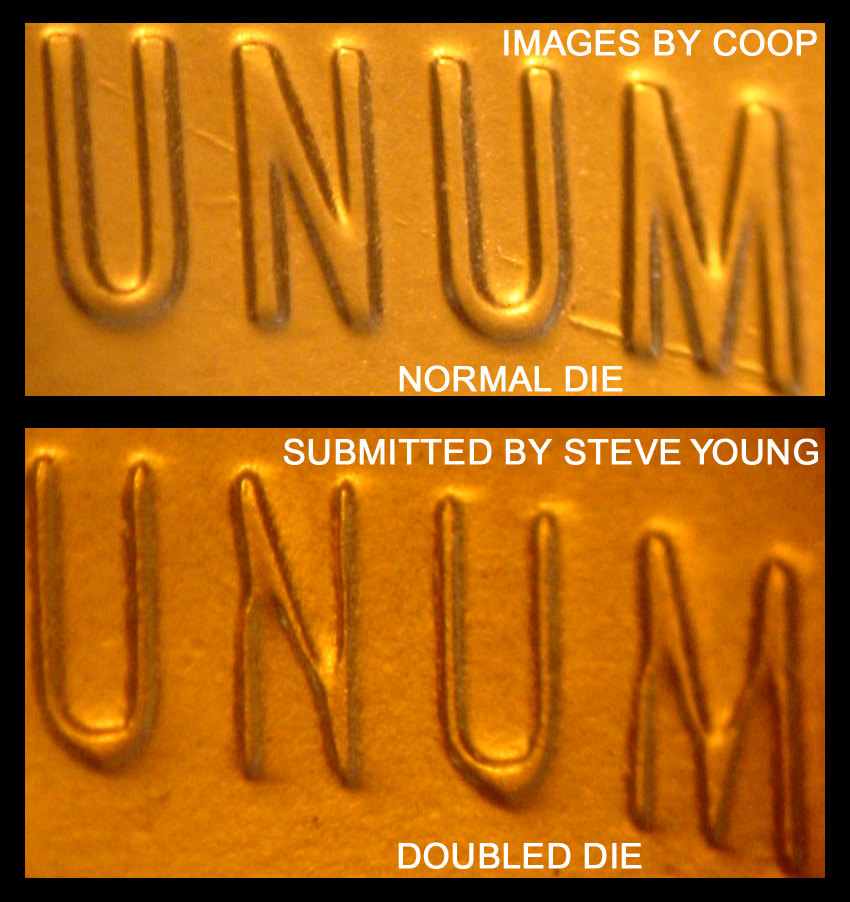 Why this happens, I wonder it the movement of the hub after the moving into the correct location affects these. But it happens on several years, but not always. I feel it might be the angle the kiss happens, that creates this: http://varietyvista.com/01e%20LC%20...5PDDR001.htmThis one, has just one image, but you can see that is is showing reduction from the image we see. But this one is stronger. On incuse devices, we see Machine Doubling enlarging the devices on the same areas:   This is my explanation as I can figure out. Hub doubling creates doubled dies on both incuse and raised devices. But not always the same way. Thus the differences in doubled dies. |
|
Pillar of the Community
Canada
1189 Posts |
This is exactly what I am talking about, you guys are so focused on being right that you completely misread and misunderstood what I was saying 100%.
not once did I even mention that that doubling was on the master hub.
What I said, was for this example I am using a working hub as a Working Die (because the devices are raised on a working hub which means it would create incuse devices on a coin).
It literally says right on the photos "Doubled Devices on coin transferred from an incuse Working Die
(Regular)"
Then on the second photo, it says "What doubled devices would look like if a coin was struck with a Positive relief Working Die (working hub used as an example)"
So instead of me taking even more time to create a completely new die sequence just to end up with a raised Working Die that would create incuse devices on a coin just to show you guys, I simply cut out the "Working Die" (red X's) and used the Working Hub to show you guys what would happen when a Raised die strikes a coin.
It is really not that hard to comprehend and I thought you guys would understand without an issue...
As for "mirroring" to further explain, if you have a Master Hub, the date will read the correct way, once the Master Hub is used to create the Master Die, the date and letters on that master die will be backwards. Once the Master Die (backwards letters and date) are hubbed to make the Working Hub it is once again in the correct orientation and will read correctly and not be backwards (mirrored) anymore.
In order to get a date to read the correct way on incuse devices, the devices on the Working Die must be Mirrored backwards OR the coin being struck will read backwards.
It's really not rocket science, it is also not as complicated as everyone makes it out to be, it's simple.
The doubling in the first photo was "doubled" by using a raised Working Die that was doubled.
The second photo was "doubled" by using an incuse Working Die that was doubled.
Finding and discovering modern Canadian doubled die varieties since 2018. 2023 Recent Publications: Modern Canadian Doubled Die Varieties - First Edition PDF & Paperback https://www.mcddv.ca - (New Site, Second Edition, Registry & Services coming fall 2026) Edited by JohnWayne007
02/05/2021 12:01 pm
|
|
Pillar of the Community
United States
4428 Posts |
Quote:
The doubling in the first photo was "doubled" by using a raised Working Die that was doubled.
The second photo was "doubled" by using an incuse Working Die that was doubled. Doubling using a RAISED element would look fundamentally different from doubling using an INCUSE element. What it seems like you did in your images is just duplicate the elements on the hubs and dies instead of replicating the hubbing process of transferring elements from the hub to die. Let's imagine a hub with a large incuse circle directly in the center. That hub is used to create a die. After the first hubbing, the die now has a large raised circle directly in the center, all of the metal around it was pushed down by the hub to create it. Now if a second hubbing is misaligned, a portion of one side of the raised circle will be pushed down, effectively deleting a crescent shape out of the side of the raised circle. The area on the opposite side is unaffected as the second hubbing would not raise any metal pushed down by the first hubbing. So the second hubbing just removed a crescent shaped piece of the circle, the circle is now thinner and has decreased in size. |
| |
Replies: 18 / Views: 3,290 |










 Posted 02/04/2021 09:07 am