| Author |
 Replies: 11 / Views: 1,801 Replies: 11 / Views: 1,801 |
|
|
New Member
United States
9 Posts |
|
|
|
|
Valued Member
United States
356 Posts |
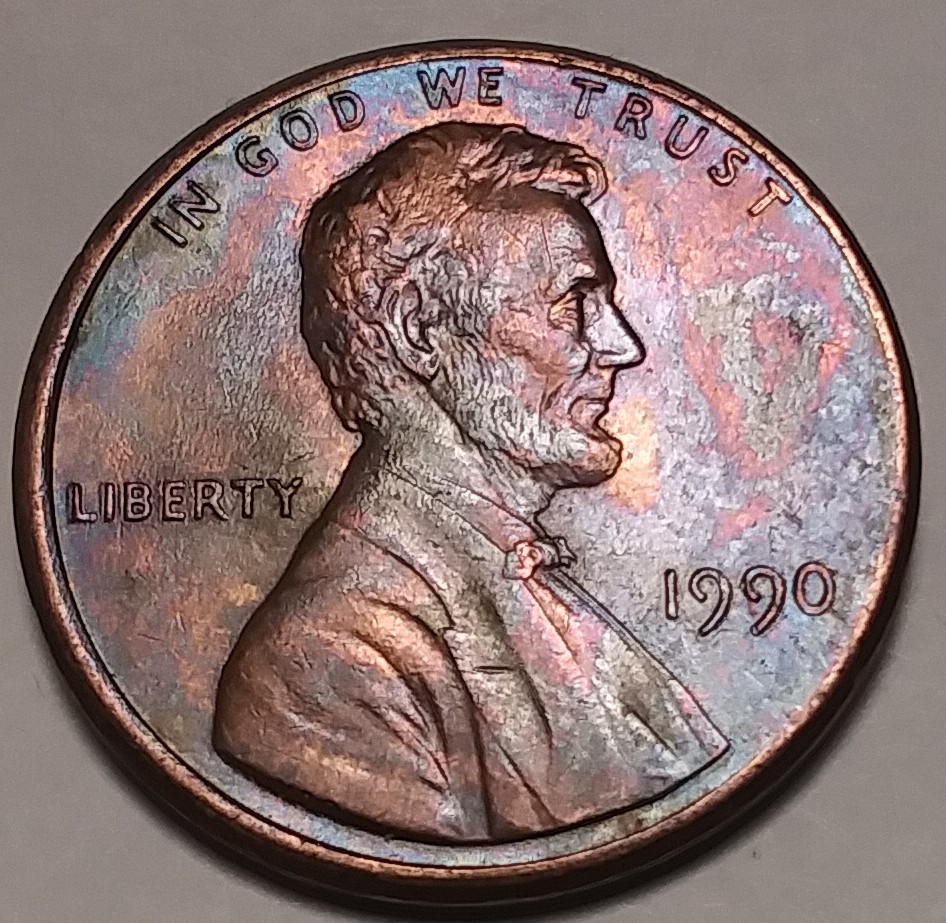
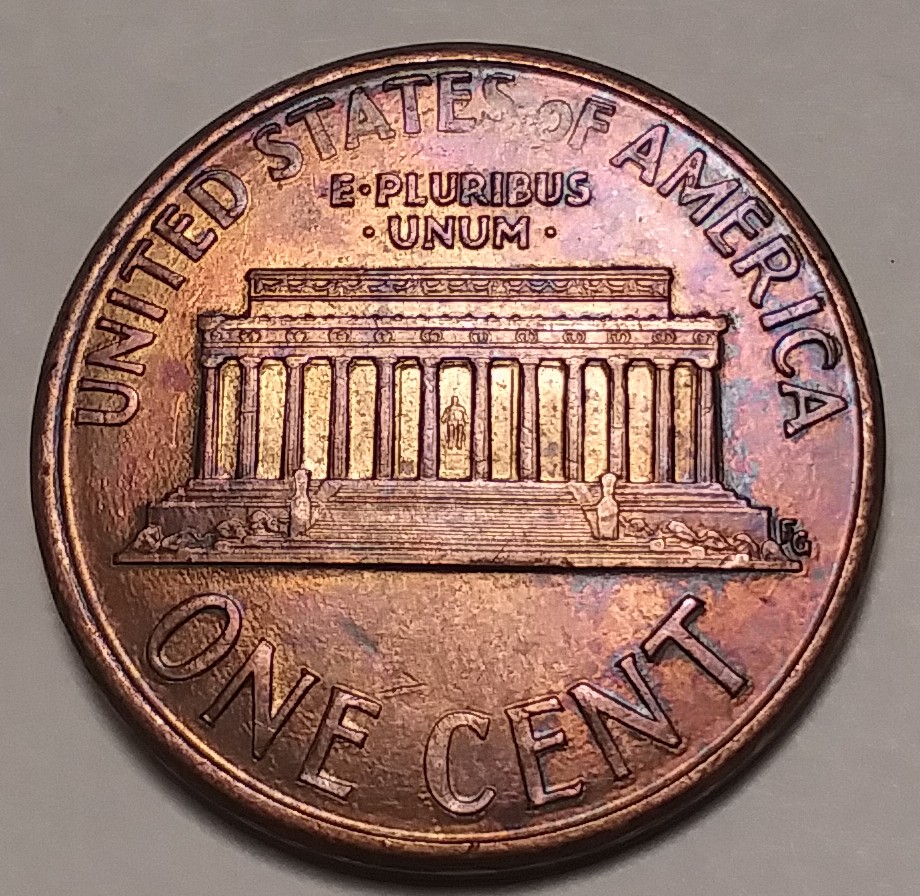
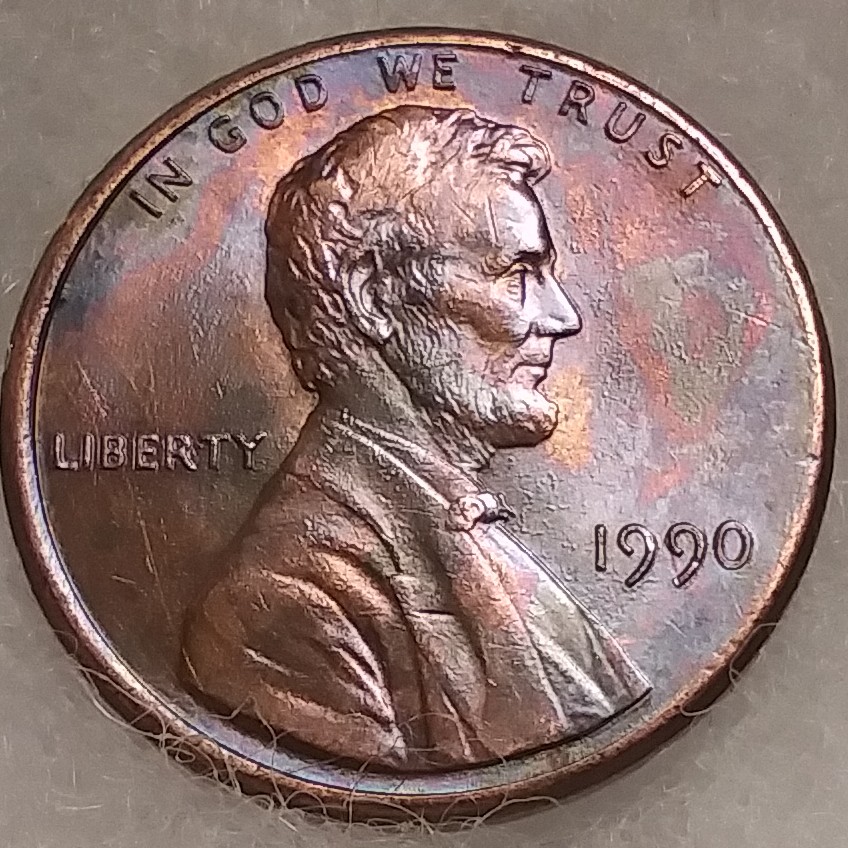
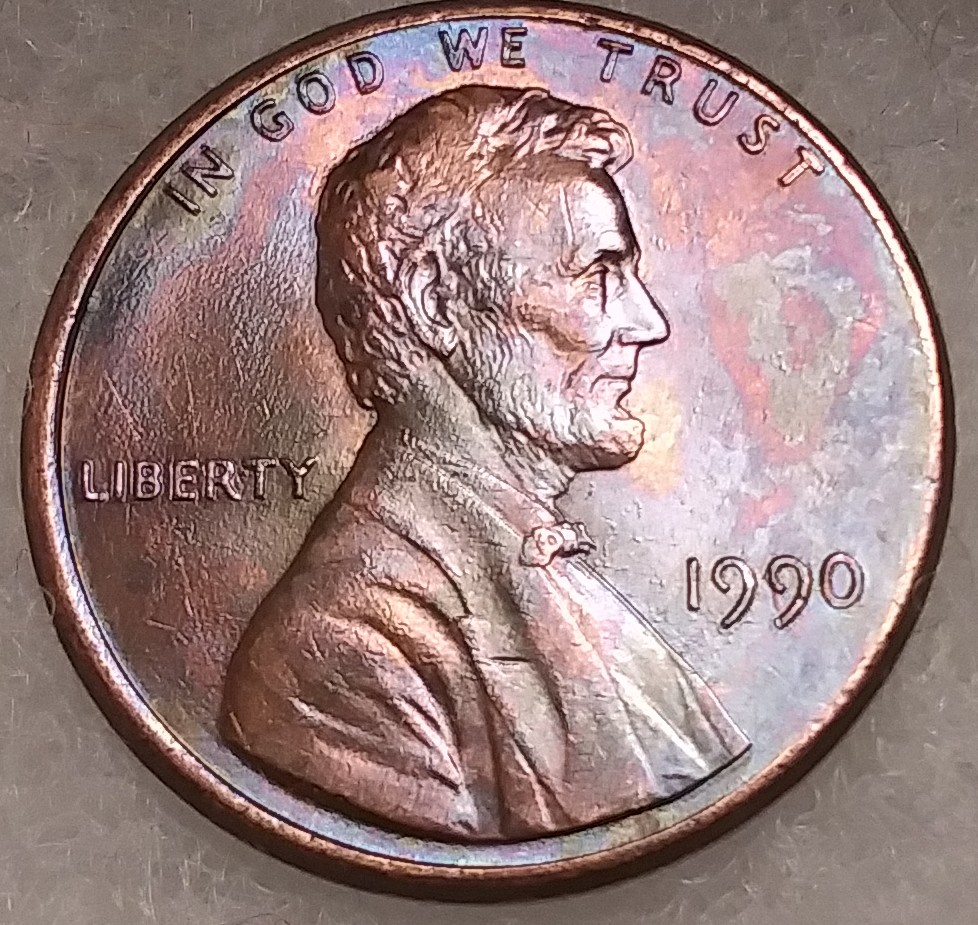
Hello Trina. Your Lincoln Cent is copper plated and there is an entire host of things that can cause the toning you see on your coin. They could range from chemical treatments to environmental factors that will speed up the process of toning on a copper plated Lincoln. Silver coins and toning are an entirely different topic and subject as a lot of collectors look for certain types of toning. I personally like rainbow toned Lincoln Cents and when I find a nice example I put it in my "keepers" pile. Good Luck and welcome to CCF! |
|
Valued Member
United States
221 Posts |
Yep. Exposure to diatomic oxygen, dihydrogen monoxide, and the like which pervade our environment....
Chemicals like these can react with metals such as copper. Light interacts with the resulting layers of chemical compounds on the metal surface, kind of like an oil slick on water. When we like the result, it is called "toning." If excessive and unappreciated, then we refer to it as corrosion, staining, environmental damage....
|
|
Bedrock of the Community
Australia
21789 Posts |
Pleasing looking coin  I would be happy to have it in my collection. A possible? explanation to what is pictured: One of the easiest ways to tone a coin nicely is just place it on a sheet of bleached (chlorinated) paper on a window sill and leave it in daily sun for six months. Simple. Above explanation not necessarily correct. It could have come about by perfectly natural means. Coins can tone in all sorts of good and bad ways under all sorts of conditions, artificial or natural. That is why I prefer coins that are as close as possible to the condition that they were just after leaving the coining press. Prefer blast white to rainbow toning, and red to brown, where all of the original luster can be appreciated, and eliminates the possibility of artificial toning. Despite all of the above I will still buy a toned coin in any condition, provided it is good value for money. I won't pay any extra for nice toning, because rainbow toning in particular, is just a transitory and unstable state on the way to full patination. ' Buy the coin, not the tone' |
|
New Member
 United States
9 Posts |
Thank you so much! The color is pretty but I've seen a lot of them so I knew they were nothing special. Your answers were exactly what I was looking for. You guys rock!
|
|
Bedrock of the Community
United States
94367 Posts |
Copper can tone to almost any color under different environmental conditions.  to the CCF! |
|
Pillar of the Community
 United States
7977 Posts |
Quote:
Exposure to diatomic oxygen, dihydrogen monoxide, and the like which pervade our environment.... Cute, but you forgot things like sulfur compounds which also likely culprits.  Edited by tdziemia
02/05/2021 09:17 am
|
|
Bedrock of the Community
United States
19306 Posts |
All comes back to exposure to environmental agents--whether those agents are 'naturally' occurring, or hastened by a tour in an oven. The copper surface doesn't give a whit where the environmental agent originates, it just reacts.
|
|
Bedrock of the Community
United States
20753 Posts |
Quote:
Cute, but you forgot things like sulfur compounds which also likely culprits. I'll go along with that one. Fossil (coal) burning factories and power plants emit Sulfur Oxide into the air. That combines with water vapors and creates Hydrogen Sulfates and Sulfides. That is the air born substance that effects Copper more than almost anything except pure Oxygen. |
|
Bedrock of the Community
Australia
21789 Posts |
Dihydrogen monoxide** is the most pervasive and the best transporting agent for getting other corrosive chemicals onto the surface of a coin.
It is also perfectly good for the rotting of boots and the sinking of battleships.
**otherwise known as water. Keep coins away from this stuff, especially in a humid environment.
|
|
Valued Member
United States
221 Posts |
 Glad some folks caught on... I didn't exactly forget about the sulfur containing compounds. Just didn't want to raise that much of a stink with my comments... If I had mentioned naturally occurring sulfides, that would have muddled my mischievous intent, as some naturally occurring compounds like hydrogen sulfide are dangerous at extremely low levels, which fortunately, we can smell quite easily before reaching toxic levels. Some people say the same about my sense of humor. I wanted to emphasize that the those things which we consider good wholesome, "all-natural" (nearly choked on that last term!) are chemicals which can damage our coins. Like ijn1944 said, it can be intentional or not, but it is all due to a chemical reaction with the environment. And to echo what sel said, water is necessary for many of those reactions to proceed. No water, no reaction in many cases. |
|
Bedrock of the Community
Australia
21789 Posts |
Oxygen, sulfur and chlorine are all oxidizing agents and are the most common causes for
very nice rainbow toning for very attractive coins, to
severe corrosion that destroys coins,
and all the way in between.
|
| |
Replies: 11 / Views: 1,801 |
|











 Posted 02/05/2021 12:44 am


