I was in junior school but was still unhappy about the change to decimal currency 50 years ago today! No more pennies or threepenny bits - I had finally lost my chance to get a 1951 penny or a 1946 or 1949 threepence in change!

But it was quite exciting finally to see the new coins in circulation, although I was familiar with the designs - my parents had given me a set of Britain's First Decimal Coins, distributed through banks in sticky blue vinyl wallets. What was strange was that all the coins in circulation were suddenly very shiny! It didn't last long...

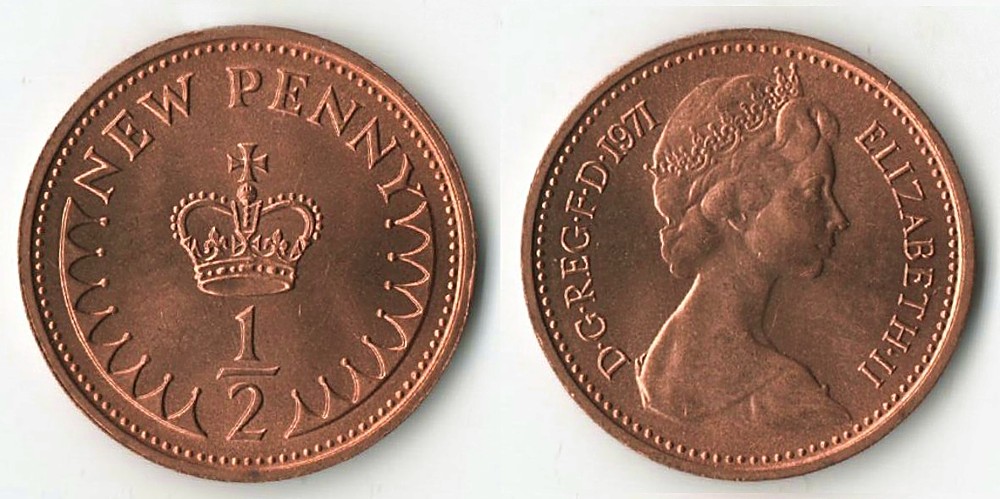
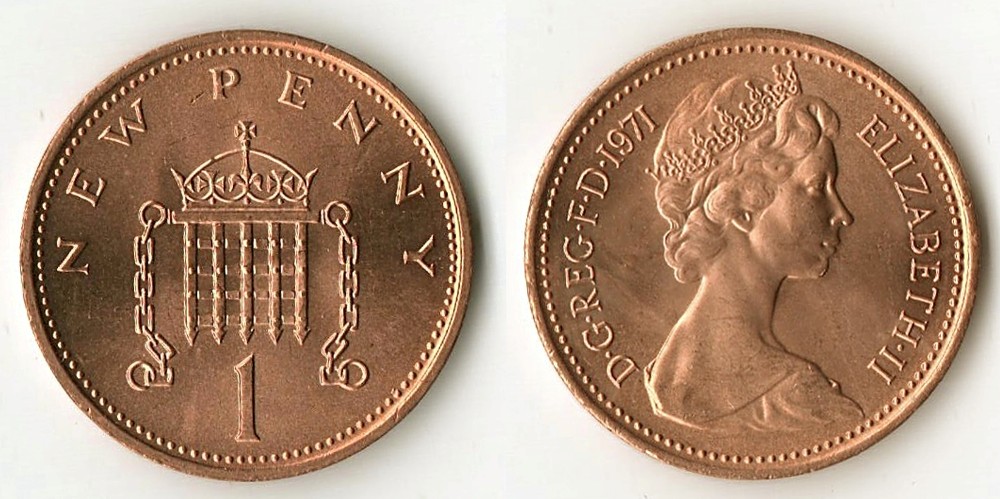
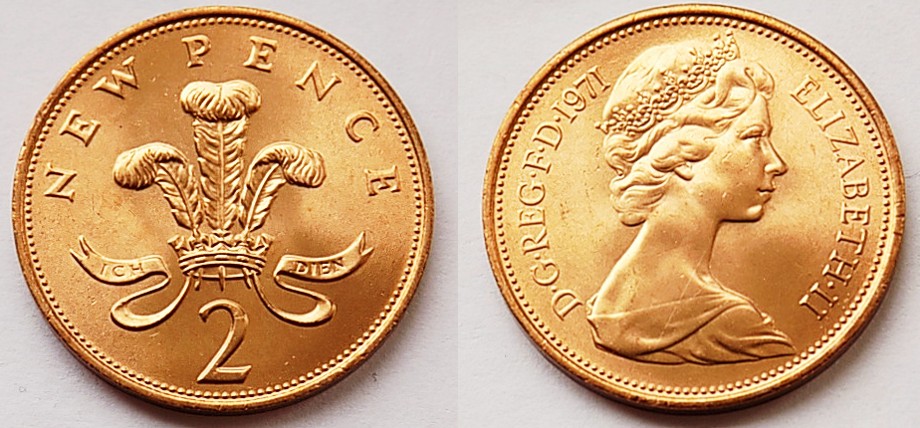
I was disappointed not to get any of the UK's new decimal stamps on D-Day. The UK was halfway through a long postal strike at the time, and I didn't get a first day cover of the new definitive stamps until much later.
I was shocked when the price of my favourite item of confectionery, the Mars Bar, changed overnight from 8d to 4p: equal to 9.6d. Inflation was beginning to bite in the early 1970s, but there is no doubt that some manufacturers took advantage of the changeover to increase their prices. A second-class postage stamp cost 4d in January 1971: when post offices reopened after the strike, the cost had jumped to two-and-a-half pence (6d), a hike of 50%!
Surprisingly, one quite major item of expenditure dropped in price. Local telephone calls from payphones had cost 6d, but went down to 2p (equivalent to 4.8d). Despite rampant inflation, they remained at this rate for a decade.
In 1969 a major campaign, "Save Our Sixpence", had been launched by a national newspaper, with car bumper stickers, petitions to 10 Downing Street and letters to Members of Parliament. The sixpence was a highly popular coin and was much used in vending machines, and there was widespread fear that, once it was withdrawn, many prices would increase to one shilling (5p). The Government relented and decided to reprieve the sixpence. In the event, the sixpence disappeared almost as quickly as the old penny and threepenny bit, and by the end of 1971 it was quite unusual to get one in change. Surprisingly they were not demonetised until 1980...

In July 1971 I remember going on a car journey with my parents that took us through the Dartford Toll Tunnel. For many years, the toll for cars passing through the tunnel had been set at two shillings and sixpence. With Decimalisation, this became twelve-and-a-half new pence. Huge queues built up at the toll booths as motorists waited for change: unless they happened to have an old sixpence, a toll that could have been paid with a single halfcrown now required at least three coins! My Dad had only a 10p piece and an old threepence. I had three old pennies, and gave them to him so that he had the right money for the toll. That is the last time I remember spending old pennies - they were withdrawn from circulation the following month.
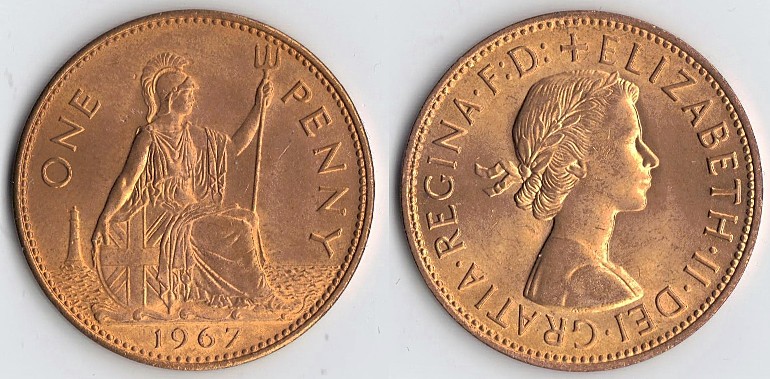
Immediately after Decimalisation, everyone called our new coins "new pence", but this soon became abbreviated to "P" and this usage has continued ever since, bewildering some overseas visitors who can't understand why we call our coins peas!
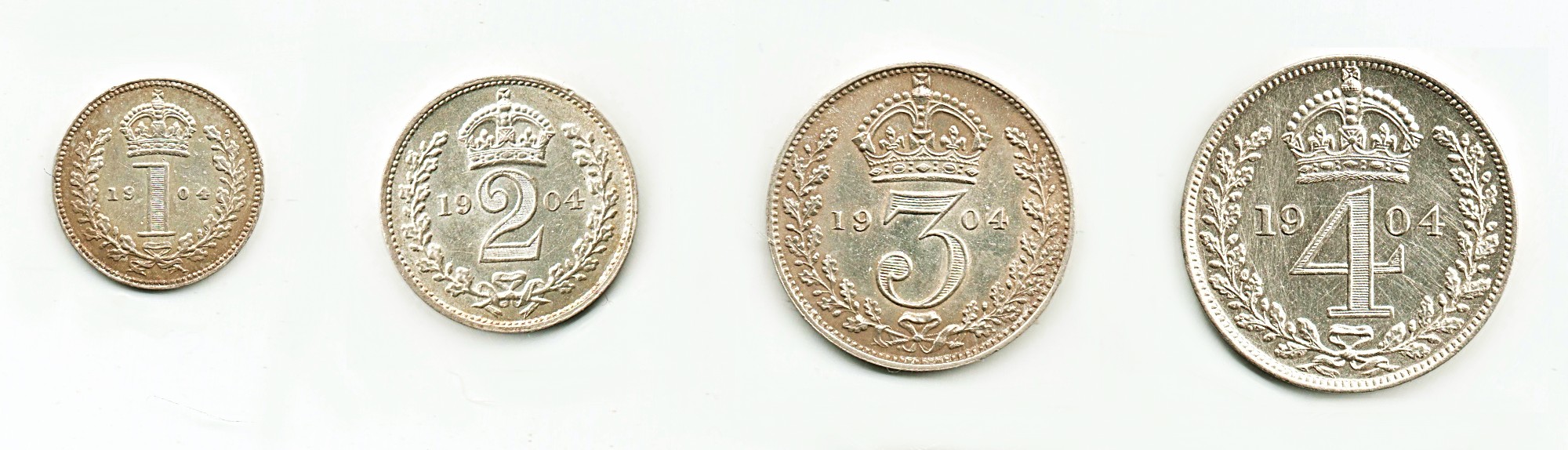
A very strange anomaly of Decimalisation was the change in the status of Maundy Money. It was declared that the designs of the four Maundy coins were to remain unchanged, but that the coins would be redenominated in New Pence, and furthermore that all previous Maundy coins dating back to 1817 would be re-valued from 1d, 2d, 3d and 4d to 1p, 2p, 3p and 4p! This also meant that any pre-1927 silver threepence (indistinguishable from a Maundy 3d in circulated condition) was now legal tender again, and for 2.4 times its original value: the silver threepence had disappeared from circulation in the 1940s and was considered a collector's item.
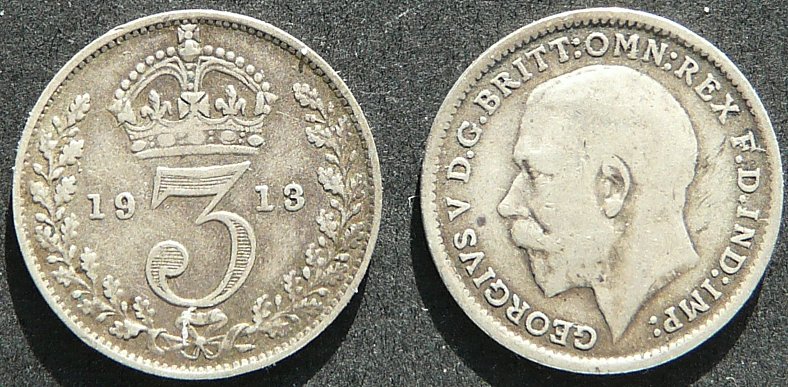
A friend of mine actually managed to spend a silver threepence in a local village shop, and a fellow collector friend's mother actually got two in change, although this was possibly because the shopkeeper knew her son collected coins!
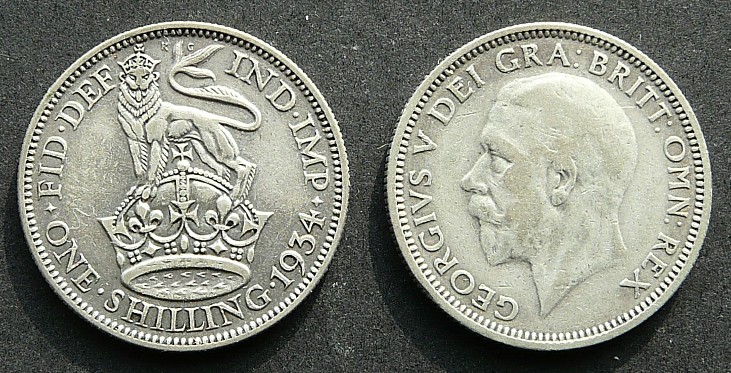
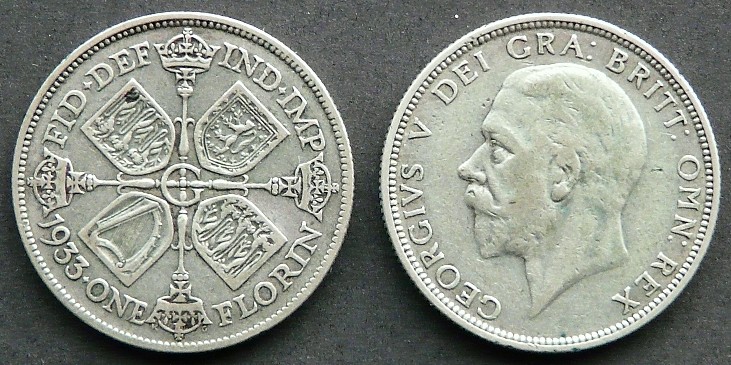
Silver coins still circulated to some extent in the UK in 1971. Pre-1920 92.5% coins were virtually extinct, but shillings and florins dating from 1920-1946 could still be found relatively easily. They would not die out completely until the original large 5p and 10p coins and the old shillings and florins were replaced by smaller coins in the early 1990s.










 Posted 02/15/2021 10:10 am


 ....that would explain why I can't find one though eh? Looks like my Whitman 9680 folder is complete...thanks for the info!