| Author |
 Replies: 56 / Views: 7,932 Replies: 56 / Views: 7,932 |
|
|
|
Pillar of the Community
United States
9811 Posts |
This appears to be PMD to me as well. I think it was made with a hammer and die (not original die) but some sort of circular die like a thick pipe or washer to fit the coin but not protrude into the rim area. then the coin was struck with the die while laying on a thick piece of leather to protect the rest of the coin design. It's quite odd and like nothing I've ever seen before. "Buy the Book Before You Buy the Coin" - Aaron R. Feldman - "And read it" - Me 2013! ANA Life Member #3288 in good standing since 1981, ANS, Early American Coppers Member (EAC), Colonial Coin Collectors Club member (C4), Conder Token Collector Club member (CTCC), Civil War Token Society (CWTS) member, Liberty Seated Collectors Club (LSCC) & Numismatic Bibliomania Society member (NBS), USMex, Member in good standing, 2¢ variety collector. See my want page: http://goccf.com/t/140440 |
|
Pillar of the Community
United States
549 Posts |
What if someone was trying to make an imprint for a fake coin (a die) and only wanted the interior design of the obverse? Perhaps they failed and this is the end result. Just speculation.
Edited by VestigeWolf
03/16/2021 10:35 pm
|
|
Pillar of the Community
 United States
4618 Posts |
Is it possible that this coin was used in a piece of jewelry? The obverse was exposed to repeated contact and damage for years, or maybe decades, while the revere could have been protected from all the abuse. Just an idea as this only addresses the look of the coins obverse vs the reverse. I don't see how this flattening could be from anything at the mint or on the original mint die.  ANA ID: 3203813 - CONECA ID: N-5637 Clean a coin that may be worth collecting? Please DON'T! When in doubt, leave it dirty!! 
|
|
Valued Member
 United States
284 Posts |
I stumbled over this thread while grazing CCF's "Recently actives" this A.M. I like IHC's and so found the title intriguing. Thus, I clicked and was ushered to page two which I read with such interest that I proceeded to page one where I discovered to my complete surprise the OP is me. I need to post fewer coins over longer periods. CCF seems to have unsubscribed me from this thread. Either that or I forgot to subscribe. My old well-circulated, post mint damaged brain is falling victim to zinc rot. I sought to respond to the enquiries as to weight and diameter, but it seems I put the thing in a place so safe, no one - including me - is going to locate it easily. It's definitely not where it's supposed to be. I'll keep looking. Kevin |
|
Valued Member
Canada
235 Posts |
For it to be PMD, there must be some Laws of Physics at work. What are they? How does one explain how the stands of some letters extend beyond the top-without the tops expanding as well? And, without obvious damage to them to accomplish this... |
|
Pillar of the Community
United States
4233 Posts |
Quote:
some letters extend beyond the top-without the tops expanding as well? I noticed that too. The top rights of U N E in united seem relatively undamaged. There's a "peaned" texture in some areas, like the top and bottom of the date. The nose and arrow ends are mushed into the surface. I can't think of a mechanical explanation (like a Dryer Coin), so I'm picturing a guy in prison with a spoon and a lot of time on his hands. |
|
Rest in Peace
United States
2668 Posts |
Going once.... going twice.... DECIDED PMD |
|
Valued Member
Canada
235 Posts |
Nice try, Parklane64, but that still doesn't explain how it happened. That's an impossible scenario for that type "damage-explaining". Simply, what's the Reaction to the Action of the "damage"? The coin is still machined-rimmed perfectly round, and the reverse appears to suffer no damage, and is flat. So, where is the collateral damage? Bronze is a relatively hard metal, so it takes some effort to move it, as such.
Edited by whatdowehavehere
03/18/2021 5:37 pm
|
|
Pillar of the Community
United States
4846 Posts |
It's impossible to conclude the exact cause of such damage, but it is damage. Can you provide an explanation as to how this could have happened at the mint?
|
|
Valued Member
United States
284 Posts |
So much interest! Thank you all for joining me! What fun! Trust me -- if you are able. My interest lies in this coin's origin and/or misfortune -- NOT in its value. Allow me, please, to offer my take on the discussion.
The discussion revolves, I suggest, around damage present and absent damage that ought to be present.That ilk of discussion is so good for our cause. The cause matters; the coin does not! Onward with the discussion!
Kevin
Edited by Kcm
03/18/2021 8:04 pm
|
|
Valued Member
Canada
235 Posts |
It's higher grade than LIBERTY indicates, and the "L"on the ribbon is mushy-not usually seen on 1906 IHC's. It would first seem that it was struck through a glob of die grease, which does marvellous things to the immages on planchets under intense die pressure. It's also obvious that whatever affected the image radiated energy outward, away from the center. That there is no damage to the rims or the reverse whatsoever dismantles most, if not all, PMD theories. Just one sample question: How could one hold the coin still, unmoving, to create the "damage" without evidence of that? It would be a Herculean task at best... Edited by whatdowehavehere
03/18/2021 10:29 pm
|
|
Valued Member
United States
284 Posts |
Found it! (Please see my Post 03/18/2021 8:02 pm /Page 2). 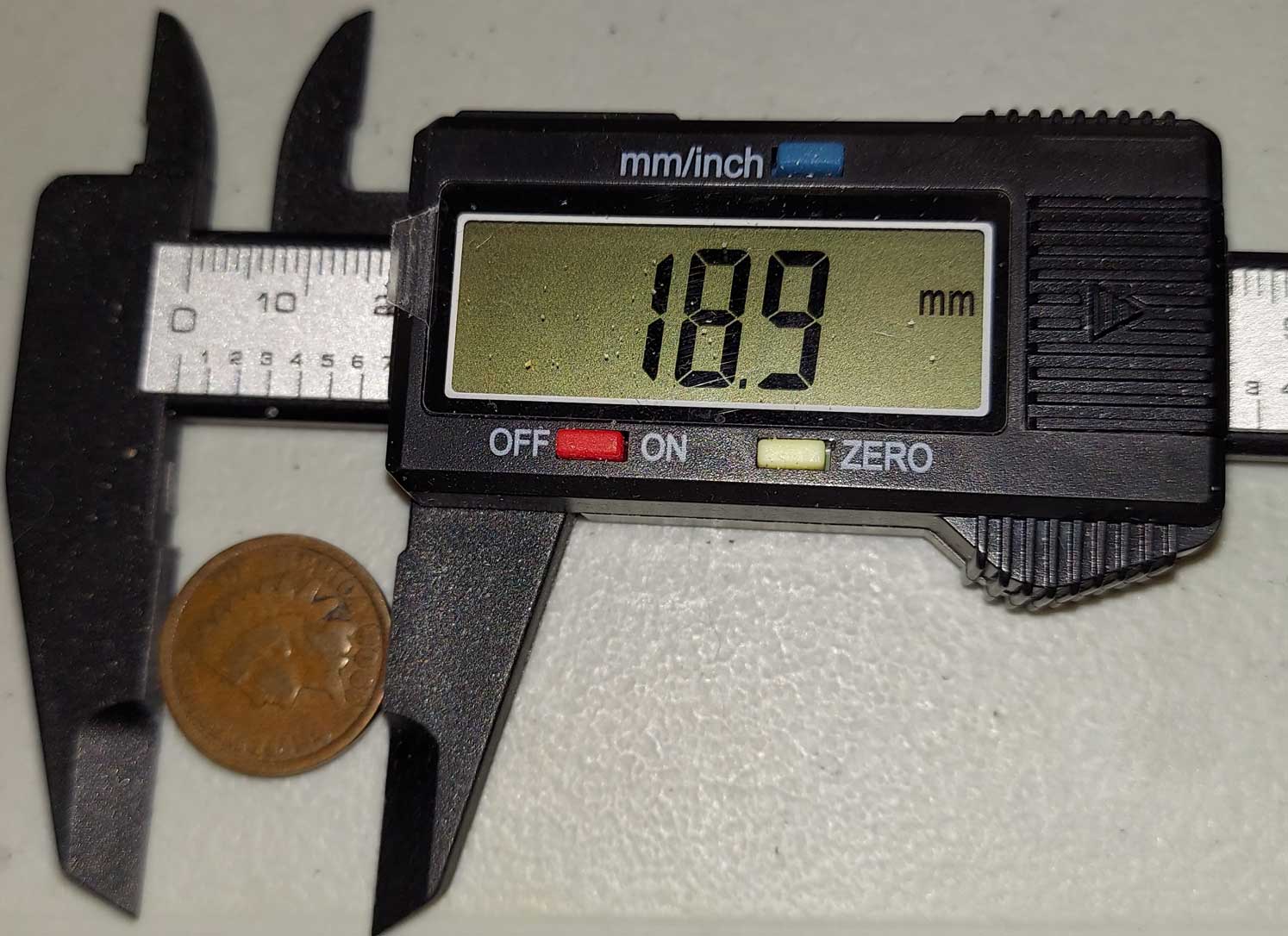 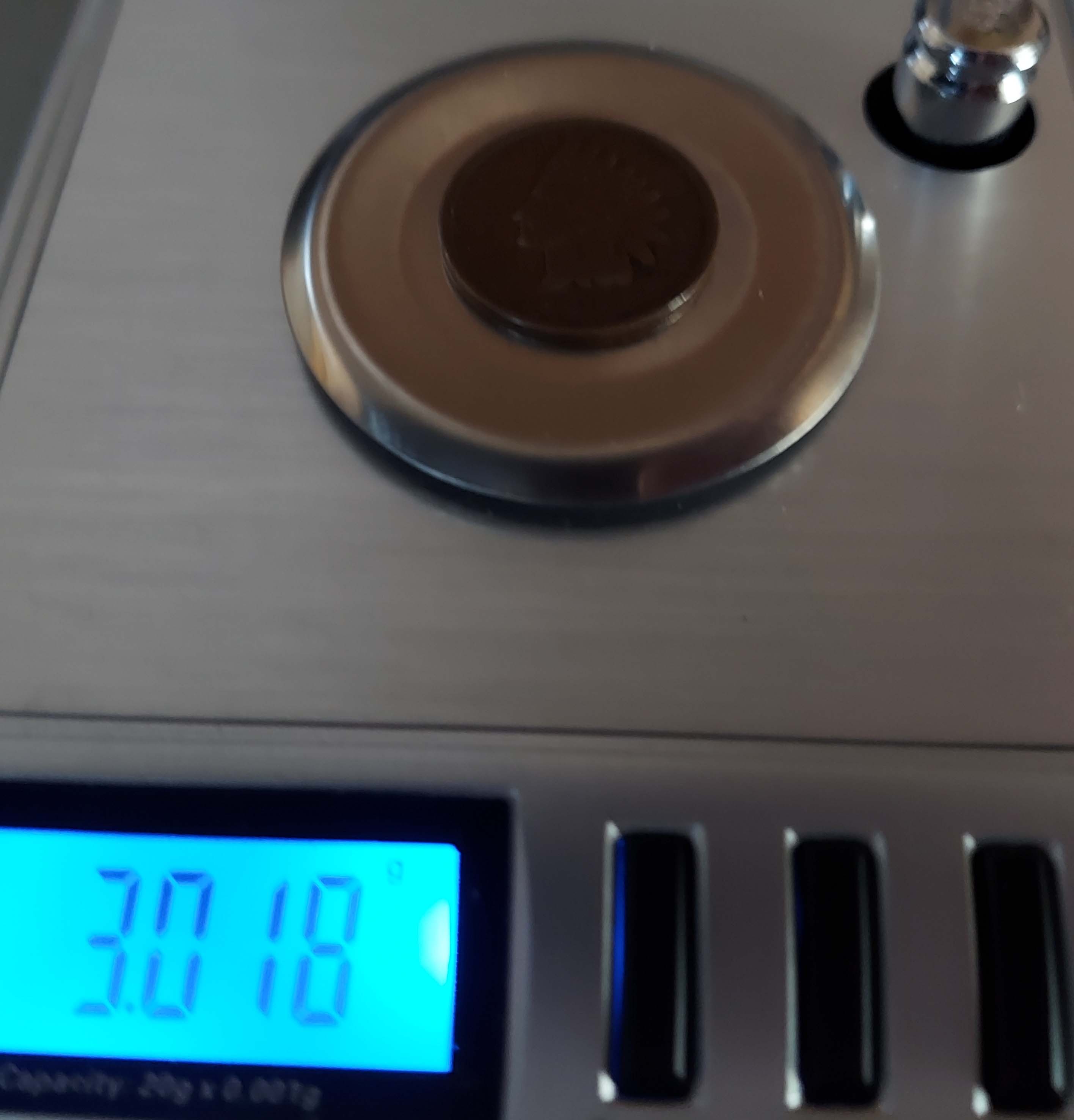 |
|
New Member
United States
45 Posts |
I had seen an instructable on how to make a "skull" on a coin by going at the sucker with sandpaper... perhaps the case here?
|
|
Valued Member
Canada
235 Posts |
Besides the "L" on the ribbon being mushily struck; one must look at the area between (AMERI)CA and the neck. It's evident a q-tip probaby swabbed a bit of corrosion off of the coin, and left some in the recesses of the devices. It's also very plain that there is a difference in the surface patina directly to the left of the cleaned corroded area-it's undisturbed. Whatever happened to that coin happened a very long time ago
Edited by whatdowehavehere
03/21/2021 8:06 pm
|
|
Valued Member
United States
284 Posts |
This post is of a "Run it up the flagpole and see if anyone salutes" nature. The path of least resistance ( PMD) has entered the conversation more than once. I recall only one "PMD! Case closed!" on the thread. Sandpaper doesn't work. No scratches that I can see under extreme magnification. I would LOVE it to be a prisoner with a spoon, but, alas, there'd be scratches remaining even after the PMD the coin suffered while circulating. Using a 1900 VG-20 IHC as a control, I did some crude measurements at 9:00 and 7:00. At 9:00 I measured from the outermost ridge of the letter "D" to the tip of the nearest denticle. The control gave me 0.5 mm. The study piece, 0.375 mm. At 7:00 I measured from the outermost point of the bust to the nearest denticle. This gave me 2.2 mm on the control and 1.5 on the study piece. Note that the denticles at 7:00 on the study piece are compromised (probably by circulation). Full denticles would further reduce the span. Next I measured from Liberty's nose tip to the nearest denticle. Control: 4.05 mm, study 0.375 mm. Now to the flagpole! This coin brings to my mind a pizza chef getting a ball of pizza dough ready to toss. S/he begins by using a rolling pin to push the dough from a central point to all points on the compass - a squashing exercise akin to a coin press squashing metal out of field space and into devices. On my coin I trace this happening. If you examine the motto you see the more heavily metalled sections (the vertical stems of the "T" and the "D", for instance) have been squashed radially outward and past the boundaries that the horizontal tops of these letters ought to have enforced. The graceful and uniform flow of the bust into the field below intrigues me. My best guess (not my pigheaded assertion!), therefore, is a very late stage capped hammer die. Anyone inclined to salute? Kevin |
| |
Replies: 56 / Views: 7,932 |








 First Page


 Posted 03/16/2021 10:33 pm


