| Author |
 Replies: 8 / Views: 3,946 Replies: 8 / Views: 3,946 |
|
|
Pillar of the Community
United States
6196 Posts |
This one came up at auction, and got it for what I thought was a rather low price of $15. Just seemed like a deal for an MS grade 40% silver with such an error on it. But I do find it a troubling coin, and have to trust ANACS knows what it is doing. I'm guessing they dropped the grade to MS 60 due to what looks like the shell being forced open just a tad leaving a crease. Better than calling it damage/details I suppose. But the split between the T and the Y is what gets me. Not sure how something like that would be mint-caused. I've seen a lot of cracked planchets and lamination peels and all that, but this one just looks off for a mint error. 1967 Kennedy half dollar mint error - clamshell lamination 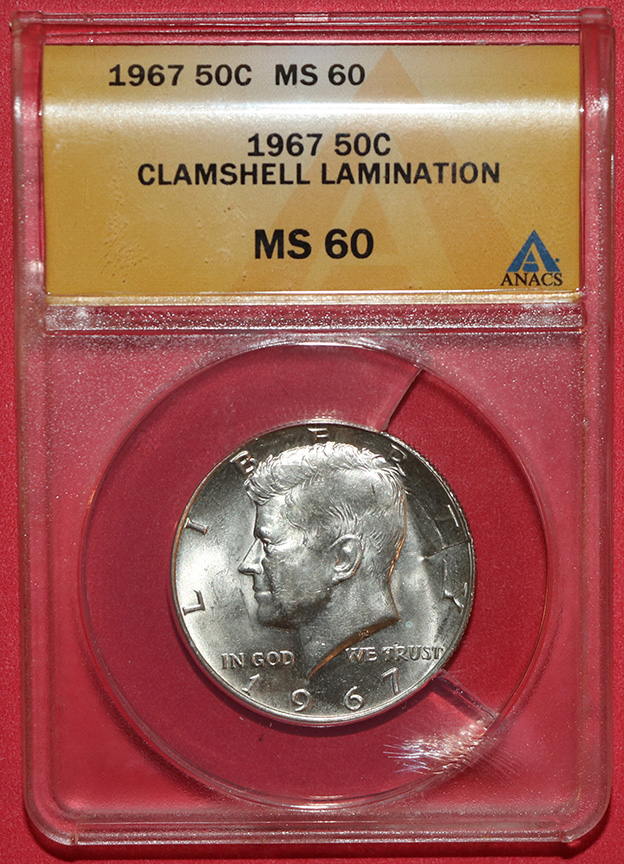 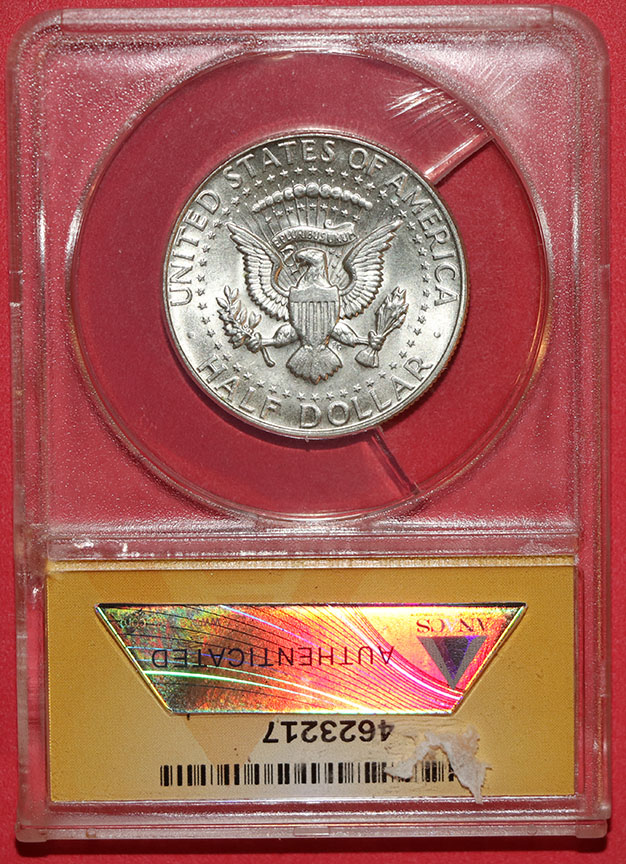 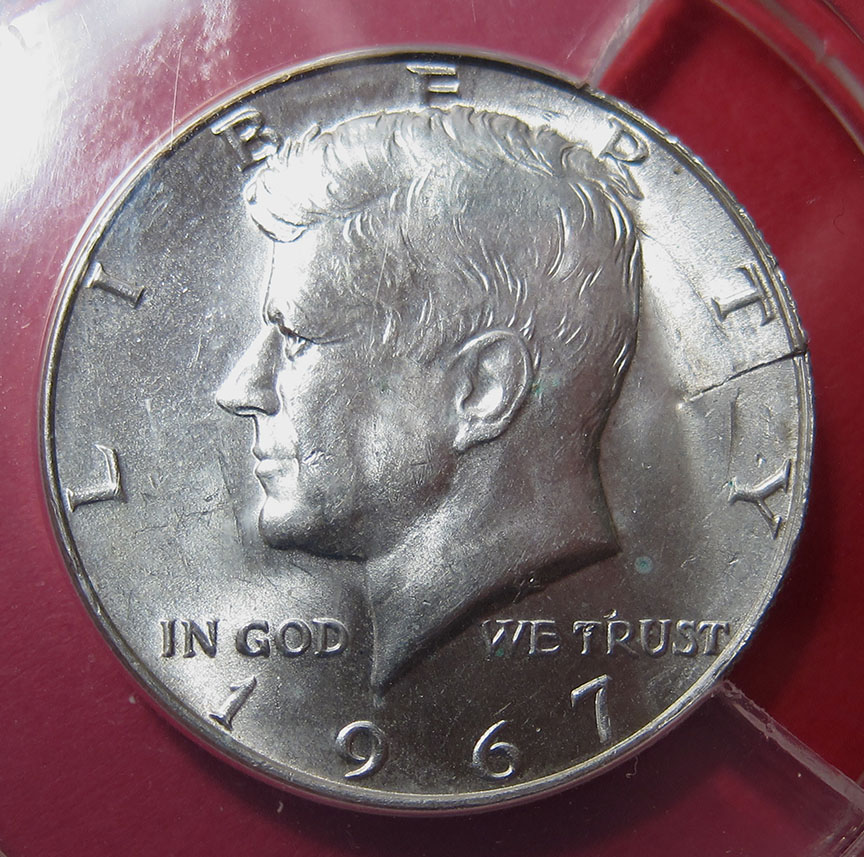 Edited by tropicalbats
03/20/2021 11:54 pm
|
|
|
|
Pillar of the Community
United States
1547 Posts |
Interesting separation. I can't quite put my finger on the dx, either, but what I think goes against post-mint is the way it closes or covers near the bottom. I'd think if it were a cracked planchet the strike would press it together somewhat like that.
|
|
Pillar of the Community
Canada
6244 Posts |
First time I see the error name clamshell ( mean wave). I do not discuss this, but? Lamination not. I look for lamination, I test those and is one of my error specialty. I can not explain ANACS say lamination, till now they was the most accurate TPG for me. those coins was 80% silver 20%Cu bonded to the core of 21.5%Ag and 78.5%Cu. Looking at this probably the bonding was crack. The rim lines are perfect, so we eliminate the post mint damage. If was a really planchet crack must show on the other side also, but is not the case here. At this price nice acquisition. |
|
Bedrock of the Community
United States
94367 Posts |
First I've seen on a Kennedy!
|
|
Pillar of the Community
United States
1547 Posts |
Quote:
Looking at this probably the bonding was crack. It looks like that's what this is. The bonding was separated and bent up ever so slightly on both sides along that line on the planchet, until the strike flattened it down. |
|
Bedrock of the Community
United States
62064 Posts |
Why are these called clam shells?When the edge splits, the can look like a clam shell. 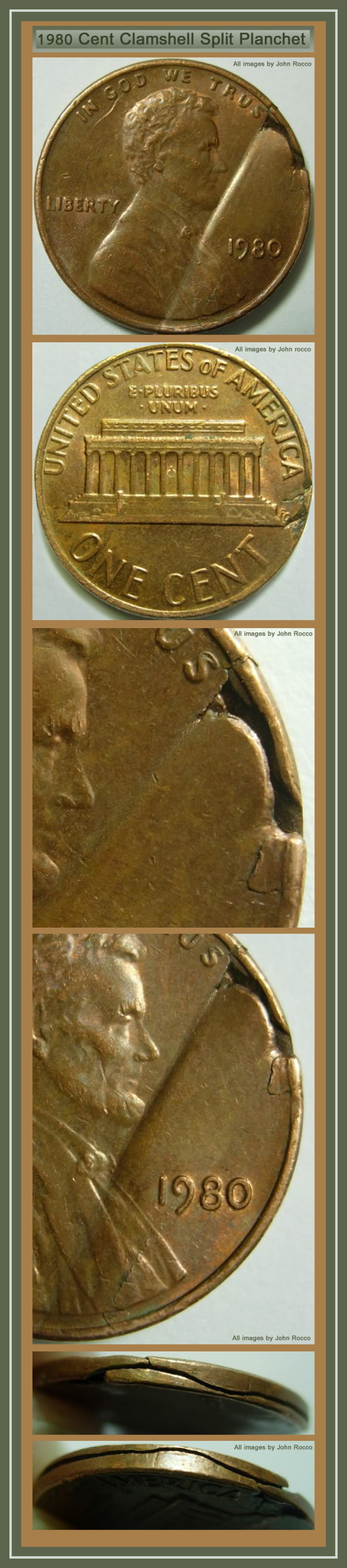 On the solid planchets, is there was a thick lamination on the stock, then when the metal is cut into a blank, it may separate down the line. This one held together because the split didn't flow all the way across the coin. The good 2/3rds of the coin held the pieces together. Coop Home : What is a clam shell coin?
Edited by coop
03/21/2021 12:09 pm
|
|
Pillar of the Community
 United States
6196 Posts |
There is only a small separation on the edge, and quite tough to light into it through the slab. But the best I can see is more of a flat surface than a rippled surface, so maybe a bonding issue as suggested, and not a lamination. Would this then be better called "split bonding"? Not sure that's a thing but I'm not that familiar with Kennedy half stuff. |
|
Pillar of the Community
United States
1547 Posts |
I think Coop has it. Just like there are laminations, and then there are laminations, there are clamshell laminations, and then there are clamshell laminations. His reference is to the latter, yours is the former. Your clam wasn't "steamed enough" to open up like his.  |
|
Pillar of the Community
United States
5887 Posts |
Very cool! Strong example and a plus to be slabbed by ANACS.
-CH27
Collector of U.S. Coins, Varieties, and Colonial Coinage
|
| |
Replies: 8 / Views: 3,946 |
|










 Posted 03/21/2021 03:48 am


