| Author |
 Replies: 10 / Views: 2,911 Replies: 10 / Views: 2,911 |
|
|
New Member
United States
5 Posts |
Hoping someone can help ID this coin, or at least narrow down country/mint/date...also hoping the images show up correctly! (First post)  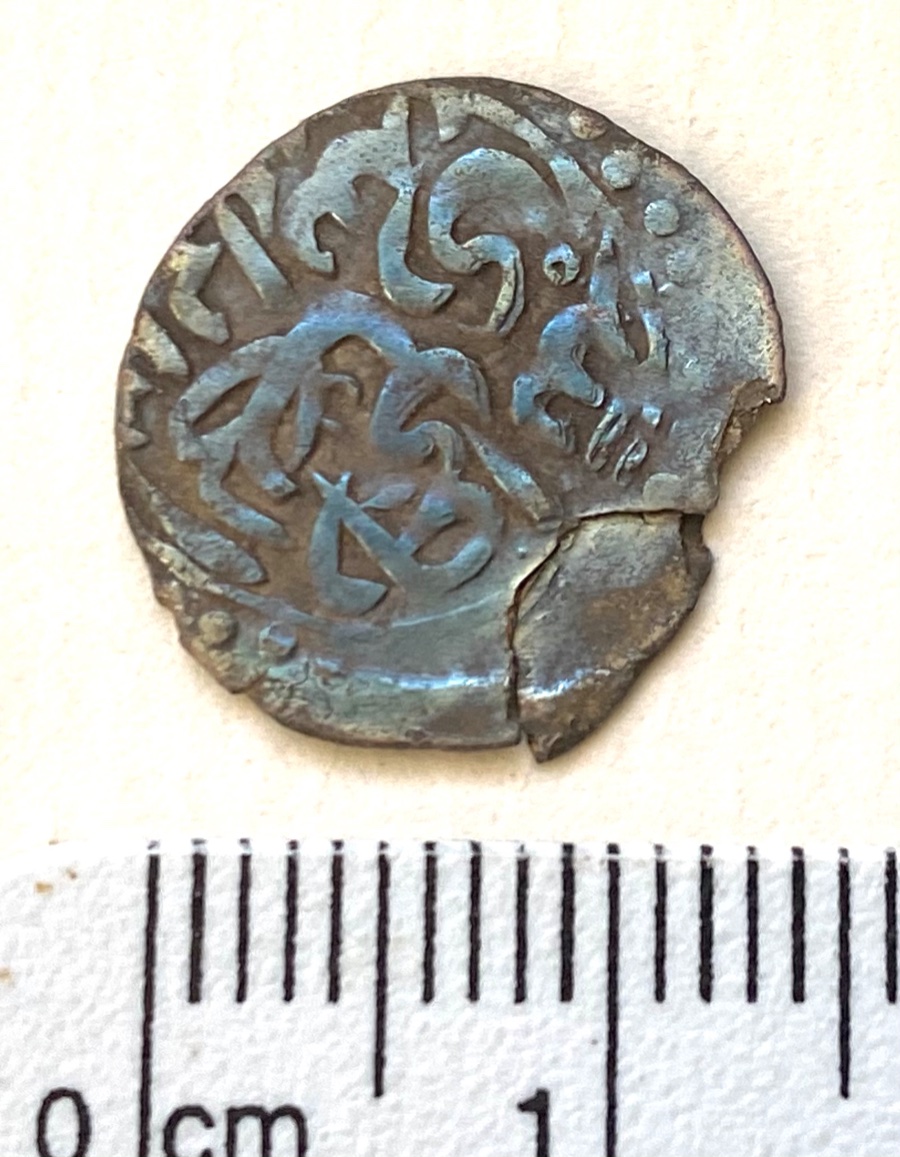 *** Moved by Staff moved to a more appropriate forum. *** *** Moved by Staff moved to a more appropriate forum. *** |
|
|
|
Moderator
 United States
196100 Posts |
 to the Community! |
|
Pillar of the Community
United States
4963 Posts |
I reoriented the photos to aid in identification:  Do you know the weight? Edited by Numisma
04/02/2021 1:27 pm
|
|
New Member
 United States
5 Posts |
Thank you!!
I don't have a scale that will work for coins... it is very thin, and brittle, as you can see by the break:((
|
|
Pillar of the Community
United States
1554 Posts |
Qasimid (Zaydi) Imams, Muhammad III "al-Hadi", 1687-1718, AR khamsiya, al-Khadra' mint, AH 1106. Album 1138 (RR). https://www.zeno.ru/showphoto.php?photo=152664I first thought this coin was vaguely "Ottoman". The date 1106 is clear but it didn't match anything Ottoman with that date. Out of desperation I searched Zeno for the number "1106" and it popped right up. Dumb luck. Edited by Kushanshah
04/02/2021 10:16 pm
|
|
New Member
United States
5 Posts |
Super! Thank you so much for the great ID!
I found it a few years ago metal detecting a field in northern massachusetts. I saw an article yesterday about a number of coins minted in Yemen about that date found in Rhode Island, speculated to be part of pirate treasure. Spurred me to finally get mine identified. I think the pirate theory is highly unlikely; there was a lot of silver from all over the world changing hands at that time...!
|
|
Pillar of the Community
United States
1554 Posts |
It's quite a rare coin and a remarkable find, in my opinion.
Edited by Kushanshah
04/03/2021 02:36 am
|
|
New Member
United States
12 Posts |
I hope that you don't me saying that you may be making assumptions on the improbability of 17th century Arabian silver coins coming to New England through Red Sea piracy. Yes, coins back in the 17th century did circulate far and wide, particularly in regards to Spanish silver cobs and Dutch Lion dollars, but there's no evidence, zero-evidence, of the American Colonies engaging in trade in the distant Red Sea. Upstarts from the American Colonies had no place at the table with offerings of barrel staves, animal hides, fish, and so forth in the ports of the East Indies, where coveted goods like cotton, silks, and spices were exchanged for gold and silver bullion. The only outside traders in the East Indies were the big trade companies - the East India Trade Company of England and their competitors, the Dutch and the Portuguese.
The ongoing recovery of 17th century Arabian silver coins in Southern New England were conveyed here by Red Sea pirates. Newport, RI, New York, Philadelphia, and other ports were bases of operation for piracy carried out against non-Christians three centuries ago in the East Indies. If interested in knowing more, send me a reply or you can just wait for the book on these coins and their connection to the infamous voyage of Henry Every, the King of Pirates. The book comes out next year.
|
|
Valued Member
United States
96 Posts |
Just Plain Jim, I am interested to know more about this.
|
|
New Member
United States
12 Posts |
DocSSavage - Sorry for the delay in responding and thanks for your interest in these coins and how they came to the American Colonies in the late 17th century. I authored a detailed study of the evidence connecting these coins to Red Sea piracy back in 2017 for a research journal published by the American Numismatic Society. If interested, my study can be viewed online. Here's the link. https://archive.org/details/CNL164&.../n0/mode/2upIt's disappointing that the OP went through the trouble to get an ID on the coin after reading the recent Associated Press story on the ongoing recovery of early Arabian silver pieces in southern New England. The story received extensive coverage by international news outlets owing to the connection to one of the most notorious piracy heist in history. I believe he a bit too dismissive. Perhaps he might check in one this post again, and if not, that's unfortunate. His coin brings the total count to 20 Arabian silver coins from Yemen and provinces of the Ottoman Empire, all recovered in New England. All the coins can be predated by reign of the issuing authority or exact year prior to Henry Every's capture of the Mughal ship Ganj-i-Sawai off the coast of India in 1695. More than half of the coins bear exact dates that correlate exceedingly well with this historical event, ranging from 1691 - 1695! |
|
Valued Member
United States
96 Posts |
Amazing find Saxonearth! And thank you for the info Jim. Quite fascinating! An otherwise ugly old coin now has an interesting pedigree.
|
| |
Replies: 10 / Views: 2,911 |
|







 Posted 04/02/2021 1:26 pm





