Your are looking to hard for something that is not there. Don't look at the outside edges of the devices. Look at the centers to see if there is a spread on that area:

Note on the top image. That is a doubled die. The second example is
Machine Doubling. The third image is a normal coin. Note the width the of devices on the first image and the third image? What is wider, where is it wider. Note the centers of the devices are enlarge. So when this spread happens between to different steps of the hub process, the alignment is not correct. So the die is doubled, These are called doubled dies, because of the doubling is on the die. The normal one is normal because the same event didn't happen to the creation of that die. The center image is
Machine Doubling. It is a normal die, that has been altered after the strike with swing from the machine, altering the devices. Note it is on the outside edges of the devices. That is because the push the machines dies altered this. So what did were learn:
1. A doubled die is caused because the die was doubled during its creation.
2. On a doubled die we will see a spread in the center of the devices, and even notching. (again note the that notching is not see on the outside of the devices, but pressed into the devices.
3. A doubled die will not happen on a normal die. If the devices are normal in size, it is a normal die. Even
Machine Doubling can happen on a doubled die. So
Machine Doubling is not the same as a doubled die.
Machine Doubling is quite common to find, and it is a reduction of the devices, not an enlarging.
4. Look at the centers for the spread, if no spread move on to the next coin. Looking on the outsides will show you what?
Machine Doubling.
To show you mow much
Machine Doubling can reduce the devices, note a side by side of this coin below:
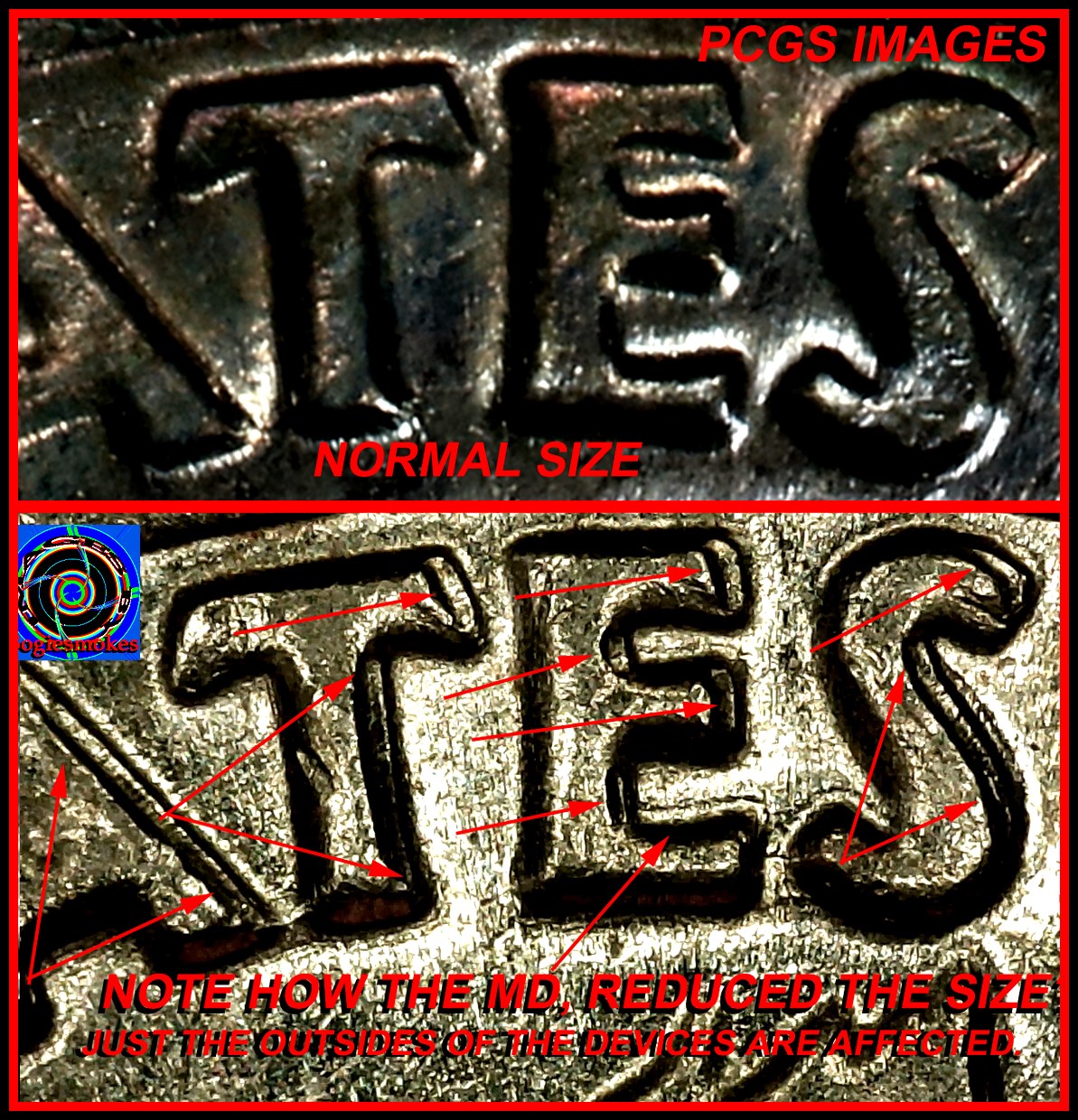
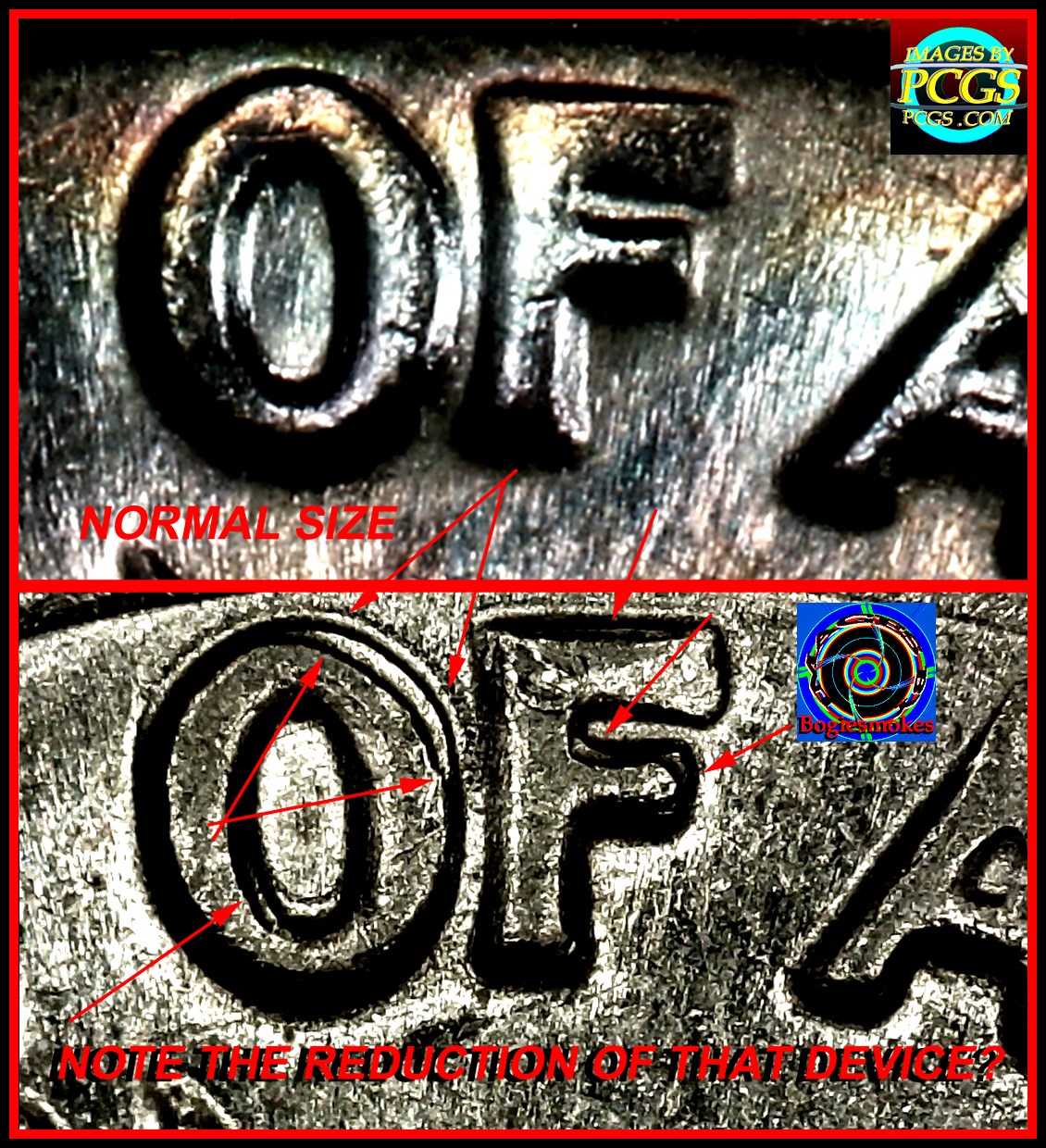
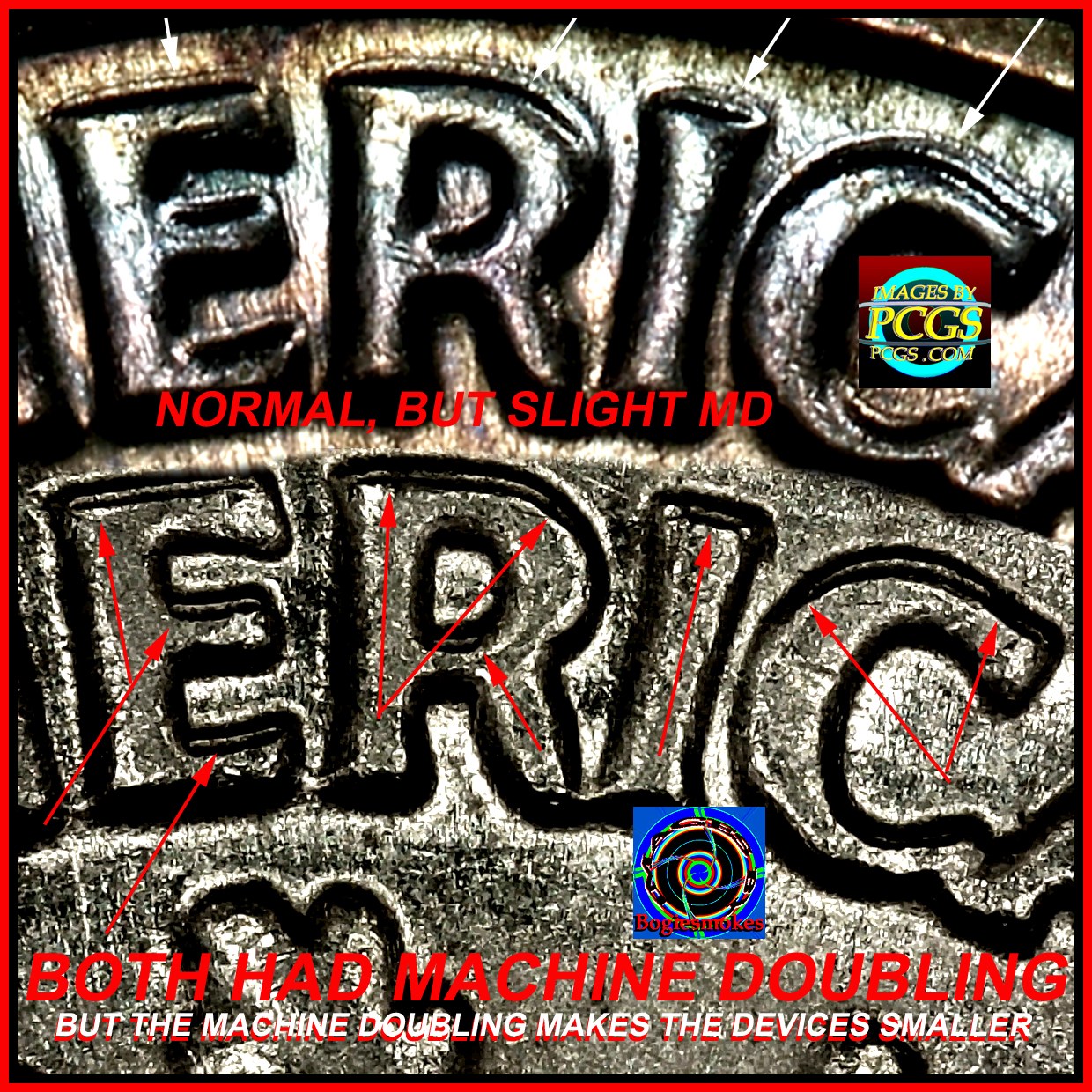
I'm sure your looking at the bottom images and thinking this is a doubled die, but it is just strong
Machine Doubling. Note the top images are just a normal example. The bottom ones are reduced by
Machine Doubling. Note the following points.
1.
Machine Doubling reduces the size of the devices.
2.
Machine Doubling is on the outside part of the design of the devices.
3. While the devices look larger, they are all normal for this design.
4. The contour of the devices are altered. Normally you would be the light color on the tops of the devices, that fade to dark on the bottoms of the devices. Note the affected areas? They are flat and there is not contour light to dark on the images. They were altered by the machine. So both of the coins were from normal dies, but the MD example was altered, after the strike by the machine.
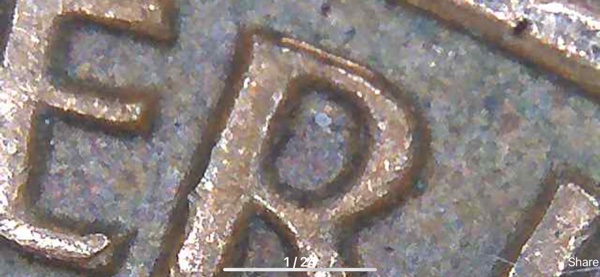
Another point on your coin, if this was a doubled die, the hub doubling would not be on just one device. There is not spread on the devices on your coin. That is the first thing we look for. Is the devices normal in size? If so, move on to the next coin. If may be the coin your look for?





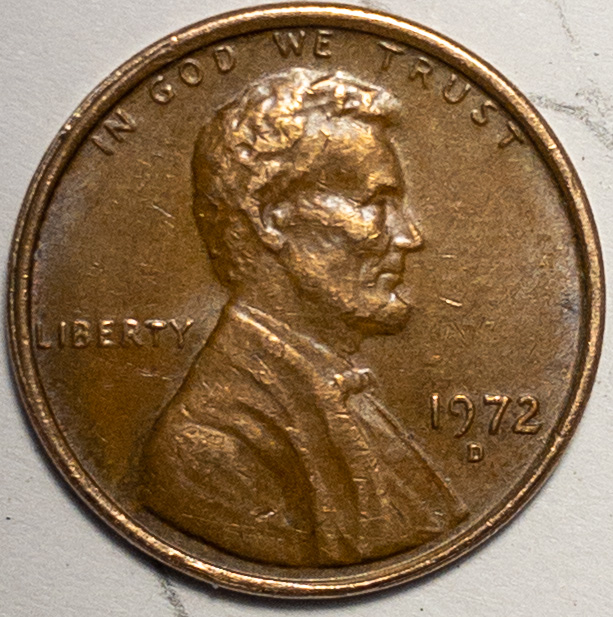

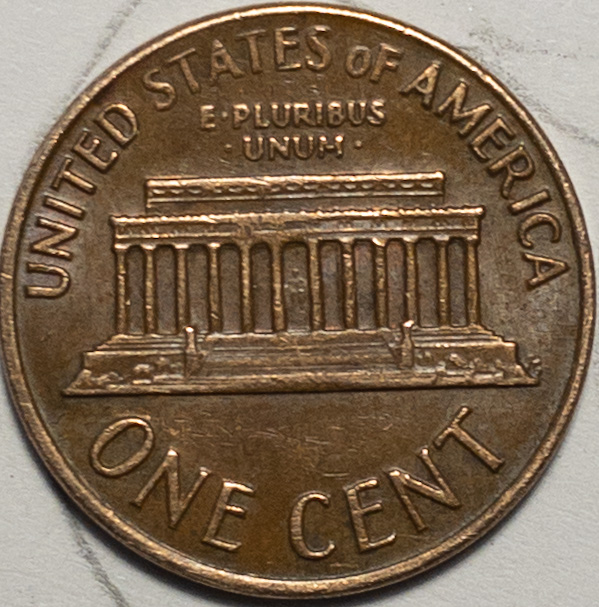


 Posted 04/22/2021 04:14 am


 . Not seeing doubling. Don't forget to also check Wexlers site.




