PCGS - Undervalued coins are often referred to as "sleepers." People who search for sleepers in numismatics are looking for coins or banknotes that show potential for better-than-average price gains during the coming months and years. Identifying sleepers requires an in-depth study of coins, banknotes, and the market. PCGS.com contains a wealth of easily accessible information to draw from such as charts, graphs, indexes, the PCGS Price Guide, the PCGS Population Report, and PCGS CoinFacts.
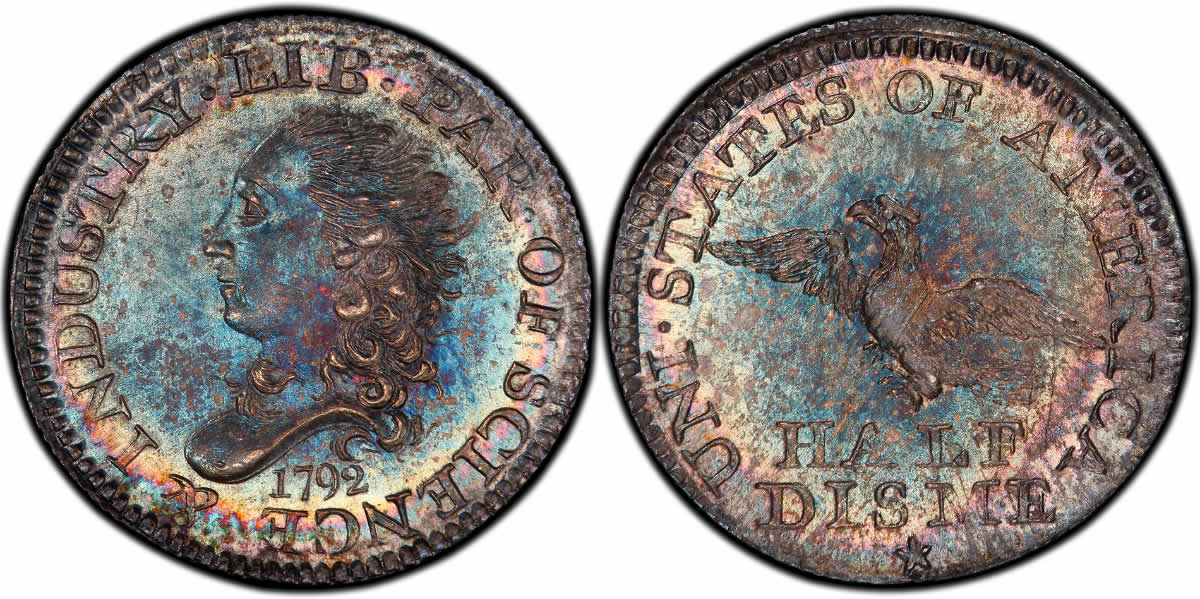 Bust Half Dime, 1792 H10C, PCGS MS68. Click image to enlarge.
Perhaps no numismatist was better at identifying sleepers than the late John Jay Pittman (1913-1996). His daughter Polly told me her father used to stay up until two or three in the morning studying auction catalogs and other numismatic reference works. As a result, the story goes, over his lifetime Pittman invested no more than $100,000 in his collection, which sold for over $30 million after his death!
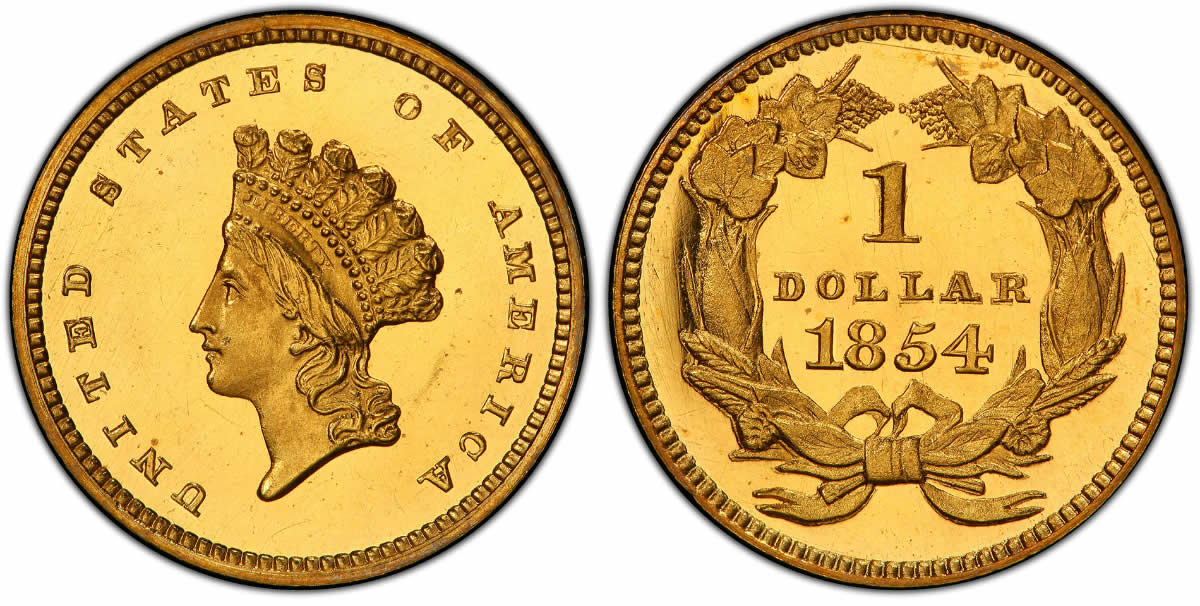 Gold Dollar, 1854 G$1 Type 2, DCAM, PCGS PR64+DCAM. Click image to enlarge.
Pittman was a shrewd negotiator, but more importantly, a shrewd researcher. While the benefit of time greatly helped enhance the value of his collection, he made many carefully thought-out purchases of sleepers. A few well-known examples that sold in 1997 during the first installment of the sale of his collection include his purchase at the 1948
ANA convention in Boston of a 1792
Half Disme for $100 that realized $308,000; his 1956 purchase of a Proof 1854 Type 2 Gold Dollar, one of four known, for $525 that realized $176,000; and his purchase of one of two known Proof 1833 $5 Half Eagles for $635 from the 1954 King Farouk sale in Egypt, which realized $467,500. He purchased the 1854 Proof Gold Dollar at the Central States Numismatic Society Convention auction in Indianapolis where, when the lot came up for sale, he walked to the front of the room, faced the crowd, held his arm high in the air to bid, and stared down anyone who dared to bid against him until he won the coin. After that move, he earned the nickname "The Statue of Liberty."
Today's MarketThis could be one of the most advantageous times in numismatic history to identify, locate, and purchase sleepers. The current market reminds me of the 2003 to 2004 period, when the coin market was awakening from a long slumber and downward price spiral as it finished its decade-long transition from the investor-based market of the 1970s, 1980s, and early 1990s to a much healtheir collector-based market. During the 2000s, times were good. Investments in stocks, real estate, fine art, rare coins, and other speculative alternatives made strong gains, only to be stopped by the financial crisis, now more than a decade ago.
The tremendous amount of stimulus money being injected into the economy these days and the interest in alternative and tangible investments bodes well for numismatics. The market is already experiencing strong price gains in areas like the popular
Morgan dollar series and auction results for high-grade rare coins in general have been strong as of late.
Prospects are bright for gains in rare coin values during the next several years as multiple top rarities are poised to break the $10 million mark. As several famous rarities begin to sell for eight figures, the stage will be set for price levels to reach new, astonishing price records, generating publicity for the coin market and pulling lesser-priced coins to higher price levels with them.
Read the Entire Article Check out PCGS Coins on ebay
.










 Posted 08/24/2021 3:26 pm


