| Author |
 Replies: 17 / Views: 2,622 Replies: 17 / Views: 2,622 |
|
Pillar of the Community
United States
580 Posts |
Any idea what causes this? Could it have been a condition with the planchet before it was struck? Or perhaps it's post mint damage? 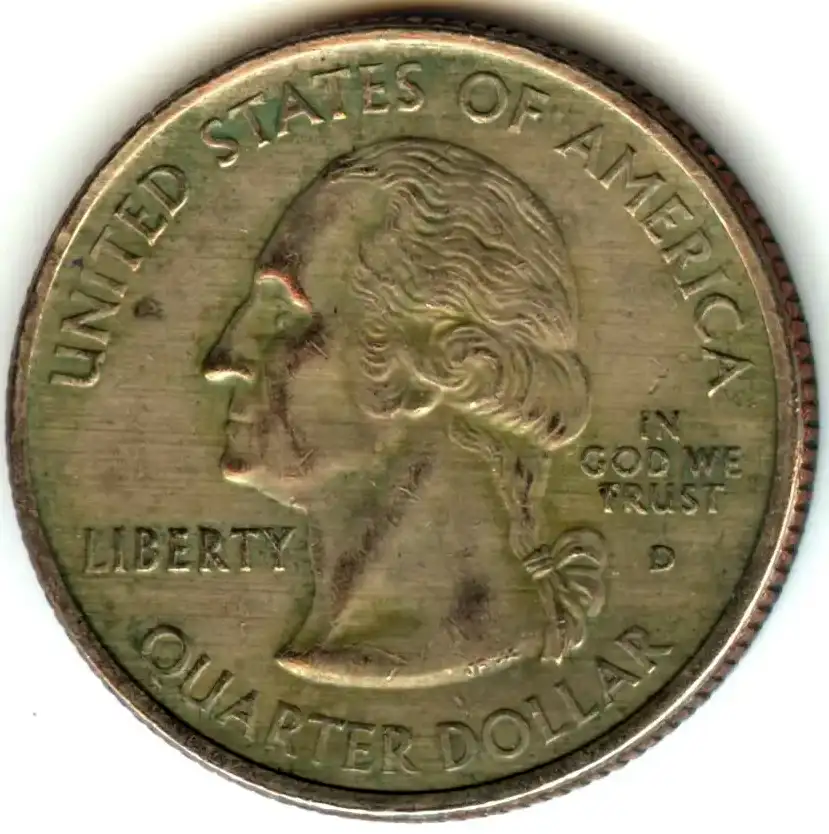 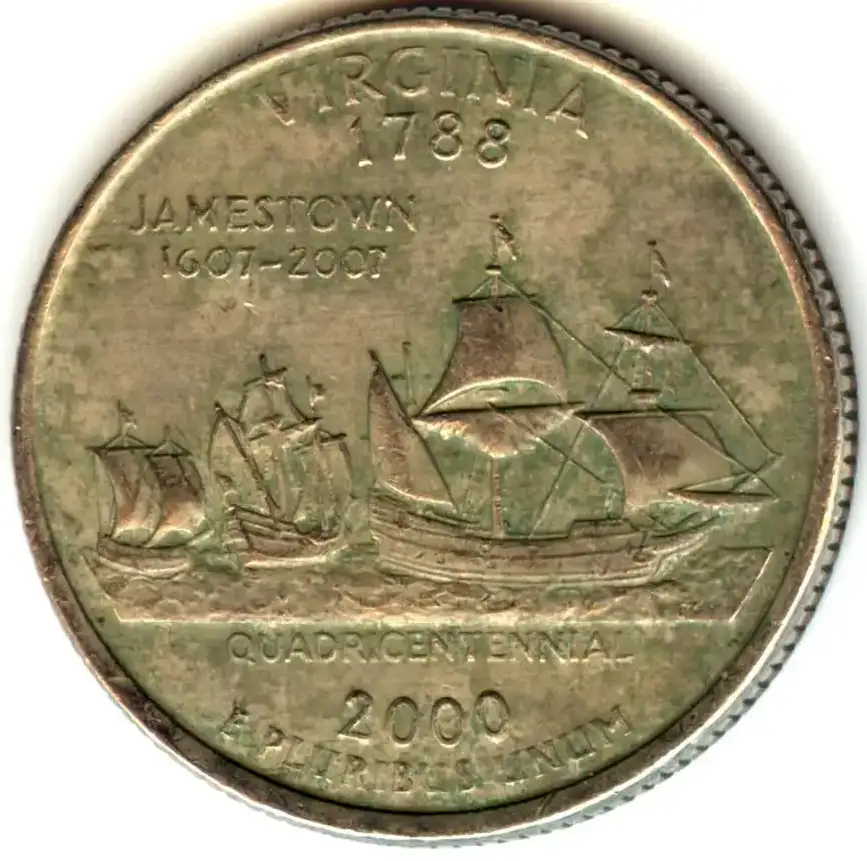 |
|
|
|
Bedrock of the Community
United States
12437 Posts |
Are there parallel lines on the reverse aligned with the obverse lines?
Edited by biokemist6
01/05/2009 3:57 pm
|
|
Pillar of the Community
United States
5318 Posts |
It sorta looks like it was exposed to an environment which etched the coin and brought out the grain of the metal.   |
|
Pillar of the Community
United States
5318 Posts |
The direction of the reverse striations appears to be aligned to the obverse. |
|
Moderator
 United States
16694 Posts |
Looks like verdigris but I do believe these lines are part of the alloy although I could be wrong.
swcoin.ecrater.com
|
|
Pillar of the Community
Spain
1361 Posts |
|
|
Bedrock of the Community
United States
12437 Posts |
My theory is that they are striations that were formed on the blank stock when it was being rolled to the proper thickness.
|
|
Pillar of the Community
 United States
580 Posts |
Bio, I agree with that assessment. That definitely seems the most logical. Does the wear on Washington's head seem a little unusual as well? It's like someone took a piece of sandpaper to the high points and the rest of it was smoothed evenly. I dunno...it almost makes me wonder if the actual composition of the metal in this one coin is slightly skewed. Is that even possible? It's weight is 5.67 grams on the nose, though.
|
|
Pillar of the Community
United States
3507 Posts |
Biokemist,
That wouldnt exactly fit. If the striations were on the planchet before the strike, they would have been obliterated when the coin was struck.
The coin has obvious environmental and chemical damage so the likelihood is that the surfaced was damaged by whatever caused the rest of the staining.
|
|
Bedrock of the Community
United States
12437 Posts |
Quote:
they would have been obliterated when the coin was struck My point of contention with that is that I have seen these same lines on other coins and other denominations(without obvious environmental damage which the above example does have) and when a coin is double struck(in collar) the original striking is not completely obliterated, merely muted. The only thing I can think of that could possibly make perfectly aligned, perfectly parallel lines on multiple, unrelated coins would be from rolling of the metal stock. Unfortunately, I wish I had kept a few of those examples now- I deemed them too common after finding several so I just put them back into circulation  Then again, I guess one could probably fill a few binders with oddball reference examples... Edited by biokemist6
01/06/2009 1:11 pm
|
|
Pillar of the Community
United States
580 Posts |
So bottom line is that it is unusual enough for me to toss it into a holder and a binder.
|
|
Bedrock of the Community
United States
17884 Posts |
It's probably a combination of things. The lines are definitely formed by the rolling of the stock but what is making them visible is probably a slight non-homogeneous alloy and some environmental contamination that is helping to make the excess copper areas more visible. (The excess copper areas react more creating light and dark streaks.)
|
|
Pillar of the Community
United States
5318 Posts |
Would rolling of planchet stock create areas of more/less copper? Even if rolling created lines, I don't see how they would coincide with streaks in the alloy. I'm just wondering out loud here, because I really cannot say what caused the streaks here. |
|
Bedrock of the Community
United States
62064 Posts |
Here is an example of marks that look like faded rolling lines. They still appear. They are not on the dies as the two images I show have the same marker from the same roll. So they would have to be on the planchets and not on the dies. 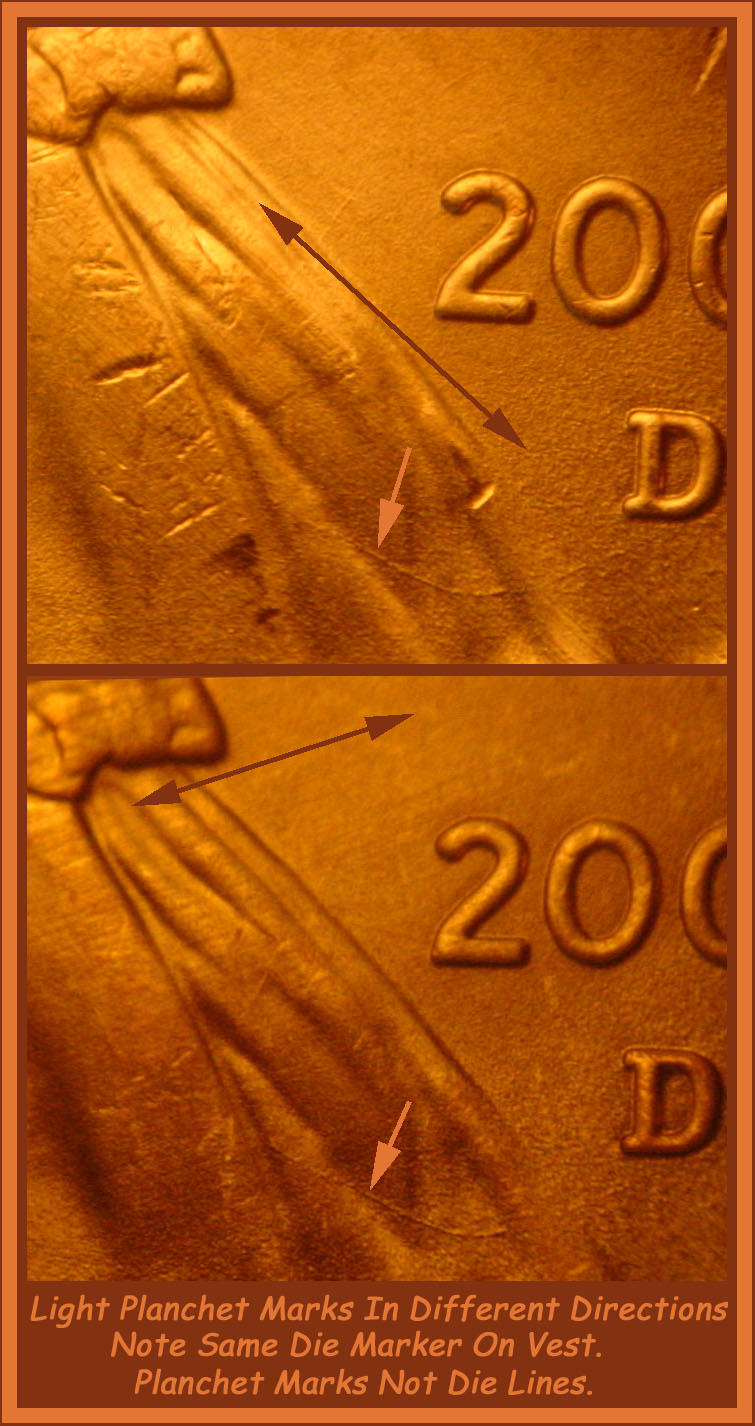 |
|
Bedrock of the Community
United States
17884 Posts |
Quote:
Would rolling of planchet stock create areas of more/less copper?
Even if rolling created lines, I don't see how they would coincide with streaks in the alloy. The rolling doesn't create the areas of more or less copper, that happens in the pouring and/or cooling of the ingot of metal used to create the strip. If the alloy is not kept roughly stirred or the pour takes took long and the metal starts to cool, or if the ingot cools too slowly the copper and nickel will begin to separate and you will have areas of varying composition. When the strip is then rolled these areas are stretched out into long thin bands of differing composition running the length of the strip |
|
Pillar of the Community
United States
5318 Posts |
Conder, right.  I raised the question, and that's a good explanation. Normal coin with environmental damage to me. |
| |
Replies: 17 / Views: 2,622 |







 Posted 01/05/2009 3:59 pm





