newguy22 First of all thank you for the complement about the book.
Visually you have coins very similar to the type that came from China in bulk bags of 100 and 1000 coins which sold for silver melt here from the late 1960s to the early 1970s. I used to search bags like that for a dealer friend and I removed the non-silver counterfeits Class 1. When I identified Class 2 types like my uncle made, he sold them as genuine because they were full assay silver. I also removed the culls to be melted, including I am sorry to say the coins of Lima that were altered to read Mo. More on specific comments below:
MisterT You say:
Quote:
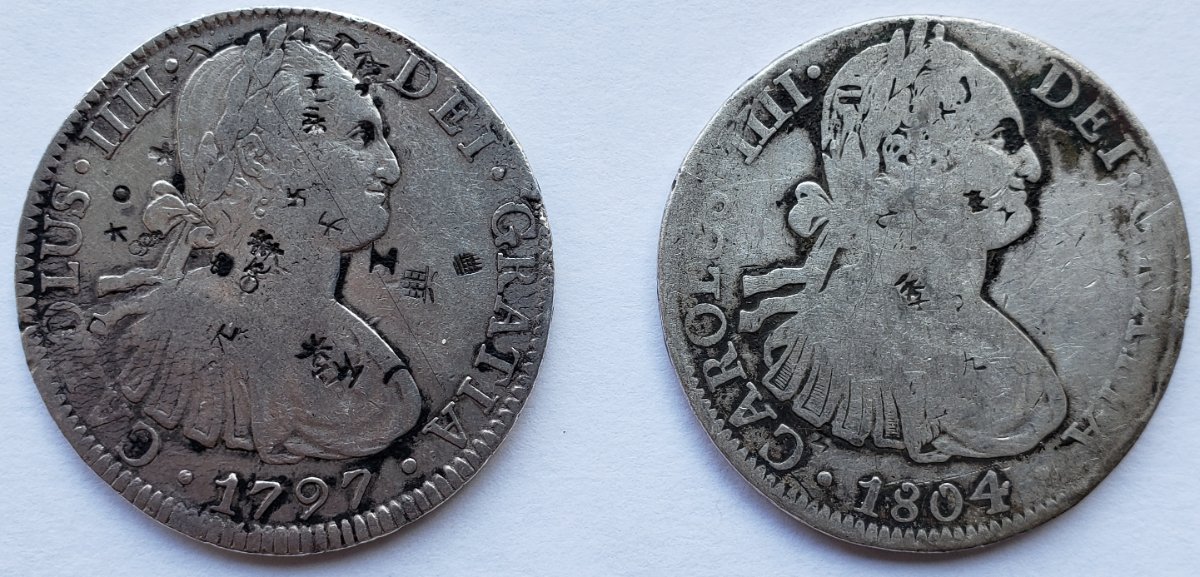
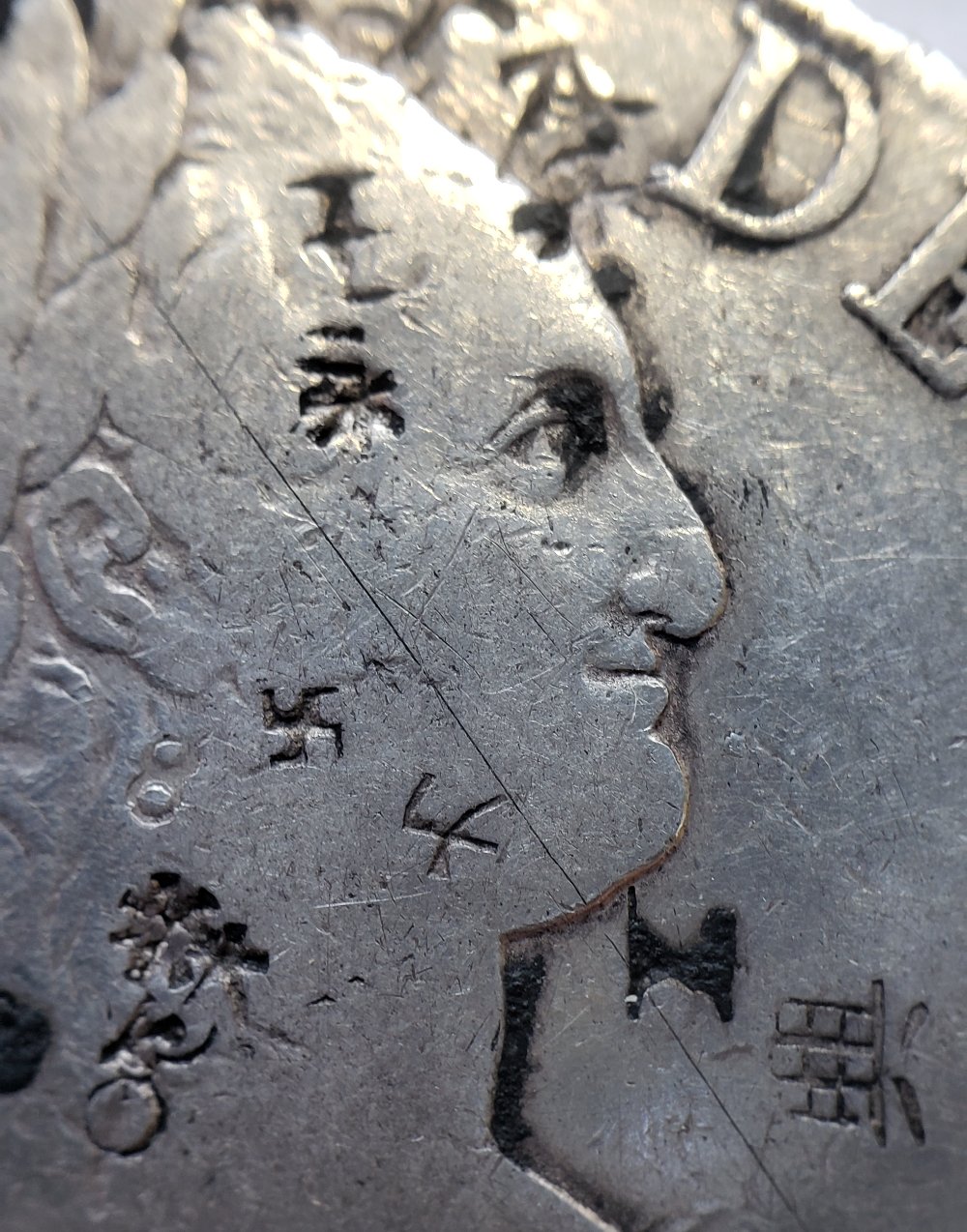
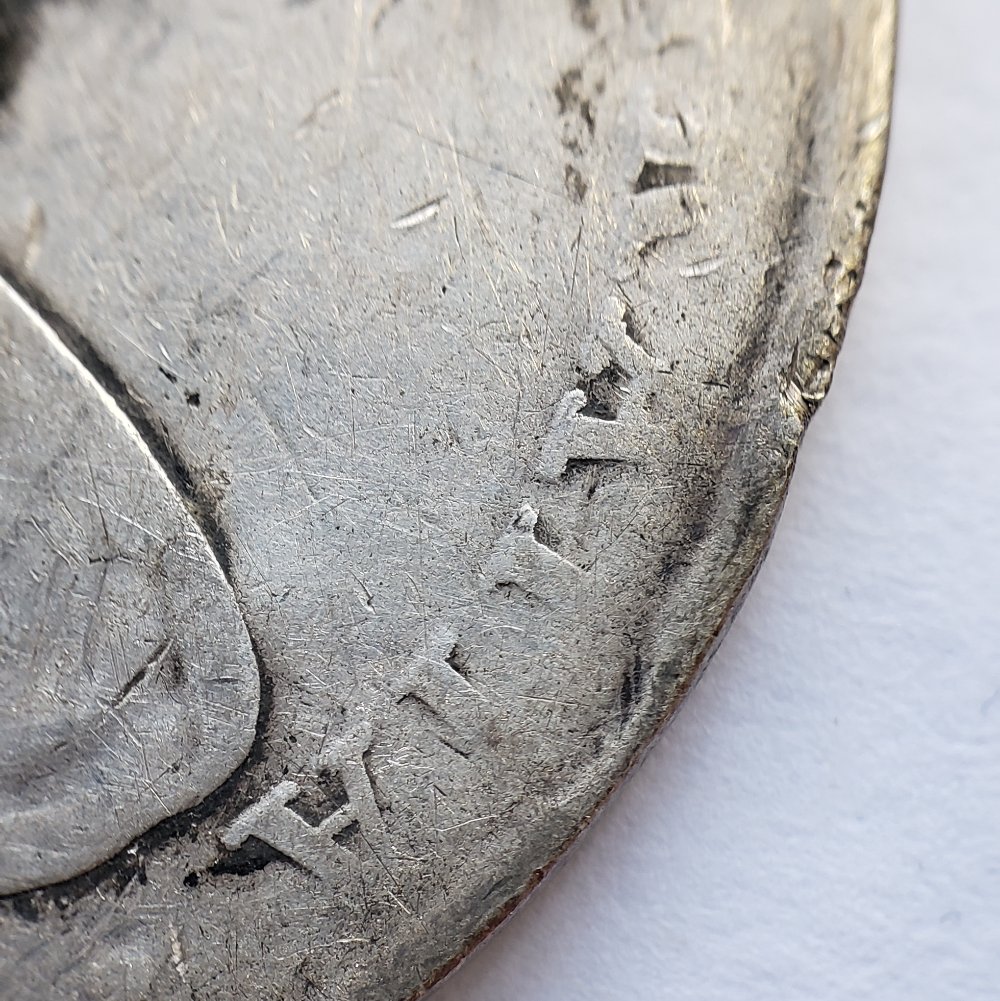
they are of silver composition of some sort which is odd and the amount of time to add all those chopmarks and the tooling required to do so seems to be more effort than a counterfeit is worth. Plus those chopmark designs appear to be authentic but I do wonder about the one with the swastika.
A very important fact to realize when dealing with Class 2 coins is that while they were made in the UK, US and elsewhere as trade coins, they did spend decades actually circulating in China. The chopmarks are most likely genuine added in China. Remember these Class 2 counterfeits circulated alongside the genuine 8Rs. Chopmarks are essentially worthless when authenticating. They are found on new and old good and bad coins. Do not be fooled because modern forgers making coins today to fool the numismatic community often add their own chopmarks but these tend to be applied to obscure errors made in the design. The original purpose of chopmarks was to see if the coins were silver plated copper.
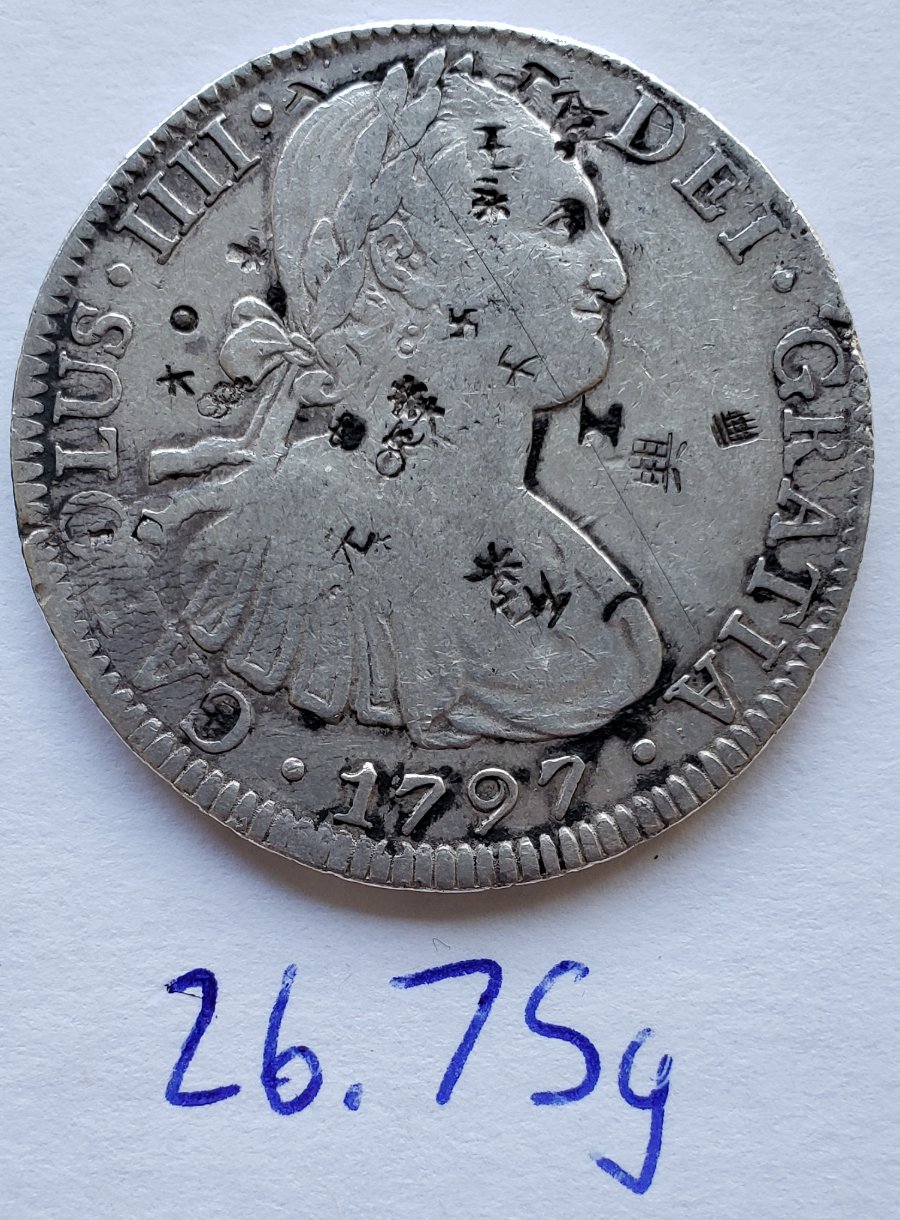
Regarding the swastika shaped chopmark. The Chinese Japanese symbol which means "good luck" or something like that is a reversed swastika with the "feet" pointed counterclockwise. A genuine swastika like the Nazi type is not seen that often on genuine 8Rs. There is however a Chinese symbol that looks like a swastika but with only three "feet" at the ends of the 4 legs. I believe that chop one has to do with value.
When I see an actual swastika I always spend additional time on the coin because that symbol appears rather often on coins that scientifically test as counterfeit or very low standard.
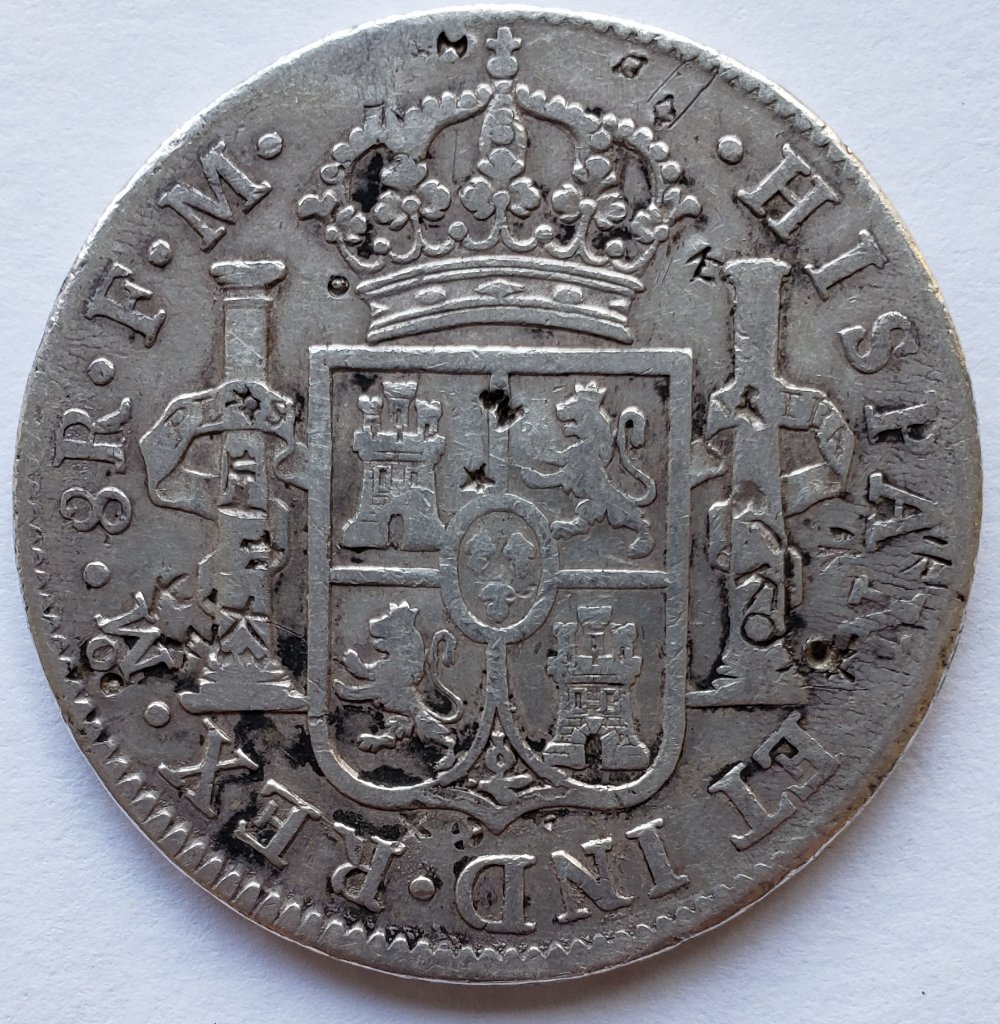
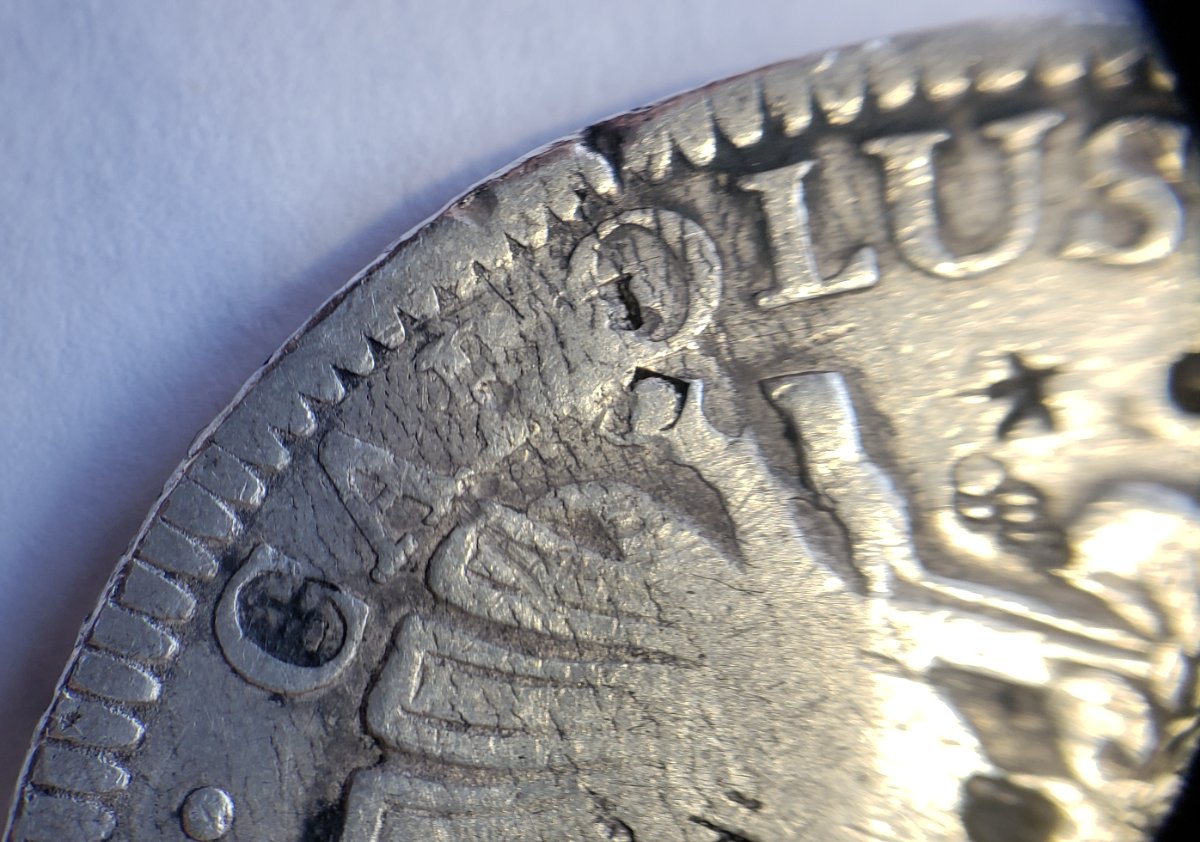
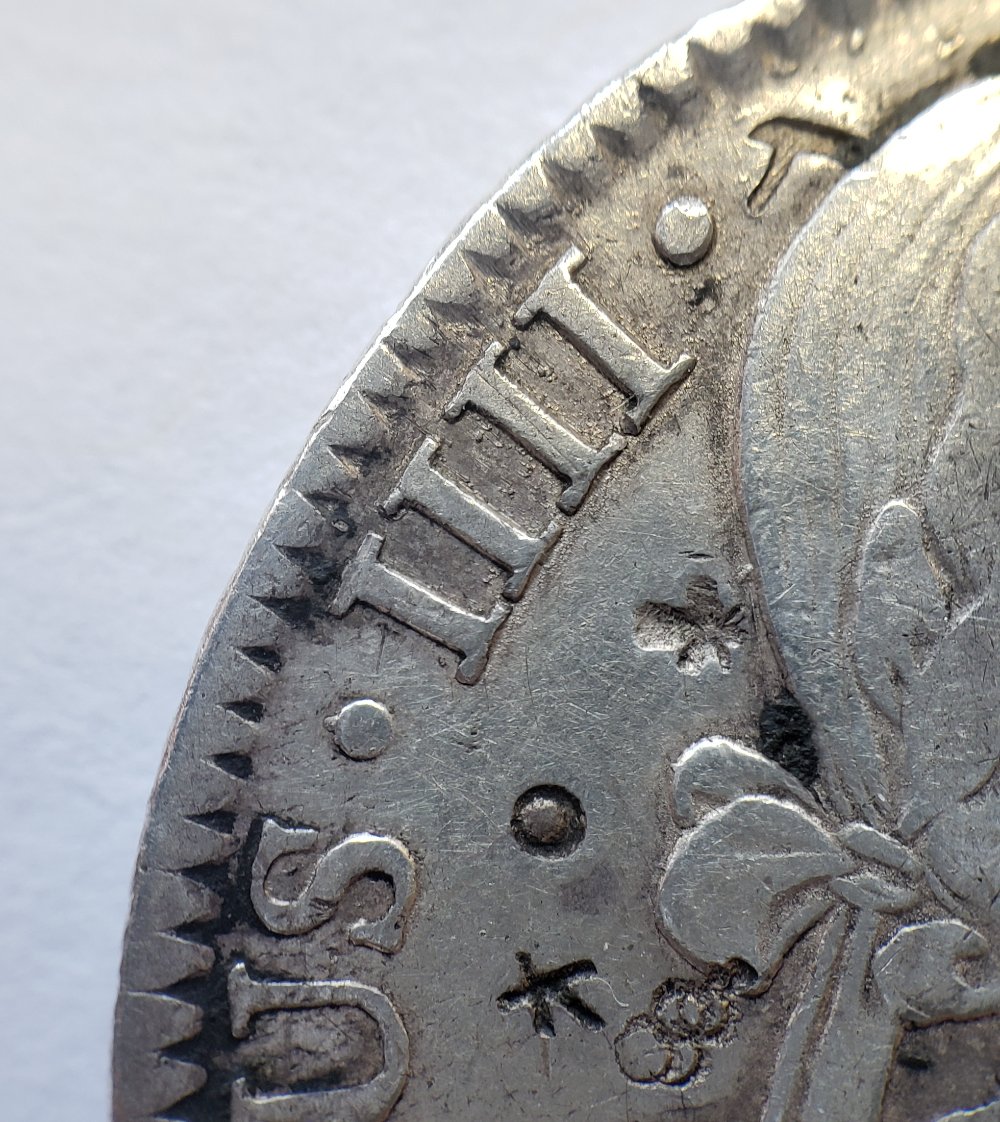
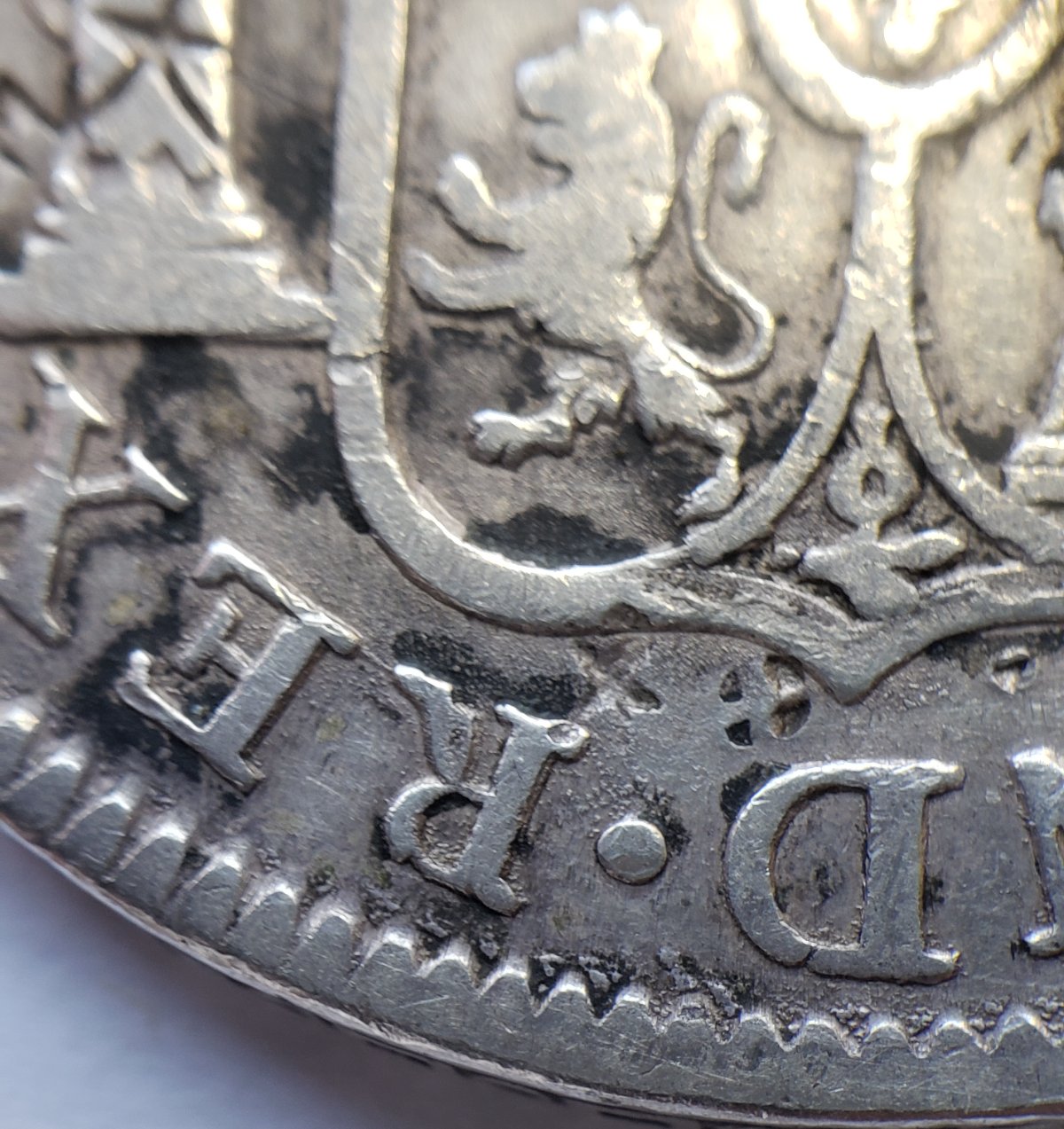
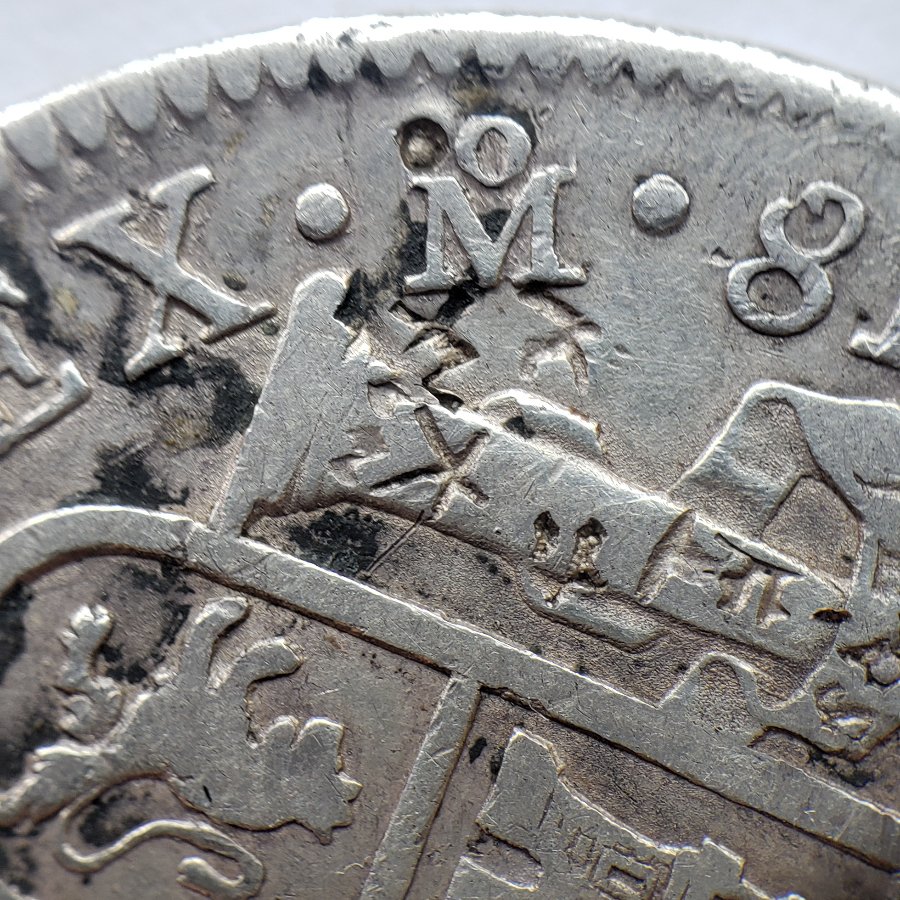
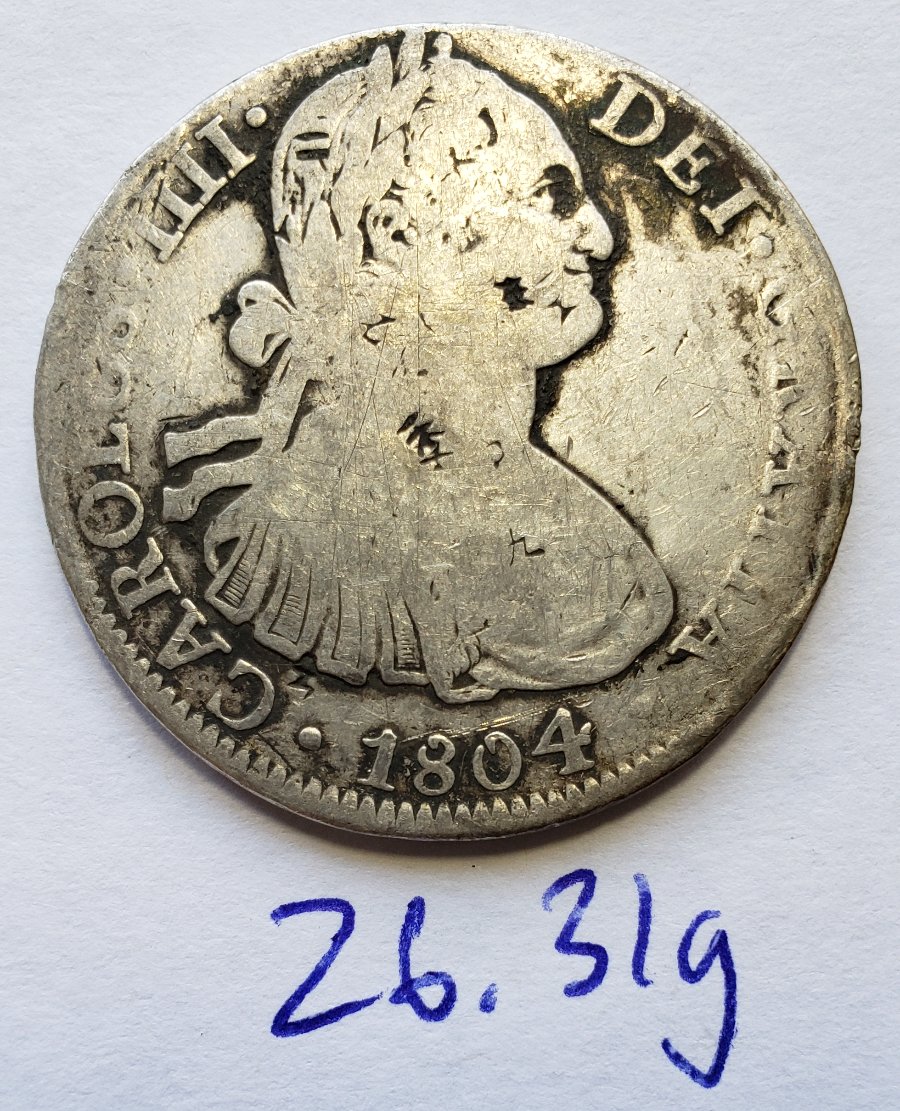
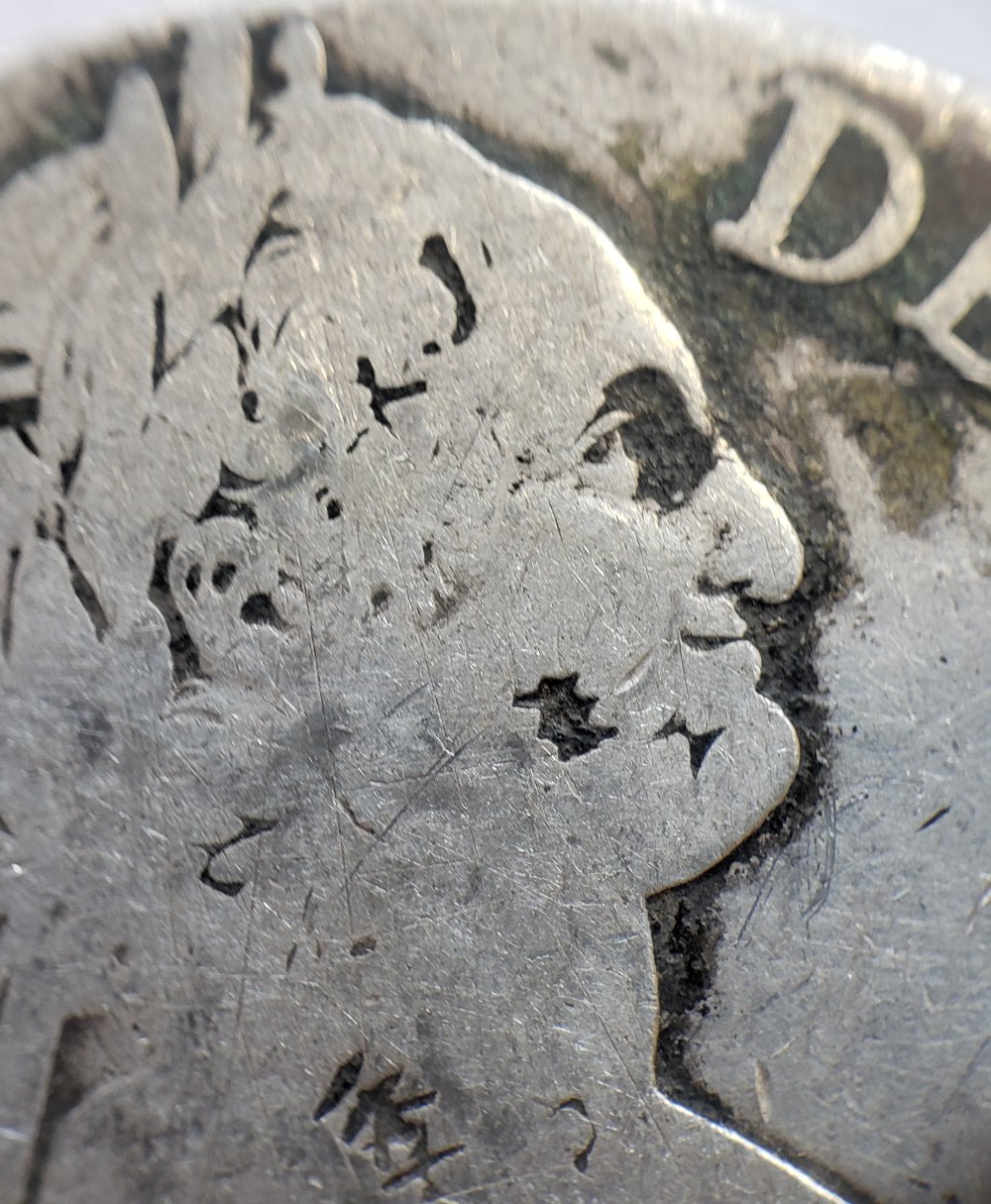
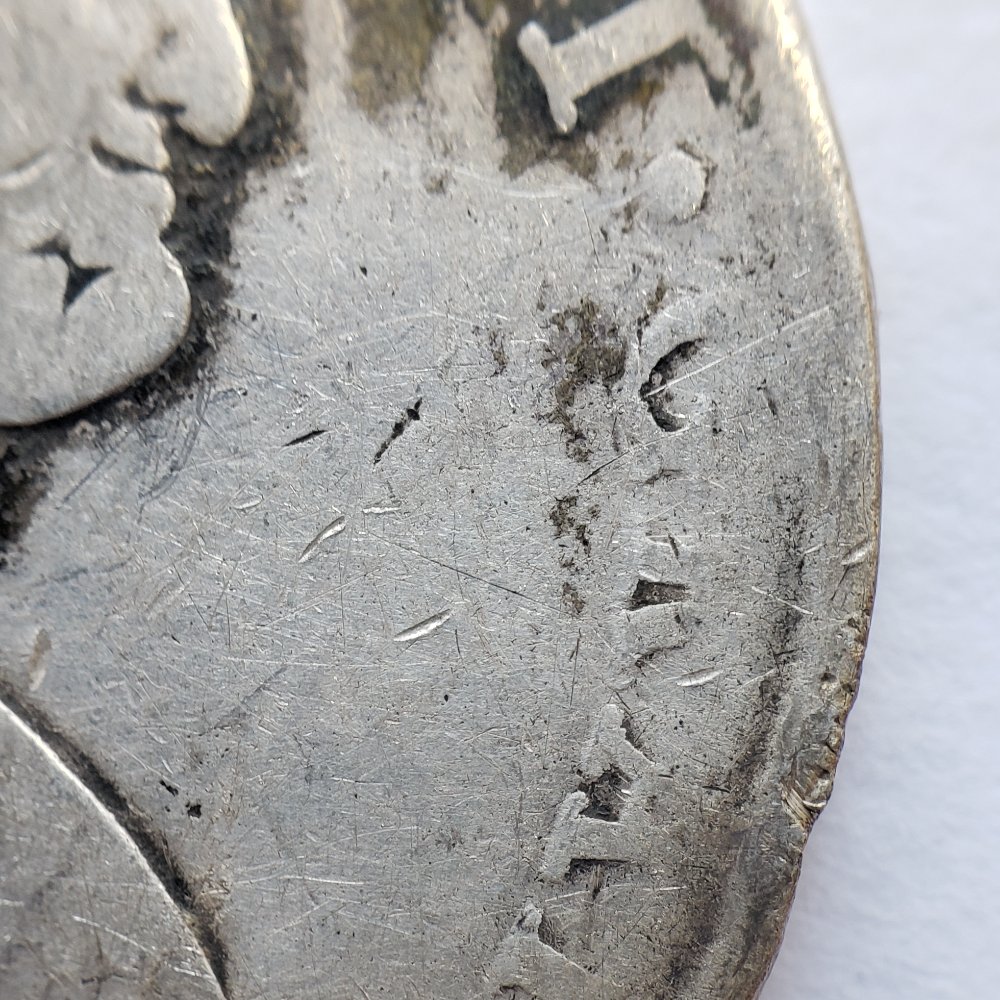
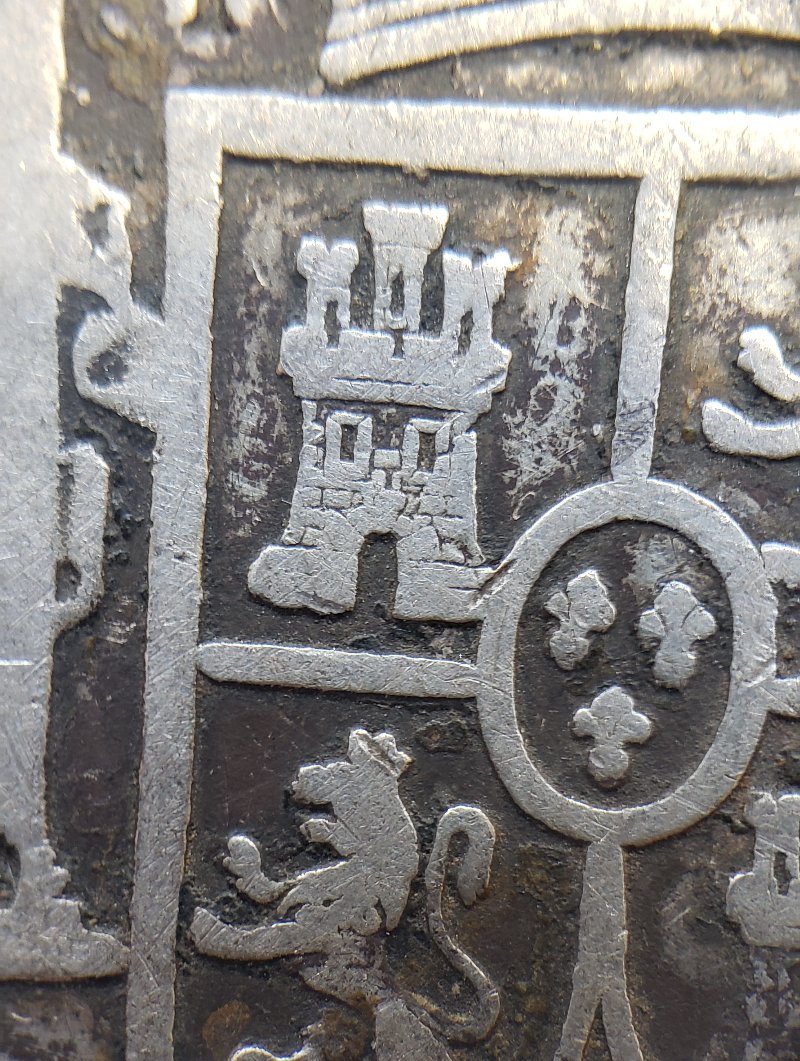
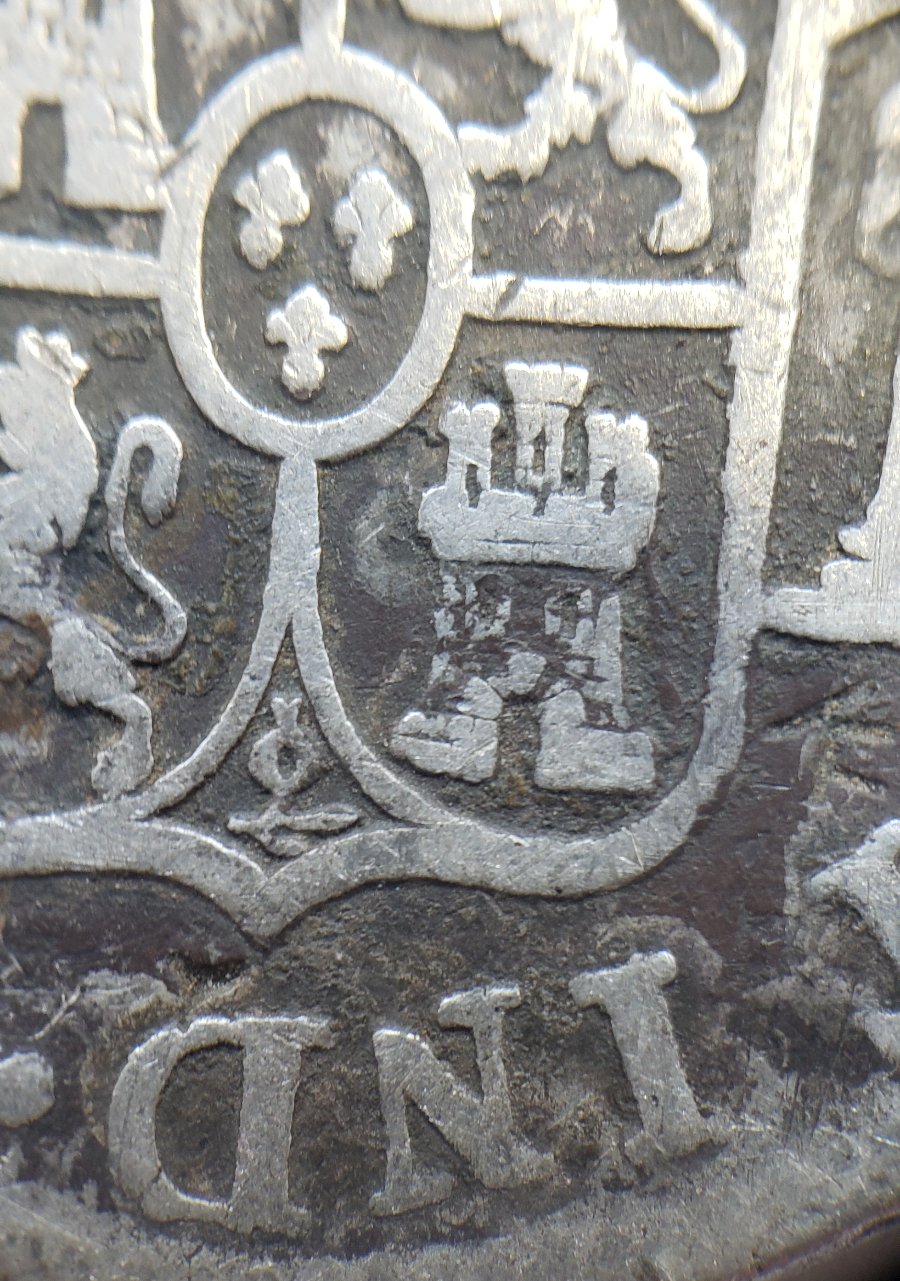
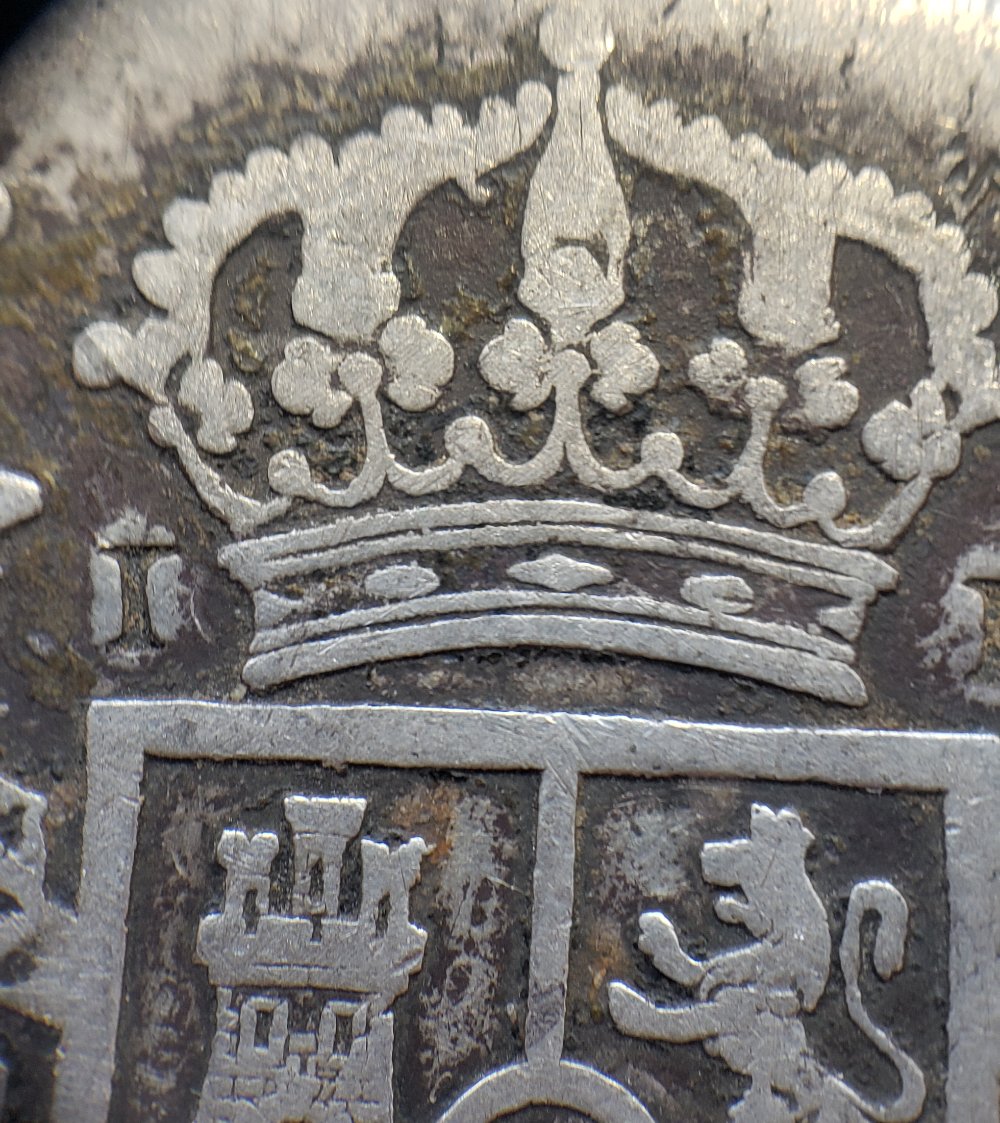
The small lumps on the fields is one of the clues I often look for on counterfeits because standard finishing the die faces should have removed most of them. Here they seem to be covered by "black goop". That is potentially a sign of 20th century forgery. Carbon black mixed with a petroleum jelly is applied to the coin which is baked in an oven. That replicates that dark patina area (which on genuine coins is an accumulation of heavy tarnish that takes decades to develop naturally). The natural black is silver corrosion often due to sulfide exposure. These surfaces (the black part) can not be tested with XRF. So XRF must be done on wear points which are relatively clean. Some artificial black goop comes off with solvents other formulations resist cleaning.
Finally, MrT is absolutely correct about SG. A routine SG test will tell if the coins "could be" Class 2 because the class 2 types were made to fool a scale of the accuracy that the Chinese schroffs possessed in 1835. The UK Class 2 coins made until 1835 and likely until 1850 were produced with 850 fine silver. The 0.01 gram accuracy of the scales belonging to the Chinese could not detect that small shortage. They could however detect the 800 fine or lower silver content found in Chinese counterfeits. The British agents at Canton specifically introduce the schroffs to SG because the British did not want to take Chinese counterfeits presented in trade.
If the coins test at about 10 using a 0.01 scale fine - they might be genuine but could be Class 2 also. The XRF test's value is in finding or NOT finding the gold trace. All genuine Mexico City coins will have a measurable gold content visible on a typical handheld XRF device. No gold or a level that is not visible to the handheld XRF means you most likely do have a class 2.
I do not need to get into the specifics of how to distinguish a UK Class 2 from a US Class 2. If these are Class 2 they are the US type. There is almost a zero chance these are UK Class 2 coins.
Blind Squirrel You are correct that a retrograde swastika is a Chinese or Japanese symbol. But this one is clockwise. Not commonly seen at all.
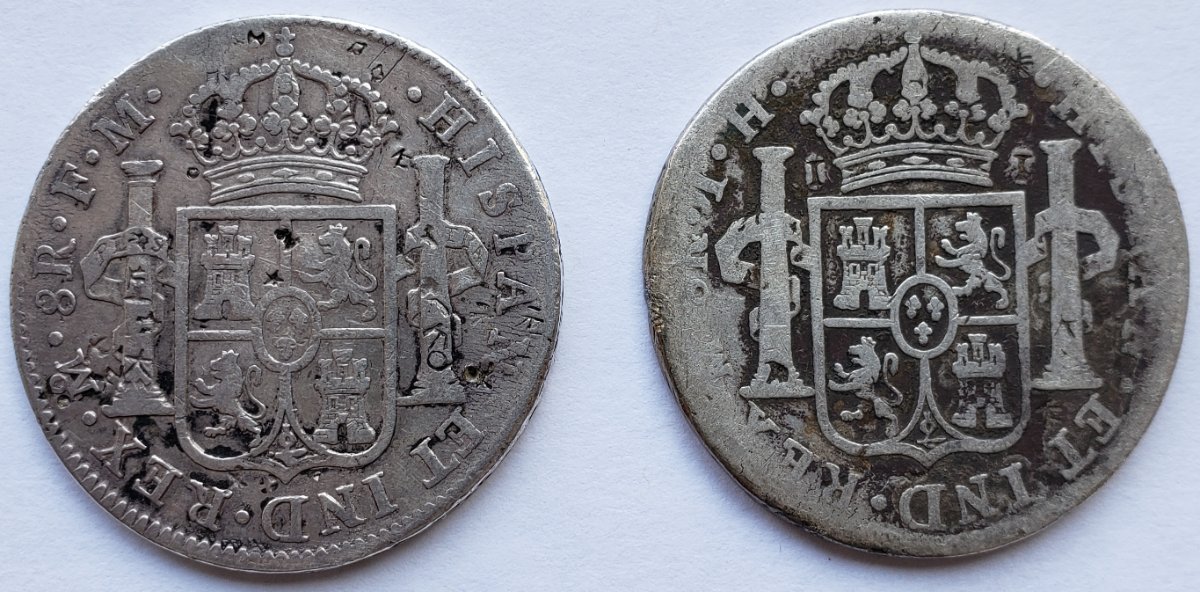
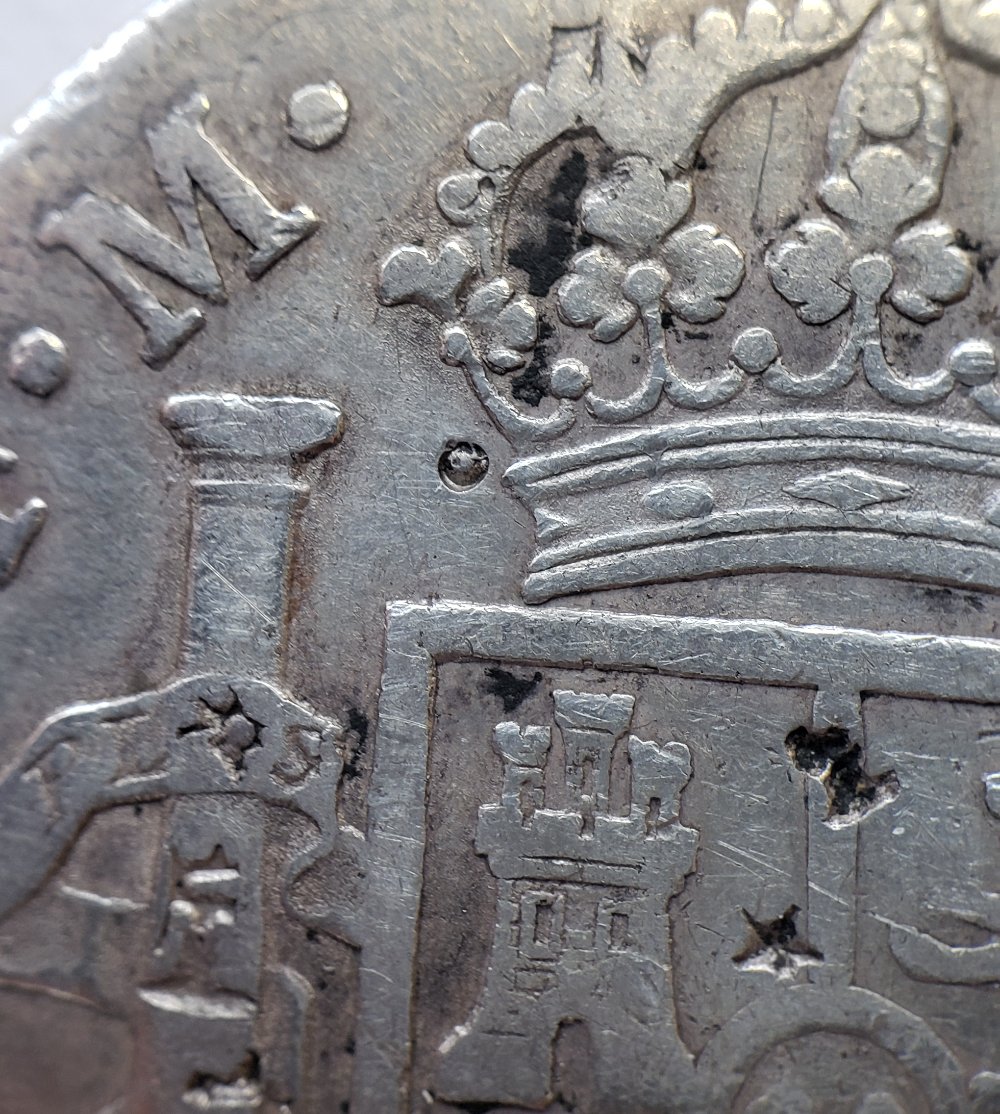
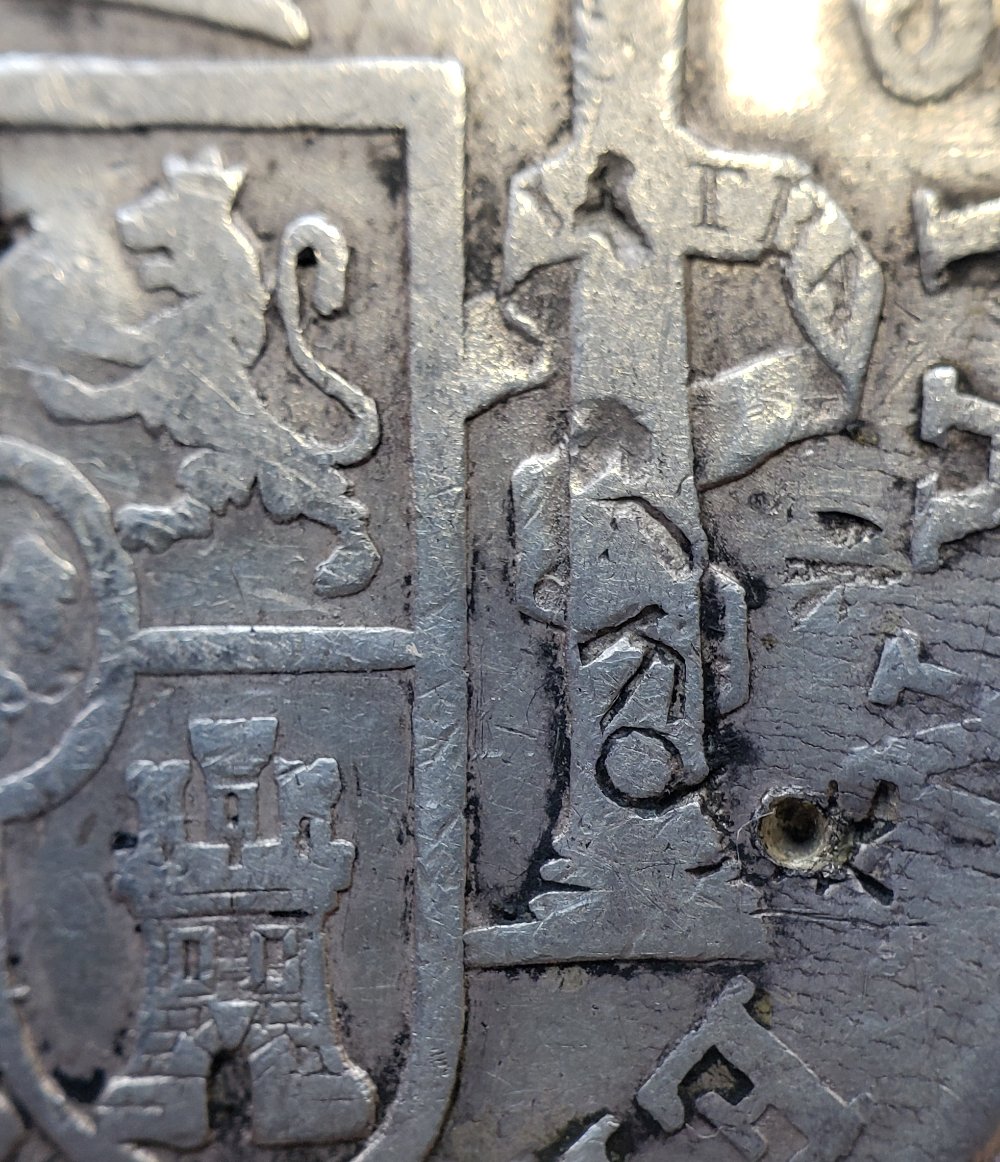
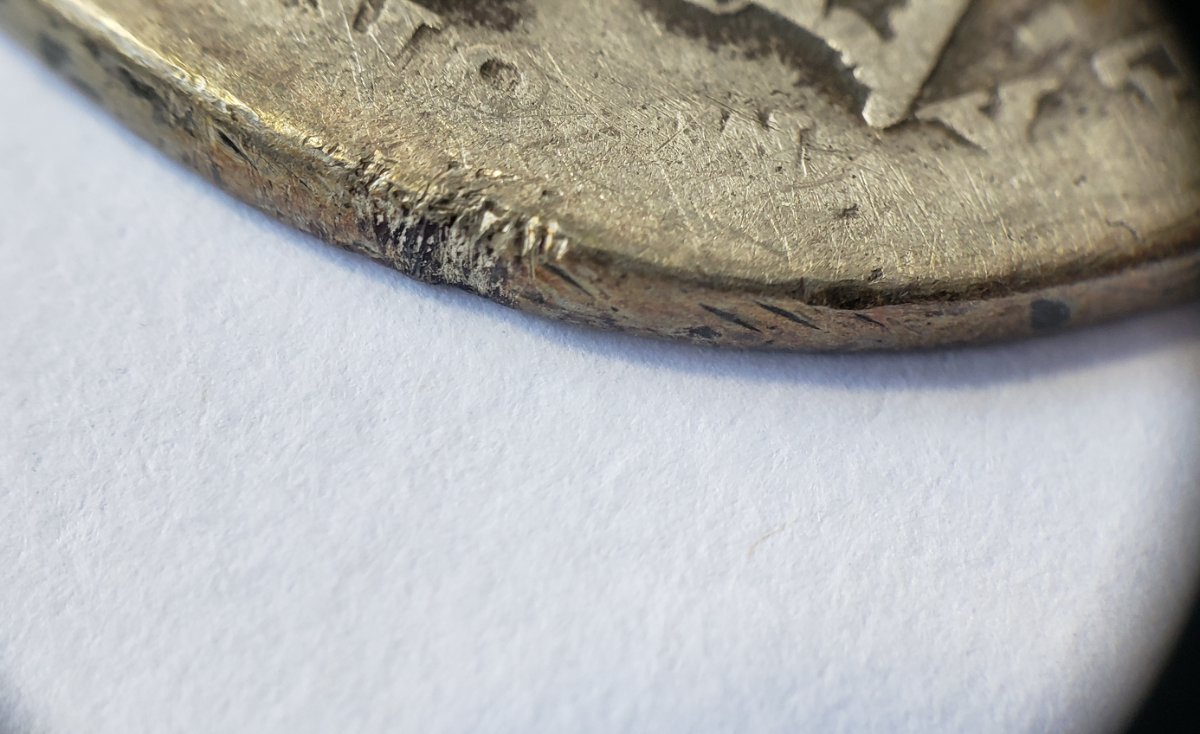
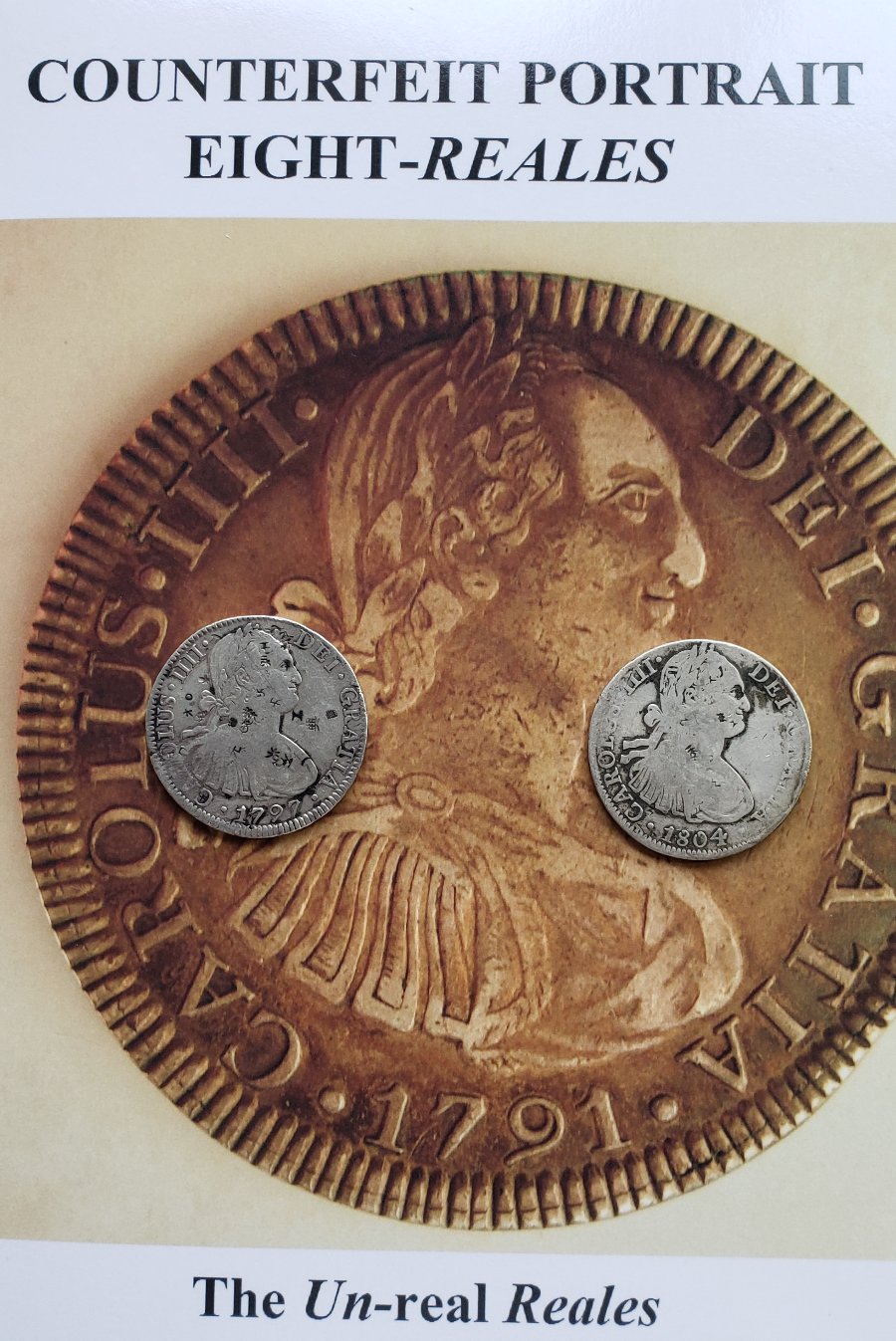
Spence Great observation about the recently drilled hole on the 1797 - someone suspected a counterfeit and was checking for a copper center. Not sure enough metal could be extracted for a standard assay test. They key thing to note is that there appears to be a raised "curl" of metal around the hole. That indicates to me that the coin circulated very little after it was drilled.
Now as to the clues that lead me in the direction of a Class 2 counterfeit struck in silver.
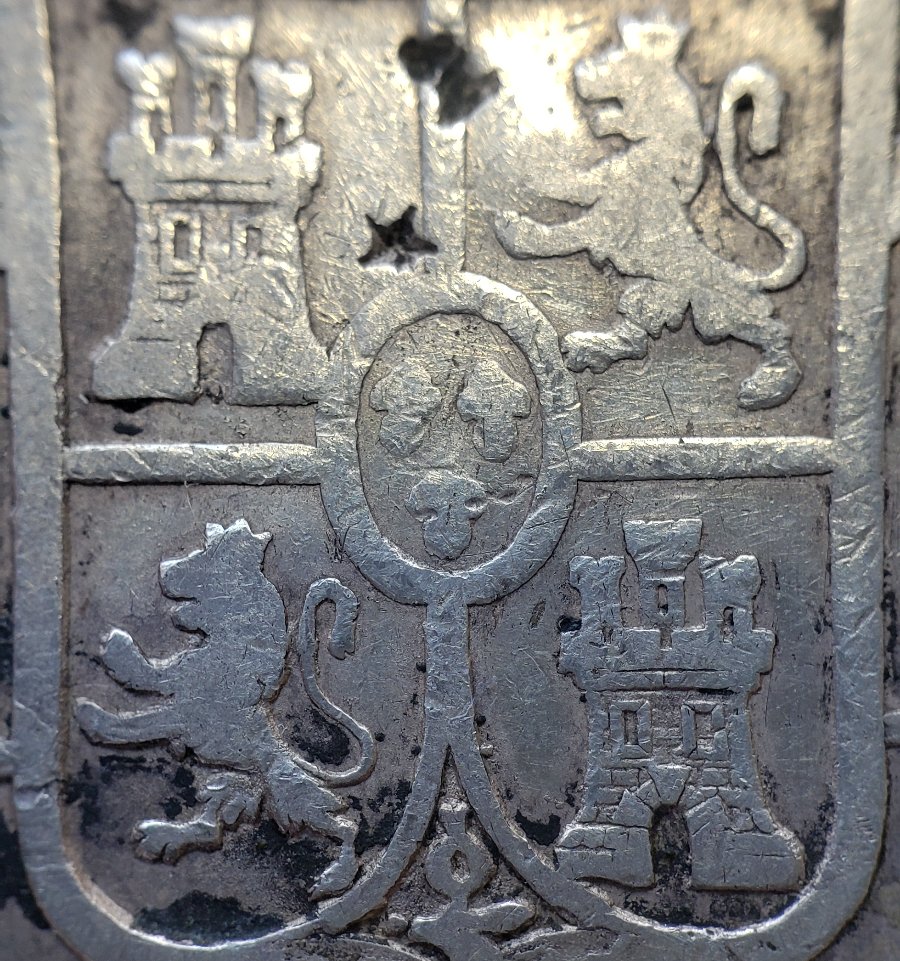
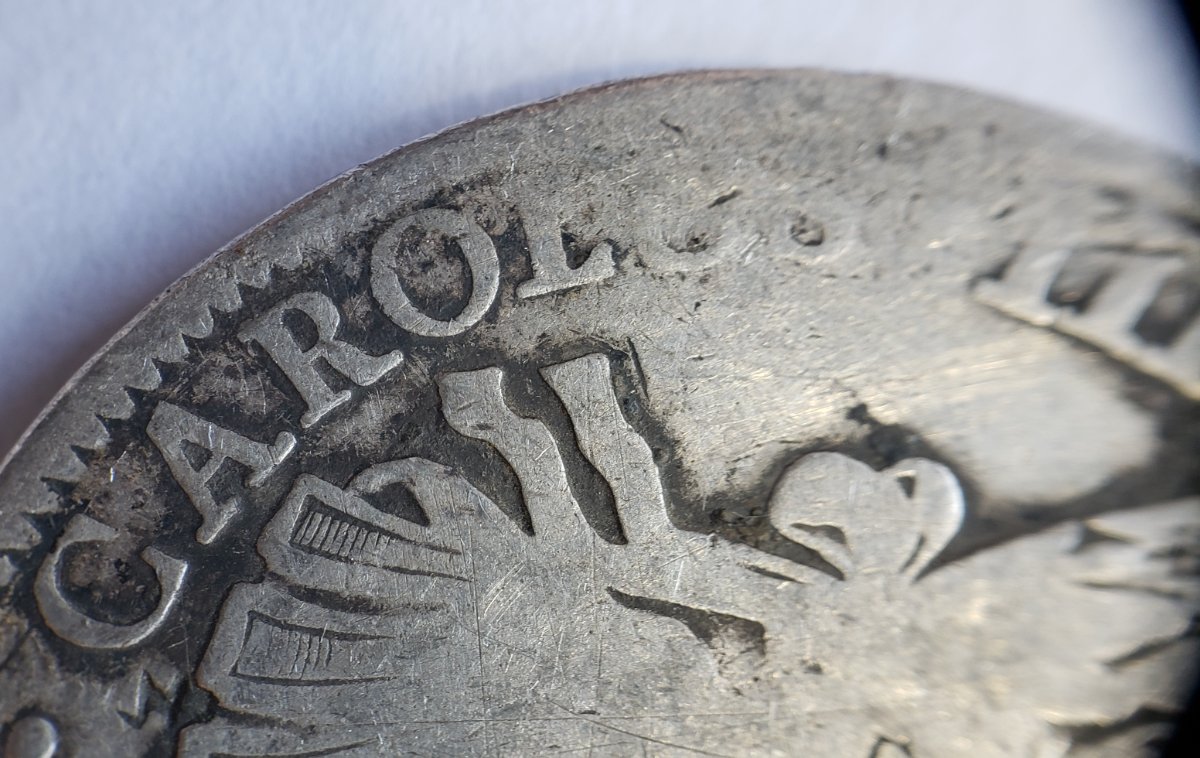
1. The failure to finish the dies leaving many tiny raised lumps close to details and lettering.
2. The surface fracture lines seen on both sides of the face of the 1797 in the area of the King's name and DEI GRAT are typical of a silver strip that is too narrow to allow the full blank to be cut out of the strip between the cracks. Typical of many US Class 2 coins I have tested. The cracks should really not appear they typically were removed in the final processing of the rolled silver strip by laminating. The only way such lines should remain is if the laminating step was done poorly or in haste using a poorly annealed silver strip.
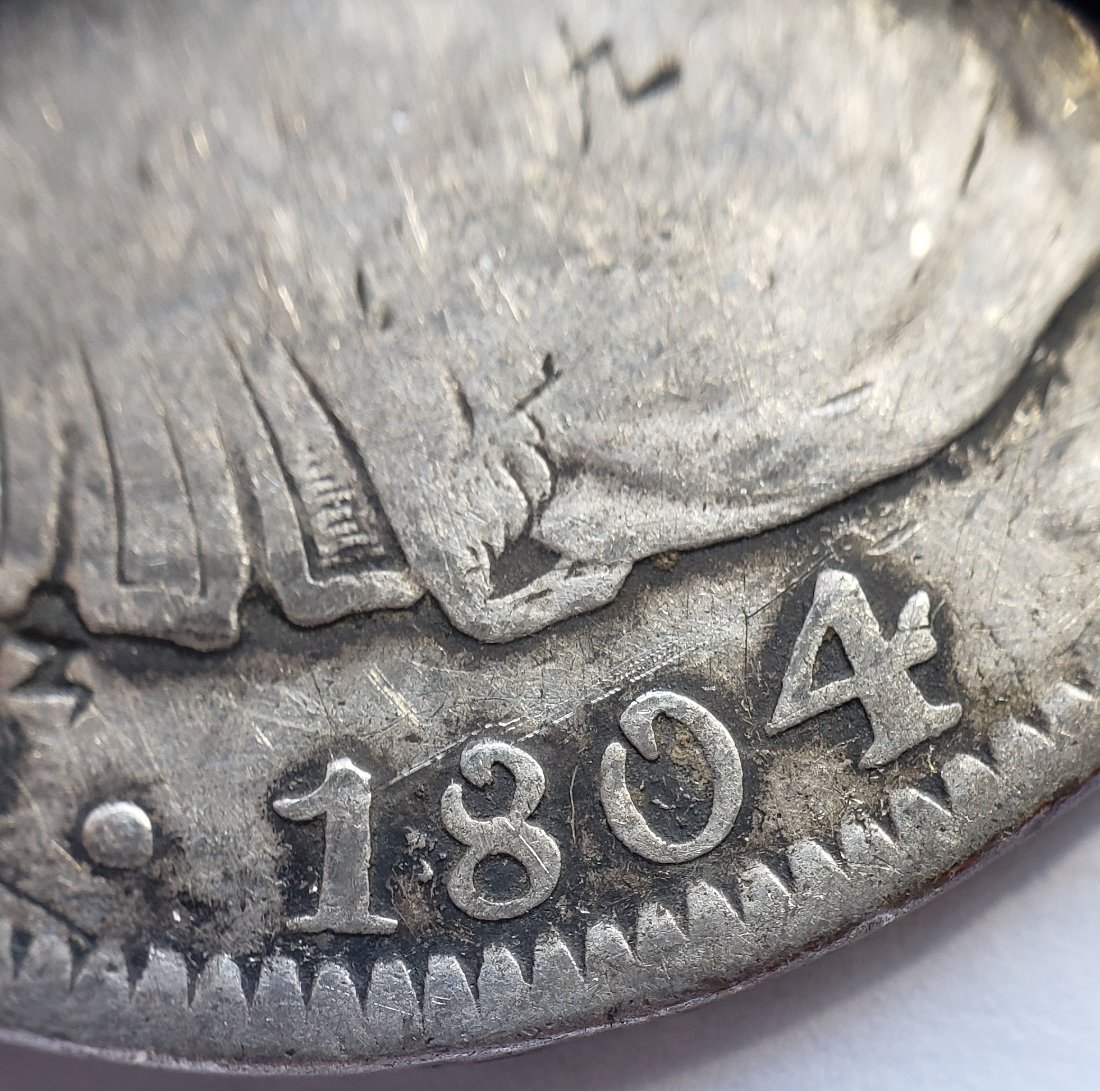
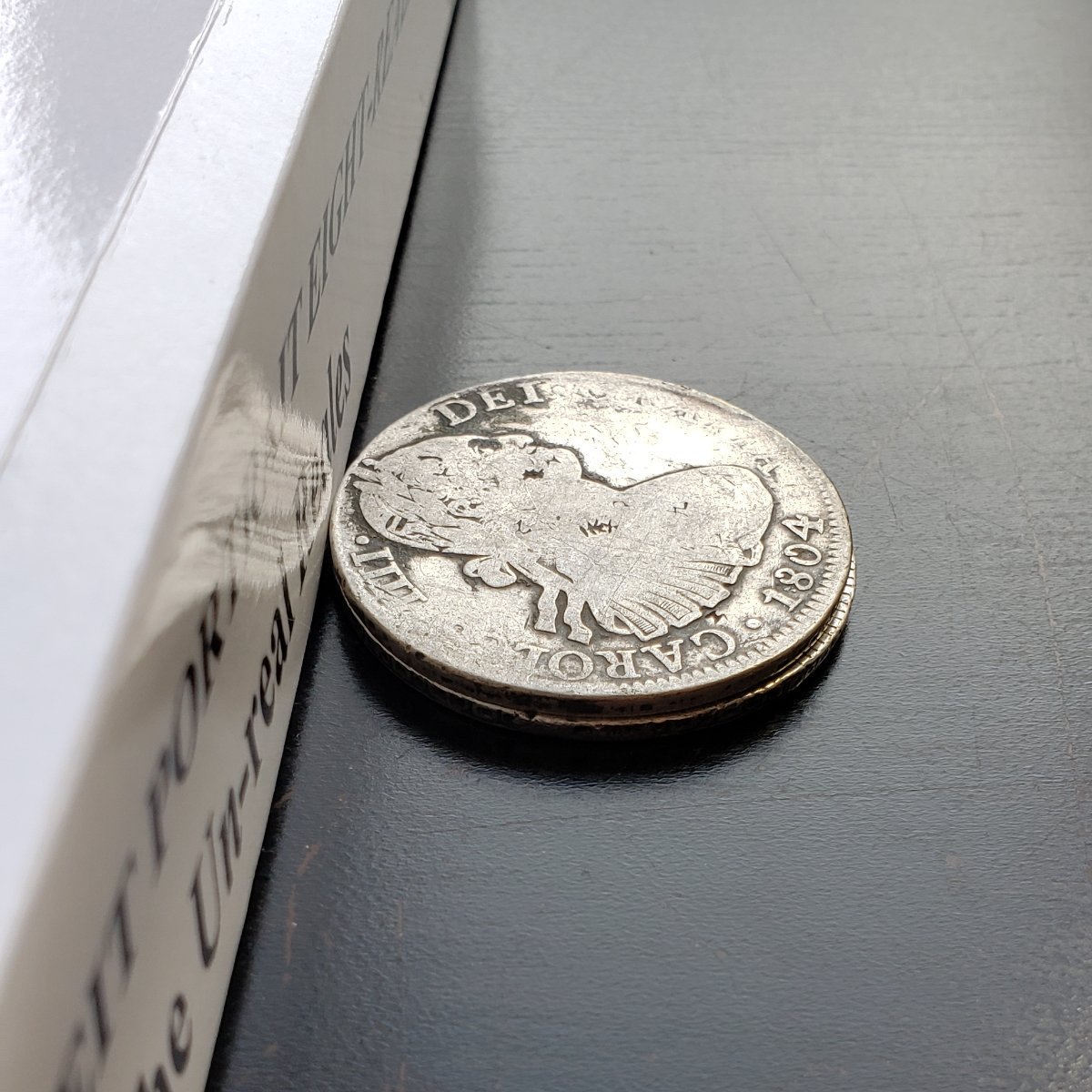
3. The poorly raised sections of the 1804 that are opposite one another indicate that the blank cut into the tapered edges of the silver strip. Not a "normal" situation in Mexico City in my experience but definitely an indication of a rushed rather sloppy production seen on confirmed Class 2 coins.
4. The comment that the 1797 is "flatter" than the 1804 is something I would say gives the 1797 the edge in the race to be a Class 2. All genuine 8Rs struck in that time period were in fact cambered (NOT FLAT STRUCK) because bankers and counting houses insisted on dollar sized coins being stackable. A "rocker" in a pile if not inverted by accident (coins were stacked Portrait up) was a sign of a likely counterfeit and the rocker was normally assayed to be sure. The stack also provided a easy look at all the coin edges to insure they were similar.
You might ask how do I know that? Good question. When I was very young but already interested in coins I met a 4th generation banker whose bank was located in Plymouth, Mass not far from where I was raised. He was a good friend of my grandfather and my great grand father who was 94 at the time. He was also a coin expert. He was in his 90s and had worked with is father and grandfather at the bank as a youth. He told me how they authenticated silver coins and he told me about the stories his father and grandfather had told him about authenticating in the days before the Civil War. They had a chain on the head teller's cage with a collection of counterfeits hanging on it. These were used for comparison with foreign coins presented at the bank. He also told me about the value of the coin stack when coins were still cambered for that purpose.
newguy22 Please do a specific gravity test and report the results.
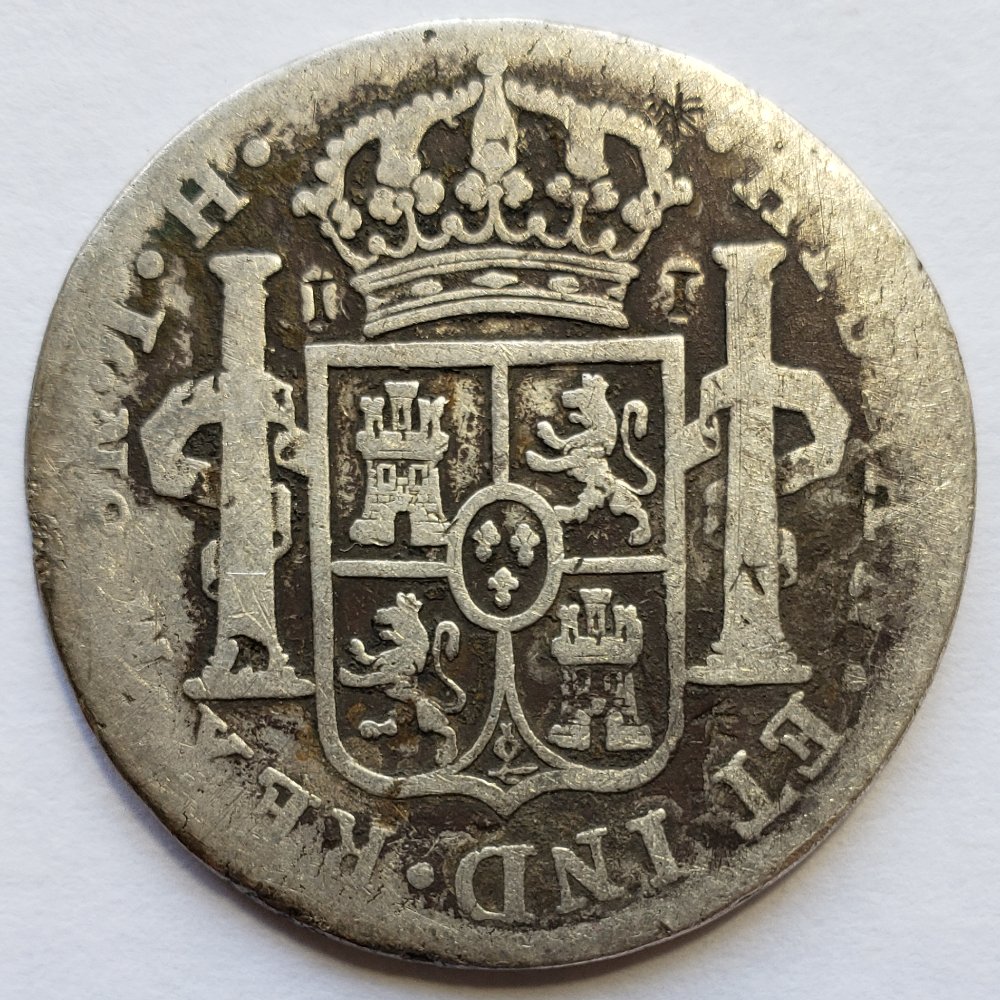
Also if possible photograph the edges of both coins and post. Most Class B types have errors.
If you can get a handheld XRF test at a jeweler, good scrap yard, high end coin shop or even some pawn shops. Make sure the test includes GOLD, silver and copper.
Perhaps then we can come closer to determining where your coins fall.
This type of testing is the minimum of what every collector needs to do before they consider any 8R coin from Mexico City to be genuine.









 Posted 07/22/2021 10:42 pm





