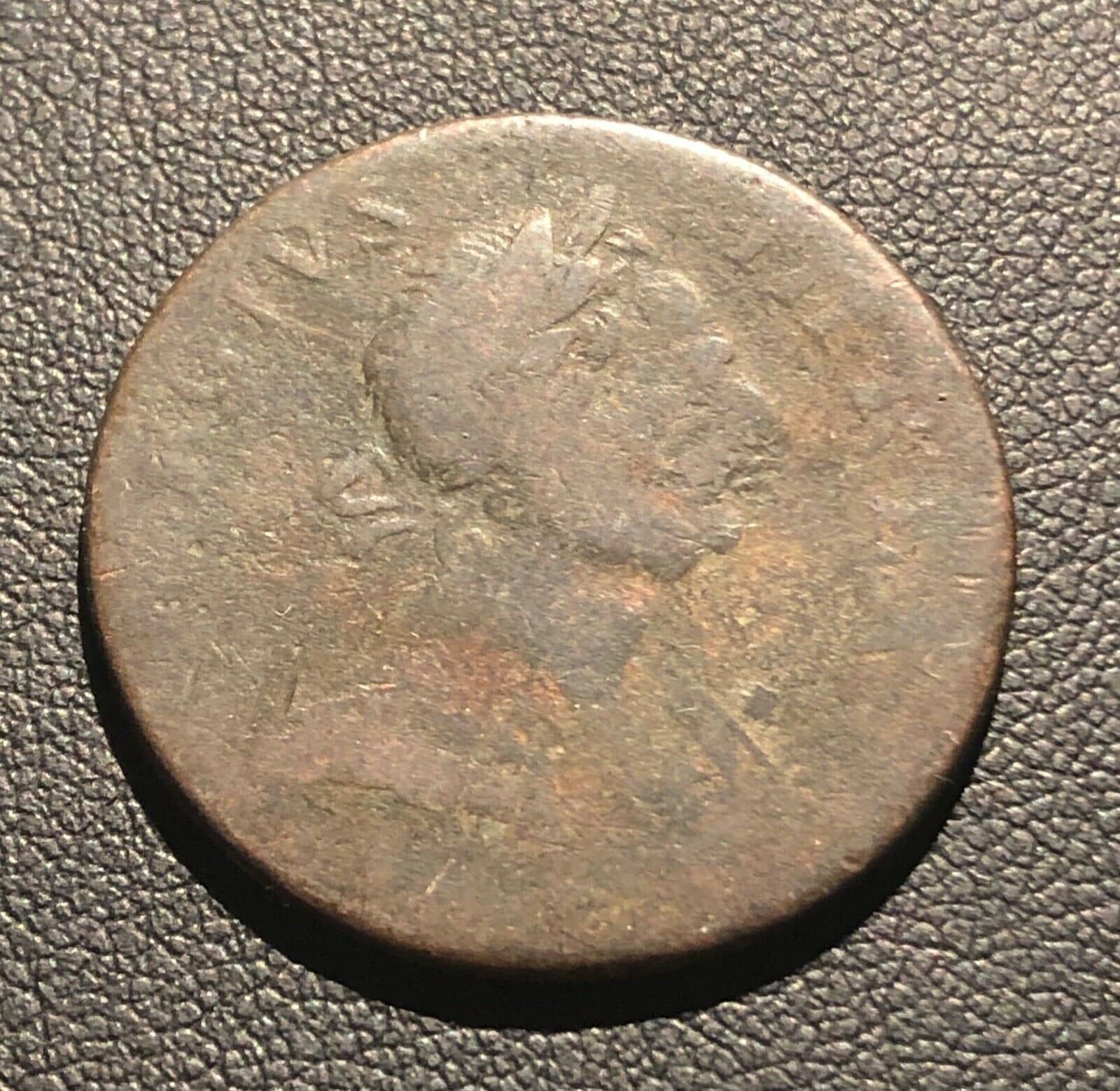
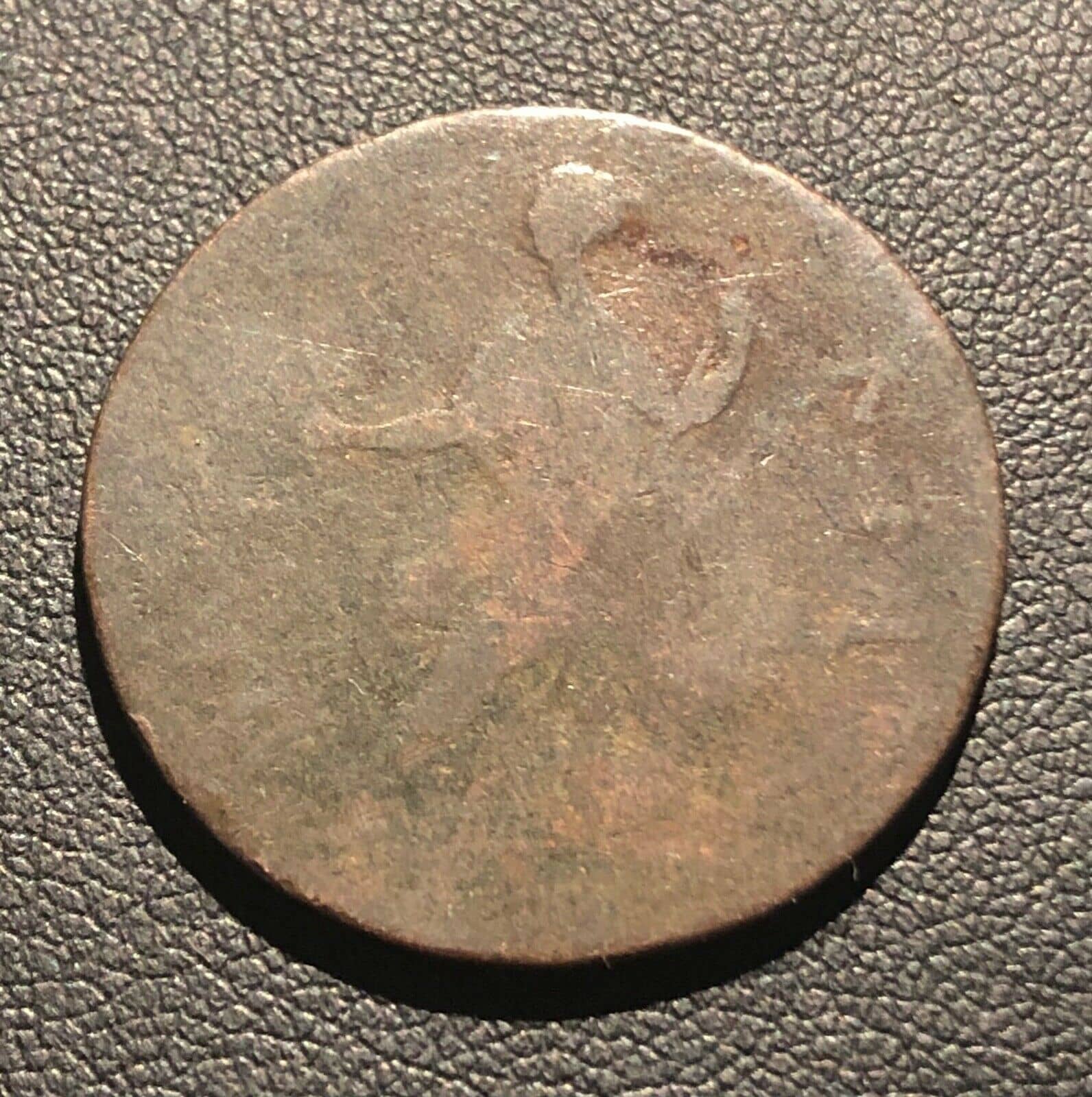
It can be quite hard to tell regal vs non-regal when the planchet is this worn without having the weight in grains or grams. You say the weight is close to catalog so that's a point in favor of a regal origin.
Most but certainly not all counterfeits are notably underweight (otherwise, why bother making them?) but see below.
The counterfeit or imitation halfpennies of George III were intended to copy actual regal issues, with widely varying degrees of success. The idea was that they would be good enough to pass as genuine coins. They were sometimes deliberately "aged", barrel-tumbled, or struck with very shallow dies to mimic heavy circulation wear.
1775 is by far the most common date for imitation issues.
That being said, counterfeit halfpennies and farthings were being struck as far back as the 1750s or even earlier.
Often times the counterfeiters would attempt to increase their profit margins by using or re-using increasingly underweight planchets, or cut-down planchets, and differences in weight and diameter are one way to help determine the origin of a coin. Some of the more egregious fakes are half again as light as genuine coins.
(Note that this isn't always the case -- I have a definite counterfeit halfpenny that weighs in a full gram HEAVIER than a genuine regal issue, but those are rare exceptions.)
"Evasion" halfpennies came later, from the late 1770s to the 1780s and onward, and had partially or entirely fictitious legends, dates, or portraits. If a coin has the same legends and devices as its regal counterpart, it is not usually considered an evasion copper. Like Oriole stated, the evasion issues scarcely, if ever, made it across the pond contemporaneously.
Enjoy your neat find and bit of history.
Member
ANA - EAC - TNA - SSDC - CCT #890
"Most of the things worth doing in the world had been declared impossible before they were done." -- Louis D. Brandeis












 Posted 08/01/2021 09:40 am


 Looks like a genuine, heavily worn English halfpenny of 1770-5.


