| Author |
 Replies: 13 / Views: 1,695 Replies: 13 / Views: 1,695 |
|
|
Pillar of the Community
United States
878 Posts |
|
|
|
|
Pillar of the Community
Canada
1556 Posts |
It looks real to me with the pic's provided. everything is crisp.
Composition: Silver
Fineness: 0.9170
Weight: 27.0674g
ASW: 0.798oz
Yours is a tad overweight, but as you say, your scale sometimes adds on weight.
|
|
Pillar of the Community
 United States
878 Posts |
|
|
New Member
United States
4 Posts |
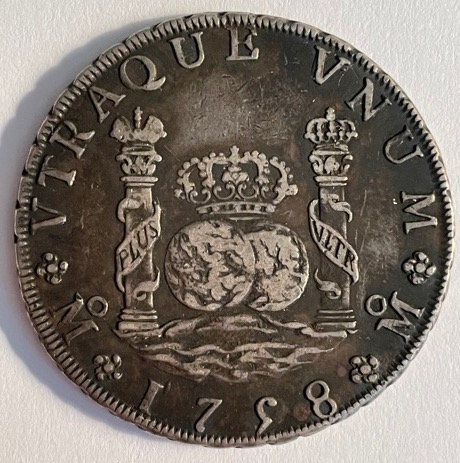
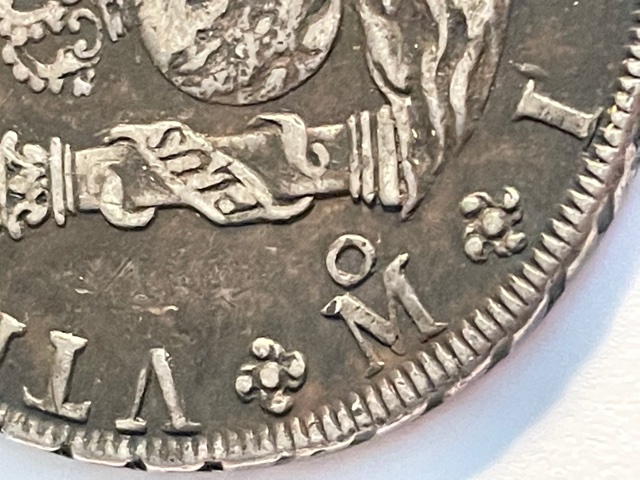
Caveat: I'm not an expert. However, it looks very fake to me. The crispness of the "plus" "vltr". The missing top part of the E in VTRAQUE. Something about the overall look just seems fake.
|
|
Pillar of the Community
United States
878 Posts |
Quote:
Caveat: I'm not an expert. However, it looks very fake to me. The crispness of the "plus" "vltr". The missing top part of the E in VTRAQUE. Something about the overall look just seems fake. Got it! Thanks for your input! I was a bit worried myself about the toning-looks like the toning on a lot of fake coins, and I do see your point about the letter E. |
|
Pillar of the Community
Hong Kong
1270 Posts |
Try a ring test(an apps named Precious coin tester is useful), I don't think it will pass.
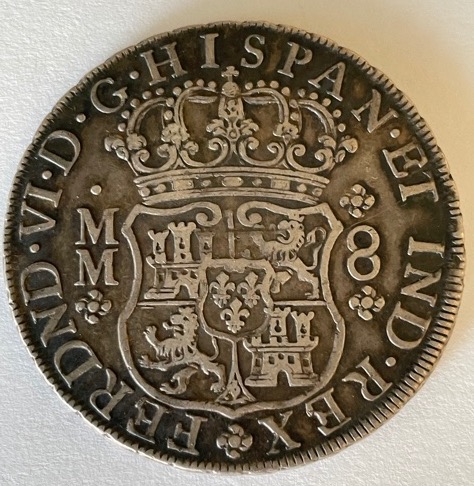
The letters looks incorrect, too thin and not complete in most case.
The lines on the globes surface looks wrong.
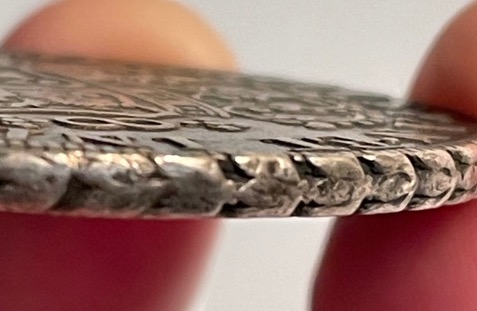
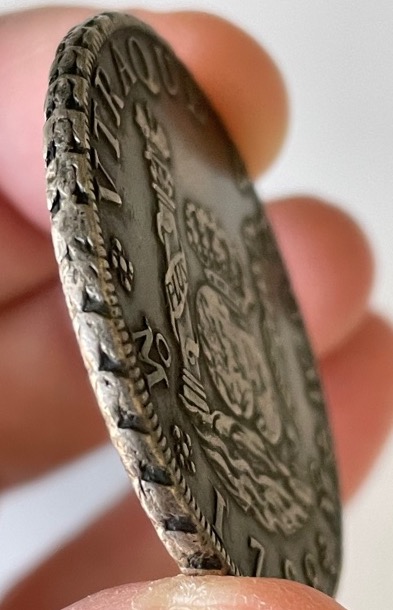
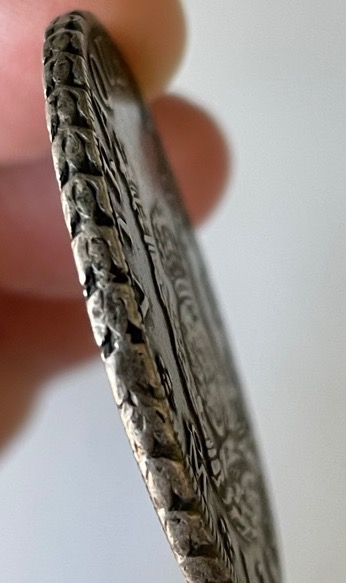
The edge looks not it should be.
A fake to me.
|
|
Pillar of the Community
United States
878 Posts |
If it's fake then that's interesting because that would mean that APMEX would sell fakes of these coins!!! That's where I got if from!! |
|
Pillar of the Community
Hong Kong
1270 Posts |
Try a slide down along a neodymium 52 magnets to test its silver content.
Please also have a close look to the letters E of "VTRAAQUE" and "ET" at the back. They are not consistent.
The letters on the whole are too slim to me at the second today.
|
|
Pillar of the Community
United States
1915 Posts |
I use five magnet slides of different magnet sizes in N-52 and N-42 as just a part of coin testing. The slide is not foolproof and one needs to be careful about just what can be concluded. For example a one ounce copper and one ounce silver coin can appear to be no different. Specific gravity would be indicated in a case like that. And as far as the power of the magnets go, it is possible to have known bad coins test no different than the good ones. All my slides are two inches wide and made of either twelve half-inch magnets or six one-inch. Thicknesses I use are 1/8, 1/4, 3/8 and 1 inch. I also use specimen coins having known compositions as reference. Generally I believe the thinner magnets work better in a number of cases than the thicker ones. A slide test is just one of several useful items. It is best used along with other tests such as specfic gravity for silver. The slide can readily point to a non-genuine coin (like many from China). But you must be careful about what you have, what you test, and what you conclude.  |
|
Pillar of the Community
Hong Kong
1270 Posts |
|
|
Pillar of the Community
Hong Kong
1270 Posts |
|
|
Pillar of the Community
Hong Kong
1270 Posts |
|
|
Pillar of the Community
Hong Kong
1270 Posts |
|
|
Pillar of the Community
United States
878 Posts |
Thanks for the last picture. After looking at the letters, looks legit to me. I tested it for silver content at LCS and it checks out.
I was mostly worried about the toning, which just looks like a lot of fake coins I see online, faked toning.
Thanks for everyone's input.
|
| |
Replies: 13 / Views: 1,695 |
|








 Posted 08/23/2021 2:19 pm





