| Author |
 Replies: 20 / Views: 2,612 Replies: 20 / Views: 2,612 |
|
Pillar of the Community
Canada
3328 Posts |
I know it's not an error but could it be considered a variety mayb? The log has been polished to the point the center of it is missing. 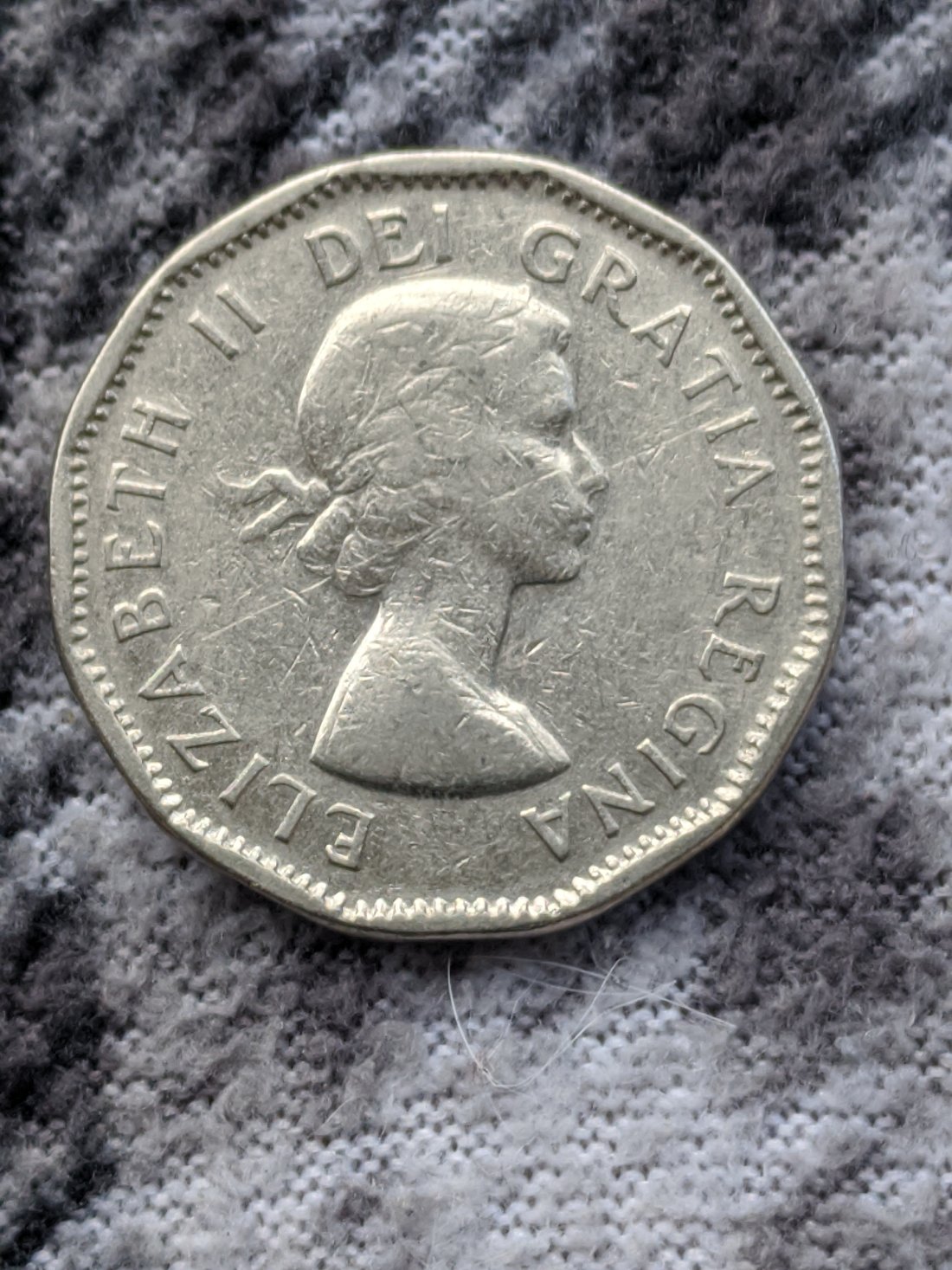 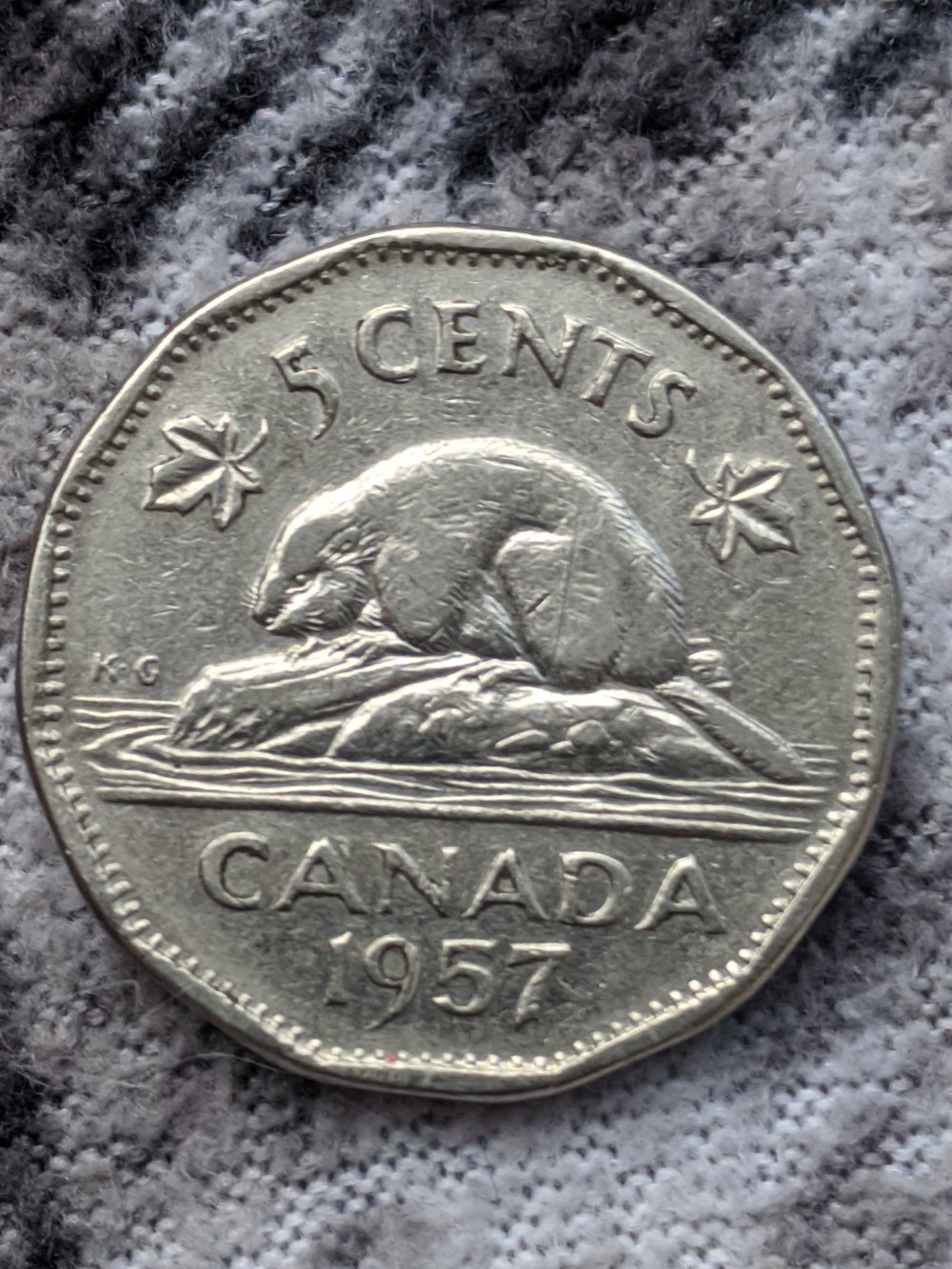 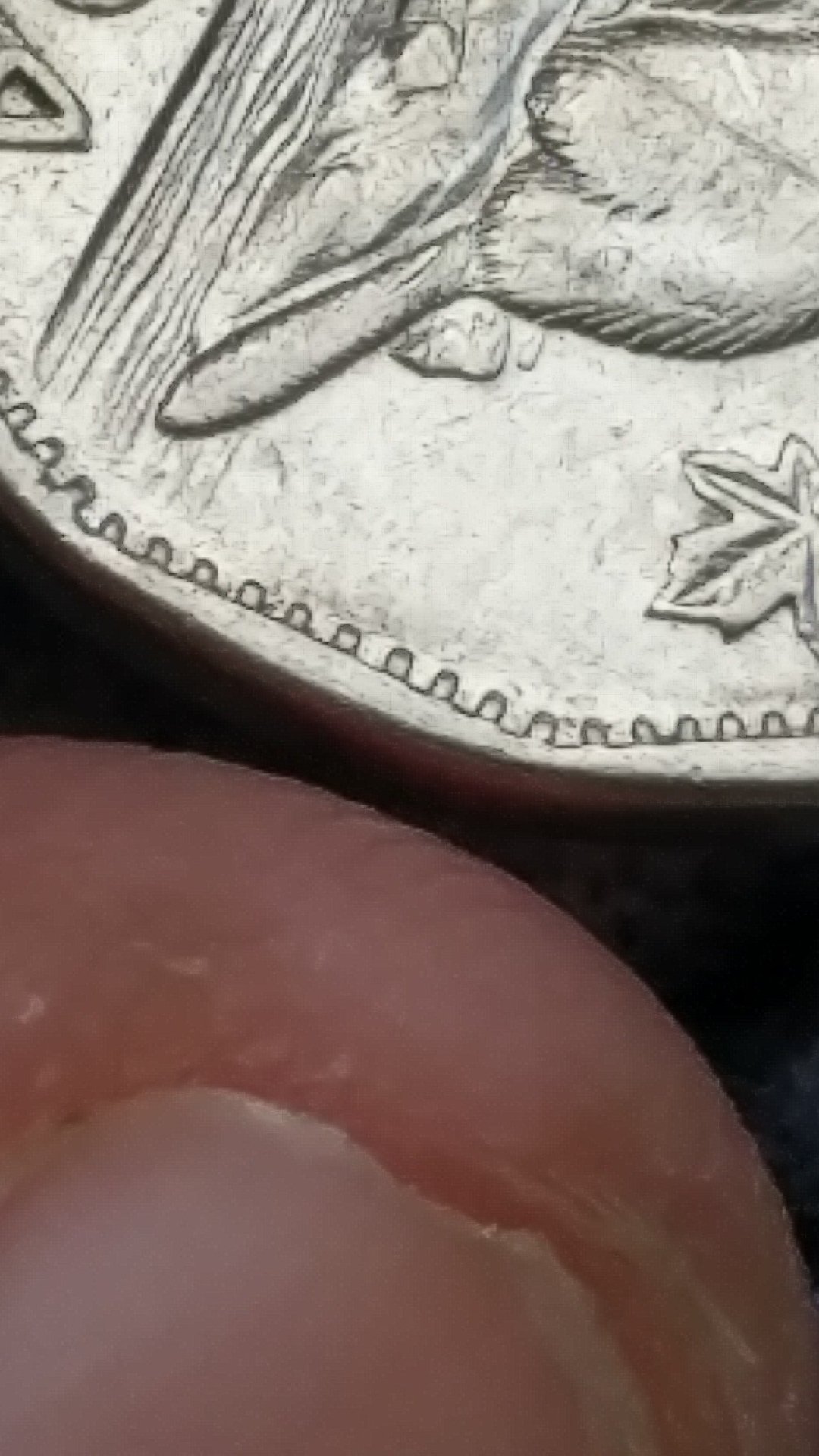 I think on the 50s nickels I've seen a fair amount of the dies have been over polished. So mayb this is a common thing? I haven't gone through half as many nickels compared to other denominations. |
|
|
|
Pillar of the Community
 Canada
5644 Posts |
The logs and everything else on the dies is RECESSED on the die. Polishing wouldn't do anything to the log in the die because it is so far below the field surface. That is just wear or the reverse is slightly convex so it wore more. It's not an error, nor a variety.
|
|
Pillar of the Community
 Canada
3328 Posts |
@okiecoiner, thanks. It's weird to me that that the middle between the upper log and bottom log would wear away down to the fields but the little piece on the top and the bottom didn't wear down with it. But I guess wear can happen in infinite ways.
|
|
Bedrock of the Community
Canada
21876 Posts |
Wrekkdd
FYI
An over polished die is not a variety, it is just part of the minting process
as it is intentionally done.
|
|
Pillar of the Community
Canada
3328 Posts |
@jimmyD, is there not old silver dollars with missing water lines as a "variety"? Is that not caused by die polishing? Or are they just called varieties. My knowledge is still like a child's with coins it seems
|
|
Pillar of the Community
United States
7312 Posts |
Good follow up questions...Like the bare belly beaver 5 cent coin I've seen here on the forum....Variety or Error coin?  ......  |
|
Pillar of the Community
Canada
3328 Posts |
That's one of the gaps In my knowledge that has been confusing me, even some die cracks and die chips iv heard called specific varieties or errors like a cracked skull etc. What makes something that I'm constantly told is nothing on one coin special on another coin?
|
|
Pillar of the Community
Canada
5644 Posts |
A major problem is that the CCF and CaC references that people use are submitted to the sites from collectors and individuals. The owners of the coin can call it or ID or name it it to whatever it wants, right or wrong. There are specific names and ID's of commonly accepted Errors and Varieties. Just because it is listed incorrectly on a coin site doesn't make it something special. You have to learn to distinguish what an error/variety actually is, how it happened, and whether it is actually in tolerance. Anything manufactured by a machine is going to put out things that are not quite perfect, but still functional and perfectly fine for what it is used for.
|
|
Pillar of the Community
Canada
3328 Posts |
@okiecoiner, I understand that, but I don't understand what makes a die crack collectable or not. Aside from doubled die coins any error of significance is noticable easily with the human eye. And I understand the difference between an error and a variety. Where do mules fall? Like there is some mules listed. Or coins like the 1953-1955 Canadian pennies,are they considered mules? I know they are called verities but isn't it caused by using dies from other years to stamp the coin like other mules?
|
|
Pillar of the Community
Canada
3328 Posts |
Also as I posted in my other thread does the fact that I don't own a Charlton yet mean I should stop asking questions on here or making posts, stop learning and filling in gaps until I can do it all myself? Also you don't need to know how something is made to find it, if you know what it looks like you can find it. I will be getting a Charlton when I can for my own knowledge and did comparison photos and so I don't have to look up every single coin I question one at a time. Untill then what do you recommend I do because you repeat the same post basically on all my threads to gain more knowledge(which I am and have been doing)
|
|
Pillar of the Community
Canada
5644 Posts |
I really don't want to get into a public discussion on semantics. I really have nothing to assemble, nor do I collect, anything after about 1920. Modern coin minting and construction/alloys of modern coinage is entirely different than where I plant my feet. My definition of a "variety" is the same as that of Hans Zoell, the variety guru of the mid 20th century Canadian numismatic. A variety is a coin struck with design approved by the mint, is struck on a good planchet, with proper equipment that is in proper working order. A new portrait: variety, a modified design: variety; repunched letters or digits: variety, date or design spacings: variety. And so on and so on. My major area of expertise is in Vicky large cents, especially the 1858's and 9's. For those years with their thin planchets, reverse dies were lucky to strike 50,000 coins, but sometimes could get 100,000 and sometimes 10,000 or less. With populations like those, most anomalies are worth taking a second look at. Die cracks in any Vicky is a marker only, used to identify a known variety. Clashes, rotations, off-centers of those are all collectible but they are not varieties.
Now, with mintages of 100's or so millions, an anomaly coming from a single die is very very common, with availability to collectors being in the maybe 10,000 to 1 ratio .... for every collector, there are 10,000 coins available. What one person thinks is a variety, others will think of a vanilla coin. It's like seeing a man wearing clothes covering his legs. Are they called pants, or trousers or something else. Everyone will have a different description for what they see. You personally, as can I, call the description of a coin anything that I want, yet others may disagree. It's your hobby and your collection. Call things what you want, but I would try to stick to what something has been called for decades just one thing. That's what books and study is for. I think that all of us on this site are looking forward to what johnwayne007 has put down on paper. That work, alone, may clear up many opinions.
Edited by okiecoiner
08/29/2021 09:33 am
|
|
Pillar of the Community
Canada
3328 Posts |
I'm anxiously awaiting JohnWayn007s info to be published and available to the public. No one has broken down Canadian modern errors like wexlers for US coinage. And I wish I could get into older coins but that means spending and possibly loosing money. I don't have a lot of spare time or money with being a new father and working full time and still spending time with my family and fiance. And about every second I have free I put into the hobby, weather I'm researching specific coins or a specific error or I'm looking through coins, I know I don't post any crazy errors like some people or extremely rare coins, but that's because I have yet to come across one lol. Once I can get down to Burlington I'll hopefully make some posts that help johnwayn007 compete his work. With the amount of coins I go through I'm sure iv had true doubled dies, even the extra toe beavers iv seen some that look like it's just one big toe or like there could be a Doubled die, but if I can't capture it then there is no point in posting about it. |
|
Pillar of the Community
Canada
5644 Posts |
Well, actually there are 3-4 excellent texts, in addition to Wexler. One I'm giving to you once you find a way the 8 miles to Burlington. It's "The Error Coin Encyclopedia" by Margolis, an old '94 copy. I personally like Alan Herbert's book on errors and there are others more commonly known. Don't rely on Charlton answering more than 10% of your questions ... it's not an error book.
|
|
Pillar of the Community
Canada
3328 Posts |
Most of the coins I bother to look at are pre 1990 so an older book is fine, I'm not aware of the reliable publishers for Canadian coin errors and verities. Before this year I didn't even really know there were books in the topic, if I drove it would be an easy trip, usually the 2 days I have off are pretty filled up, and then busing down there is an option but from dundas to Burlington east is about 2-3 hours each way, last weekend my ride bailed due to anxiety and my bike got stollen from work this week Wich really is annoying, bike thefts bad in Hamilton. But it's definitely at the top of my list when I find the time.
On a side note my variety collection has grown a fair bit since iv started looking and researching. I need to go to a few banks and see if there willing to trade penny rolls out for me.
|
|
Bedrock of the Community
Canada
21876 Posts |
Quote:
I don't understand what makes a die crack collectable or not Hyped up to make it Marketable. Most die cracks (unless it is large or runs rim to rim) have no extra value as they are too common. Have one placed in a strategic place like the Lincoln cracked skull that you mentioned or the 1999 Spitting Horse to name a couple, and someone comes up with a fancy name for it as a means of selling them. If either of these cracks were about 1/4 inch either side , they would just be a normal crack worth about face value. Too me a crack is a crack wherever it is on the coin. That is not to say that some people do not collect them, It is just my opinion. Wrekkdd Did you not get my email this past Friday. Edited by JimmyD
08/29/2021 10:22 am
|
|
Pillar of the Community
Canada
5644 Posts |
The books that I mention are not relegated to Canadian coinage. They are ERROR guides with good photos for each different name or ID of what are coin anomalies. They show and explain the variances found in errors or varieties, though most is for US coinage, but they SHOW and EXPLAIN what each different kind of difference really is. The book, microscope and camera await your contacting me. |
| |
Replies: 20 / Views: 2,612 |










 Posted 08/28/2021 10:09 am


