| Author |
 Replies: 11 / Views: 1,302 Replies: 11 / Views: 1,302 |
|
|
Valued Member
United States
78 Posts |
Edited by RookieBuffaloHun
09/02/2021 12:39 pm
|
|
|
|
Moderator
 United States
56855 Posts |
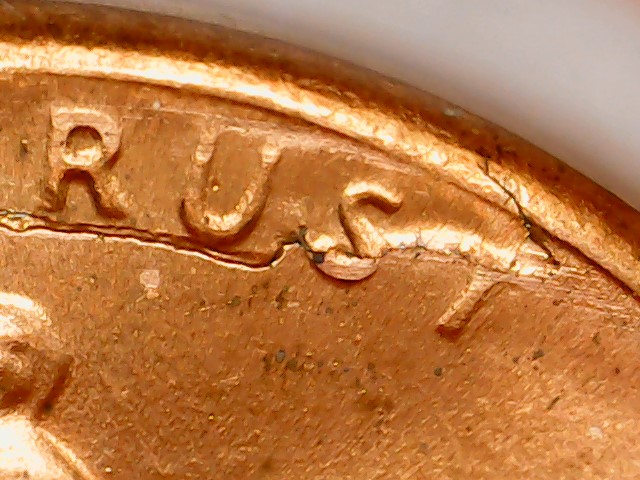
No LAMs on zincolns, so a plating issue...IMHO. John1  |
|
Pillar of the Community
United States
3237 Posts |
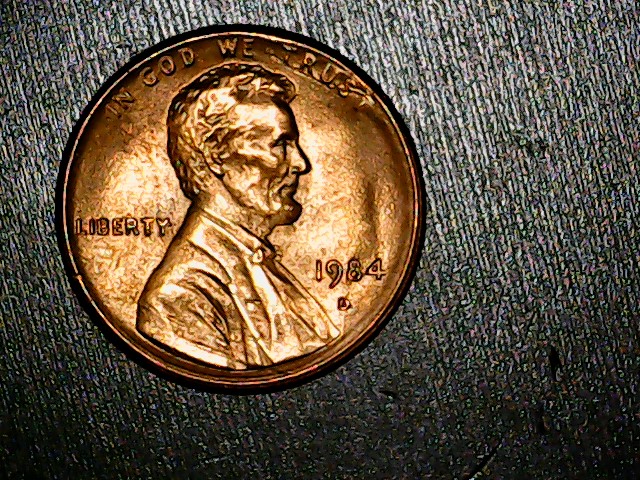
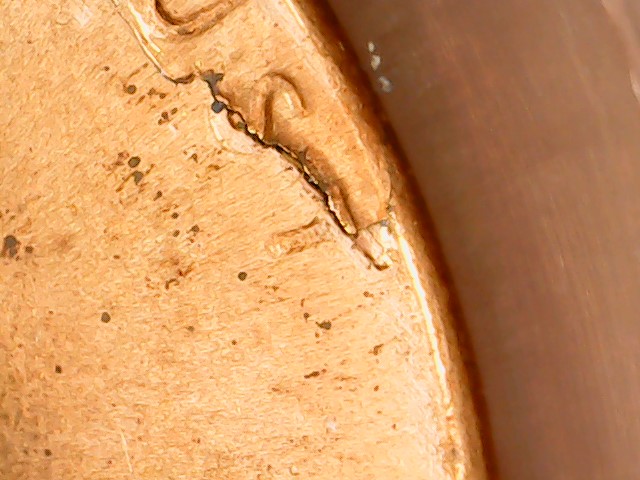
Disagree with John, there definitely can be lams on zincolns if they occur on the zinc blank and are then plated over. I think there's a chance that could be what we're seeing here.
|
|
Pillar of the Community
United States
509 Posts |
Good discussion here gentlemen. I have always been under the same thought as John1. I have never seen a lamination error on a zinc cent and everything I have researched over the years says that lamination errors only occur on solid alloy type coins. I'm thinking the op's coin is more of a plating issue than a lamination issue, IMHO. Here's a good article on this forum from a few years back that I just skimmed over. Pretty interesting. http://goccf.com/t/337498 |
|
Moderator
United States
56855 Posts |
Just a note it was Mike Diamond that told me that. John1 |
|
Pillar of the Community
United States
3237 Posts |
@John Mike may have meant that there are no lams in the sense that it doesn't effect the plating layer of the coin. I see no reason why zinc as a metal would be incapable of forming lams when we see them on virtually every other elemental metal and alloy.
Edited by SamCoin
09/02/2021 5:16 pm
|
|
Pillar of the Community
United States
2869 Posts |
I think it is lam under the plating.
|
|
Bedrock of the Community
United States
62064 Posts |
The difference between a lamination and a zinc planchet: 1. A lamination happens when the metal is is cold rolled to make the correct thickness. When pieces of the hot rolled metal cools and the rolling continues, the cold rolling process is having metal rolled into that was not hot. Thus the cold debris does not adhere as strong as the hot rolled metal. So that is why they metal falls away. The cutting of the blanks can loosen some of the cold rolled bits thus creating a pre-strike lamination. Also another event happens that after the roto rim is added, this can also loosen the bits from not sticking. So if during the strike, these get move even a bit, it will break away from the stock metal. This can happen post strike or after the strike.. Why am I mentioning this? Because on the zinc, the material is not combined with anything. Thus it stays in tact. (No lamination happens) Note the process of the creation of coins on the zinc: 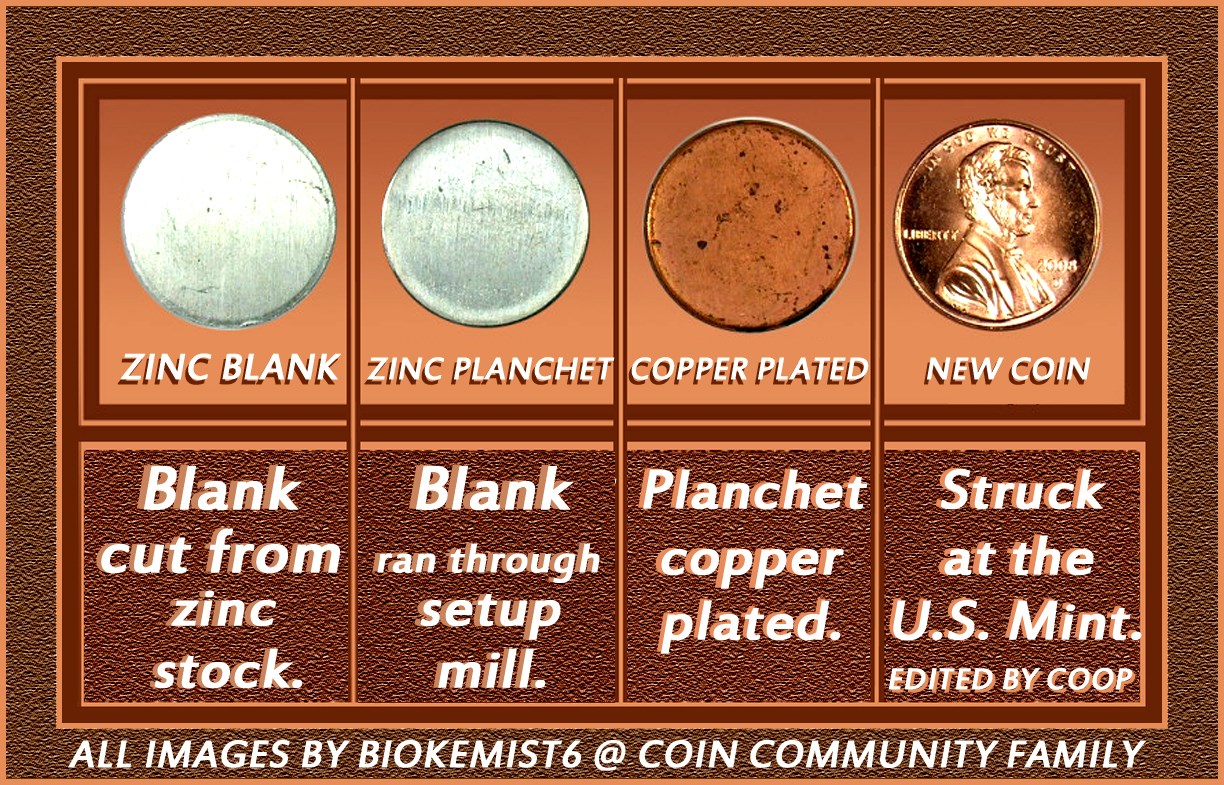 Note the blank, then planchet, then plating, then coin. There is a lot less chance of a lamination issue. True they plating can break off the planchets, have rim burs. 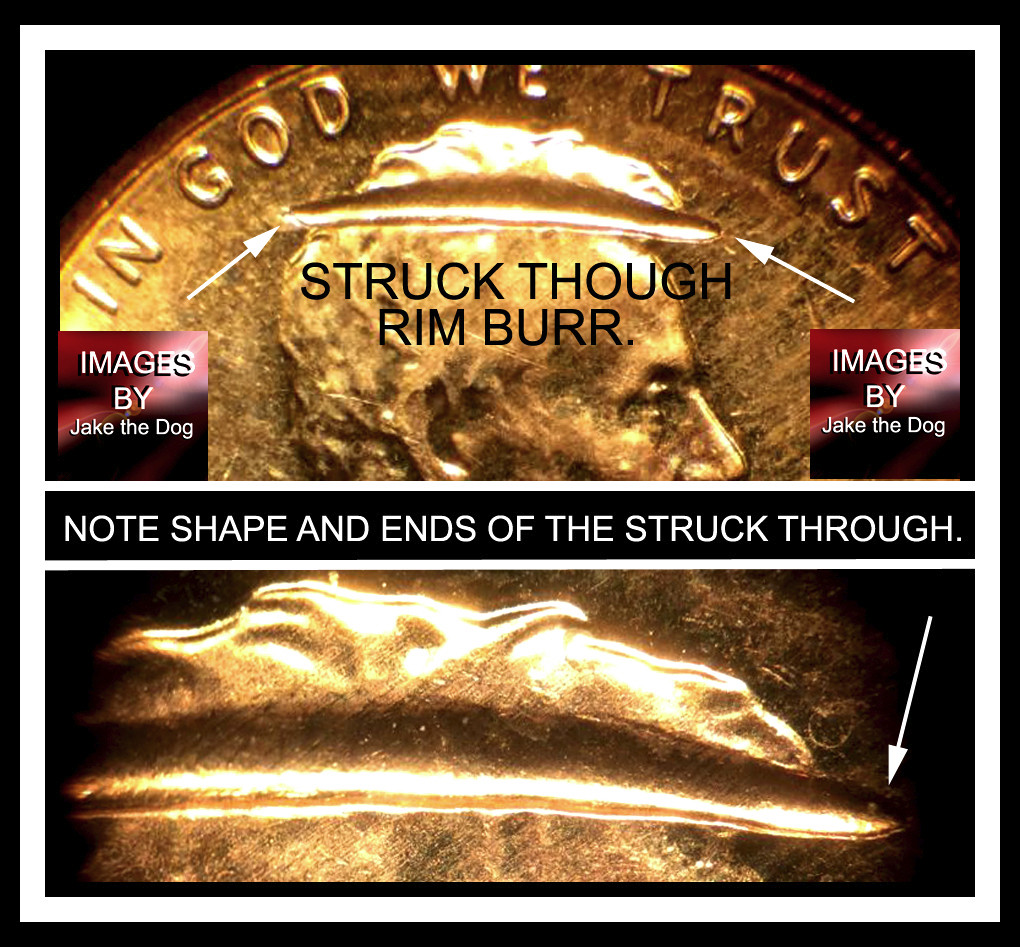 Also sometimes plating metal can be struck onto the a coin. Thus the plating foil issue, which I see on this coin will have plating under the struck on foil. This is not a lamination, but a struck through foil issue. 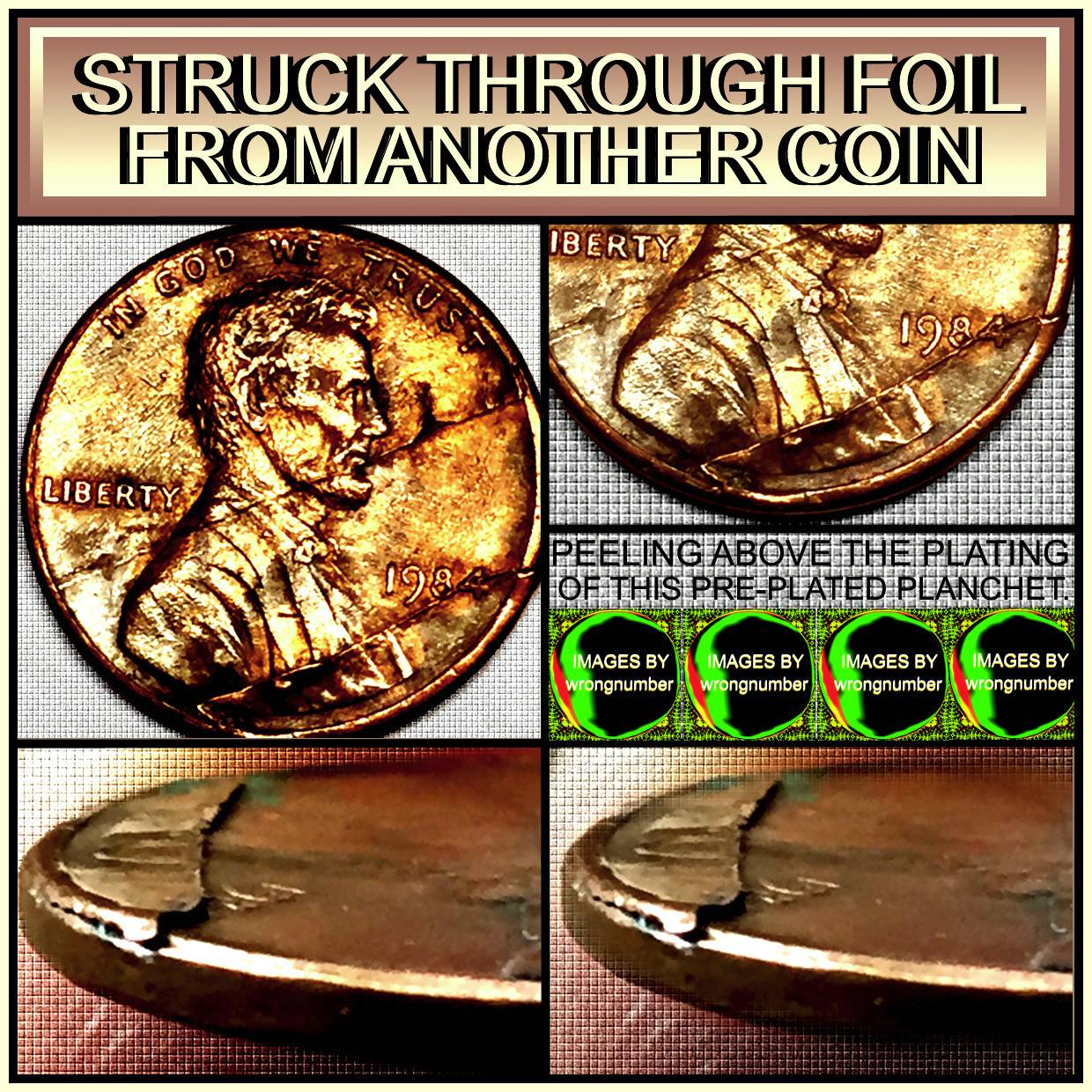 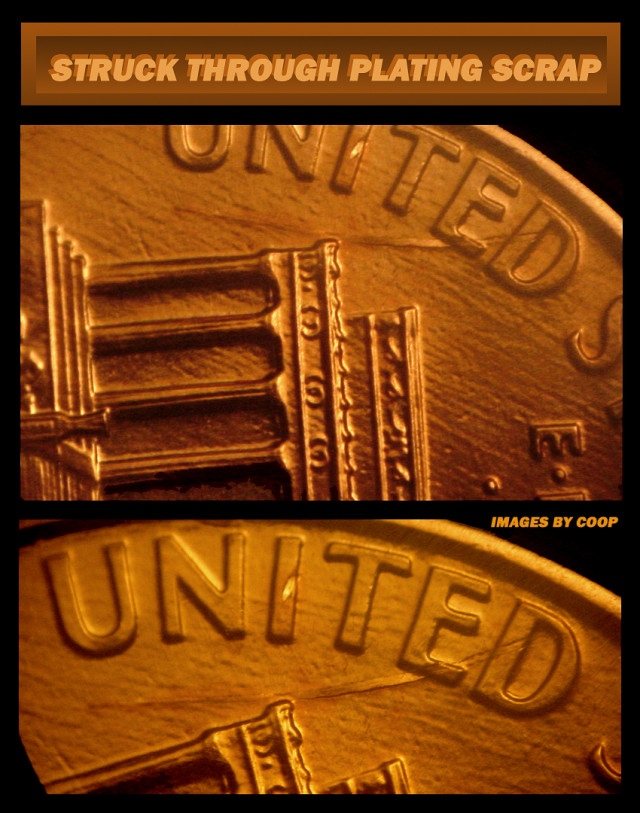 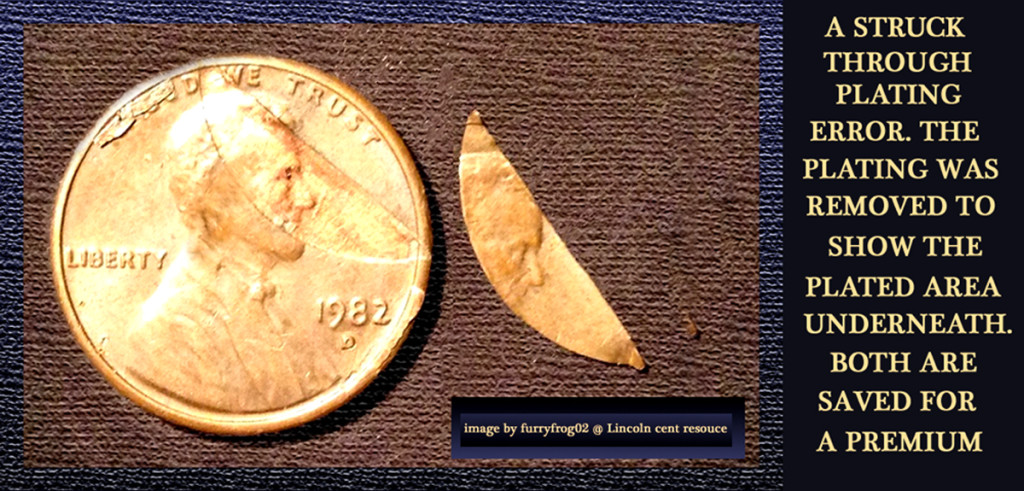 So while both appear to be the same, they are not. One was an issue with the stock material that made the blanks/planchets. The other is a struck through issue plating debris. While they look the same, they are not the same. The lamination issue happens more often. It is real rare to see a struck through plating issue. If meant that another planchet was destroyed/damage to allow the foil to fall into the chamber to be struck onto a coin. Hope this helps. CoopHome: Why don't lamination issues not happen on zinc planchets? |
|
Bedrock of the Community
United States
94367 Posts |
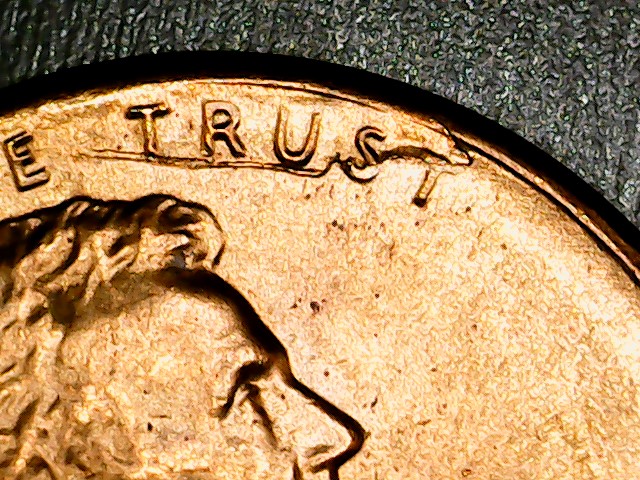
Sure looks like a linear plating bubble.
|
|
Pillar of the Community
United States
7174 Posts |
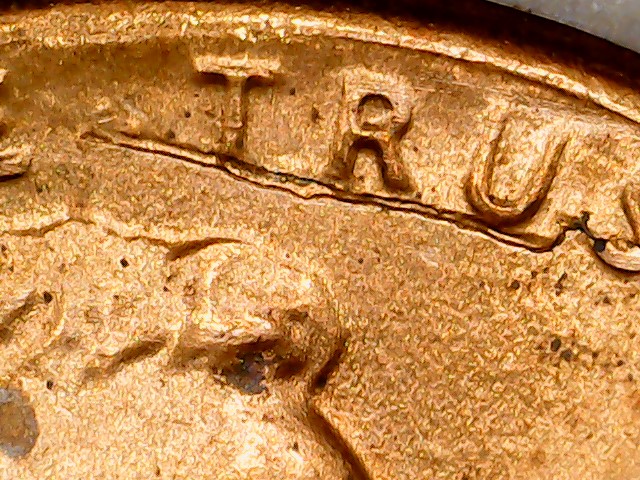
Not at all like a linear bubble. This is incised. Plating bubbles are raised.
|
|
Bedrock of the Community
United States
62064 Posts |
Note the area over the 'ST' on Trust.
|
|
Pillar of the Community
United States
3237 Posts |
@coinfrog I think you need to look again if you think this looks like a linear plating bubble.
|
| |
Replies: 11 / Views: 1,302 |
|









 Posted 09/02/2021 2:28 pm





