| Author |
 Replies: 11 / Views: 1,386 Replies: 11 / Views: 1,386 |
|
|
Valued Member
United States
297 Posts |
|
|
|
|
Bedrock of the Community
Canada
21868 Posts |
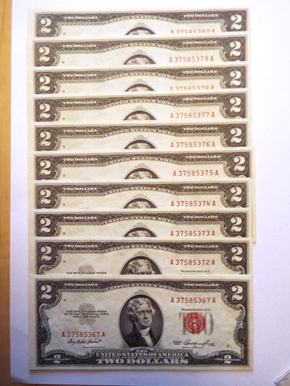
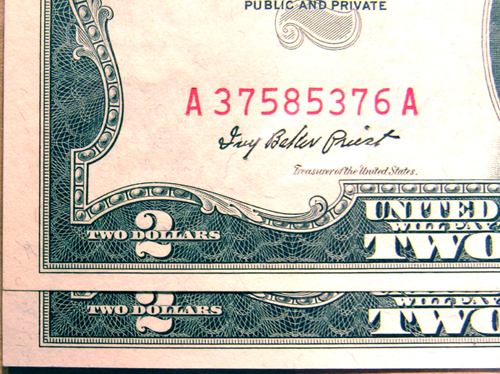
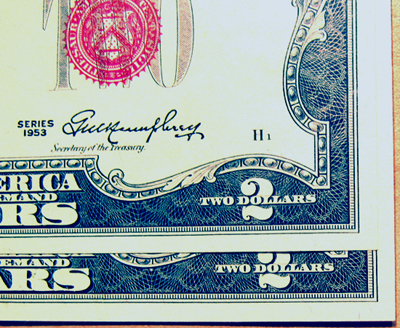
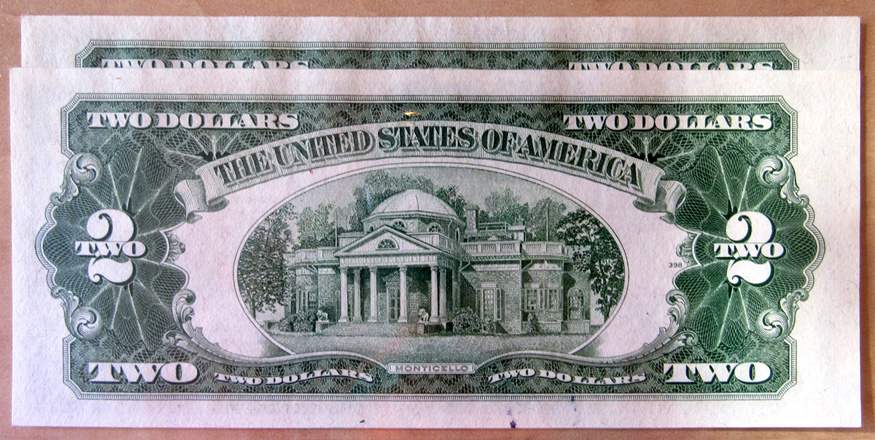
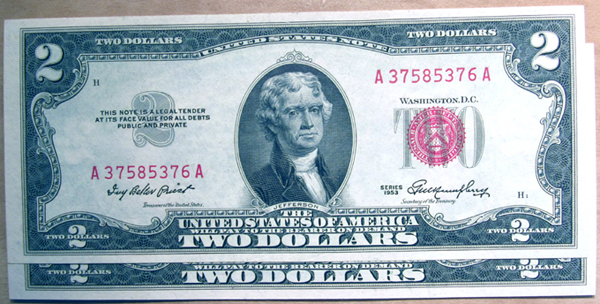
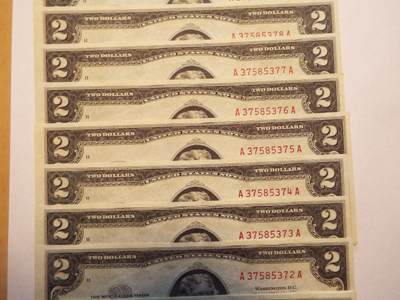
Is it possible to somehow stretch a bill after it was cut?
If you look at the printing, it is also longer which means
it must have happened after it was printed.
Also there is no way when a stack of bills are cut
on the guillotine that one could be longer.
|
|
Valued Member
United States
266 Posts |
I don't think you mean there is a 2 cm difference. That is close to three quarters of an inch! 2 mm maybe?
Regardless, that is very curious.
Edited by HappyHippo
09/11/2021 10:36 pm
|
|
Pillar of the Community
United States
4637 Posts |
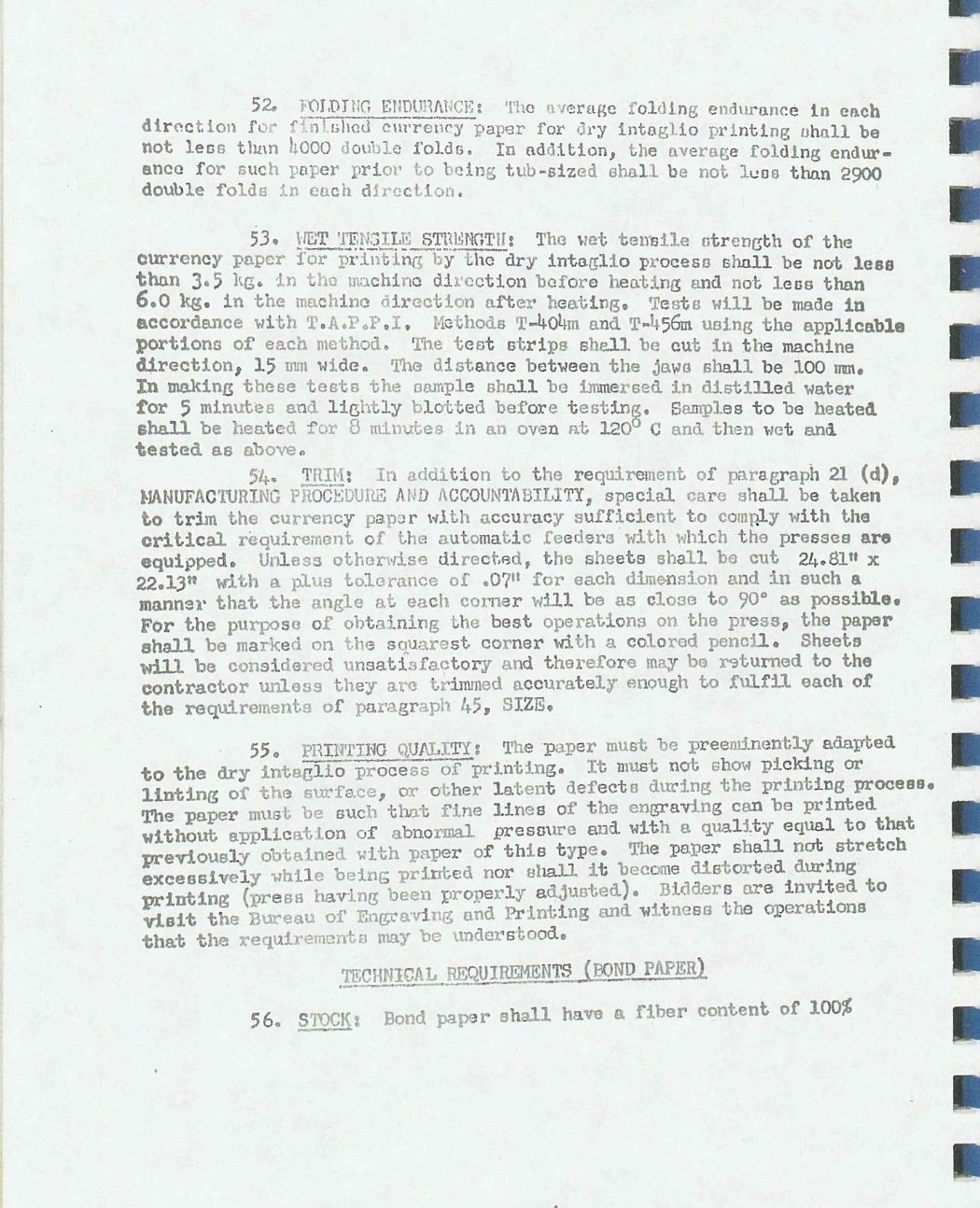
I occasionally see minor differences in the older, damp printed notes. The sheets are dampened twice. Once before the first print. Then left to dry. Then dampened again for the second print and again left to dry before the overprint. I've heard that different shrinkage rates explain some of the minor differences.
|
|
Bedrock of the Community
Canada
21868 Posts |
Is it possible then that all the other sheets shrunk except for this one?
I never thought of that. Seems more feasible than one stretching.
|
|
Pillar of the Community
 United States
8968 Posts |
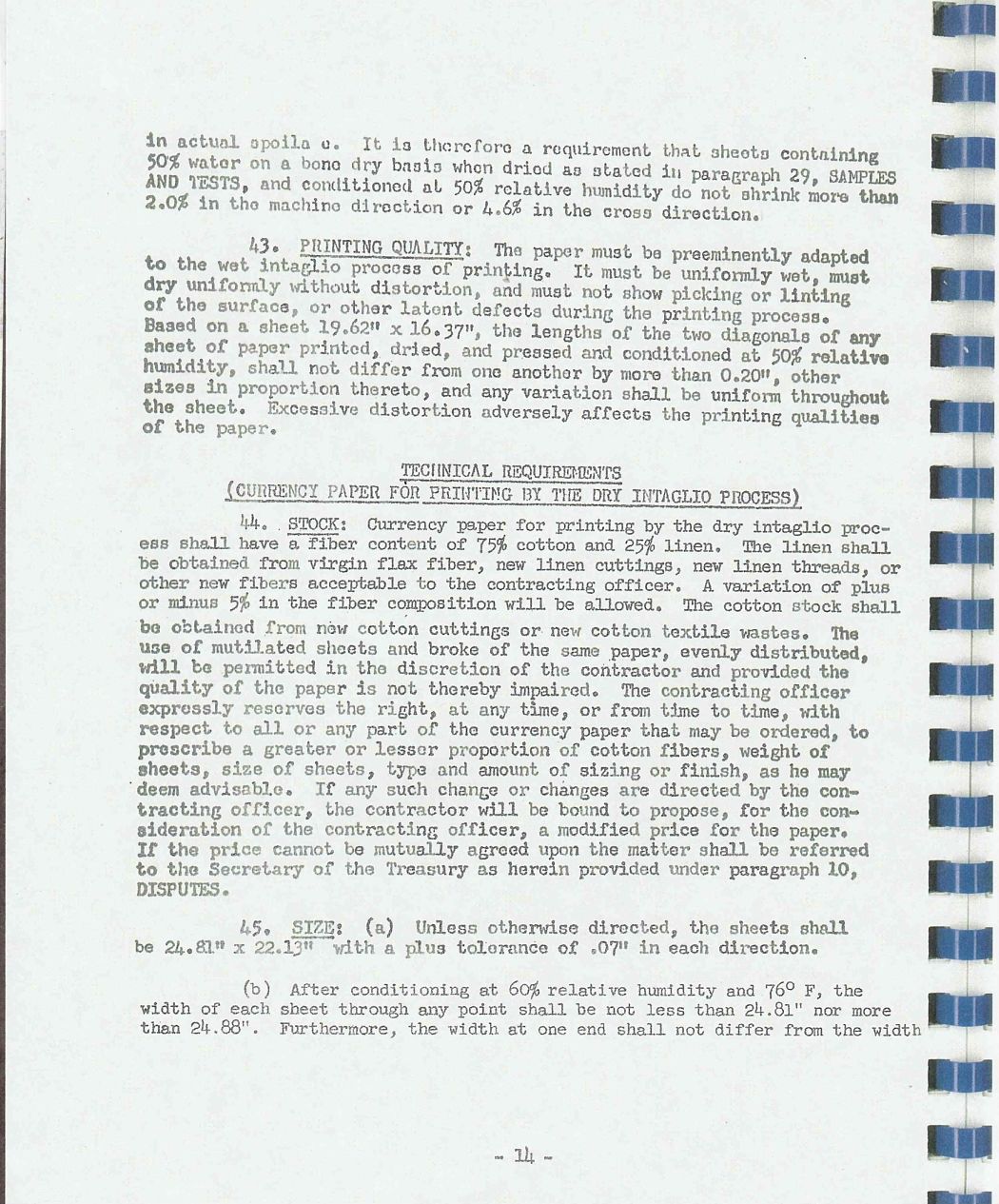
Very cool! I wonder if the paper mix could be off, and allow it to dry and shrink differently? I looked it up and it's suppose to be 75% cotton and 25% linen. Maybe a bill's version of when a coin's alloys can be mixed wrong?
-makecents-
|
|
Valued Member
 United States
297 Posts |
Thanks to all of you. I appreciate your thoughts. I'm going to submit these pictures to officials at the BEP and see what they say, and happy hippo, you were correct- I meant 2 millimeters.
|
|
Pillar of the Community
United States
4637 Posts |
|
|
Pillar of the Community
United States
3207 Posts |
How do the notes compare to others outside the group? Perhaps someone trimmed all but one of your notes.
|
|
Valued Member
United States
297 Posts |
Actually I tested 58 bills. 1953 16 bills, 1953-A 8 bills, 1953-B 8 bills, and 1953-C 26 bills. The 1953 bills have just the one longer, 1953-A have two longer, 1953-B none were longer, and 1953-C two are longer. All longer bills have the same measurements as the original 1953 bill. The reason I singled out the 1953 is because it was the only one in a sequence with shorter bills. after checking again I found that number 75 has a plate number H4 in the lower right corner, while number 75 has H1 in the corner. Conversely, number 75 has a rear plate number 398 on the mid right, while number 76 has 399. Not being a "true" paper money collector, I do not yet know what this signifies. Thanks for continuing to try to unravel the explanation.
|
|
Valued Member
United States
297 Posts |
to Steve in tampa, there do not seem to be any note lengths given, only sheet widths and lengths, but thanks. Bill.
|
|
Pillar of the Community
United States
4637 Posts |
Quote:
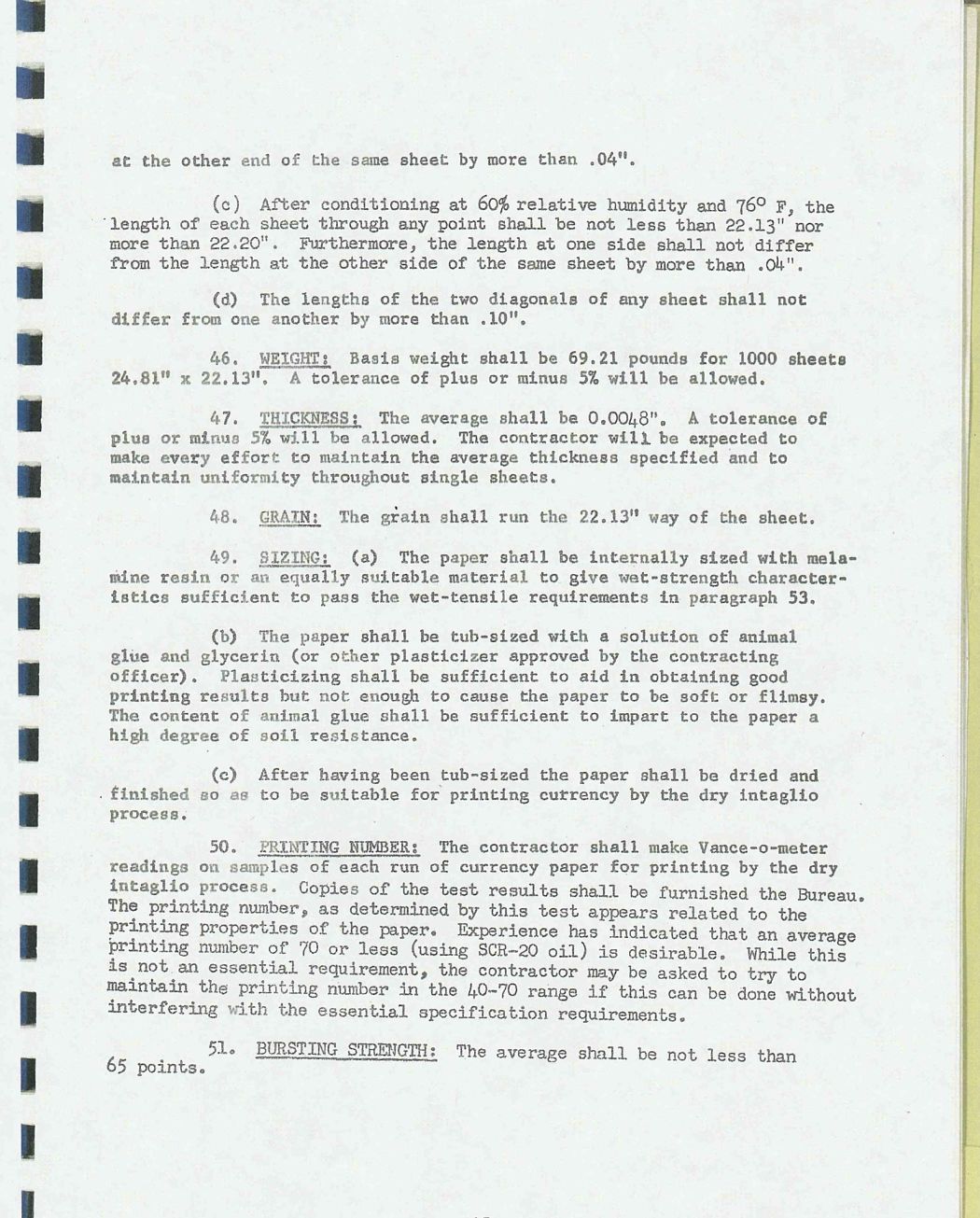
to Steve in tampa, there do not seem to be any note lengths given, only sheet widths and lengths, but thanks. Bill. The specifications written about above were for the suppliers of security paper to the BEP. Once the BEP received the paper (on pallets) it was up to them to print, cut, package and distribute the finished product. |
| |
Replies: 11 / Views: 1,386 |
|









 Posted 09/11/2021 10:35 pm