| Author |
 Replies: 9 / Views: 2,436 Replies: 9 / Views: 2,436 |
|
|
Valued Member
United States
181 Posts |
|
|
|
|
Pillar of the Community
United States
4846 Posts |
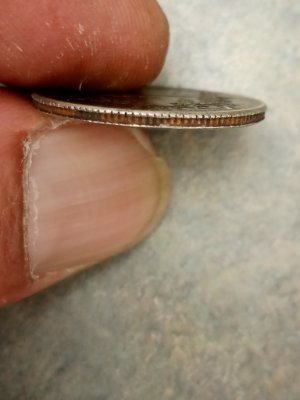
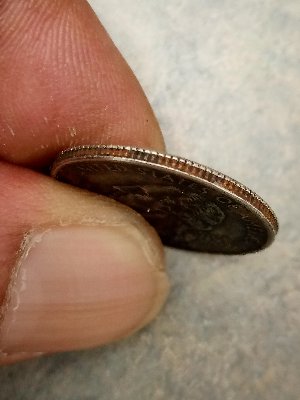
The coin has been sitting in an environment that corroded the copper but left the nickel cladding relatively unharmed. Just a damaged coin unfortunately
|
|
Bedrock of the Community
United States
10635 Posts |
Your coin is showing evidence of environmental acidic conditions. On the coin's edge, you can see where to acid has eaten into the copper. Post mint damage, a spender I'm afraid.  |
|
Pillar of the Community
 United States
3768 Posts |
Appears to have been dipped in acid. The acid will remove the copper core faster than the cupronickel cladding, leaving a depression as you're seeing around the edge.
|
|
Moderator
United States
56855 Posts |
Agreed,acid damage. If you use the search box here on CCF,you will find a lot of info on it. John1  |
|
Valued Member
 United States
181 Posts |
I'm confused because if it is corrosion why is it so perfect and not uneven..? And I didn't know the ridges on Quarters were cut below the rim I thought they were only cut so far out around the coin not inside as far as it shows? Can you please explain
|
|
Valued Member
United States
181 Posts |
And the whole middle of Reeding shows all copper it's not split with the clad I'm confused
|
|
Moderator
United States
34532 Posts |
@drag, on quarters, imagine the layers of clad and copper as a sandwich. The cladding is the bread and the copper is the tuna fish or whatever filling in between. Also, the reeding is not cut into the metal, but rather forged so there will be evidence of this metal movement more than just on the surface of the coin's edge. Hope this helps.
"If you climb a good tree, you get a push."
-----Ghanaian proverb
"The danger we all now face is distinguishing between what is authentic and what is performed."
-----King Adz
|
|
Bedrock of the Community
United States
94367 Posts |
|
|
Pillar of the Community
United States
4846 Posts |
The acidic environment will also attack the surface of the metal equally, leaving the impression of reeding visible on the corroded area.
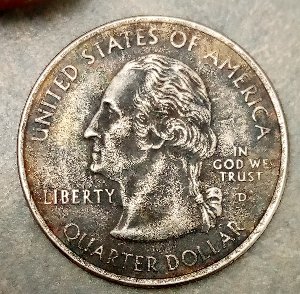
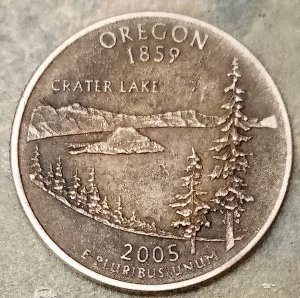
We see this type of damage fairly often on here. Another clue is the really dark and pitted obverse and reverse. It's an indication that the coin has been sitting in a harsh environment.
|
| |
Replies: 9 / Views: 2,436 |
|









 Posted 10/17/2021 11:53 pm


