| Author |
 Replies: 28 / Views: 3,583 Replies: 28 / Views: 3,583 |
|
|
|
New Member
 Canada
26 Posts |
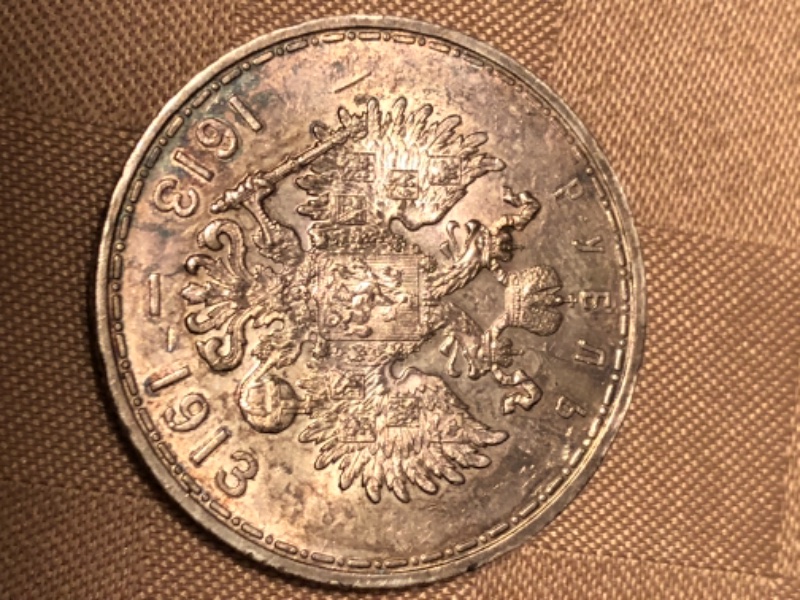
Sorry it's taken so long to get images up-I need to retake the reverse in order to upload!
|
|
New Member
Canada
26 Posts |
|
|
New Member
Canada
26 Posts |
|
|
New Member
Canada
26 Posts |
|
|
New Member
Canada
26 Posts |
|
|
New Member
Canada
26 Posts |
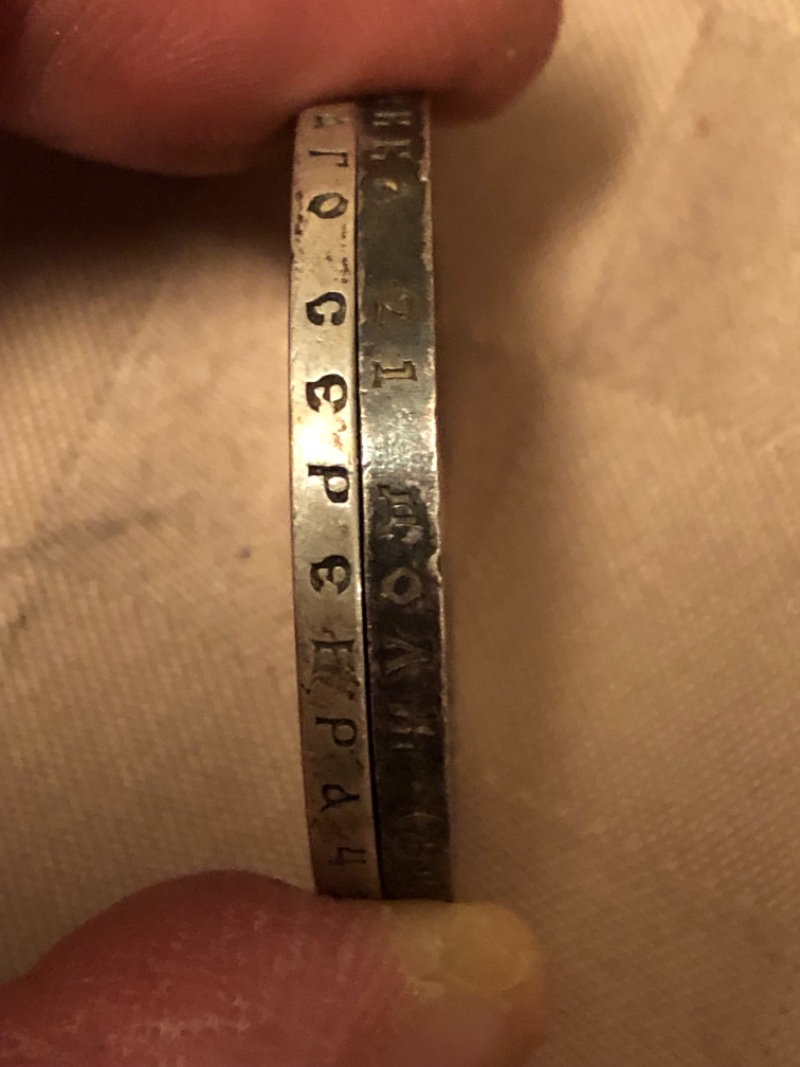
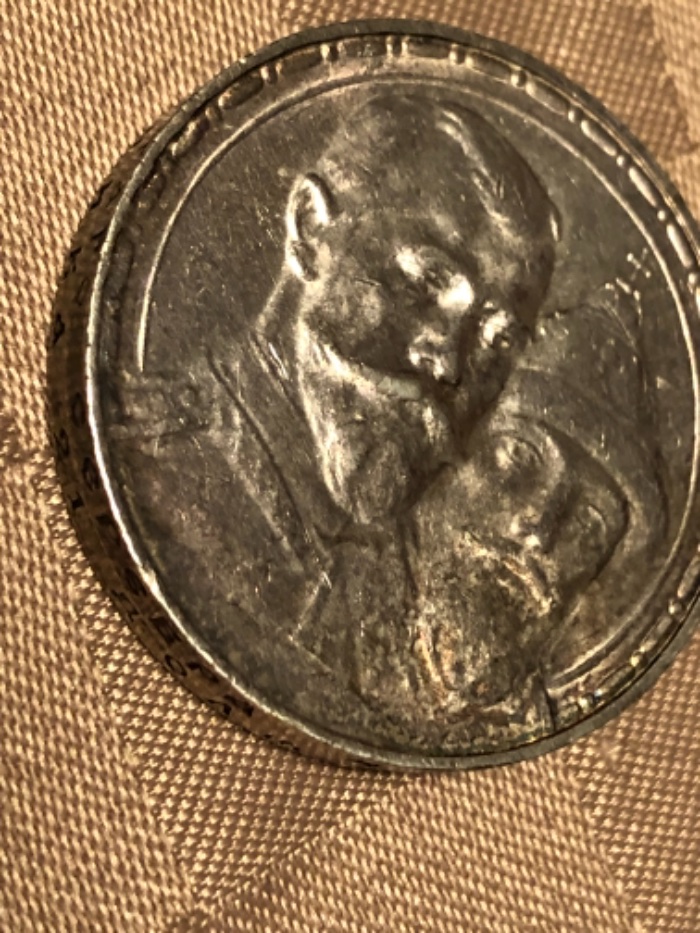
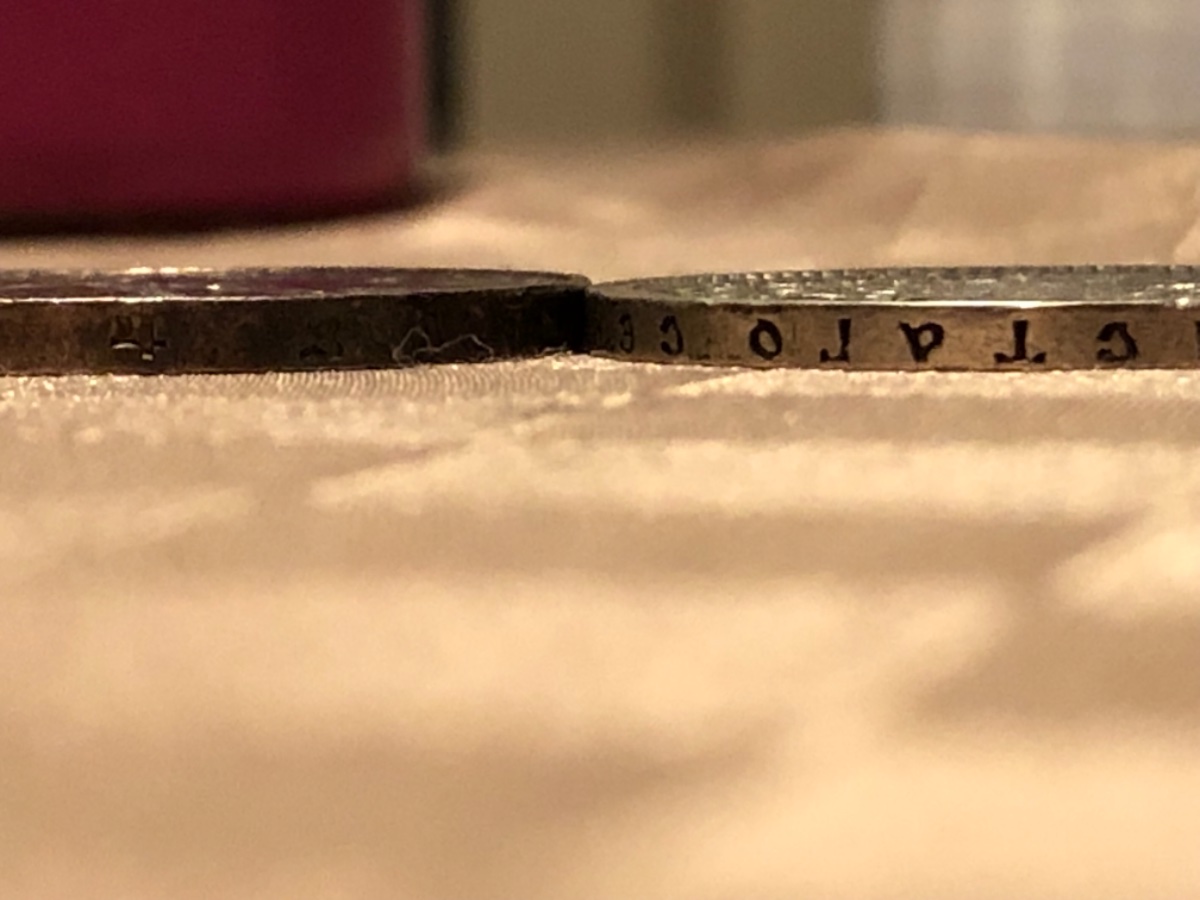
Thanks to everyone that has commented so far! Hopefully the photos illustrate the details well enough-at the end I've put it alongside an 1896 Rouble in F-12 condition. Diameter is exact and width looks to be quite close although the 1913 is thicker.
Any more commentary would be excellent!
|
|
Pillar of the Community
Australia
3841 Posts |
I am honestly troubled. From the photos alone, it looks genuine. The edge is quite hard to duplicate but it doesn't mean that it's impossible. I have a counterfeit Gangut ruble and the edge and weight is close to spot on - the color just looked wrong.
I think it's a bit too early to dismiss it as counterfeit immediately based on the XRF. There isn't any real research of such silver coins. The only one that I can think of straight away is the Russian platinum coins that circulated. The UNC coins proved to be an issue as some were restruck later during the Soviet era to be sold in the Western world. The only way to differentiate the difference is that the restrikes are too pure and the original coins have traces of various metals including iron.
Personally I would suggest finding another example of such commemorative ruble to compare the result. It would be interesting to see if it shows any differences.
|
|
Moderator
 United States
195203 Posts |
 to the Community! |
|
New Member
Canada
26 Posts |
|
|
New Member
Canada
26 Posts |
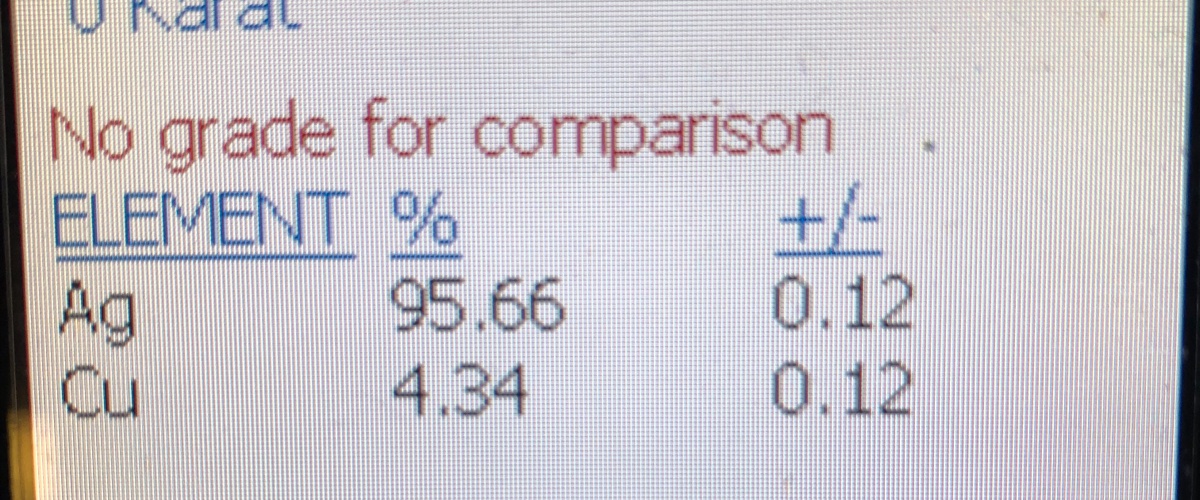
gxseries Thank You for your input! The coin reweighed exactly at 20g and the xrf result photo is now uploaded.
I agree it is almost too good-one thing I noticed is that the detail in mine seems to be sharper than NGC graded examples, maybe the extra 5% silver allowed for a better (re) strike? One would think a true counterfeiter with this skill level would try and replicate the scarcer issues over the 1913 issue?
|
|
Pillar of the Community
United States
1915 Posts |
It's not so simple as to which coins a counterfeiter makes or why.
Most cases I have are to decieve merchants having base metal core with a silver wash.
Others decieve collectors and will spend $20 for silver to get a $80 or $180 profit.
A different approach made by some counterfeiters, was the South Africa 5 Rand coin, worth I think about 34 cents.
The difference is the nickel is thinner and the core is thicker.
You can pick up the genuine coin with a very weak magnet- not so much with the fake coins.
If the magnet is too strong, it may pick up both.
Obviously the intent here was to deceive by passing for real.
And since they were made in large quantities, that's what they did until caught.
So I guess my point is that the couterfeiter may just decide, what is available, what may sell.
Maybe some coins are so expensive to fake that buyers & graders would use close scrutiny.
Others of lower cost may sometimes be sold between dealers and collectors but nobody really studies the coin if it looks good in hand and weighs good.
I have some fakes that are impossible to detect in hand with the eye.
It takes a microscope and testing to tell them apart from the genuine coins.
Not done very much at a coin show.
|
|
New Member
Canada
26 Posts |
Hi Albert thanks for your input. I think that's where this one stands out-it's the correct size, weight, strike etc and hasn't been ‚washed' like the Canada 1948 silver dollars struck in Lebanon or some of the military medals I've seen to hide the poor strike or signs of casting. This one stands out in that I only put it through the xrf because I was there anyway and had found all sorts of fun compositions in other coins I'd scanned.
This points to what I suspect (but can't prove) as being struck with original dies if not original equipment. Does that make it a fake? An unauthorized restrike? Perhaps a trial run when they were seeing how the dies would strike the admittedly fussy design back in the early 1900s?
It's impossible to be certain. I will try and source another 1913 and xrf it as well and compare to the .950 example. Also may try and source a regular rouble and see what the metal contains.
|
|
Pillar of the Community
United States
1760 Posts |
The higher silver content is the result of silver surface enrichment. Silver and copper alloys particularly for Ag alloys that exhibit 90% Ag in their original alloy mix do indeed register silver levels ~ 95% after some decades of environmental exposure where a thin film of enriched silver forms at the surface. See the classic paper by L. Beck on silver surface enrichment. Its a bit complex but this is a common XRF result where Ag is reading HIGHER than the original alloy mix (i.e., 90%). Its genuine IMO. Remembering XRF analysis is restricted to a VERY thin layer at the surface measured at best in tens of microns in width. John Lorenzo (Numismatist).
Silver surface enrichment of silver-copper alloys: a limitation for the analysis of ancient silver coins by surface techniques
Lucile Beck
FABIEN PILON
2004, Nuclear Instruments & Methods in Physics Research Section B-beam Interactions With Materials and Atoms
Edited by colonialjohn
12/08/2021 8:19 pm
|
| |
Replies: 28 / Views: 3,583 |






 First Page

 Posted 10/23/2021 02:09 am