| Author |
 Replies: 17 / Views: 2,417 Replies: 17 / Views: 2,417 |
|
Valued Member
United States
426 Posts |
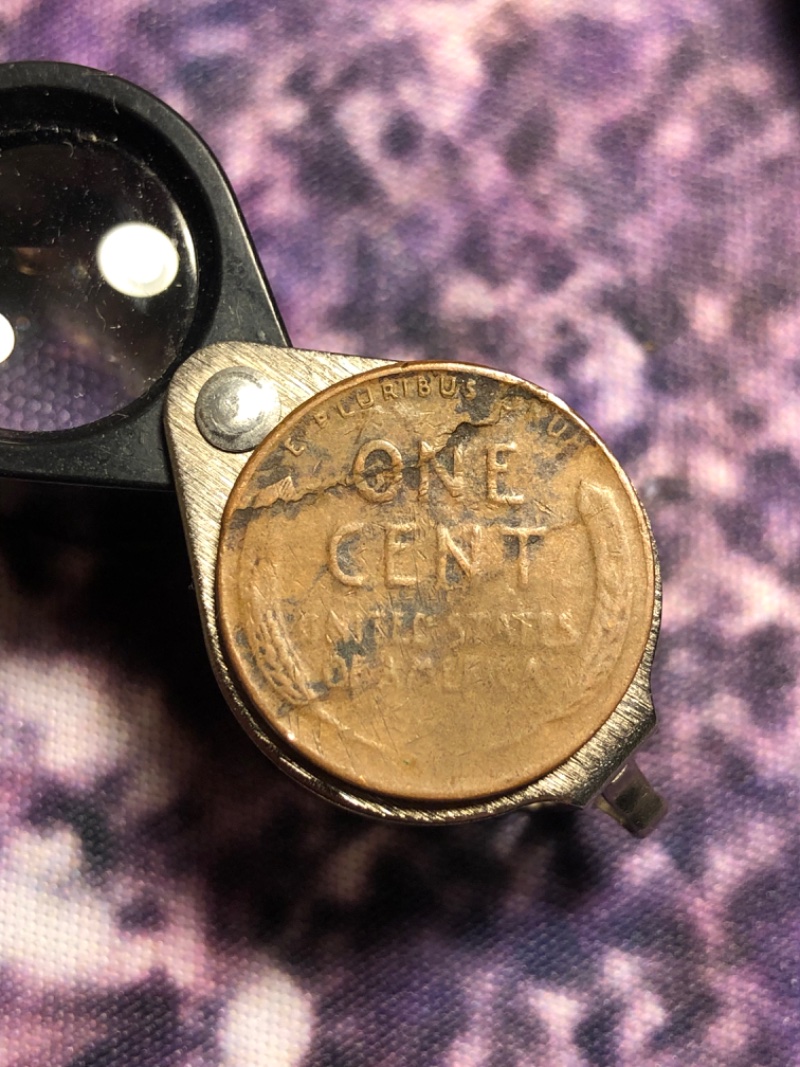
Now the reverse I know for a fact is a lamination. The obverse I'm 95% sure it's a lamination. You can see from GOD to the face and above the date to the rim the lamination I'm pretty sure but very circulated and worn. Also it continues from the middle of the face past the ear and above liberty as well. I was think struck thru a very late spilt cap die but I doubt it just because it doesn't really seem to show evidence and the effect that a cap die would leave on a coin in a late stage. I'm thinking two big laminations errors what do we think about the obverse? 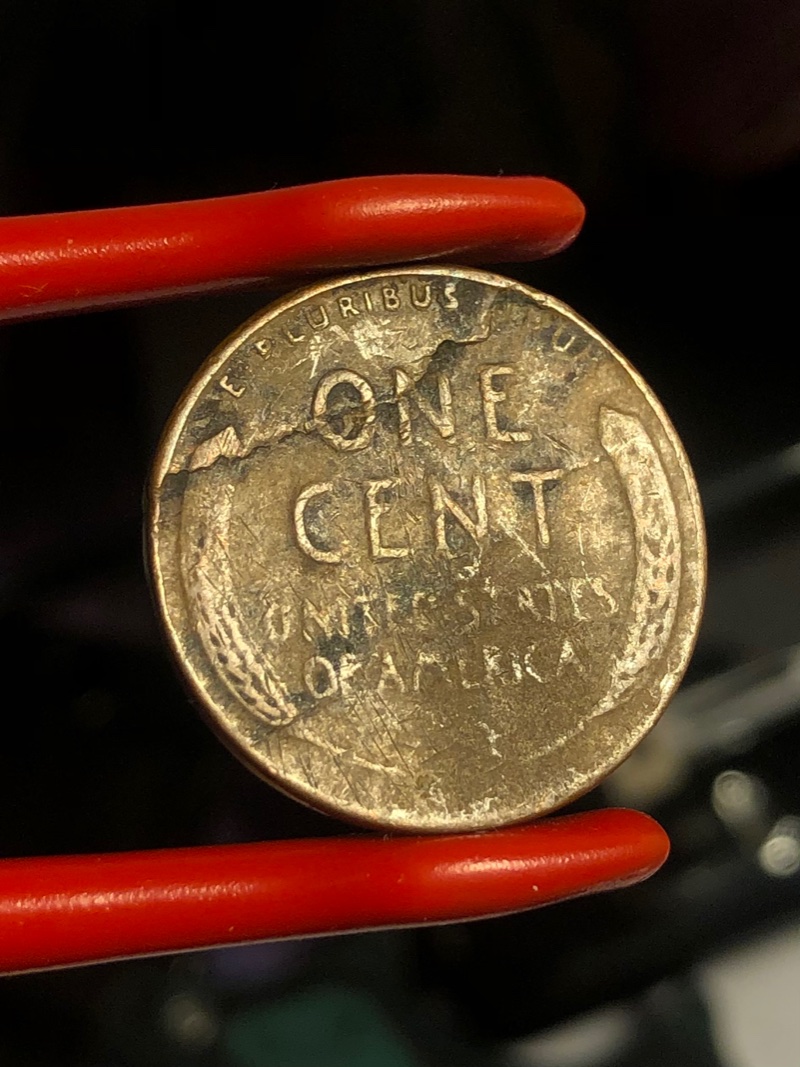 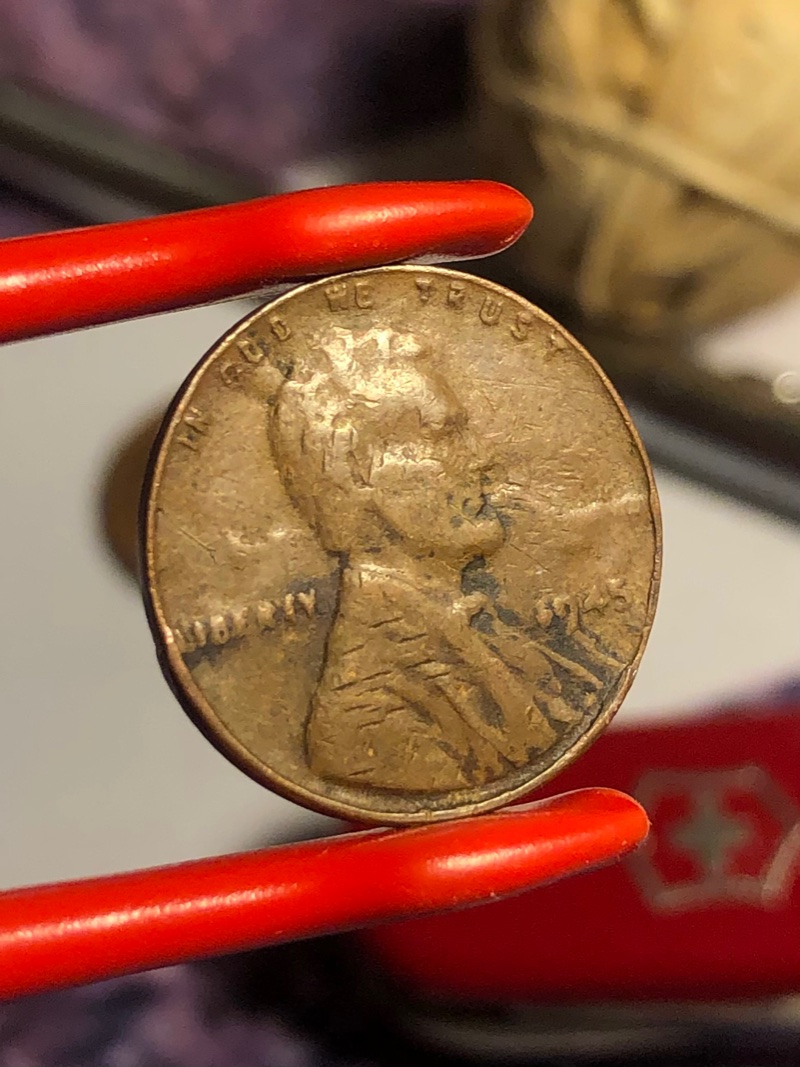 Edited by gorham_collector
12/27/2021 05:23 am
|
|
|
|
Pillar of the Community
Canada
6244 Posts |
I will not say ex-foliation (lamination on your term) to this coin.
Look at the color. This show alloy mix. could be begin or end of the roll and seem that the mix was more zinc and with the time environment factors parts fly . And this not only where you see ex-foliation, also upper and bottom.
|
|
Pillar of the Community
United States
1204 Posts |
Definite lam on the reverse, obverse looks like it as well. To bad that the coin has been so heavily cleaned.
|
|
Valued Member
 United States
426 Posts |
Quote:
Definite lam on the reverse, obverse looks like it as well. To bad that the coin has been so heavily cleaned. I don't mind still a great find and just to have it for the collection very cool |
|
Pillar of the Community
Canada
6244 Posts |
Quote:
the coin has been so heavily cleaned Was clean no doubt. to you to understand: 1. Cleaning a cooper coin will not bring yellow color on one side and reddish (normal) on the other. 2. Second come to what you want to be: "Lamination" (lamination mean union of two materials by different process like press) Ex-foliation mean separation of the material due to a rolling process, which apply in the production of the coins. 3. What you thing to be it is more an linear molecular material structure. It is characteristic for alloy with bigger % of zinc then 5%. Is happened that the alloy was improper mix or because has to much carbon accumulation. |
|
Moderator
 United States
56855 Posts |
Weight? The coin looks odd to me  John1  |
|
Valued Member
United States
426 Posts |
Quote:
Weight? The coin looks odd to me Idly I always forget to weight my coins John lol it weighs 2.64 grams so maybe a spilt Planchet with a reverse lamination error? And possible half a spilt Planchet considering those "lines" in the front where it broke away in certain places? Edited by gorham_collector
12/27/2021 05:34 am
|
|
Moderator
United States
56855 Posts |
I do not think it is a split planchet issue. Need a few pros to chime in. John1 |
|
Valued Member
United States
426 Posts |
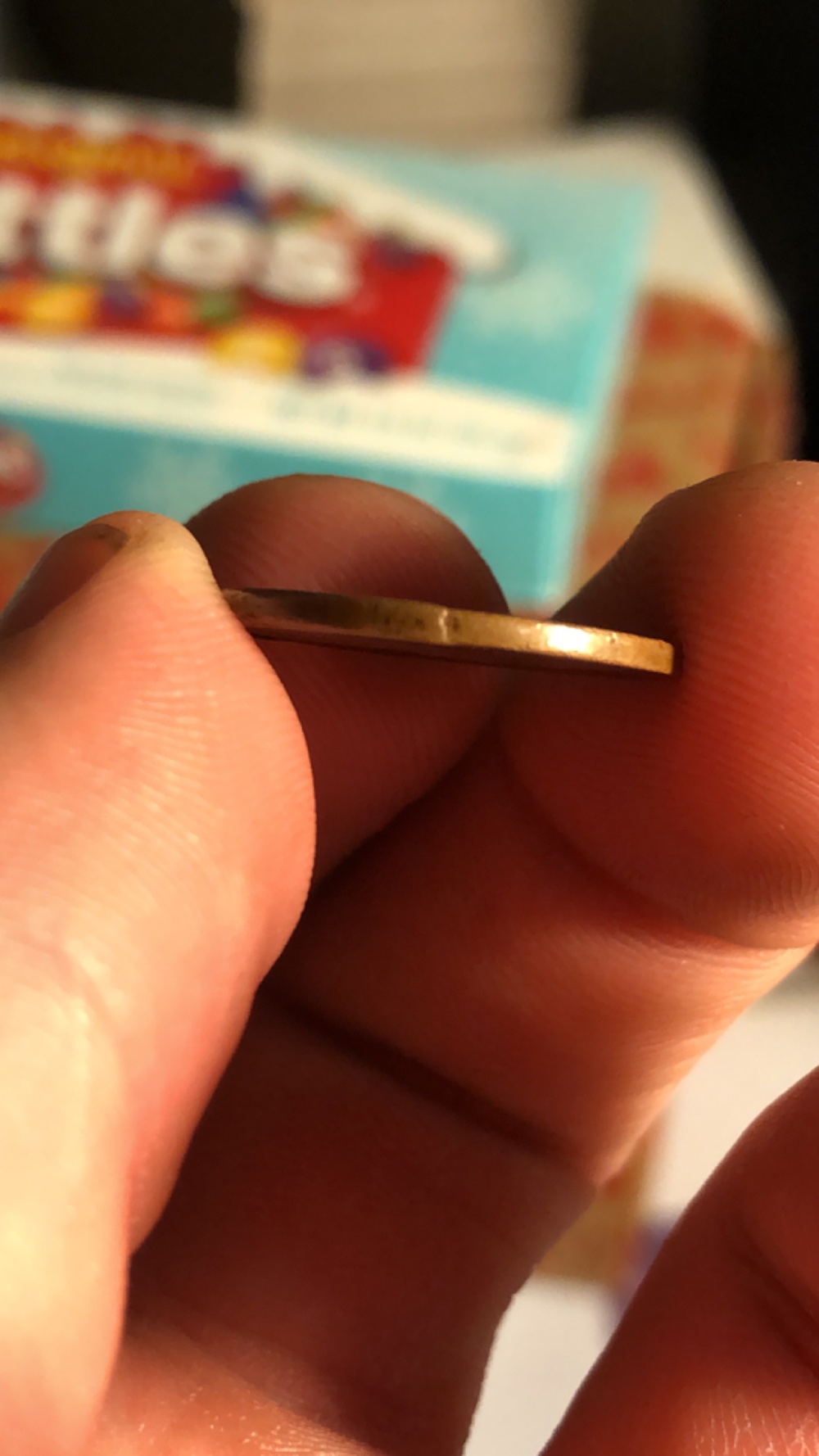
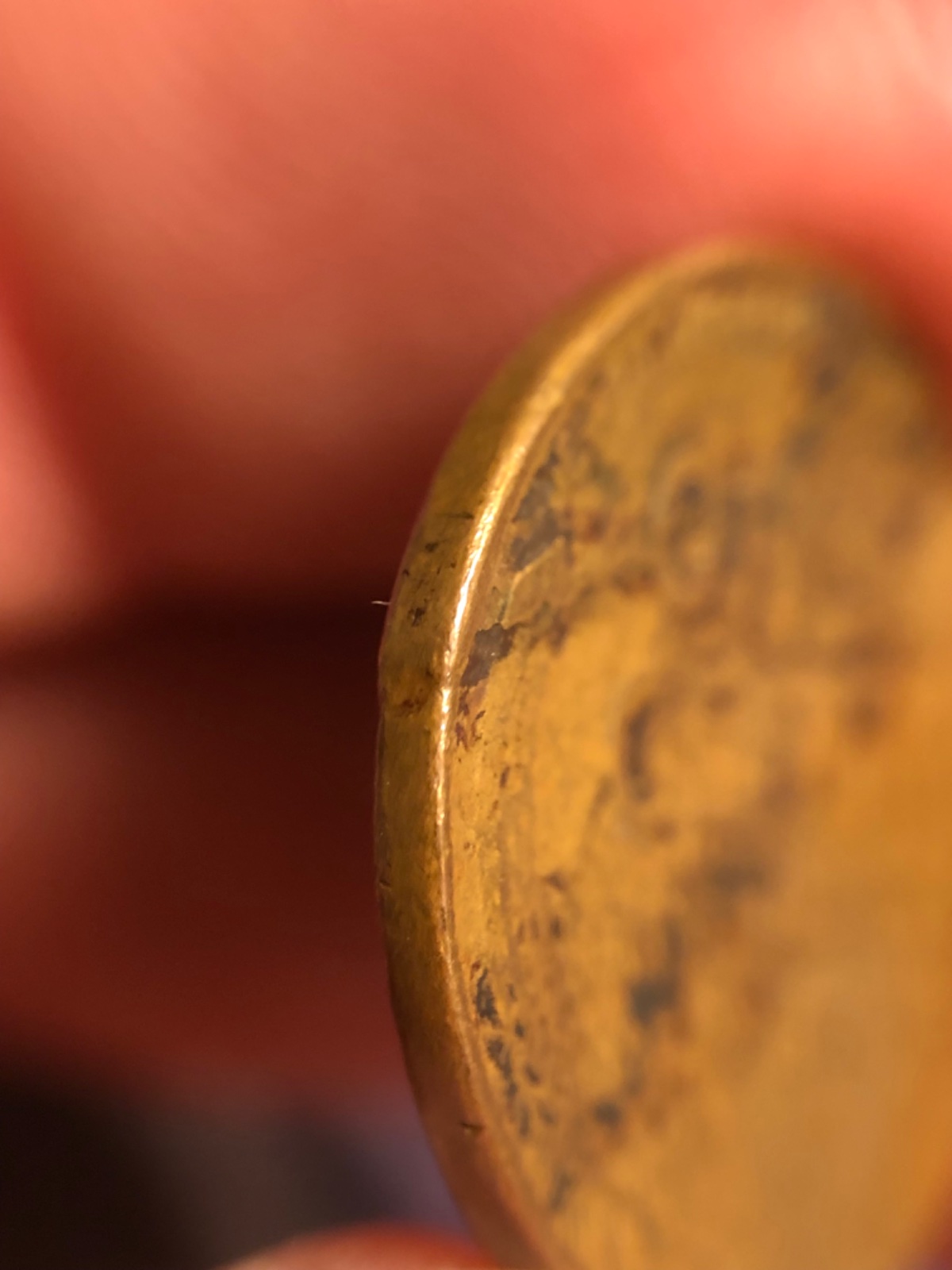
John I'll have to take a pic of the rim once I'm home from work. I'll post it in a Facebook group which mike diamond and a couple more pros reside to see what they say
|
|
Moderator
United States
109845 Posts |
Sure post it to your mystery Facebook group, but can you also post it here. or at the very least, clue us in to this Facebook group you allude to?
|
|
Valued Member
United States
426 Posts |
Oh I can Dearborn I wasn't trying to be secretive or anything haha it's called Joe Cronins mint errors explained. Great group. Of course I'm also gonna post it my results and finds here I posted it here first.
|
|
Valued Member
United States
426 Posts |
I did not expect to see this Interesting reply from mike diamond. I'll look more when I get home at it to see if what he said makes sense. My brain could playing tricks but I'm pretty sure the reverse is just very circulated and worn old scrapes with along with the reverse lamination. For sure. I don't think it looks like chemically or damaged eaten coin. I'll take what he says into consideration tho rim pic at 2:30am 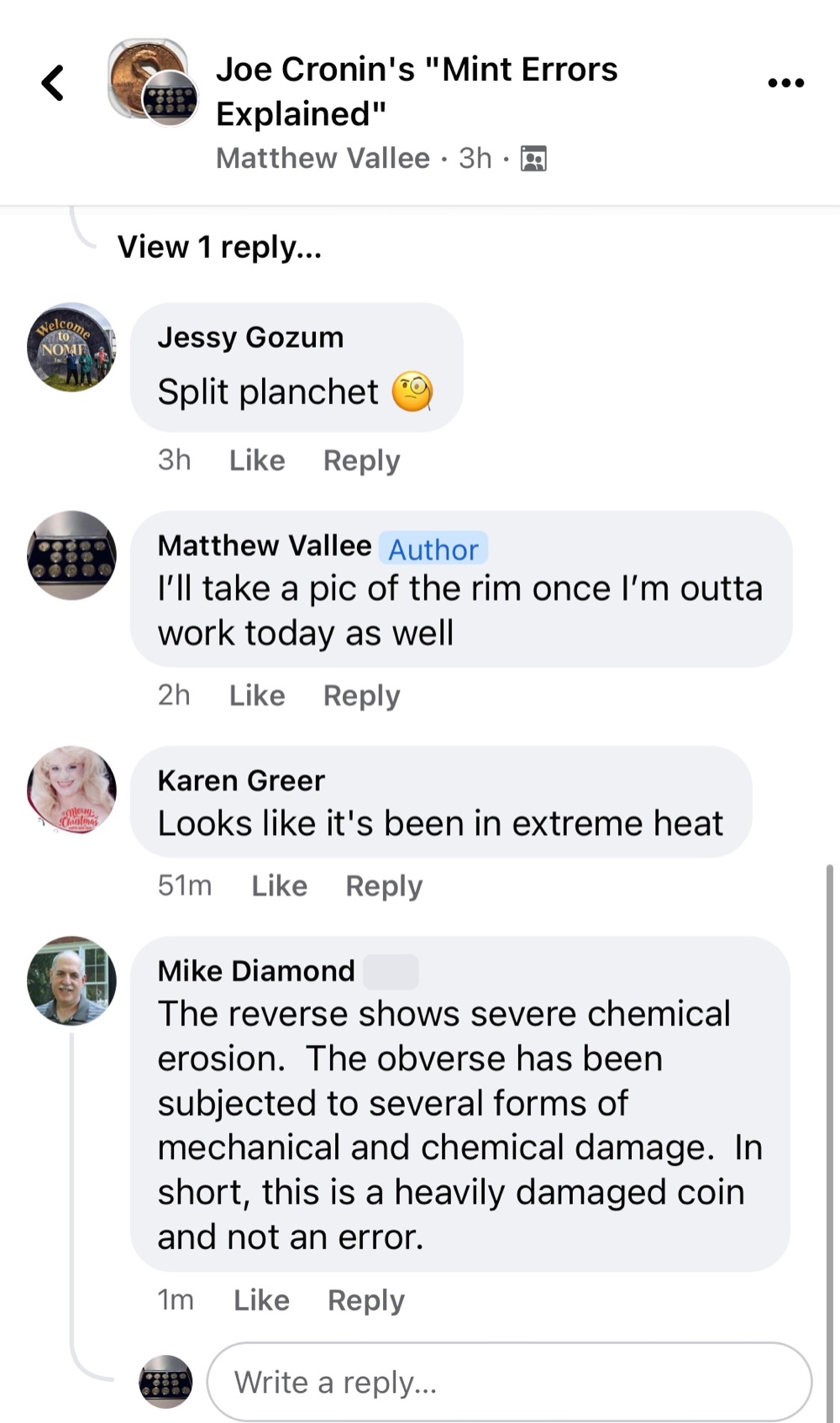 |
|
Valued Member
United States
426 Posts |
|
|
Pillar of the Community
Canada
6244 Posts |
Congrats have Mike (the living coins encyclopedia) on your Facebook, and also thanks to post his answer because I learn how to wrote here.
EX: "Mechanical and chemical damage" instead of "linear molecular material structure" and also "eaten material" which it is a laboratory term for action due to the expose of the materials to different corrosive agents.
Nice and thanks.
|
|
Pillar of the Community
Canada
6244 Posts |
when you took the sides photos, the last one show clear external agent actions on your coin.
What Mike say "Mechanical" in my opinion it is a split planchet which it is not necessary been total. Is no science evidences that a split in the material structure due to a mechanical applied forces must be total. Could be surface, like could be internal which will can come out long time after fabrication.
Very interesting and nice topic.
|
|
Valued Member
United States
426 Posts |
External agents I'd say more like common goo and dirty crap you see on wheat cents all the time I've got lots of wheat cents with black whatever on there from being in circulation. And I also want it to be clear to everyone I'm not one of those collectors that says oh I have the million dollar coin etc. I genuinely believe with my experience I do have something I want to understand it more and I don't believe that it's all chemical and mechanical damage ( PMD) |
| |
Replies: 17 / Views: 2,417 |




 Posted 12/26/2021 11:56 pm