| Author |
 Replies: 10 / Views: 936 Replies: 10 / Views: 936 |
|
|
Valued Member
United Kingdom
112 Posts |
A friend has asked me to look into this. It's an Elizabeth I shilling which was found under the mast of an 1899 sailing cutter when it was restored. It was obviously put there deliberately and if anyone knows of this tradition, do reply on that. The ELIZABET rather than ELIZABETH helps identify it as probably 1559-1560. I assumed it was a 19th century replica because it is in very good condition and I'd thought the colour was because it was a pewter alloy. But I was rather flummoxed to find the weight(5.7 grams) exactly matches original ones. (eg this https://www.acsearch.info/search.html?id=7409470 ) The diameter is 28.5mm not 30mm or 31mm as originals should be but it is missing much of the milled rim. I can't quite interpret the edge - see photos - and don't know if the raised part if evidence of it being a copy or of it being a technical aspect of it being very early example of milled coinage. All comments gratefully received! 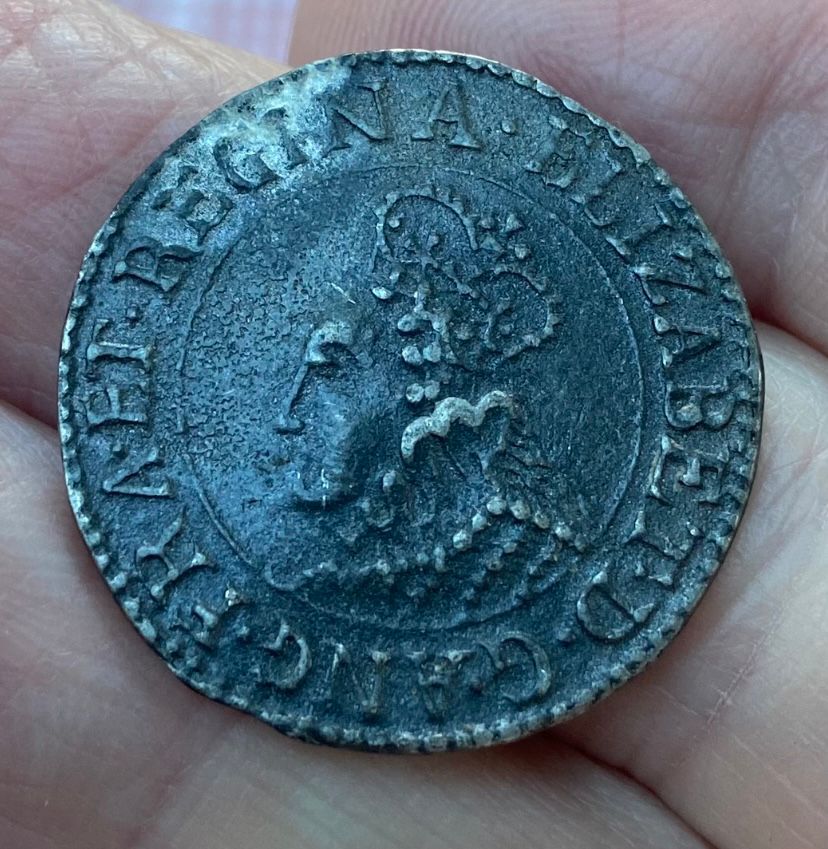 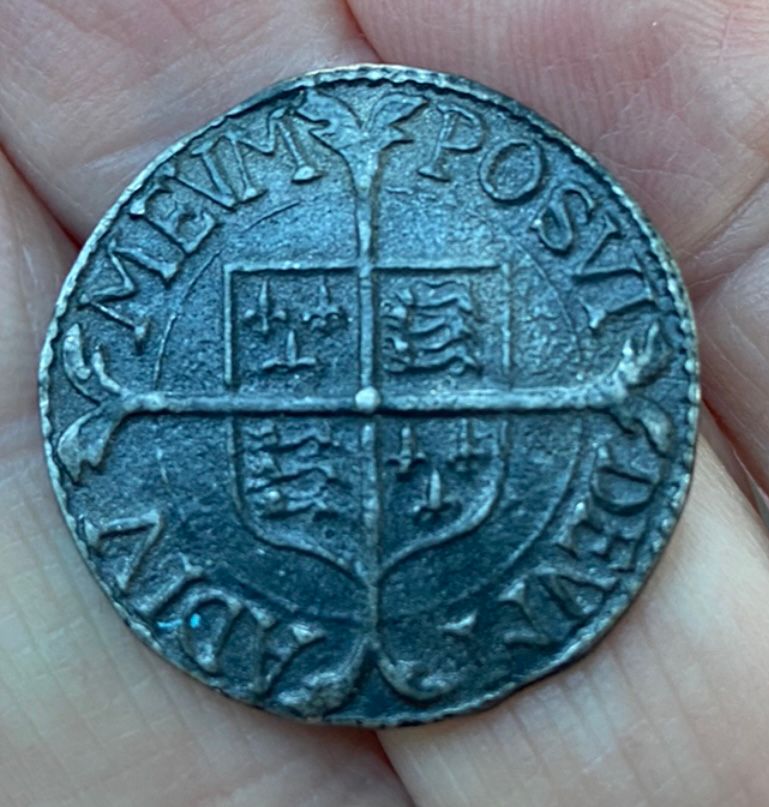 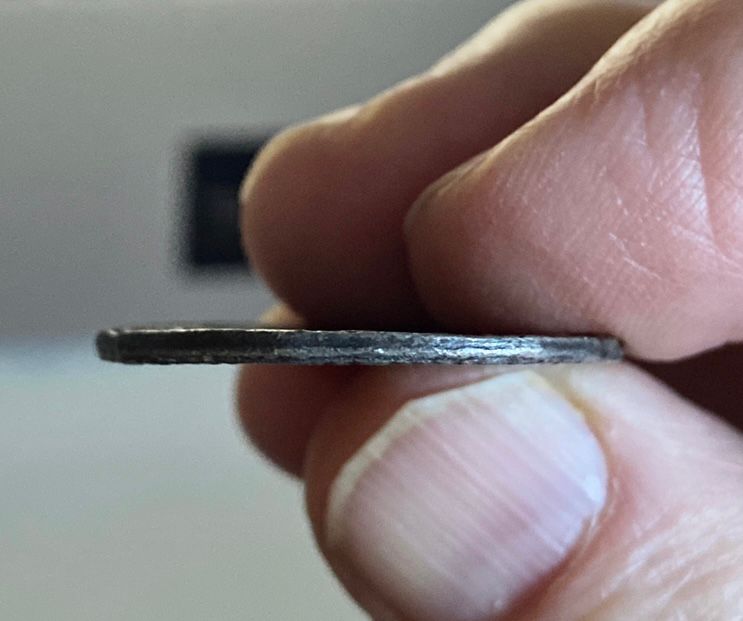 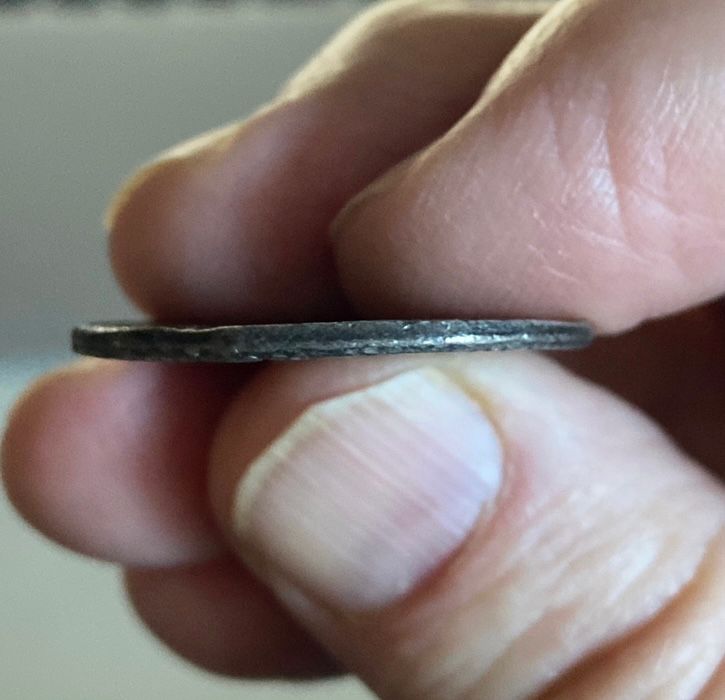 |
|
|
|
Pillar of the Community
United Kingdom
725 Posts |
Edited by JohnConduitt
01/05/2022 07:26 am
|
|
Bedrock of the Community
United States
19511 Posts |
|
|
Pillar of the Community
United Kingdom
725 Posts |
Also milled coinage didn't come in until Mestrelle's experiments in 1561. The vast majority were sixpences, like this: Elizabeth I Sixpence, 1562 Edited by JohnConduitt
01/05/2022 07:31 am
|
|
Pillar of the Community
 United States
8032 Posts |
I am far from an expert on UK coinage, but to my eye, this portrait does not look at all like those on a real shilling. The profile is wrong (too linear, not curved/convex), the vestments and crown are both off (not enough detail).
Maybe there was an issue like this but a quick scan over acsearch did not turn it up.
Will be interested to see other comments.
Edited by tdziemia
01/05/2022 07:38 am
|
|
Pillar of the Community
United Kingdom
725 Posts |
Quote:
The profile is wrong (too linear, not curved/convex), the vestments and crown are both off (not enough detail). Yes it must be a Victorian copy. It's interesting they chose Elizabeth I to bring them luck, and not Victoria. |
|
Valued Member
 United Kingdom
112 Posts |
http://goccf.com/t/414221#3558731John - I'd looked at my Spink catalogue and seen the dotted rim (sorry, don't know the tech term) and assumed it was milled. If it isn't there's no doubt from the edge it's a replica. (If this link above doesn't reproduce the 'quote' box can someone tell me how to do that. I've looked at the help pages but can't find out how.) How does anyone account for the weight being right? That this was struck in silver too?
Edited by gerio2
01/05/2022 08:02 am
|
|
Pillar of the Community
United States
666 Posts |
copy words to quote. Switch to full reply. Choose this button.  paste copied words between the brackets which appear. Edited by fplagge
01/05/2022 09:51 am
|
|
Valued Member
United Kingdom
112 Posts |
Quote:
paste copied words between the brackets which appear. At last! Thanks so much! |
|
Pillar of the Community
United Kingdom
725 Posts |
If the coin this is copying should've been struck before 1561, it's definitely not meant to be milled. (It's actually very unlikely anyway with Elizabeth I, since milled coinage was very sparse in the 1560s and stopped altogether in the early 1570s, not to return until Charles I. Most coins were hammered until Charles II). The style of the engraving is also poor, which just wouldn't have been used on milled coins. Quote:
How does anyone account for the weight being right? That this was struck in silver too? It isn't difficult for reproductions to be the correct weight. What's difficult is for them to be the correct weight, diameter and thickness, while using a different metal. Modern reproductions or fakes might be made of silver, if the coin they're copying is worth a lot more than it's melt value. If it was made of silver, in theory they could get all of the dimensions correct. In this case, the diameter is different, although that often happens with hammered coins - much less so with milled coins and not with collared milled coins. Edited by JohnConduitt
01/05/2022 1:03 pm
|
|
Valued Member
United Kingdom
112 Posts |
Thanks, very interesting. makes sense. Given that the coin under the Victory's 19th Cent replacement mast was only a farthing (or was it a halfpenny), and this yacht, though a substantial cutter was only a working boat (taking pilots to larger ships coming into port), it was a symbolic coin and didn't need to be of value anyway.
|
| |
Replies: 10 / Views: 936 |
|







 Posted 01/05/2022 07:26 am





