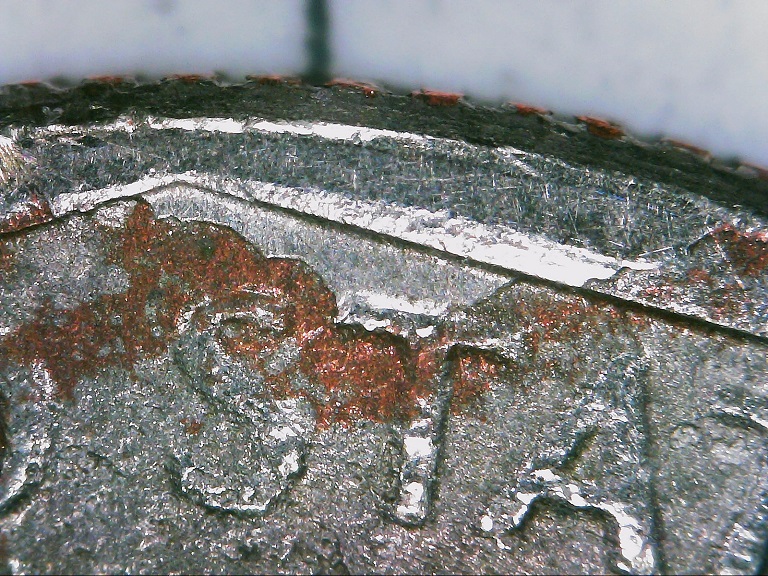
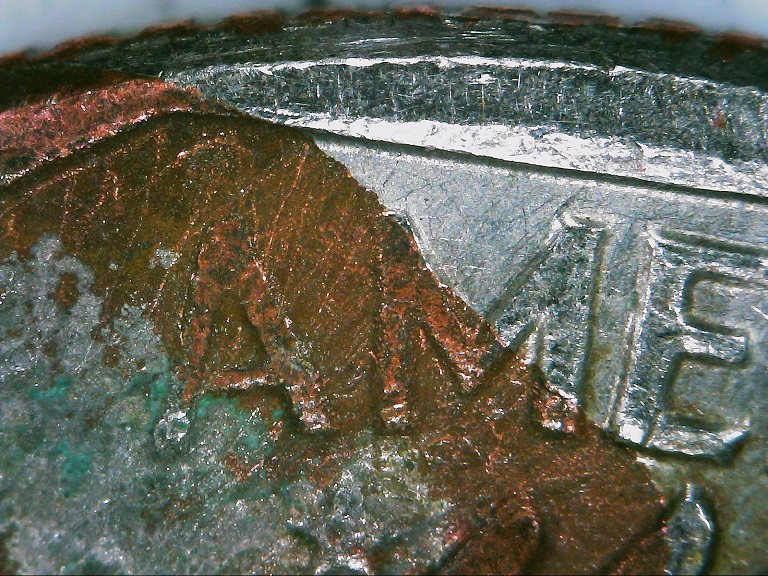
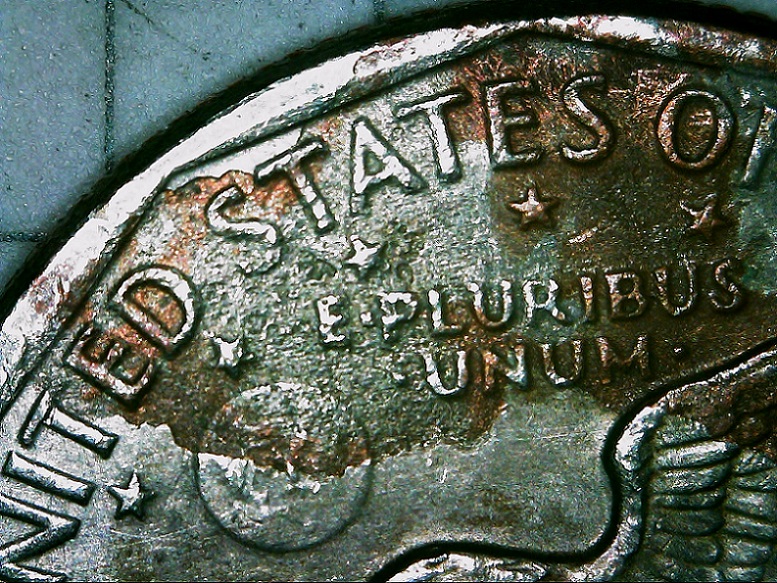
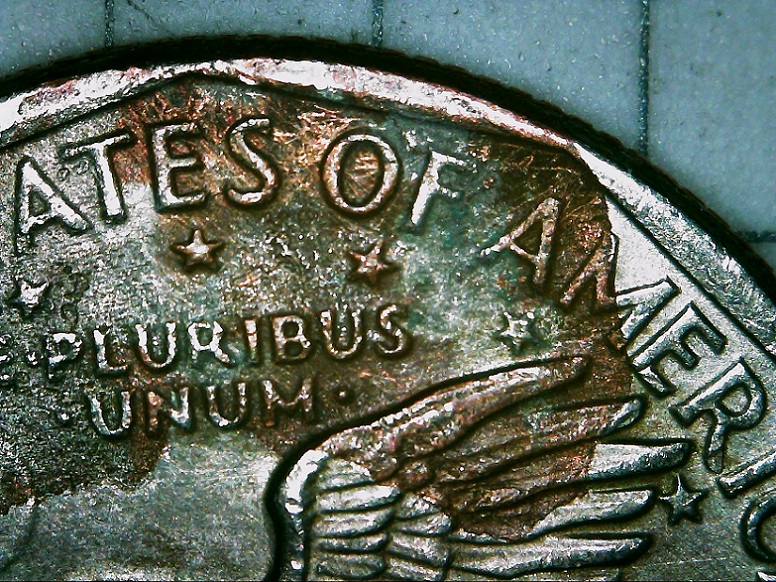
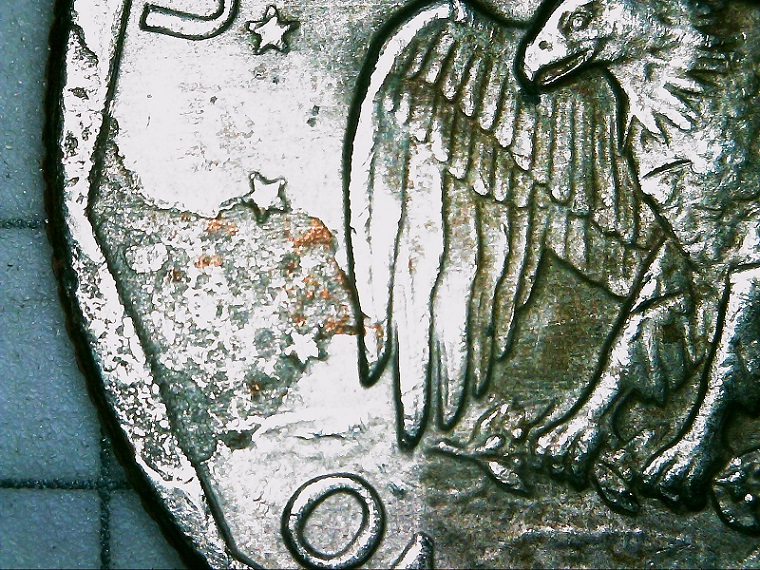
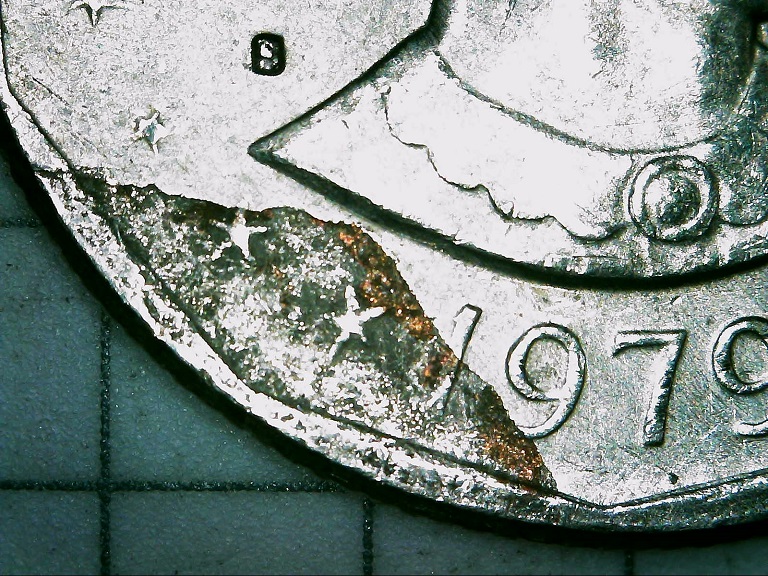
Definitely acid damage, sorry. That's corrosion inside the pits, which is why it's changed to all funky colours.
Quote:
Some of the boarder lines between the clad and the missing clad are so crisp I just wasn't expecting it to be from acid damage.
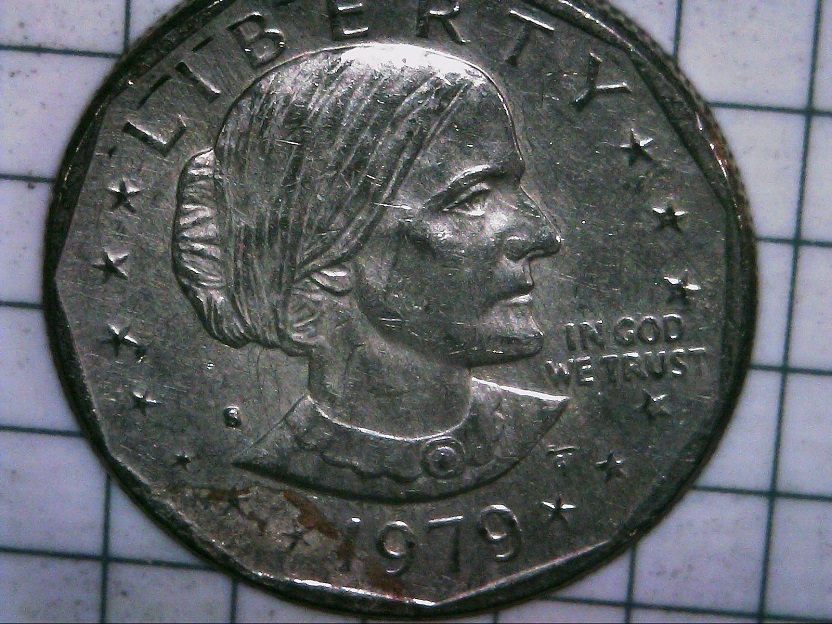
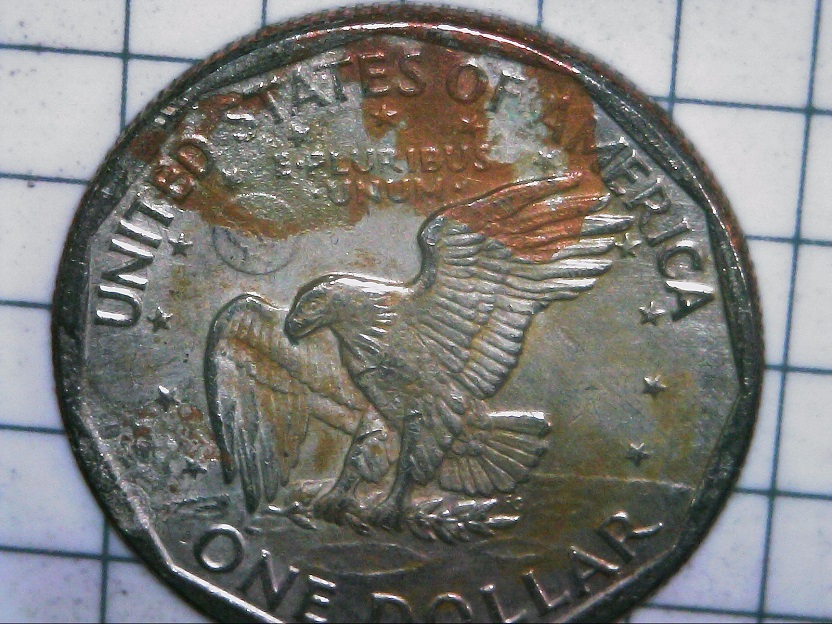
Sharp borders between acid-damaged and non-acid-damaged areas are exactly what I would expect if a puddle of something corrosive was sitting undisturbed on the coin for a prolonged period. My guess would be the coin was placed on a flat surface facing reverse-up, corrosive liquid was placed on top (the reverse), and some of it spilled over the side of the coin , seeped underneath and caused the corrosion patch on the obverse.
Finally, there's the technical aspect. While it would not be unreasonable to find a solid metal coin with "lamination flaws" on both sides (if the flawed blob of metal was large enough), a clad coin is not made from a single solid piece of metal. It's made of three separate pieces of metal, bonded together by explosive force. In a clad coin, you can have a lamination flaw in the piece of cupronickel on one side, or the piece on the other, or (technically, though impossible to detect) in the copper core in between. But the chances of two similar but independent flaws from two independent pieces of metal, that just happen to line up to manifest themselves on the same coin, are infinitesimally small.
In other words, I'm pretty sure that finding a clad coin with "lamination errors on both sides" is functionally impossible. Occam's Razor says the two errors ought to have the same cause, and that cause is most likely to be acid damage.
Don't say "infinitely" when you mean "very"; otherwise, you'll have no word left when you want to talk about something really infinite. - C. S. Lewis









 Posted 01/11/2022 8:26 pm