Keep in mind these facts on
Machine Doubling.
1. Always seen on the outside/inside edges of devices.
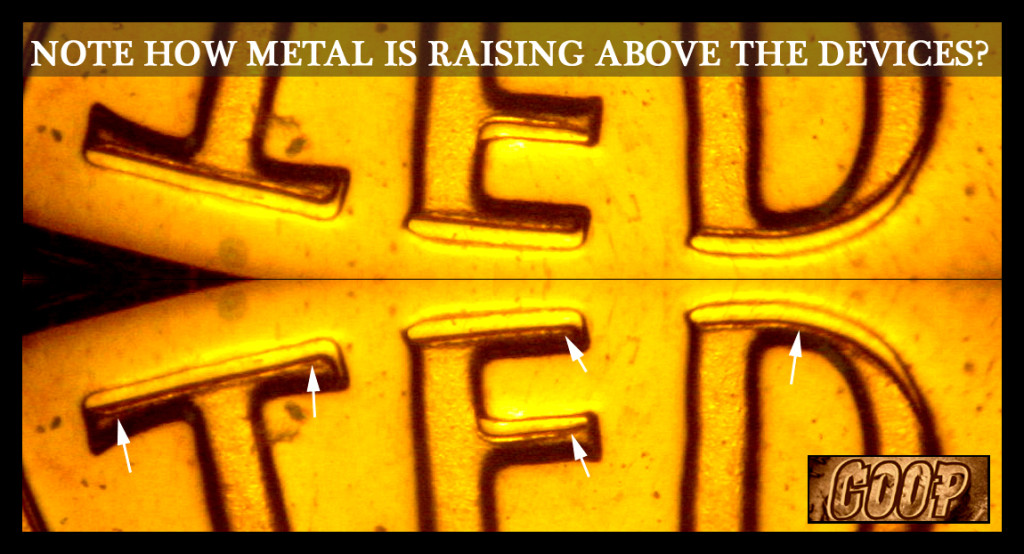
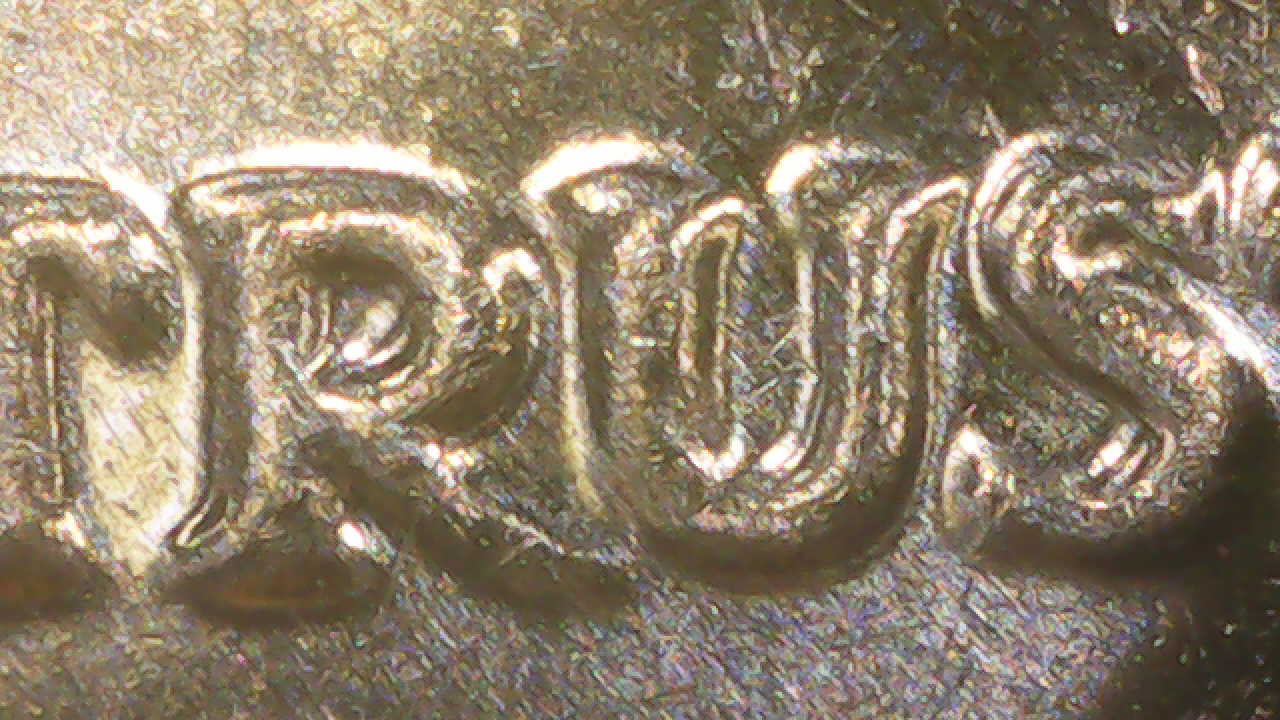
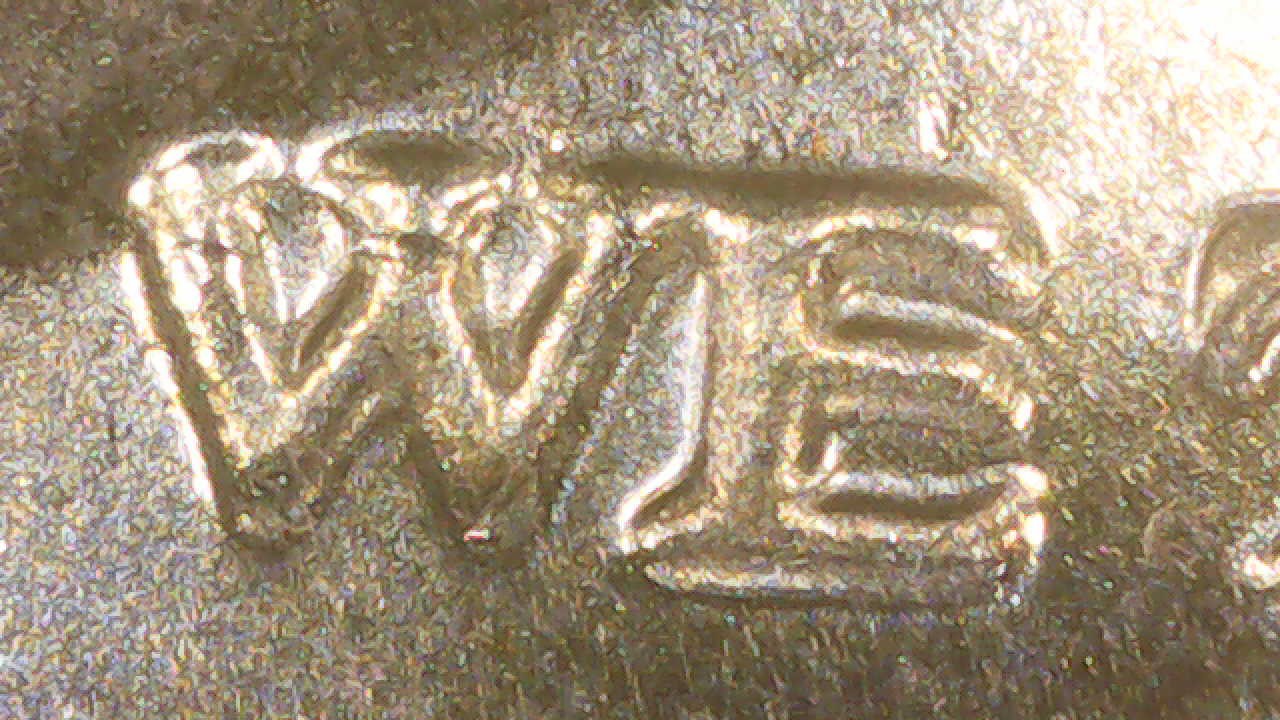
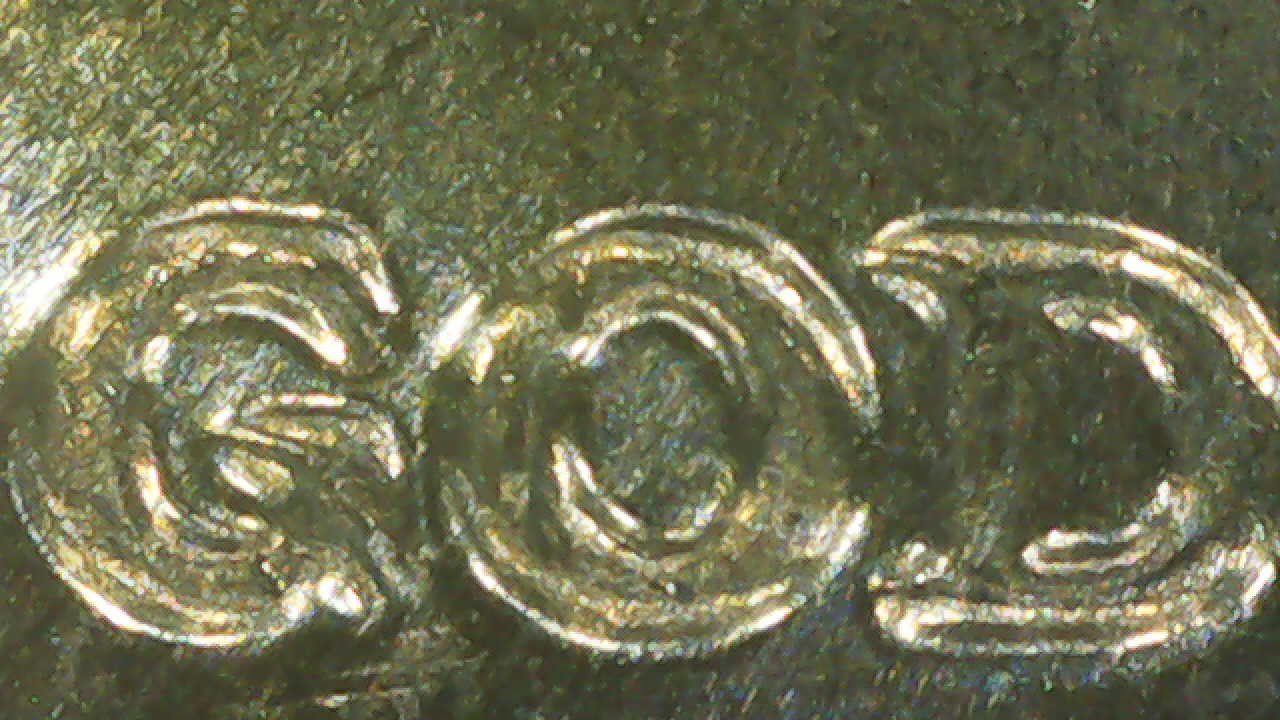
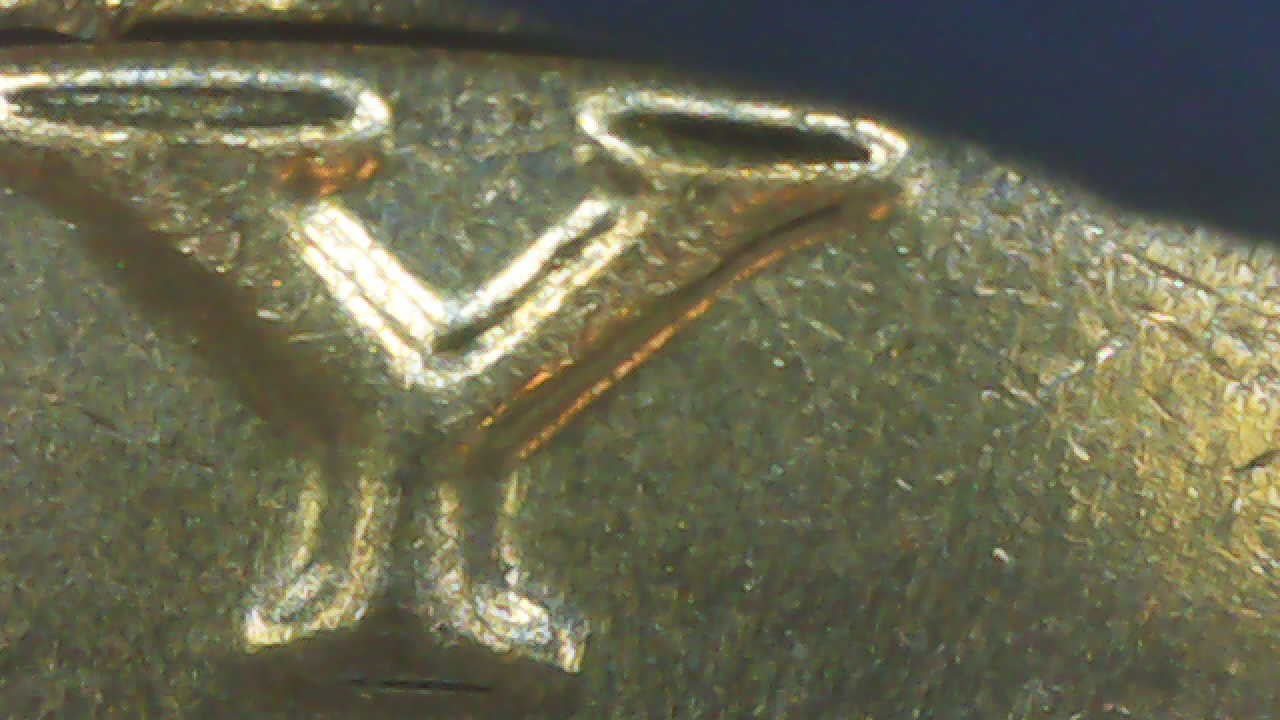
Note the pushed metal look of
Machine Doubling? The metal was there after the strike, but altered by the machine right after the strike.
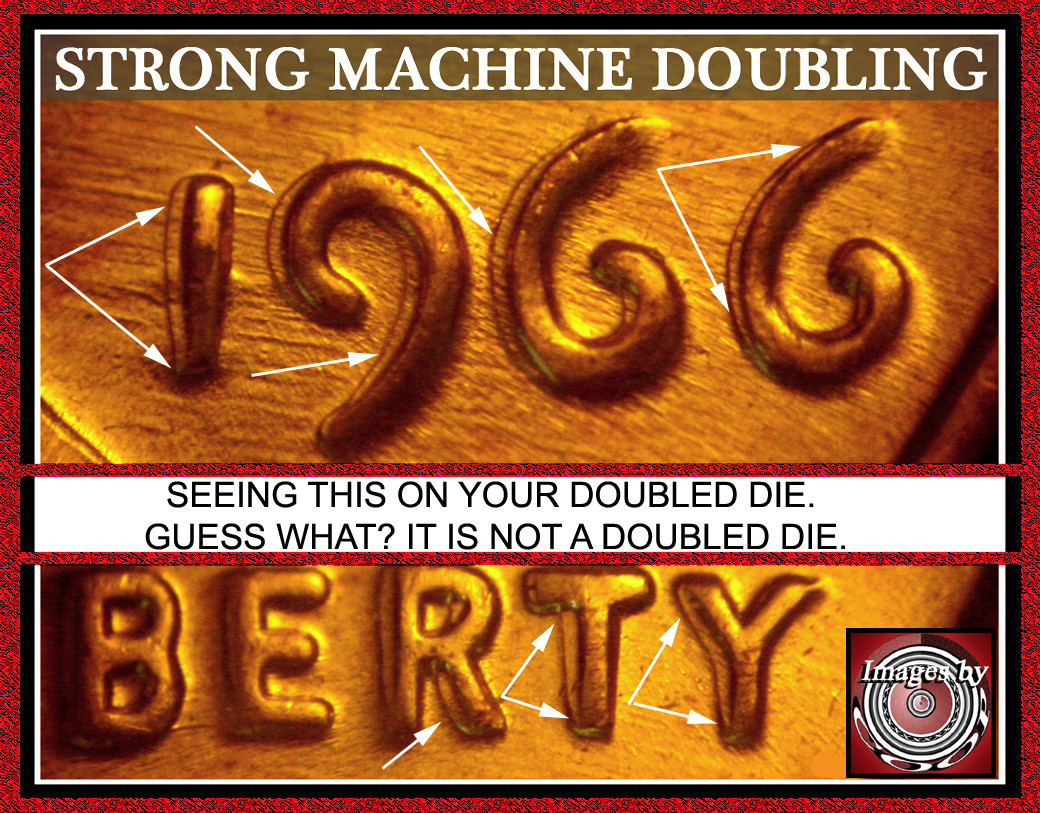 (A doubled die shows a spread in the centers of the devices.)
 Note the centers again? The spread is seen on the centers of the devices. Machine Doubling is always see on the outside/inside edges of devices.
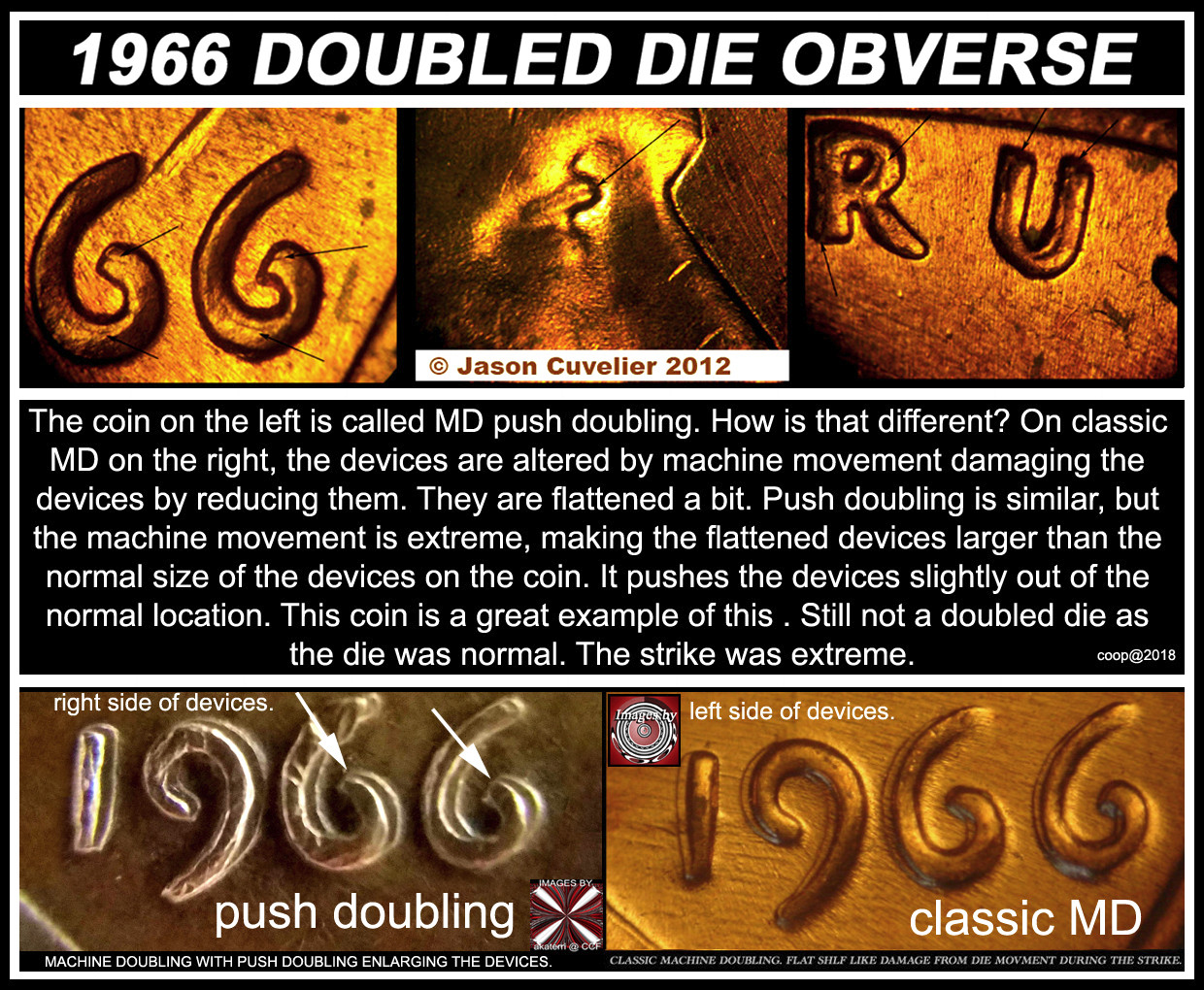
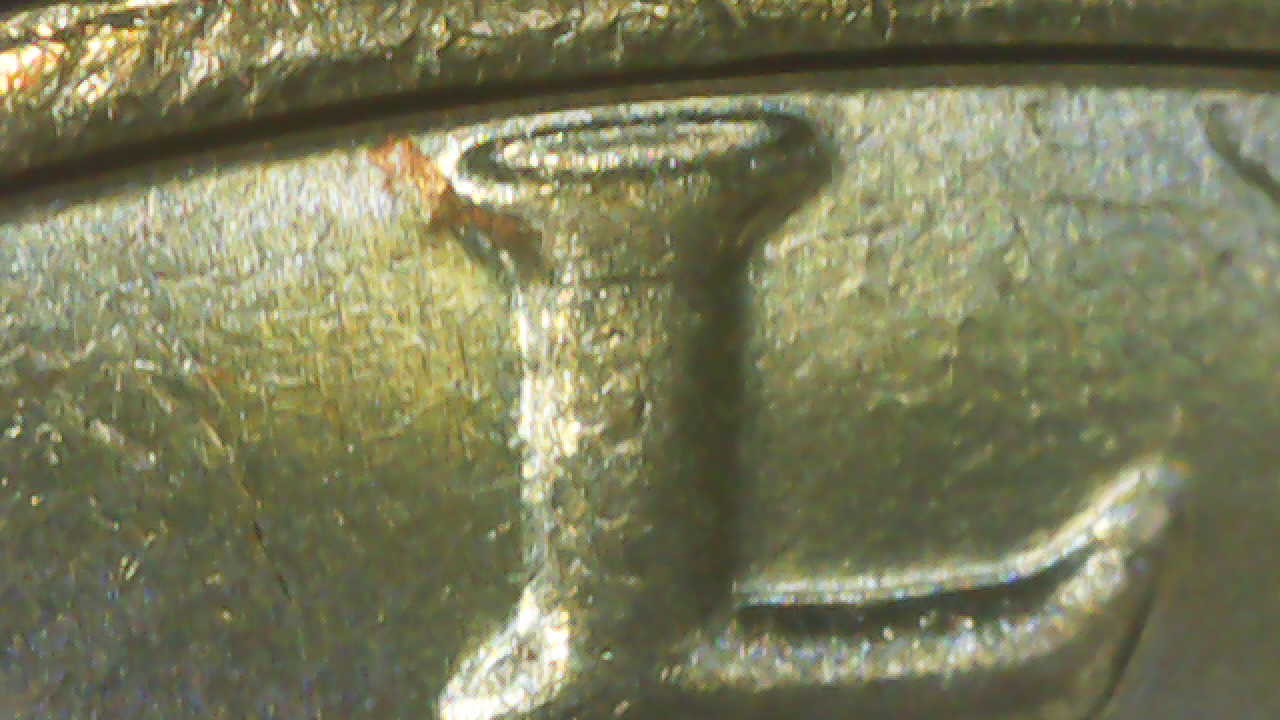
2. Always leaves a flat design where the contour is removed from the devices.

(The contour on a coin will show the top of the devices the flowing down the base of the device. This flow will show the color light at the top of the devices and then darker at the bottom of the devices.
Note on the left side of these devices there is no contour, it was removed unevenly by the machine. Stronger to weaker on the left side. The right side of the devices is showing the contour. The light to darker color of the normal devices. So if you see it on one side the device, then know it was there before the Machine Doubling flatten that edge of the device.
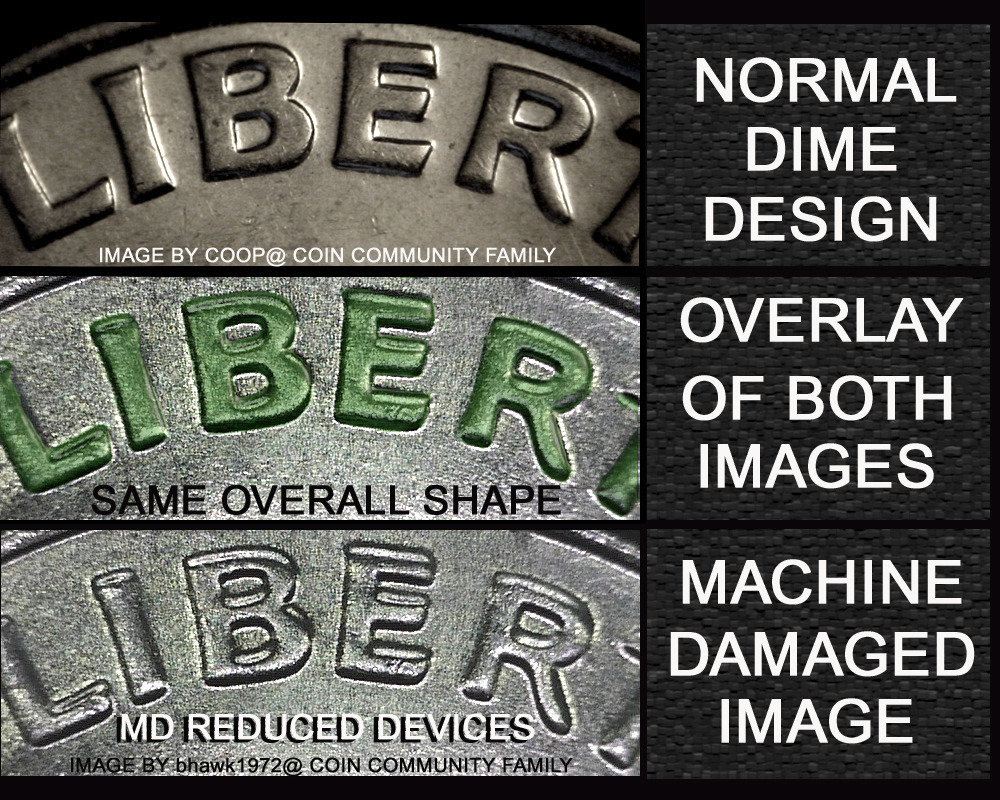
(Most of the times it is seen as a 90 degree angle, instead the normal shape of the devices.)
Facts about die wear on a coin:
1. Die wear always flows towards the edge of a coin.
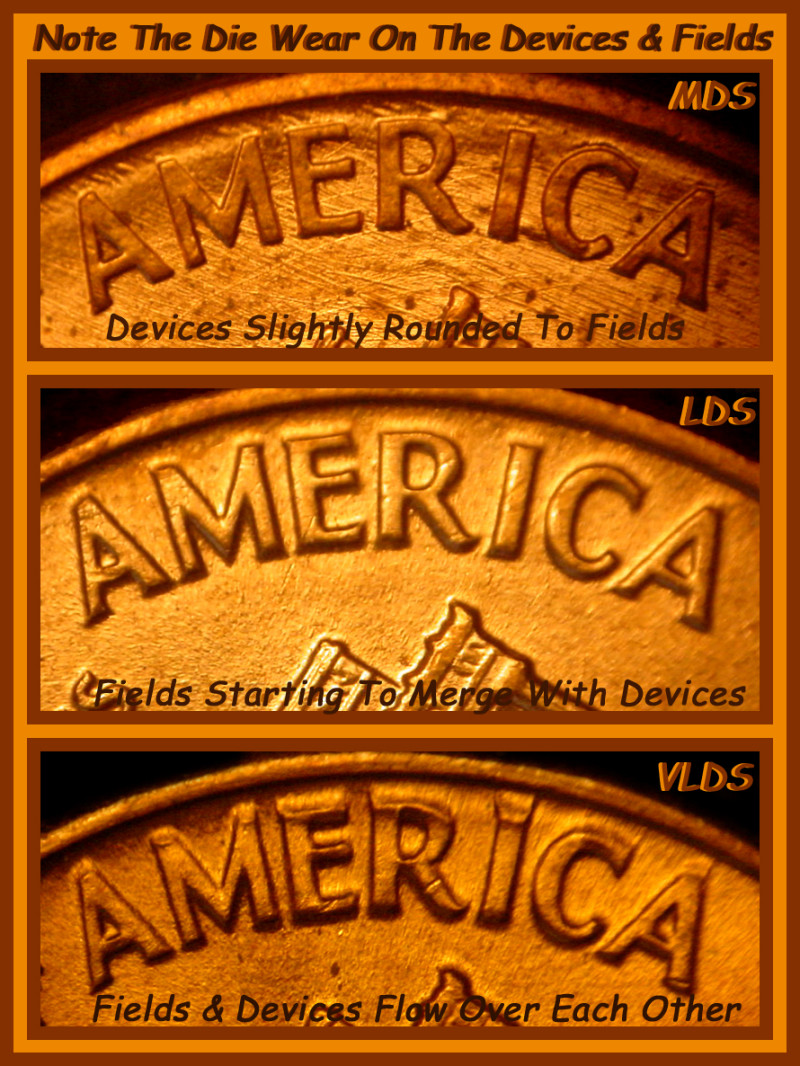

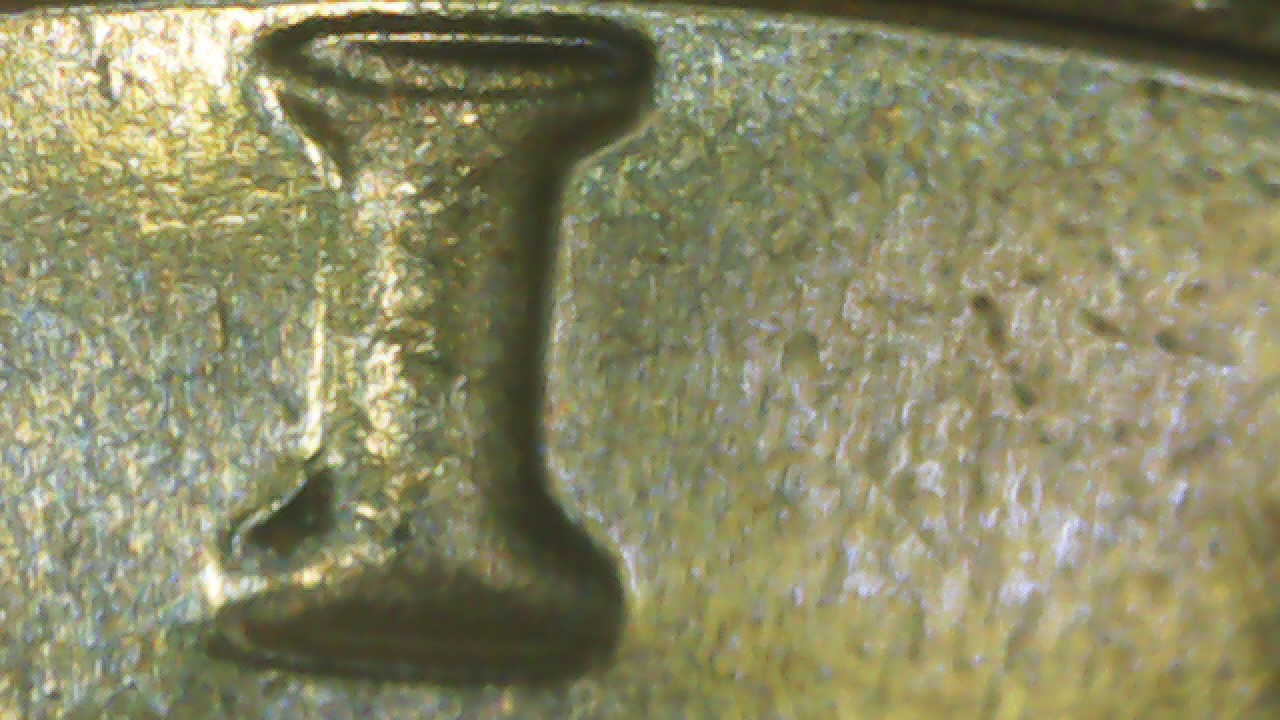
DDD is also seen first on the fields towards the closest edge on the coin. Machine Doubling can appear on both sides of the devices.
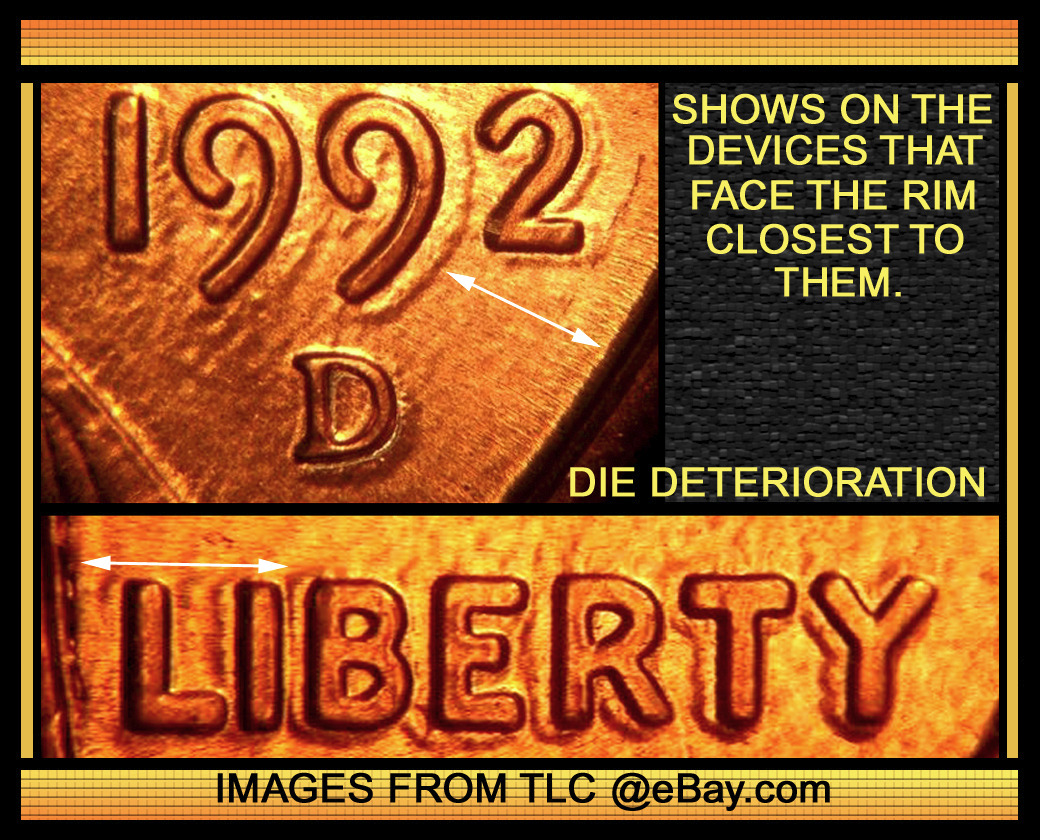
Note the fields are affected, but the devices are normal. Because of the lower profile on the design, it affect that area differently.
But again both affect the outside edges of devices.
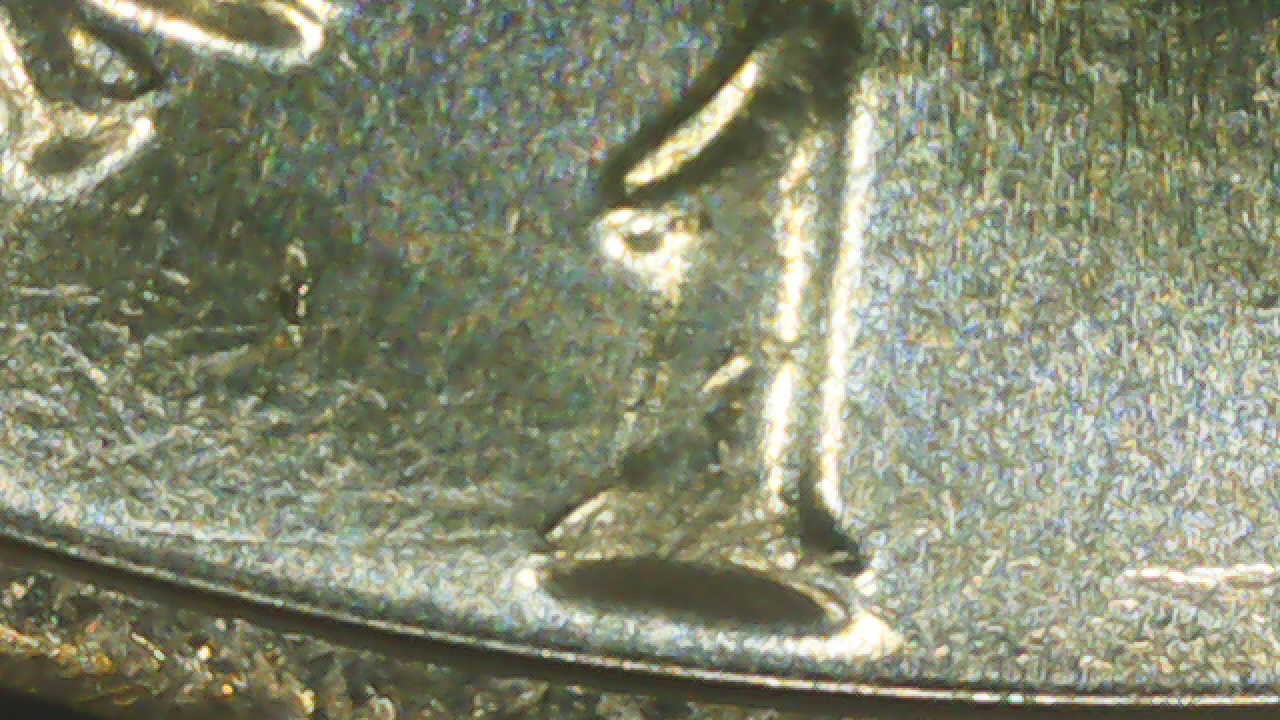
2. On DDD, that appears on the single squeeze coins, the second stage of the DDD, is Ridge Ring, that is seen most often on cents, rises on the coins (indicating it is lowering of that area on the dies.)

This is see on the outside edges of the devices more times on the Motto of cents. Again this is a die issue. When the dies are polished, then the centers of the devices tend to fade away off the dies.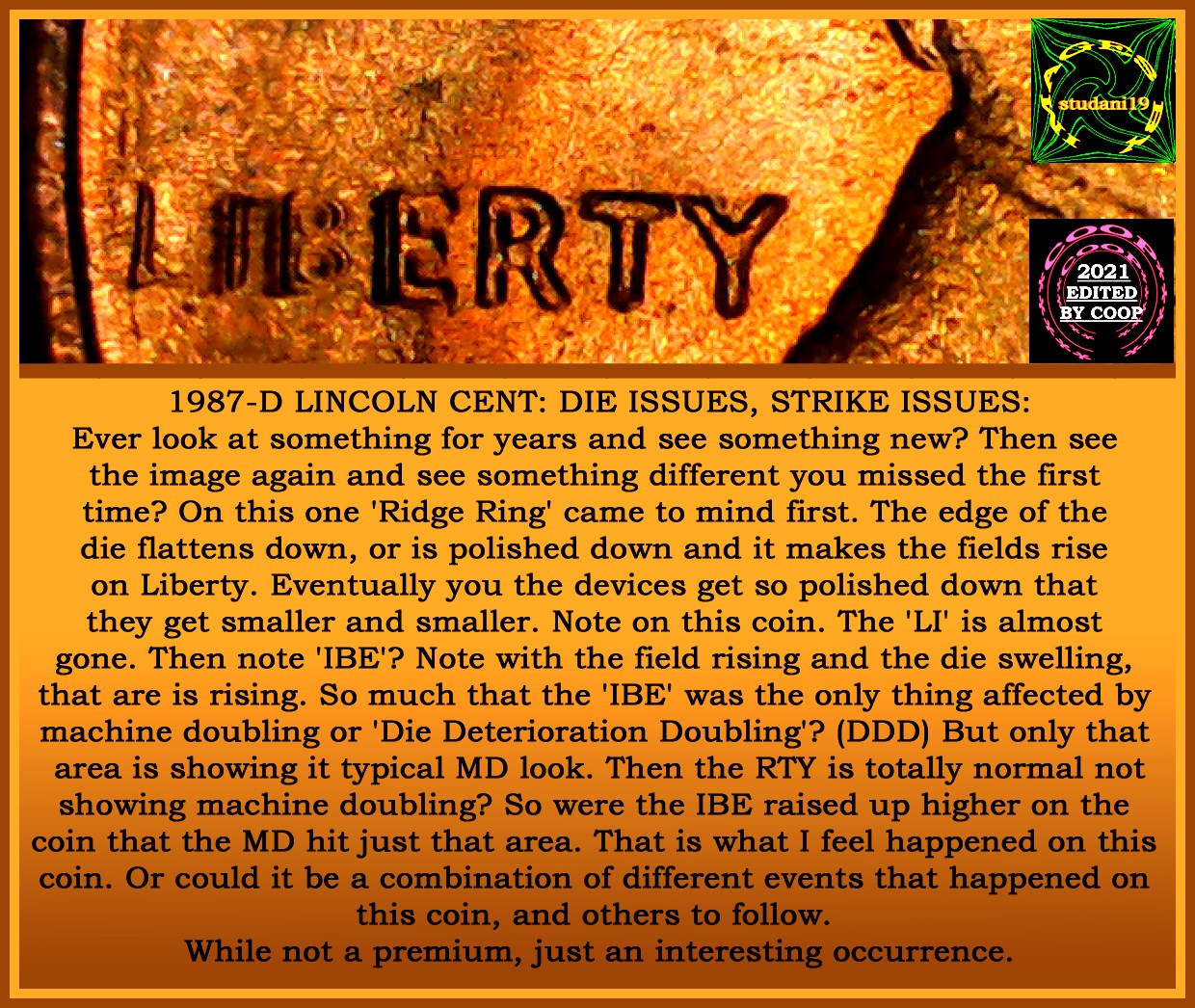
These are the two
non collectable things that happens on coins. You can have both affecting the coins struck by these dies.
But the
Machine Doubling is a striking issue, the die aging is a die event issue. These confuse new collectors.
But look at the center of the devices.
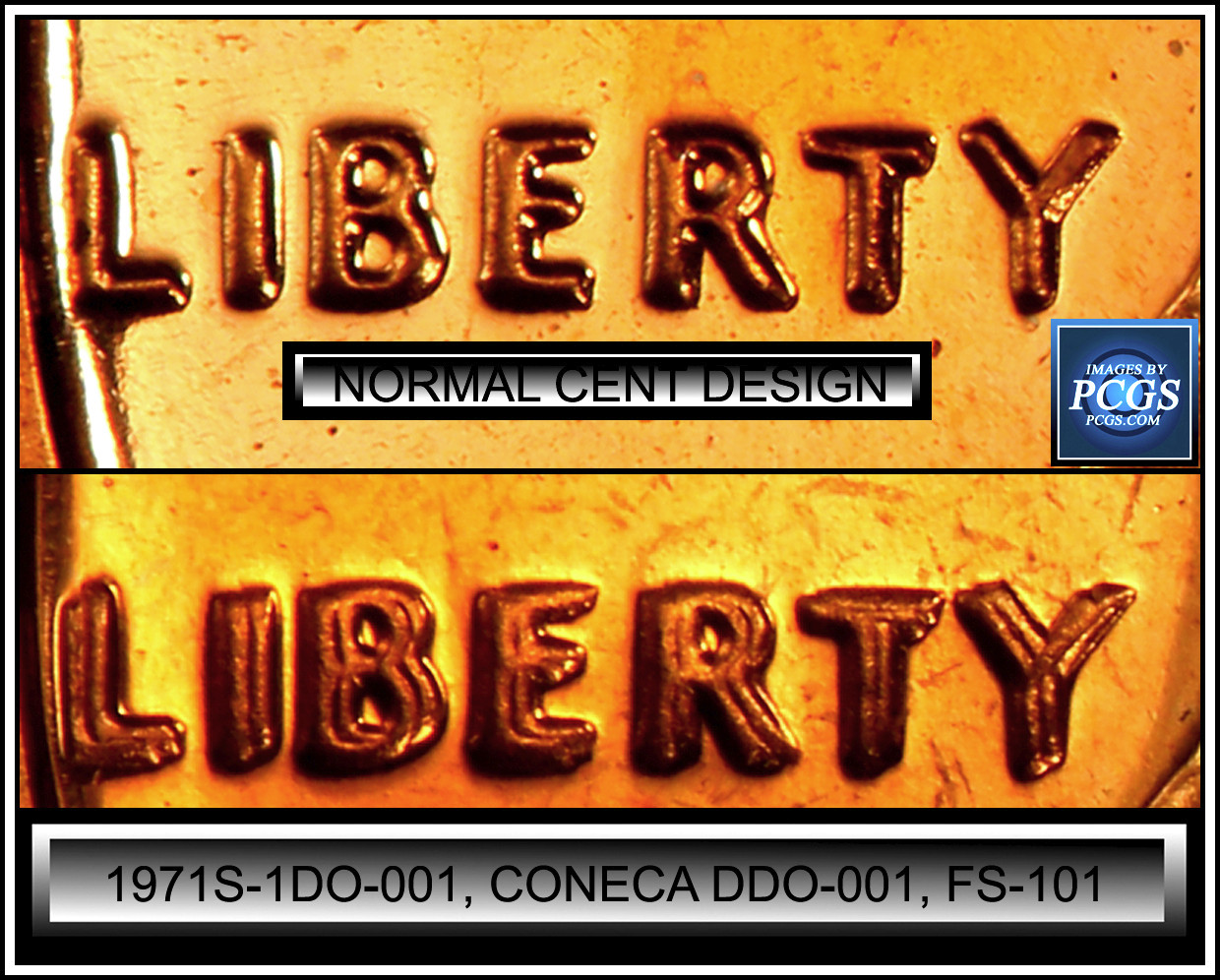
There should be a spread on the devices in the centers of the devices. Sometimes even nothing appears. On the single squeeze dies there are also two things to look for on the doubled dies.
1. In the centers of the devices is where you will see doubled dies first.
2. On some of these areas you will need to look up on the sites to spot the DDRs. They are not in the areas you are used to see a doubled die. The doubling is on the center devices.
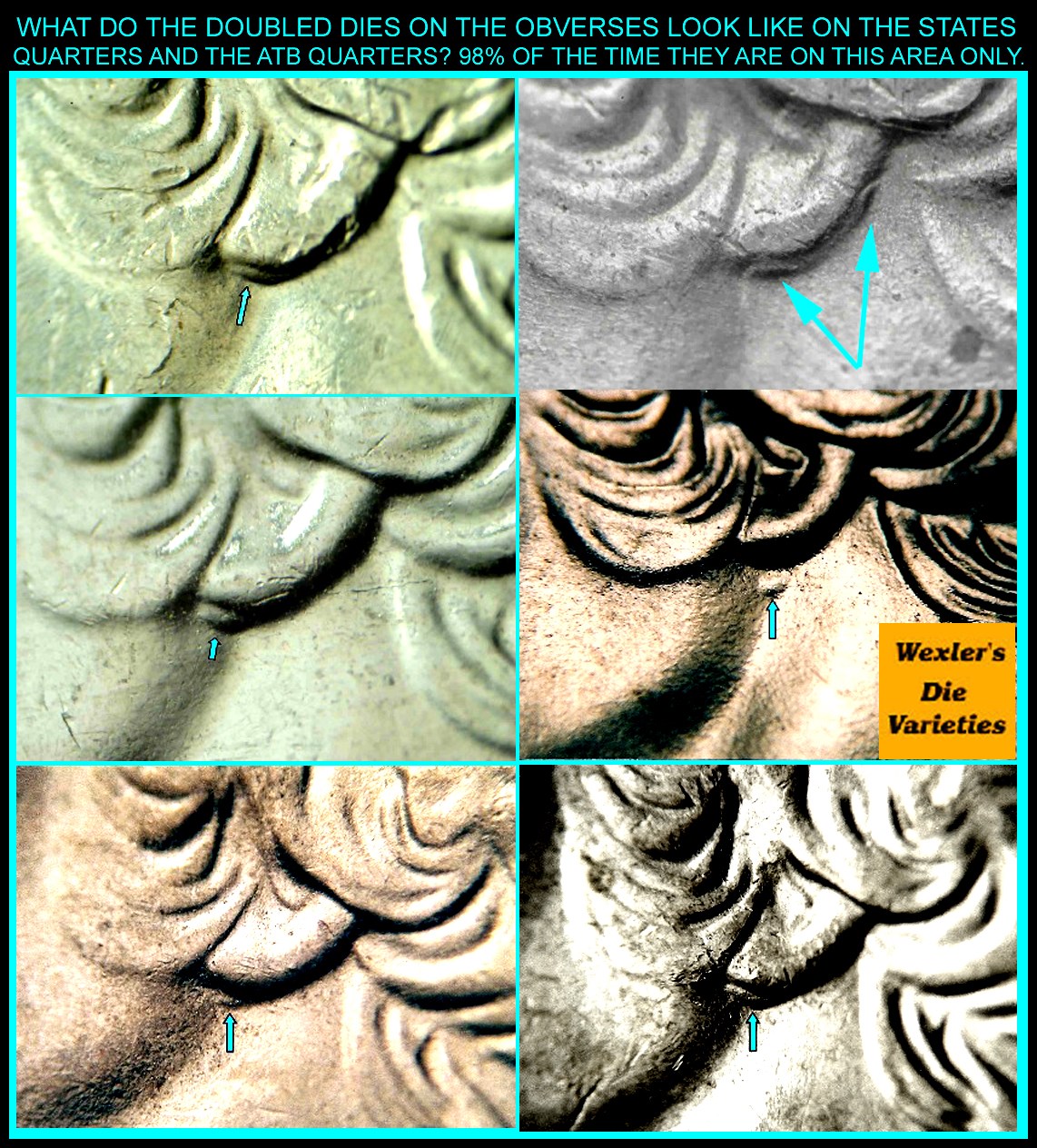

Quarters Obverse on the Earlobes. On the Motto areas the devices will be distorted in shape. On the quarters, they tend to look like oriental looking. Look at the lobes on the above image. Note how the doubling is raised above the design and copies the hub design?
3. The hub doubling on the reverse is most often not on the devices, but on the design in the centers. As I mentioned earlier, the sooner you start looking this up, you will stop searching in the wrong location for the wrong things. Read the site to
know what to look for as each design is different and designs with nothing in the center of designs, will never have a
DDR. Remember the target areas are more in the center of the designs:




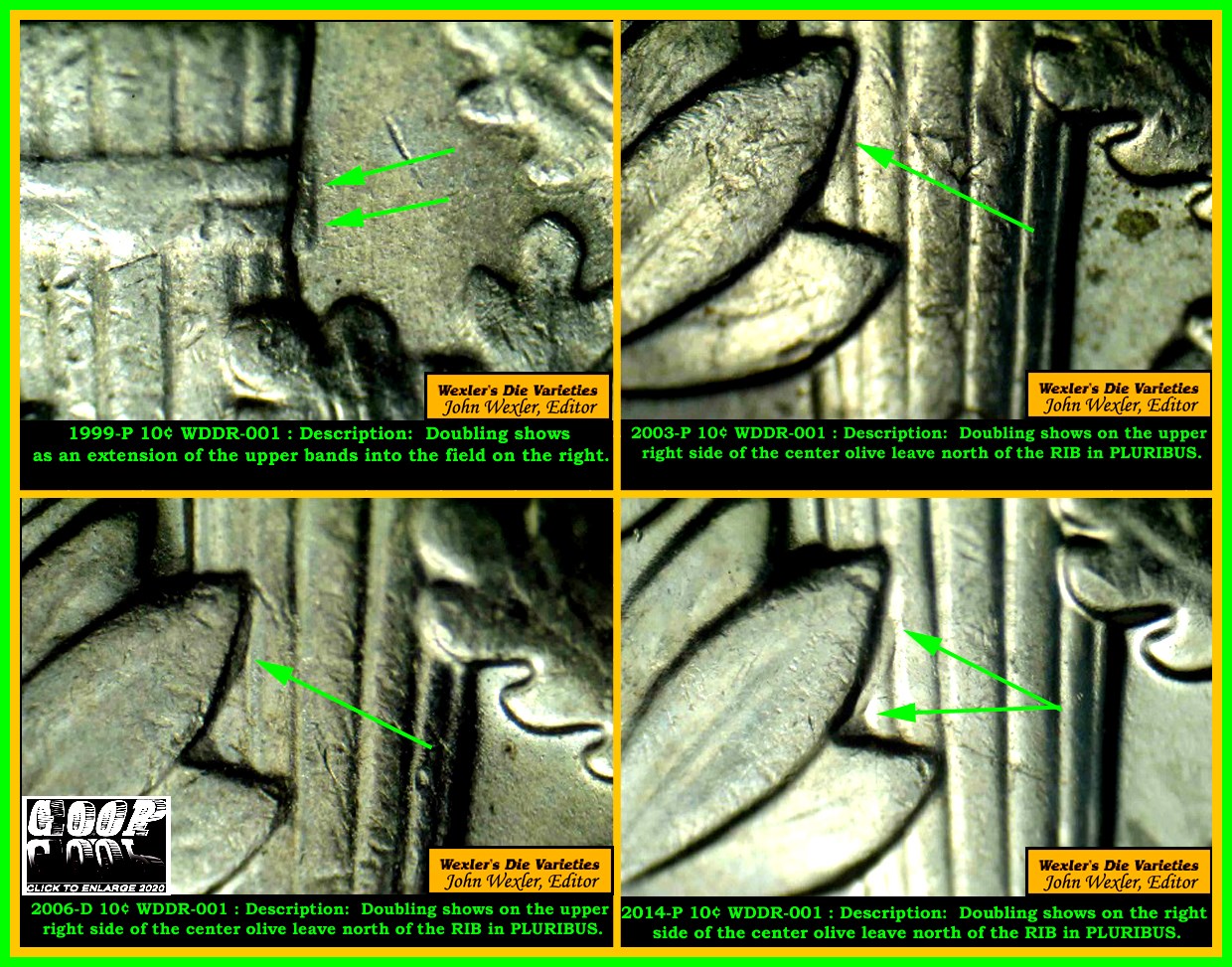
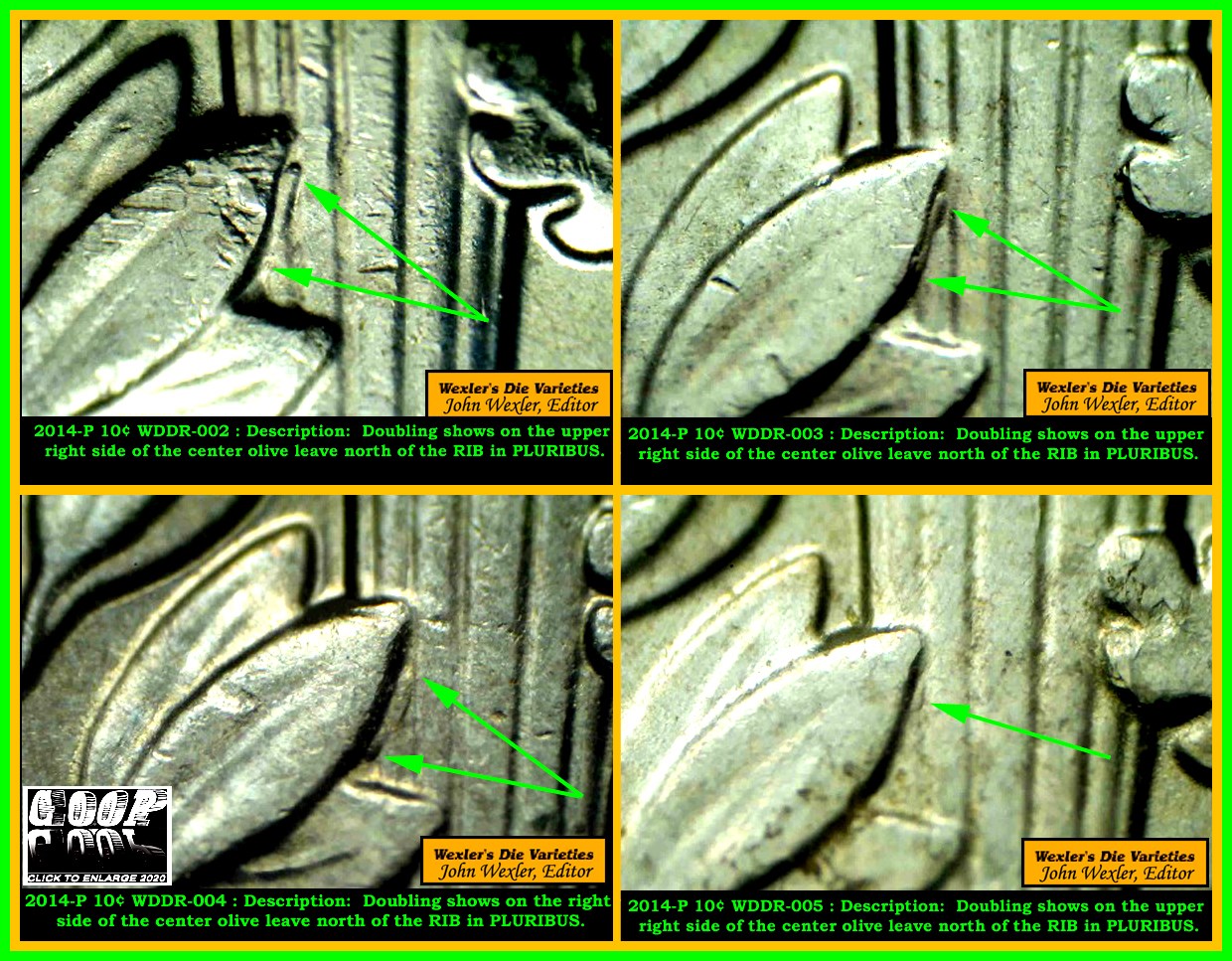
Examples of Dimes that have DDRs:
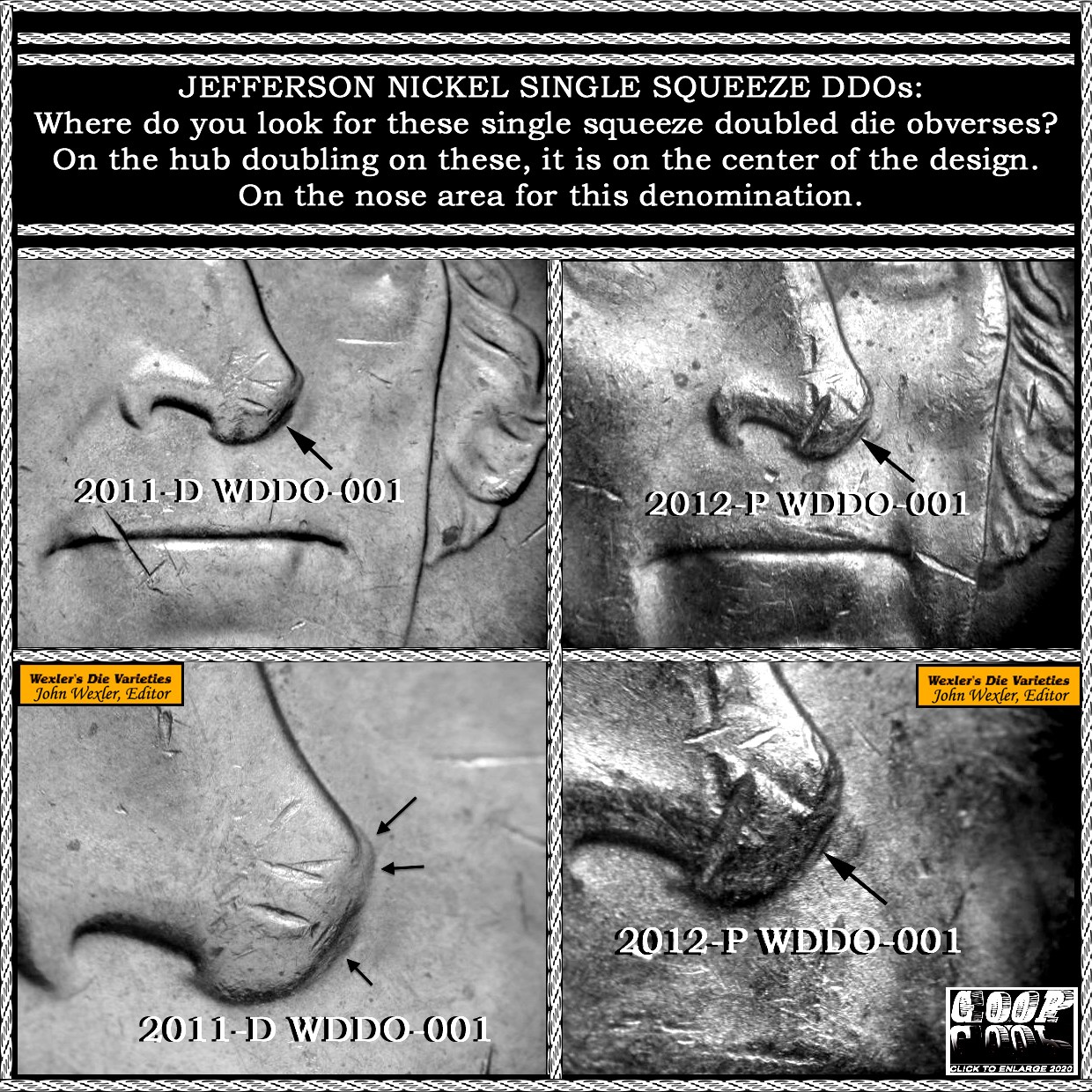
Area for nickels:
)).jpg)
So study the sites. know what to look for on different types of die setups. The ones of the past doubled dies are different than the new single squeeze dies since 1999-forward. Save your eyes. Know what to look for.









 Posted 01/23/2022 2:12 pm





