| Author |
 Replies: 45 / Views: 3,232 Replies: 45 / Views: 3,232 |
|
|
|
Pillar of the Community
 Canada
3328 Posts |
Would a buffing wheel also account for how thin the coin is? That's the main thing that has me stumped. Its so much thinner I imagine to Buff it this thin would take off much more of the design if no all of it. I'll still get the weight then, chances are more likely some kind of PMD over it being a planchet Error but I'd be kicking myself if I sent a possible error like an off planchet strike back into the wild lol. If anyone has a 1980 dime on hand and can compare it to of other 1980 dines for thickness please let me know if they are naturally thinner. Here is a better picture come thickness comparison. It a 1989 and a 1986... Apparently I have ever 1980s dimes on me except another 1980 lol. Coins and Canada has them all as the same thickness for these years but they get thing wrong all the time. Would a buffing wheel be able to make it so thin without eliminating the design? 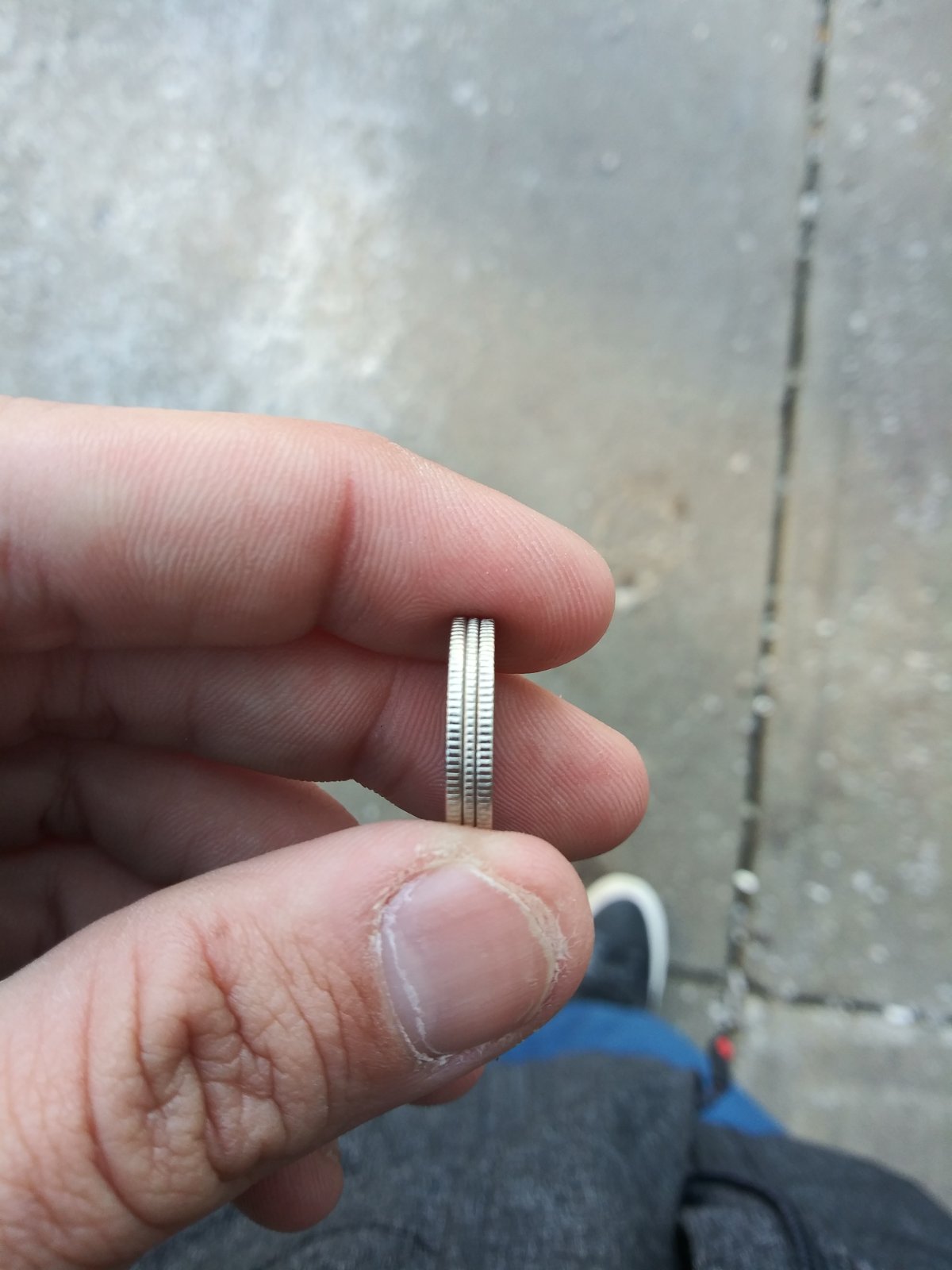 Edited by Wrekkdd
02/07/2022 12:09 pm
|
|
Pillar of the Community
 Canada
5660 Posts |
I've had coins caught in my own dryer that made the coin stationary on the inner edge behind the gasket/seal.. The spinning drum coin , with its own gasket, swipes the high point on the gasket/seal, where the coin is, once every revolution. That way, only one part of the coin normally comes in contact every revolution and it's barely hitting, maybe only clothing. Maybe the coin can move or rotate just a little to minutely affect more than just one section of the coin. The coin doesn't clink and clatter around; it just stationary
|
|
Bedrock of the Community
Canada
21931 Posts |
You might never find out exactly what caused it but there is nothing in the striking process that would cause it so by default it is PMD. A thin planchet would show weakness on both sides, not just one. |
|
Pillar of the Community
Canada
3328 Posts |
I just went through the Dryer Coin example thread on here, unfortunately all American coins but none seemed to match up with this. I'm not ruling anything out yet. Obviously I'd rather it turn out to be an error over PMD. With Dryer Coin s they are usually smaller and diameter and seem to get a really far rim, the reeding is also usually gone in many of them. For a dryer to reduce the thickness this much but barely cause wear to the major devices is a confusing thought. It seems it will remain a mystery For now and we will see what people say when I get the weight. Appreciate everyone for chiming in. |
|
Pillar of the Community
Canada
3328 Posts |
Quote:You might never find out exactly what caused it but there is nothing in the striking process that would cause it so by default it is PMD. A thin planchet would show weakness on both sides, not just one. There does appear to be weakness on the Queen's high points as well, namely the hair and middle of the crown but it could easily be chopped up to normal circulation wear. I'm still not quite convinced of PMD. I saw many examples of thin planchet strikes where the obverse seems to have less detail missing then the reverse, maybe it could be due to the fact that the obverse is usually the anvil die and due to gravity and metal flor the anvil die image fills in more then the hammer die image, but I'm just spit balling lol. Or maybe a misaligned die mixed with a thin planchet causing more pressure on one part of the hammer die forming slightly more defined devices on the left side of the reverse. I think I'm probably being pretty hopeful here though lol. I just know if nothing that count reduce the thickness of a coin by this much without causing much more drastic damage to the coin. |
|
Pillar of the Community
Canada
3328 Posts |
Is anyone aware of a way a coin can become so thin without causing major effects to the design on the whole coin? The thickness where I'm the most confused. I have seen acid coins that are thin but this obviously isn't an acid soaked coin. A buffing wheel was mentioned but I never got an answer if something like that could almost cut the thickness in half without dealing a massive amount of wear to the coin it self. I know probably just as much about fake errors as I do errors and in my mind it's impossible either way which is why I'm curiouser. Dryer Coin was Brough up as well but I don't see any of the tell tale signs for that and it wouldn't account for the loss of thickness while still maintaining the reeding and diameters. I'm still scratching my head on this. Lots of great info but JimmyD was the only person who gave any kind of definitive answer. I know there are many forms of PMD and many combinations of different errors can have different effects. But I'm in aware of any error that could cause this, same goes for PMD. I have never seen this sort of thing lol. Unless as I stated from the start if all 1980 dimes are much thinner then late 70,s and 80s dimes. I really enjoy a head scratcher and most everyone is leaning PMD. I know you might not always be able to find out what caused the damage but something like this... Idk... |
|
Pillar of the Community
Canada
5342 Posts |
Other than this coin raising some questions, you trying to hard to find the true cause of this coins wear, there are many human things that could create something similar. Even if PGCS would grade it as an error of some type, the grading fee would be worth more than the coin, PGCS would never grade this coin as an error. A few years ago a GTA jeweler was so talented in repairing holed key date coins they now are graded
|
|
Pillar of the Community
Canada
3328 Posts |
@john100, that is definitely believable about the whole filling expert. But I have never seen or heard of someone being able to reduce the thickness of a coin by 30% or more while maintaining luster and not destroying the full design of the coin. Lol maybe it's not me trying to hard to figure out what caused the wear but looking for a definitive answer. It is 100% possible for a coin to be thin and have almost the full design stamped on the coin. I have also seen examples of coins with a weak strike and ones with a thin planchet where the weakness in the devices was not equal from obverse to reverse. As for an off planchet strike that would be a whole different story. Is this an error? I have no idea? Is it PMD? Again no idea. I'm well versed in error coins at this point and know many things are possible and could be chalked up to PMD fairly easily. When something falls into a grey area do you just give up and call it damage? When it comes to the question of whats possible as an error I there are errors out there that are not obvious. If this coin was regular thickness and had the same issues on the reverse I would not be questioning this. But show me an example of a coin that is half as thick as a normal coin from that year with a similar effect. I would much rather dig to the bottom of a question rather then just sum it up to damage because that's to easy lol. I'm not saying this is an error but would you just throw a coin away being unsure if it was an error or not? Iv had several opinions givin but none explain the thickness vs the lack of wear in the whole coin itself. Do I believe this is an error coin? No clue.... Do I believe it's PMD? More plausible but still I have no clue. Is it possible to be an error? Tell me why not. Is it definitely PMD? Explain why. Can one side of a coin have uneven distribution of metal during the strike with a weak strike or a thin planchet? Most definately. The anvil die is under the planchet and it's much easier for metal to flow downwards to fill the die then it would be to flow up into the space left open on the hammer die. As far as I know the anvil die is usually the obverse and the hammer is usually the reverse. So for the obverse to be almost fully struck but show in ever weakness on the reverse is definitely possible I'd think. I have looked into many different PMD coins like acids dipped or soaked in one side, including things like battery acid. I have looked at Dryer Coins and many other PMD examples. Nothing adds up with this coin lol. Which is why I'm no so quick to just right it off as PMD. Again just to be clear I'm not saying it is an error or it isn't PMD, I'm just saying what's your logic behind your opinions. |
|
Pillar of the Community
Canada
3328 Posts |
Just to add there is a difference between trying to figure out what caused the wear or weakness to the design on a coin and trying to figure out how it's possible to have lack of wear yet be so much thinner then a normal coin. If you have a 1980 please take a picture of the thickness of the 1980 vs a 1979 or a 1986 etc. This coin is very noticeably thinner then the other years, maybe this is normal for 1980 dimes and if so this while thread was just a waste of time and I apologize as I couldn't find a 1980 at work or this morning before work.
If it's supposed the be the same thickness that's a whole other story as I have never seen a coin. Reduced by 30% or more in thickness without having major effects to the coin. It self and the devices.
Edited by Wrekkdd
02/07/2022 5:54 pm
|
|
Pillar of the Community
Canada
5342 Posts |
We all just gave you examples, fountain coins at malls, restaurants, were emptied once a year or less and donated to charities would hire an outfit to clean and rolled the coins for deposit, most of these coins are all nasty on one side, anything logical could have happened to this coin, a thin planchet could be the case but most likely aided wear, almost everyone here leans toward PMD |
|
Pillar of the Community
Canada
3328 Posts |
Leaning is leaning lol, as I said I'm not dismissing opinions. But nothing that has been described or anything I have looked up can account for a coin being this much thinner then a normal coin if the same year yet lacks massive wear and the coin still has luster.
|
|
Pillar of the Community
Canada
3328 Posts |
I grabbed a new scale and idk if it's wrong but weight is not off.
|
|
Pillar of the Community
Canada
3328 Posts |
Tested some other coins and the scale seem correct. So even with the wear and coin looking much thinner then a regular coin the weigh is coming out between 2.05-2.08 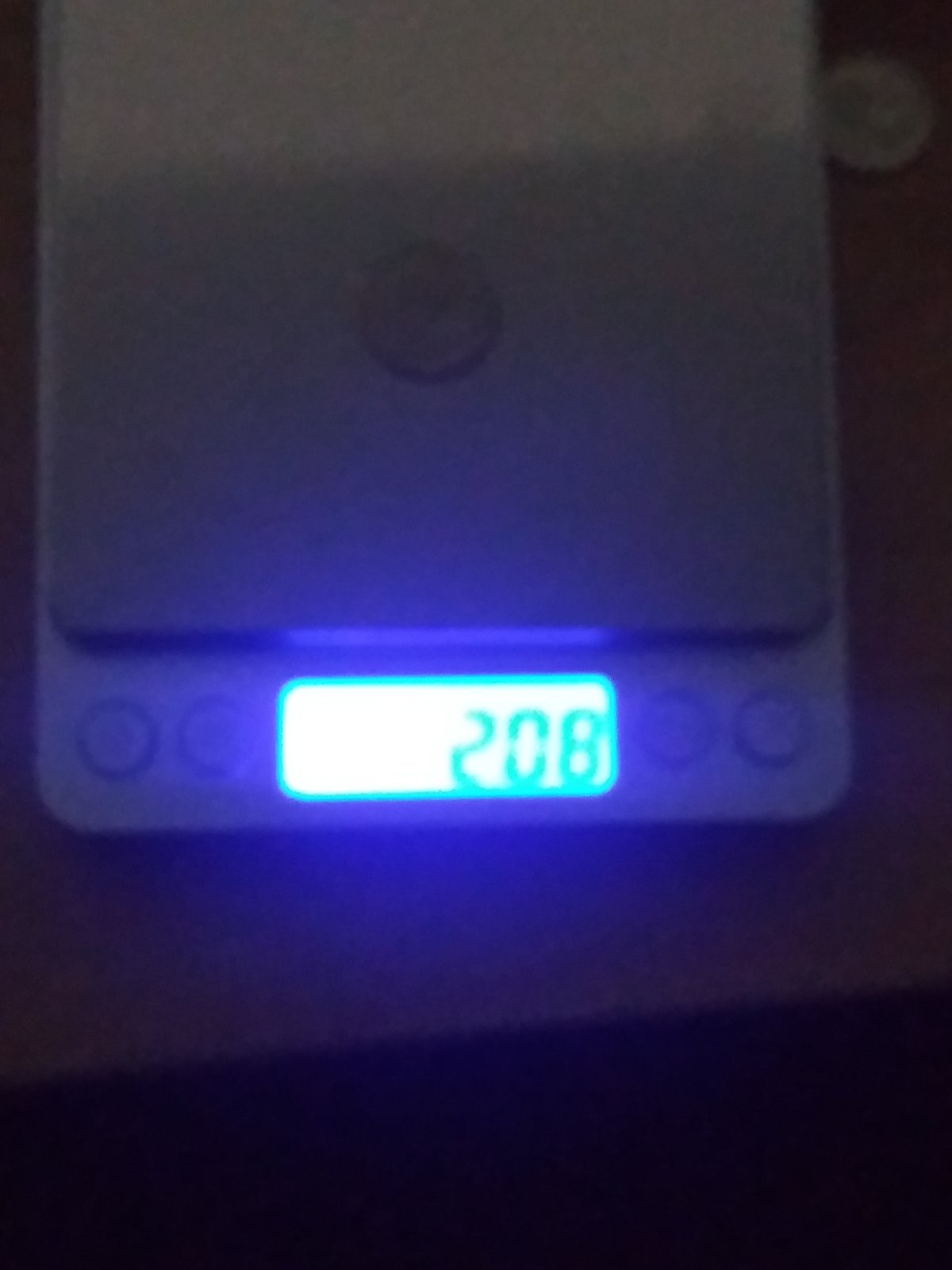 Now I'm more confused then I was before by this and all responses. Any input on thickness with the obviouse lack of detail yet the weight seems on spot? |
|
Valued Member
Canada
342 Posts |
You don't listen to what people are telling you, now your saying your scale is not working correctly. Give it a break. It's PMD |
|
Pillar of the Community
Canada
3328 Posts |
Quote:
You don't listen to what people are telling you, now your saying your scale is not working correctly. Give it a break. It's PMD Please don't talk to me as if I'm not educated when it comes to errors or possible errors. This dime has been shown as much thinner then a dime from this year. The wear/weakness is evident, and the weight is normal. It's a new scale so ya I had to test it out after getting a regular weight from the dime but my other coins weighed exactly what they should as well(give or take .002. that's all I'll say to your ignorant comment. If you don't want to read this topic simply stay away from it. Every single person on this thread has commented on old posts of mine and sometimes they are right also some times they were wrong. Most peoples posts were opinions and not definitive conclusions. The fact are**** the dime is much thinner then a normal one, the weight is around normal give or take .002g, the devices show clear weakness on some parts on the reverse as well as the rim being not fully formed for the most part, explain this to me as PMD a friend of mine showed me a 1980 and 1986 dime in calipers and they were the same thickness. So from the pictures alone it's obviously the dime I posted is much thinner then normal. Edited by Wrekkdd
02/07/2022 7:57 pm
|
| |
Replies: 45 / Views: 3,232 |





 First Page


 Posted 02/07/2022 12:28 pm


