| Author |
 Replies: 18 / Views: 2,010 Replies: 18 / Views: 2,010 |
|
Pillar of the Community
United States
6196 Posts |
So, a little help here. This is in an ANACS slab as "Lincoln split after strike" weight 0.78g. So it's pretty thin, but if it split after the strike shouldn't it be a little more rough on the split side? Seems to me more like it was struck after split through something. Either a blank planchet making is uniface, or a die cap. Doesn't really look like a die cap strike, but what is it about that memorial visible on the obverse? Seems like there is a slightly tilted memorial as well as the normal one that is just showing through from the reverse as the coin is so thin. Rambling. Ramble on. Sing my song. Remind self to stop listening to so much Led Zepplin. Anyway, I have three coins in ANACS slabs that I am thinking of cracking out as I just don't think this type of error looks very good in their slabs, which cover part of the rim. Comments on this one welcome. No date Lincoln Memorial cent mint error - split planchet 0.78g 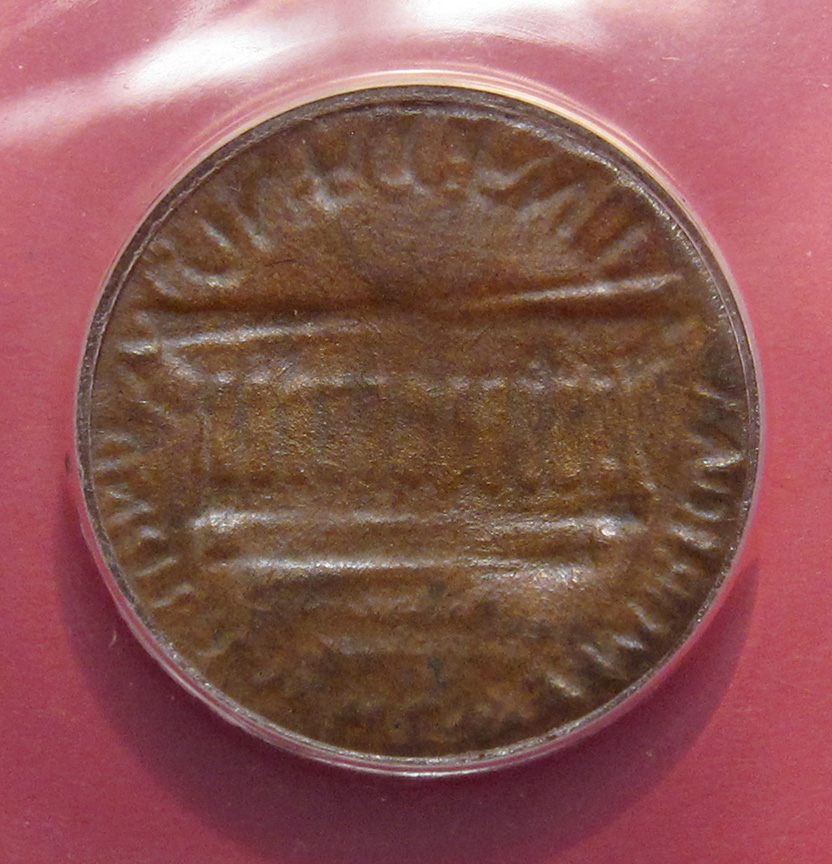 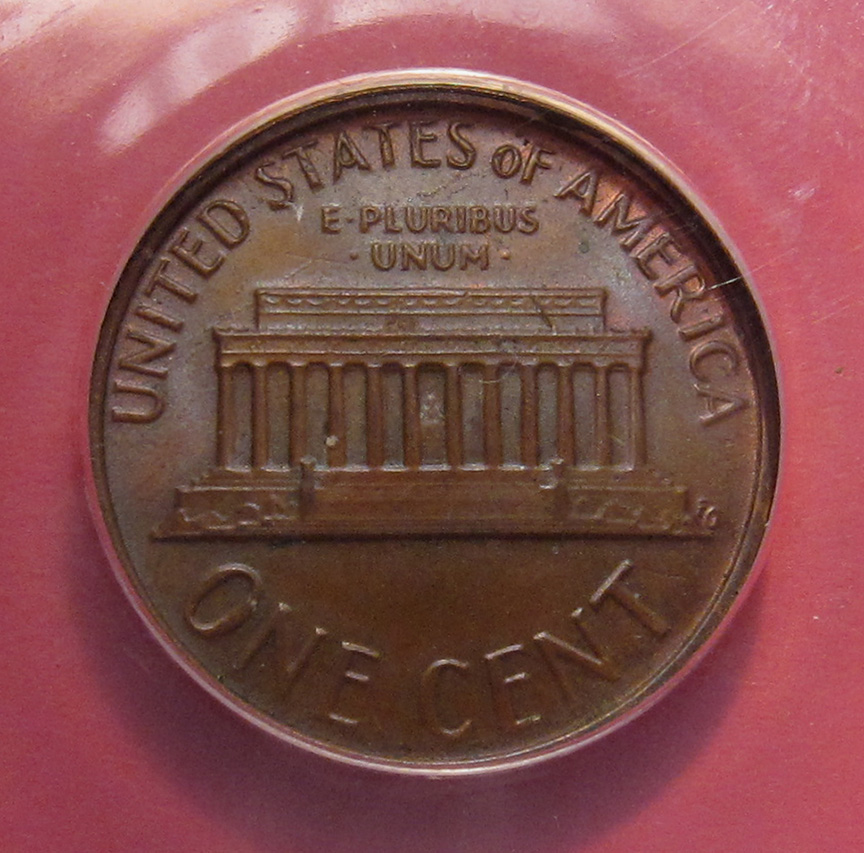 |
|
|
|
Bedrock of the Community
United States
94367 Posts |
Knockout!  |
|
Pillar of the Community
Canada
6244 Posts |
Trop I like what you pic-up. I see that on your coin the letters are mirroring. Here it is your photo: Tell me if my old eye start to play me jokes. Silvio 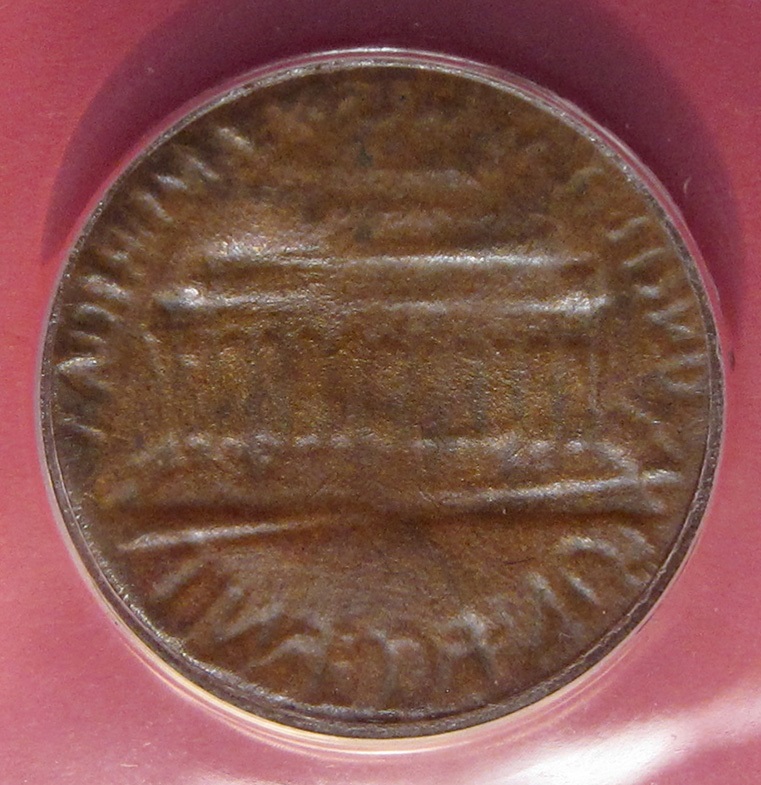 Edited by silviosi
03/14/2022 10:49 pm
|
|
Pillar of the Community
 United States
6196 Posts |
Yes, the letters are mirrored, so to speak, since the lettering is just the actual raised lettering showing through on the thin planchet as incuse, reversed lettering.
More interesting is that rotated memorial image. I don't know how that got there.
|
|
Pillar of the Community
Canada
6244 Posts |
You know, give me production Mint process analyze, or metal of the coins or varieties of the reverses (varieties design) and I can explain.
I do not see the marks of an horizontal split planchet. Maybe in hand is different, but an split planchet show the structural geometry.
|
|
Pillar of the Community
United States
2376 Posts |
Morning TB !
My Thoughts are this coin and the other similar coin that you posted were planchets that split before the strike. Both examples that you have, entered their respective striking chambers with the split side facing the reverse die and both had an additional unstruck planchet in the chamber with them to separate them from the obverse die. After the strike , the other example that you posted left it's striking chamber but the coin in this post remained and rotated slightly, and then was struck again.
The coin in this post might be labeled , if the above is true, uniface double struck on a split before strike planchet.
Edited by stoneman227
03/15/2022 07:14 am
|
|
Pillar of the Community
 United States
5883 Posts |
I agree with Stoneman about the split before the strike (by a capped die). The capped die produces enough striking pressure for the rev. of the split planchet to strike up fully. I can't see any indication the reverse of your coin is double struck though. The double image of the memorial building on the obv. makes me think the die cap may have struck the rev. die twice (and rotated slightly between strikes) without a planchet in the chamber. Then the die cap struck your split planchet. IMHO, When the double-struck die cap struck your split planchet it produced the doubled and rotated memorial building. Quote:
Remind self to stop listening to so much Led Zepplin. Uh, ... no such thing! Quote:
I do not see the marks of an horizontal split planchet... Those marks were eliminated by the die cap filling the void created by the split planchet. Words of encouragement are one of the major food groups.
We need to consume them regularly to thrive and grow.
Edited by Petespockets55
03/15/2022 7:52 pm
|
|
Moderator
United States
195559 Posts |
Another nice example! |
|
Bedrock of the Community
United States
62064 Posts |
To me it looks like a post strike split off of that area of the coin. Making me think of a cold roll piece of lamination larger than the planchet, that was thin on the rolled stock. After cut into a blank, the setup process may have altered the planchet, making it weaker. then after the strike it split off into two pieces. The times when we see the deeper lines on a split off may be because of the a piece cold roll that had thicker areas on the rolled on material. this leaving a thicker thinner look on the split area: 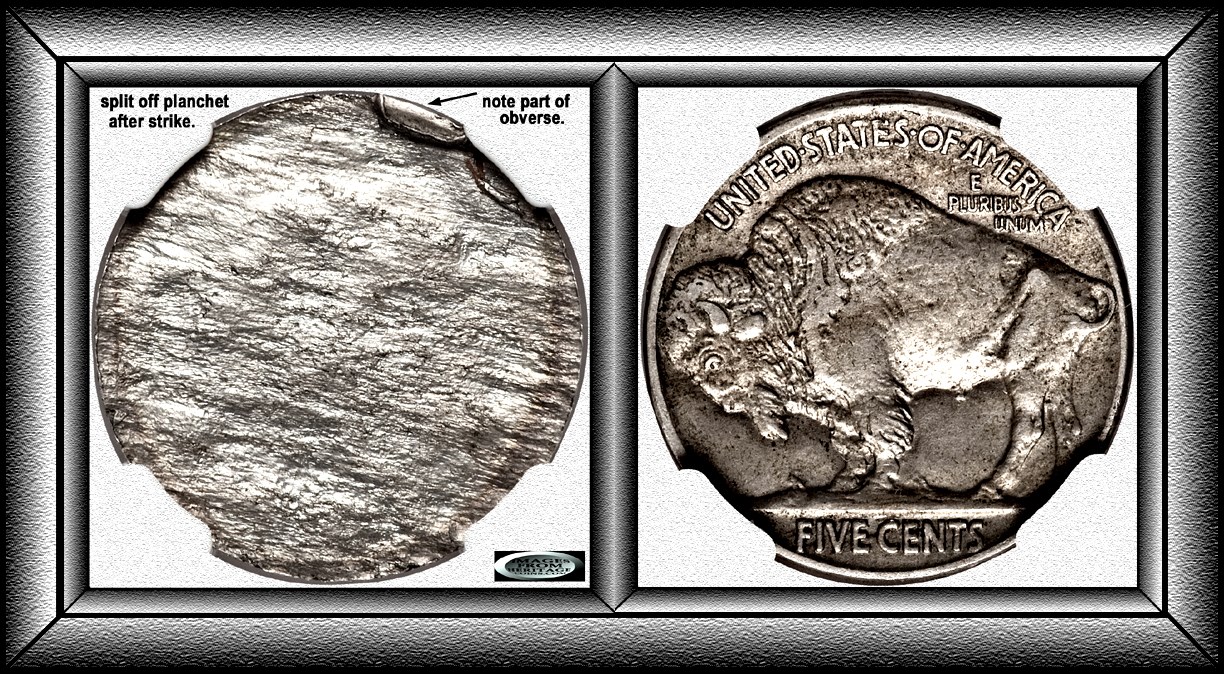 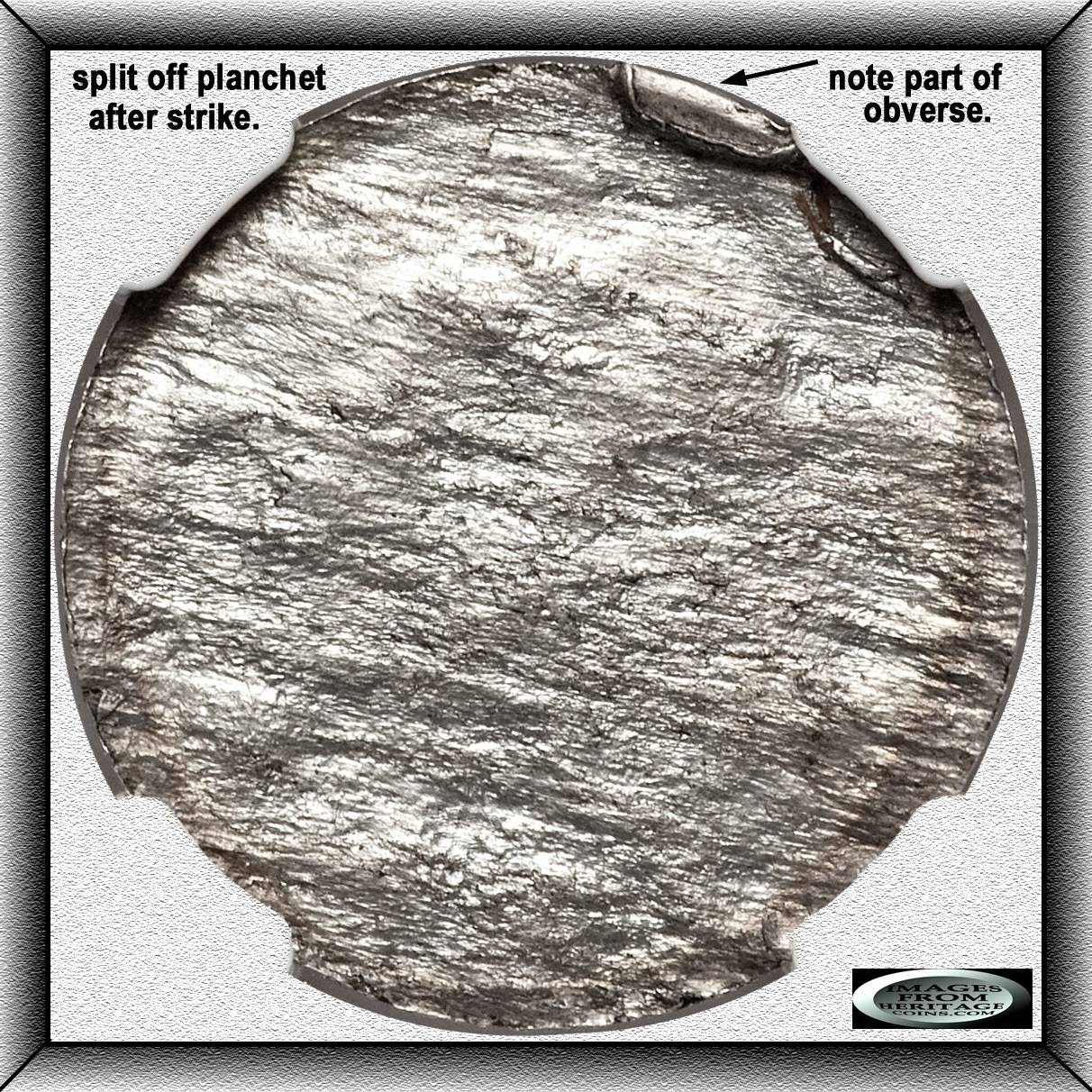 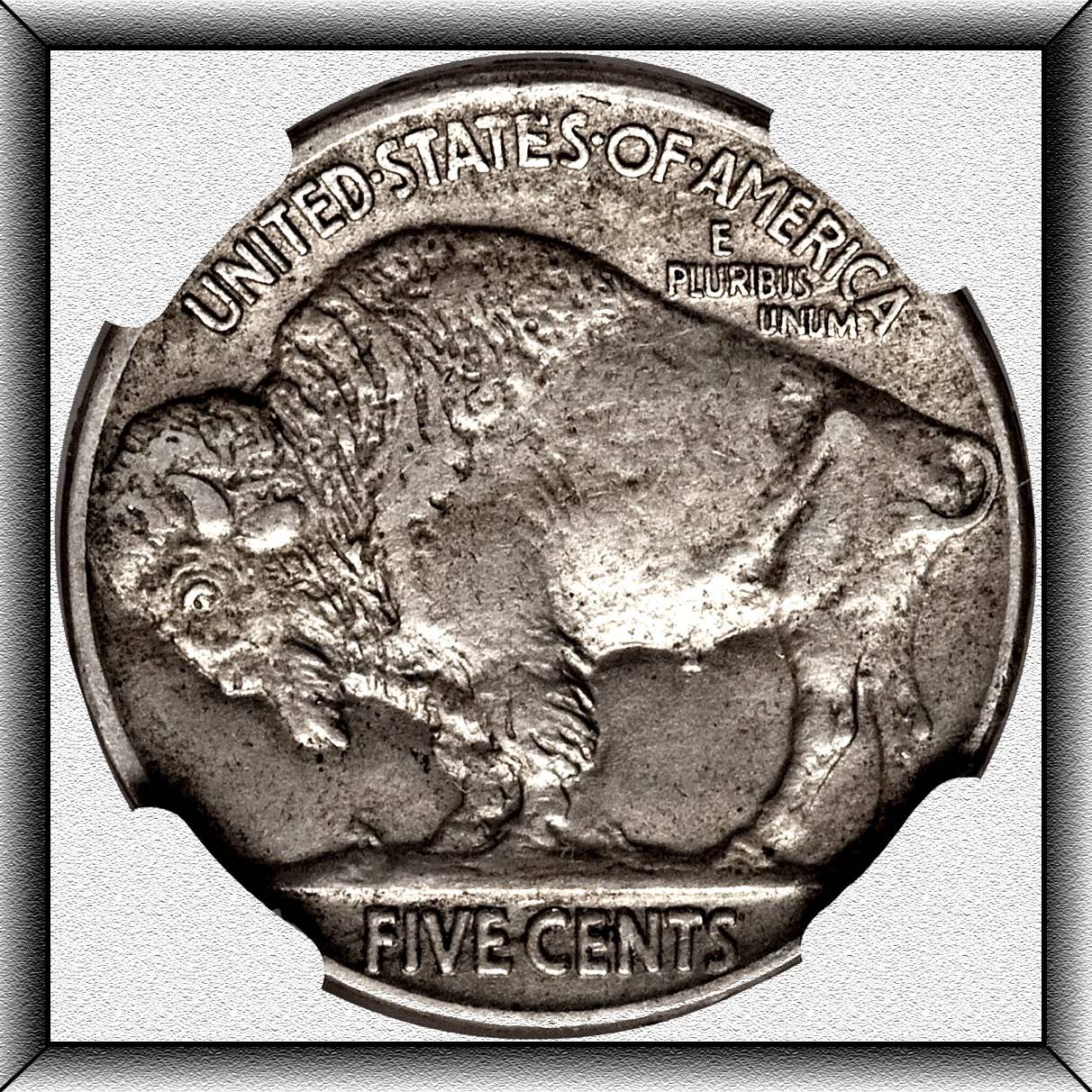 So depending on thickness of the attached cold roll of material added to the hot rolled stock, the cold material would not be attached to the stock material. Seeing your coin help me to see why a split planchet would appear and why they would look differently. Funny how seeing things on images, helps to put thing into place and answer questions. Now if I could figure out why the base line looks angled, then I would be happy figuring this out. The reverse is normal. Maybe that area is the last holding ground before the split? When the split happened, then that area was altered, making the two pieces to split off on their separate journeys? Edited by coop
03/15/2022 2:28 pm
|
|
Moderator
United States
106822 Posts |
Fine coin TB, One day I would love to see how you store or display your collection.
|
|
Pillar of the Community
United States
2752 Posts |
The diagnosis would depend on whether both mirror-image Memorial designs are incuse or one is raised. Get back to me on this and I'll tell you what happened.
Error coin writer and researcher.
|
|
Pillar of the Community
Canada
6244 Posts |
Excellent photo COOP for education of what mean the horizontal split planchet (roll) The texture it is specific of and maybe you can have an photo also of exfoliation to put near and not to be confounded by collectors.
I am curios of the final diagnostic from Mike.
PS. COOP will be nice if you have also for Cooper (Cu) and Nickel (Ni) parallel photos.
Edited by silviosi
03/15/2022 6:26 pm
|
|
Bedrock of the Community
United States
10635 Posts |
Love the splits! Nice Bats! Yeah,I'd rather see it in a PCGS slab too. Very nice, Bats! |
|
Pillar of the Community
United States
6196 Posts |
Thanks for all the super comments! Long day and just getting to sit down, and first thing was to figure out that I just can not seem to photograph the rotation correctly. So, to answer Mike's question, the image that is upright in my images is incuse, while the image that is rotated is raised. But for some reason, no matter how I light the thing it looks the opposite in the image so I'm just going to say it since I can't show it. One is incuse, one is raised.
Thanks Mike, really appreciate your help!
|
|
Pillar of the Community
United States
2752 Posts |
Since one image is raised, your coin began as a split or rolled-thin planchet that was subjected to two in-collar uniface strikes against two different planchets. Your coin rotated slightly between the two strikes.
Error coin writer and researcher.
|
|
Pillar of the Community
United States
6196 Posts |
All right! I'm finally understanding the coin. Knowing what to think about and look for I found several locations on the reverse where the first strike still shows through just a bit. The C and vertical bar of the E are maybe the clearest, although the lower edge of the memorial is pretty strong in places as well and can be seen in the original photo coming off the top right of the cross of the T in CENT. So label might be a mouthful, something like: Split planchet double struck rotated in collar both strikes uniface Thanks again! 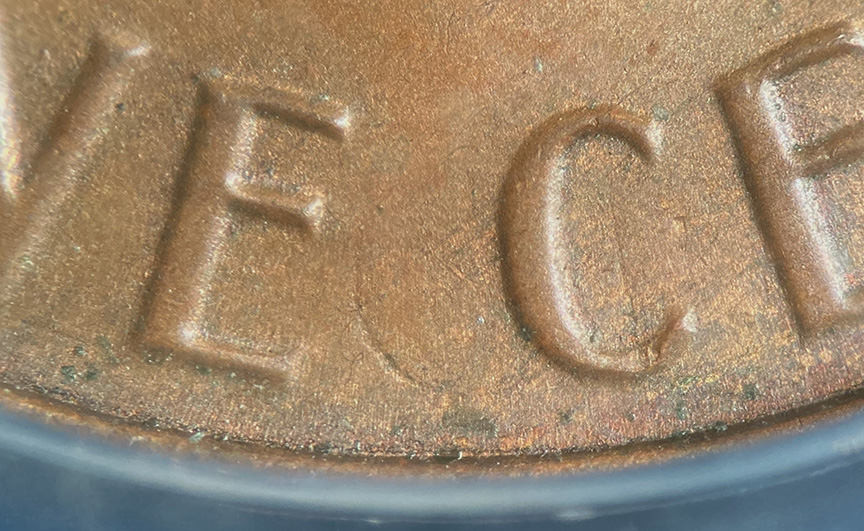 |
| |
Replies: 18 / Views: 2,010 |










 Posted 03/14/2022 10:47 pm


