| Author |
 Replies: 65 / Views: 4,972 Replies: 65 / Views: 4,972 |
|
Pillar of the Community
United States
6195 Posts |
This one came up on ebay and I just went back and forth about was it an error, or even could it be an error. It went for under $20 so I figured it was worth that much to find out. The coin is not bent, does not appear to be out of round, and weighs 4.97g. I am unfamiliar with what a wraparound struck through might look like or even how it might happen, but just maybe there is some little conveyor thingy in the machinery that got loose and ended up wrapped around the planchet. Or, someone squeezed the thing in a way to carefully have no raised material around the incuse area. The fact the trench ends at about the same spot on both sides furthers the theory of a tool. So please feel free to comment on this one. Hopefully it can get sorted out as either a fabulous error or an attractive bit of damage. 2006-D Jefferson nickel - struck through or PMD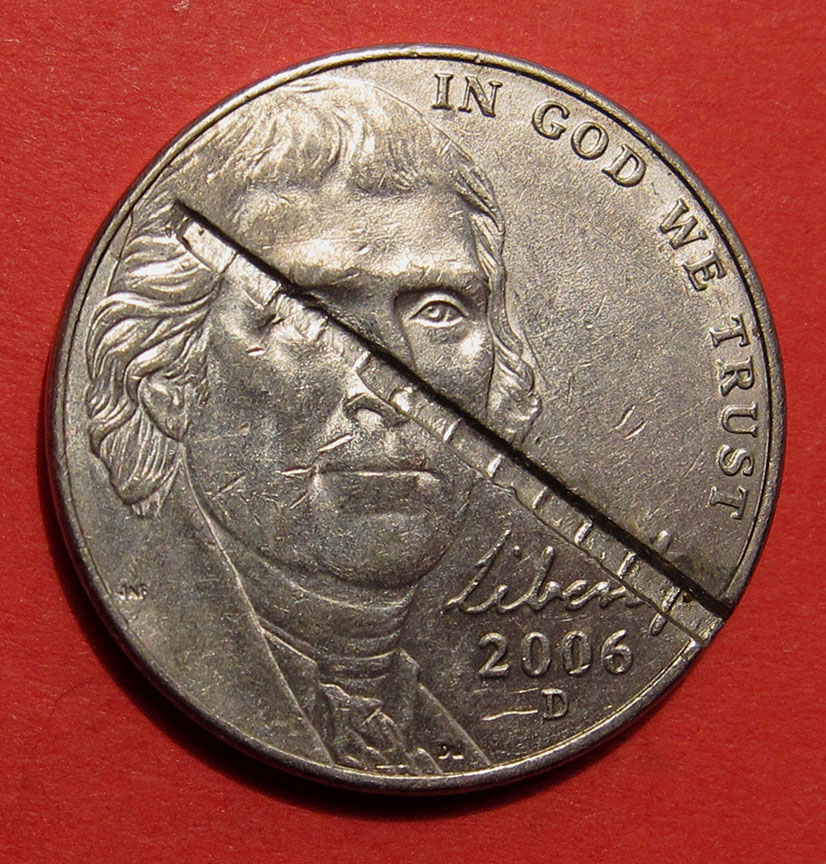 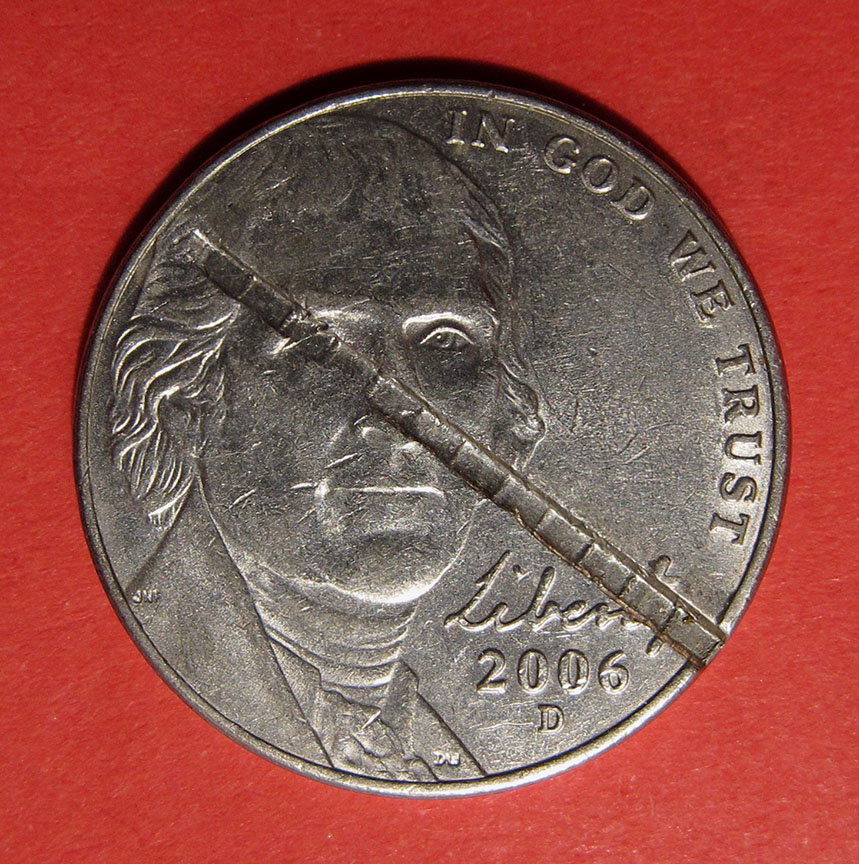 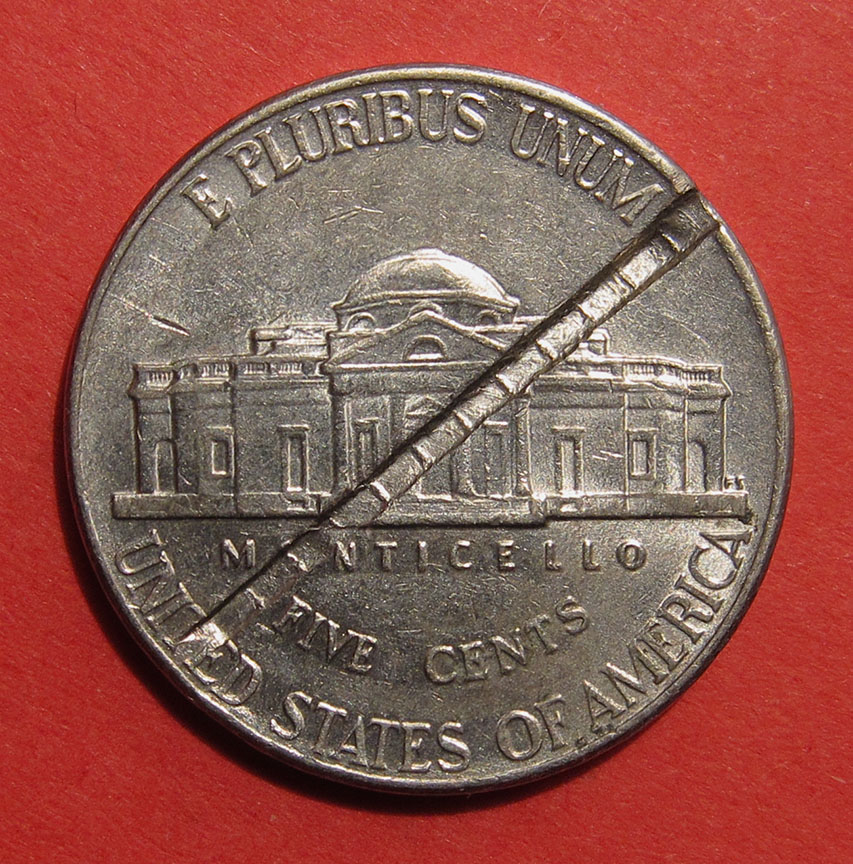 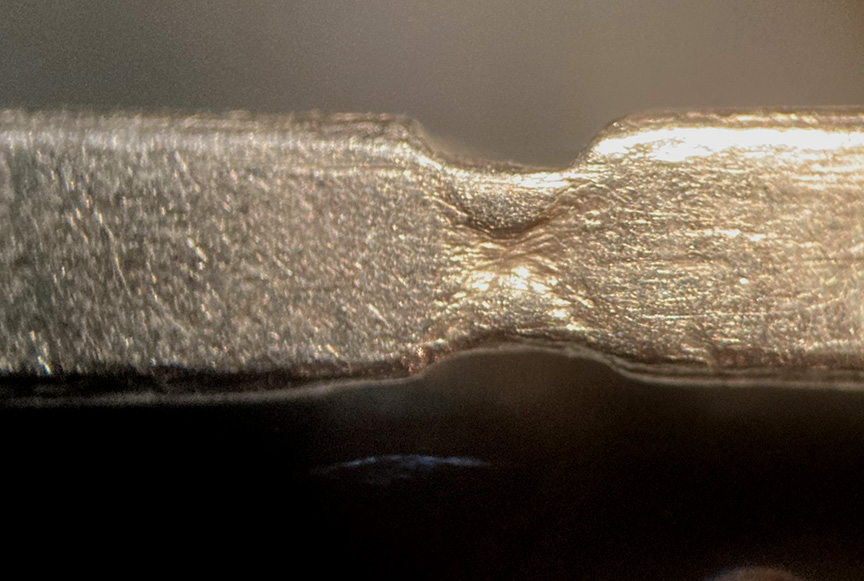 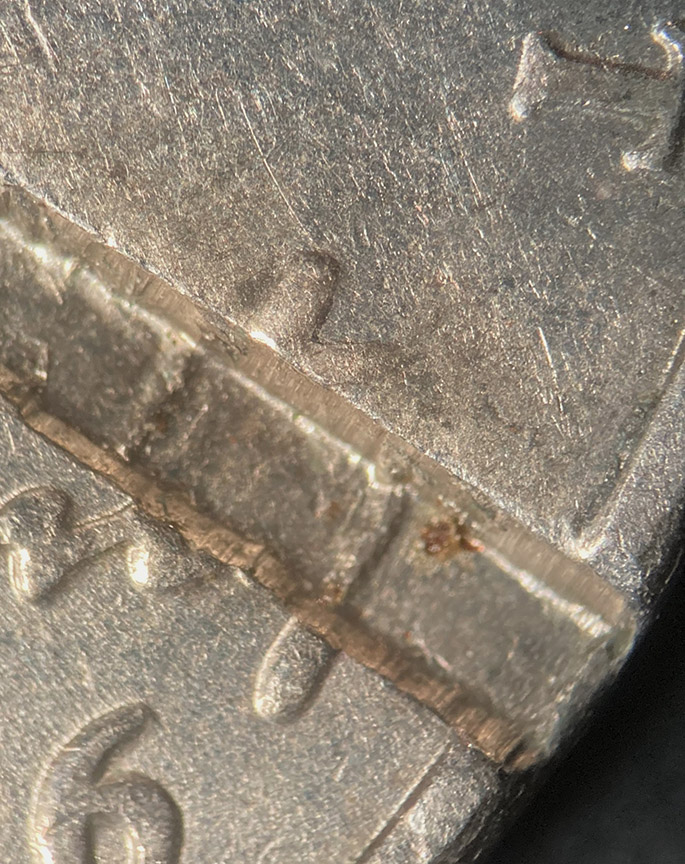 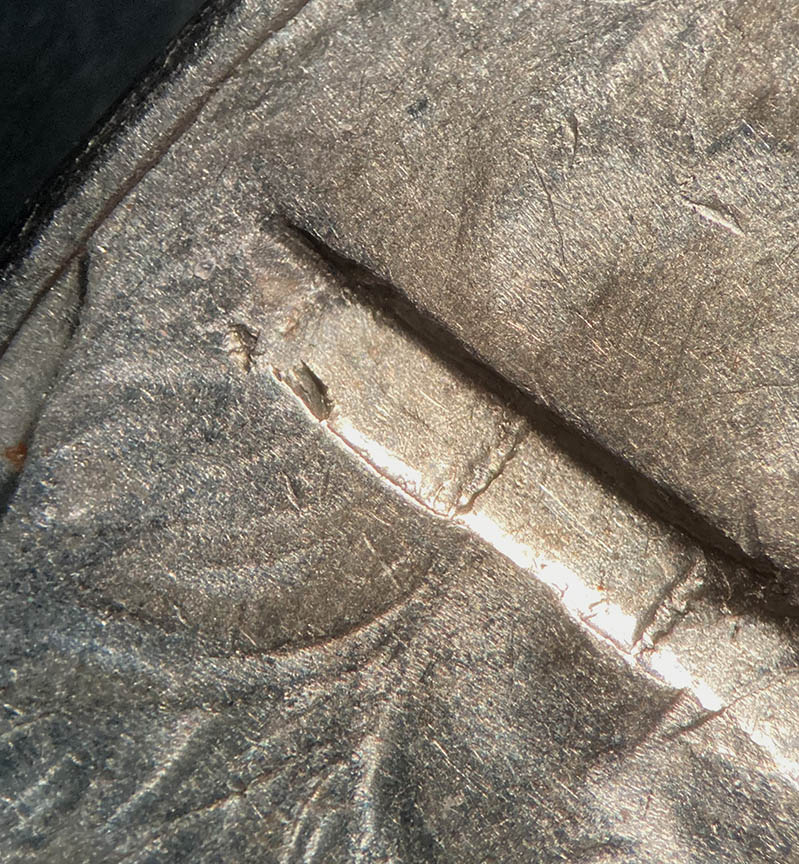 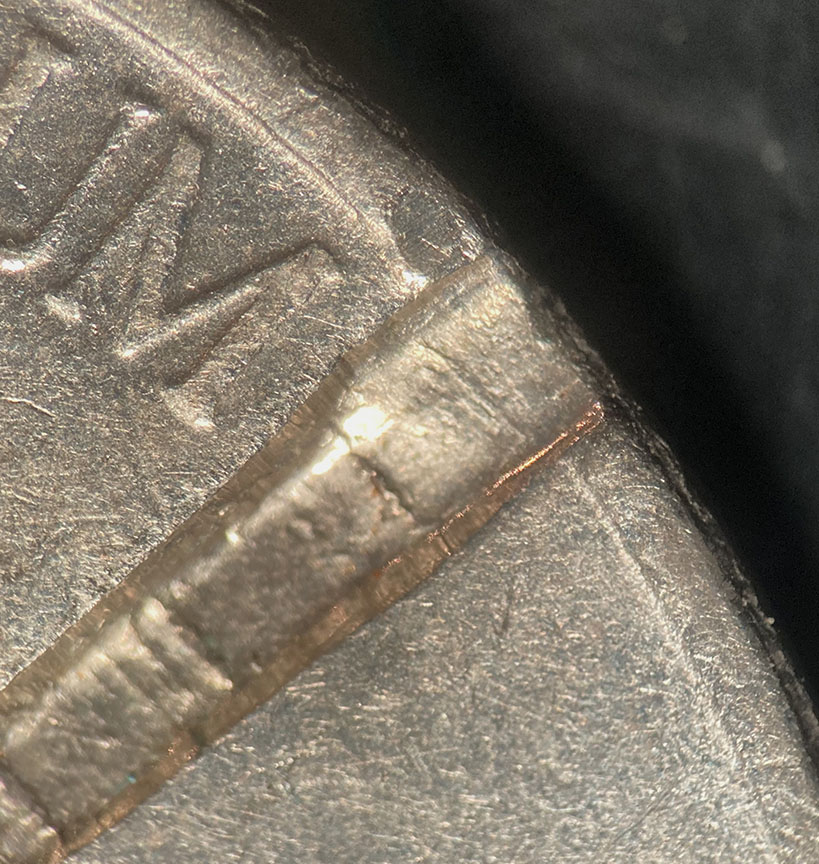 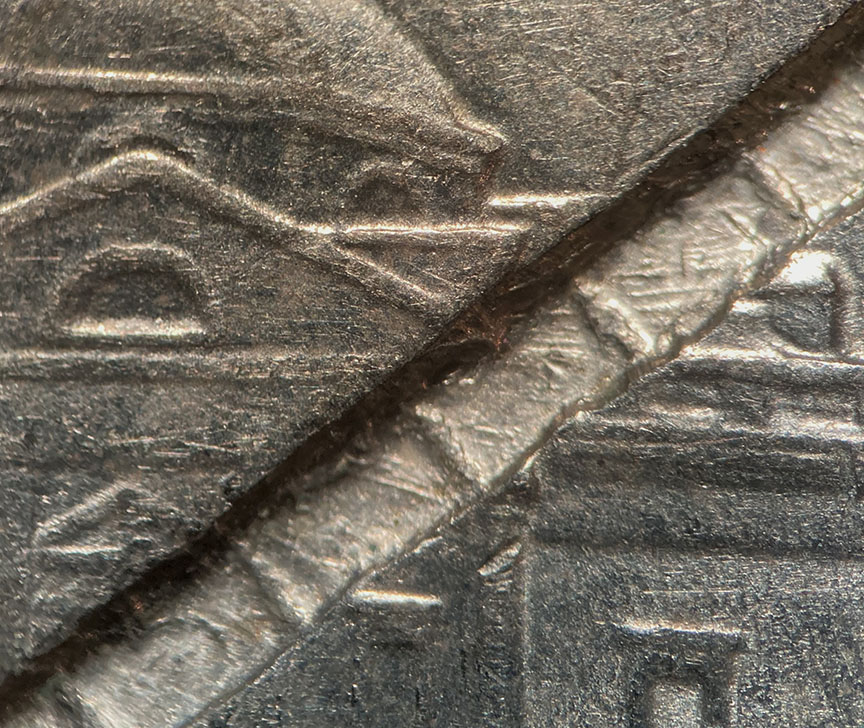 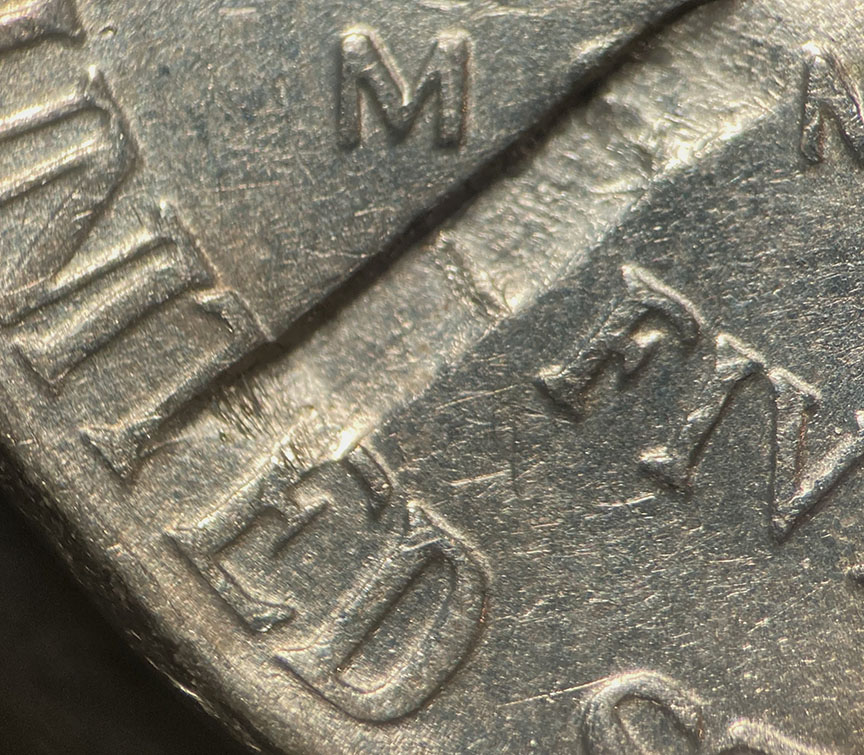 |
|
|
|
Pillar of the Community
 United States
7174 Posts |
Wow! Looks like links in a chain. Or a segmented v belt. Albeit a small one. I'm sure it's a strike through but what. Interesting.
|
|
Pillar of the Community
United States
2803 Posts |
Nice! I vote struck through. I don't see how you could squeeze near edge and not bulge the metal out of round.
"Pride is yoked with callous behavior, as humility is with compassion." St. Gregory Palamas Top Finds - 1969-S 1c FS-101 http://goccf.com/t/477681 1976 D WQ FS-101 http://goccf.com/t/382777 - 1968 D 1c FS-801 http://goccf.com/t/422254Cool clashed dies - 1972 D 1c http://goccf.com/t/429855&SearchTerms=CCLStruck-In Rim Burr - 1969 S 1c http://goccf.com/t/425587&SearchTerms=burrFloating (Type II) Counterclash - 1978 D 1c http://goccf.com/t/434991&SearchTerms=1978 |
|
Pillar of the Community
United States
3003 Posts |
|
|
Moderator
United States
56855 Posts |
|
|
Pillar of the Community
Canada
6244 Posts |
For me this trace was before strike. The borders are not perfect strait which make me thing forces was applied after the trace was done. Second: the bottom of the trace has marks like heat (texture of the metal). Third: Has the traces of the gear roll. Maybe the planchet after cut do not fall and was rolled with the waste and then fall side and was put back in the planchets bin. Seem the trace start on the West side and finish on the East side.
I say heat: because in the annealing is go to 600 deg. Celsius, and at this temperature tinny CU-Ni will start to shrink (meaning the point when start to melt)
|
|
Pillar of the Community
United States
2376 Posts |
TB , on the reverse, where the porch roof meets the anomaly. Are those fibers , lodged in the metal ,inside the groove ?
|
|
Pillar of the Community
United States
5875 Posts |
Congrats TB. I agree with Silviosi about happening before the strike to the planchet. Pretty nice images showing lots of little nuances for why it's not PSD. Words of encouragement are one of the major food groups.
We need to consume them regularly to thrive and grow.
|
|
Bedrock of the Community
United States
94367 Posts |
|
|
Pillar of the Community
 United States
6195 Posts |
Thanks for the great comments! This is interesting. And Stoneman, no fibers. There is a bit of coppery color in that general area which is a bit of odd-shaped metal reflecting the light bulb in my room, which I didn't turn off for the photos.
|
|
Pillar of the Community
2226 Posts |
Great photos Just my humble opinion but I lean toward PSD. How soft would the nickel metal have to be if placed in a vise type tool, an object put around the coin, then squeezed? Wouldn't that create what we see here? Just trying to imagine the scenario. . . . |
|
Moderator
United States
195183 Posts |
Very interesting!  |
|
Pillar of the Community
United States
2376 Posts |
If this were PSD I feel the N of Monticello would be adversely affected. |
|
Pillar of the Community
United States
3207 Posts |
I think the N has been squeezed, but just a little at its top. I vote PMD mostly because if the anomaly had happened within the striking chamber the edge of the coin would not have the dimple seen. Instead metal would have formed outward to the collar. |
|
Pillar of the Community
United States
902 Posts |
I am by no means an expert in analysis of what is and what is not PMD or mint error. The base of knowledge I do have is a result of information absorbed here. I lean more towards PMD. The edge view cleary indicates an incuse anomaly on both the obv. and rev. in alignment. Equally spaced striations running perpendicular to the indentation. A stretch of the imagination whould have to assume that 2 equal parts or the same fragment fell on the strip before punching the plancet. A more plausible explanation to me would be a clever hack locking a pair of surgical grade, needle nose forceps to to coin, then squeezed in a vise. The taper is plain to see thanks to the good images. And conveniently terminates before extending beyond opposite rim of the coin. The forceps weren't deep enough span the diameter of the coin. PMD is easier to assume than an unknown occurrence before the fact. This is only my opinion based on the knowledge I have gained from many of you. |
|
Pillar of the Community
Canada
6244 Posts |
Wow Dowhat, you make me smile and also to remember 26 years of my life almost daily in OR. I do not know exact of what kind of forceps you talk that have those type of strides. Basically those stride are 2 by mm in the case of needle forceps and longitudinal are not strait like those marks on this coin. You are funny ,really, I like the parallel.
In what is the side of the coin we can see that the metal shrink and the milling procedure make flat the side. Another things for me it is the sign that the rolls entered where is the upper side of the UNITED, and like any material entered between two rolls, will be a gradual dispatch of the material. The milling effect showed me when occur this anomaly.
Maybe wrong, maybe point.
|
| |
Replies: 65 / Views: 4,972 |








 Posted 03/29/2022 12:57 am


