| Author |
 Replies: 23 / Views: 2,282 Replies: 23 / Views: 2,282 |
|
New Member
United States
6 Posts |
Obverse is covered with tiny cracks, mostly on the field. Reverse has some cracks too, but fewer. Any help appreciated. 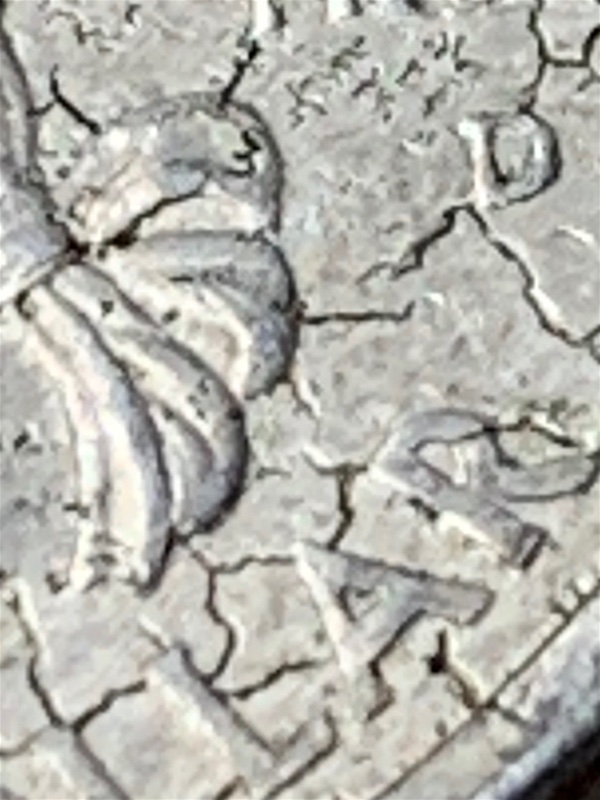 |
|
|
|
Moderator
 United States
195789 Posts |
 to the Community! |
|
Pillar of the Community
United States
3207 Posts |
looks like dried liquid to me, it might come off in a water or acetone bath
|
|
Pillar of the Community
United States
7174 Posts |
to the CCF Need clearer pic, and not so close in. |
|
Bedrock of the Community
Canada
21900 Posts |
to the CCF Please include complete photo of both sides when making an enquiry This helps us help you. Looks like something has dried on it but hard to say what with partial picture. |
|
Bedrock of the Community
United States
62064 Posts |
Weight would show if it has a coating on it. The weigh normal it may have been altered or a splitting cladding? Need to see both sides of the coin in full shots to see how other areas are affected.
|
|
Pillar of the Community
United States
549 Posts |
Yes, a complete shot of obv. and rev. would be nice.
|
|
Moderator
United States
107152 Posts |
Very interesting pic. I would love to see the full pictures. so far it looks like dried cracked mud in some arid desert. Edited by Dearborn
03/29/2022 9:30 pm
|
|
New Member
 United States
6 Posts |
Here's the obverse: 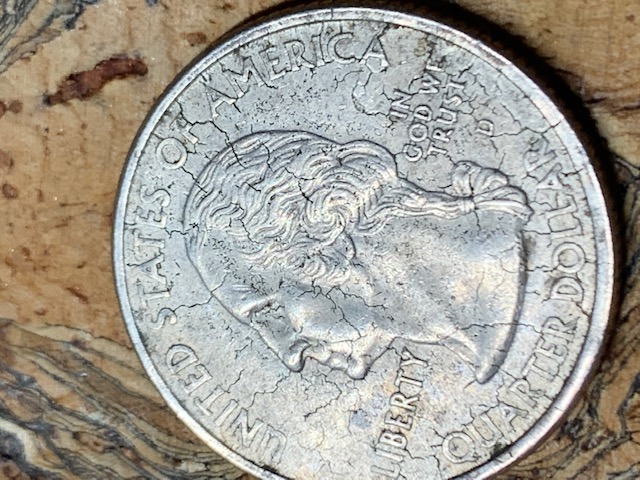 |
|
New Member
United States
6 Posts |
Reverse: checked and there is no glue or other coating. Sorry for initial bad photo. 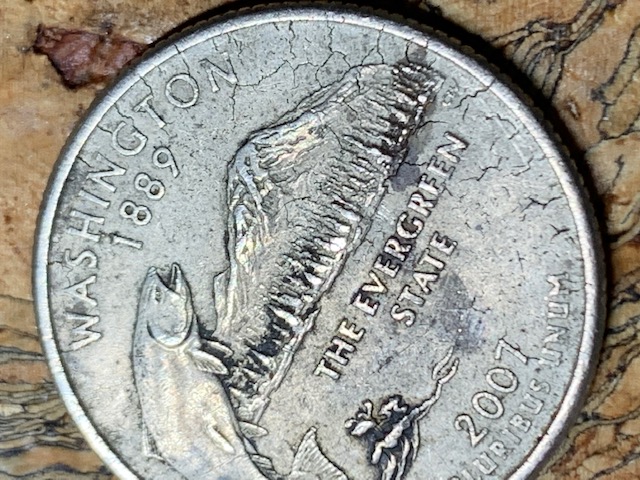 |
|
Pillar of the Community
Canada
6244 Posts |
Very nice photos BU2. What is show for me and I know some here will be very skeptical, is that the clad Ni roll was improper annealed at the manufacture, then was applied over the core and the forces applied make the clad to crack; what we say cracked clad. The forms of the cracks are characteristics to Ni molecular or crystalline structure. Other thing are those black spots who was develop due to the effect of the H2O in the atmosphere. Will be not long that the Cu oxides will come out.
Some will say: But the planchet was annealed. Correct, but the clad in the moment when was applied was not, so internal separated, not necessary out layout. Then the planchet was annealed at 600 deg C. for be prepared for the strike, which it is not enough for the Ni which need normally at least 700 deg C. then 80 tones was apply, so we see the results.
Except upper IGWT where you will say Lam the rests of the crack follow the strike flow of the metal.
My opinions and wait for the others also. Price for?!!! No idea. Collectors for this kind?!!! maybe, but me I do not know one of them.
|
|
New Member
United States
6 Posts |
I'm grateful for this explanation. Unless I hear otherwise, I'm going with your idea. I've learned so much from you. Thank you!
|
|
Pillar of the Community
United States
7174 Posts |
Silviosi, are you saying that the different clad layers weren't the right temperature when they were fused together? Then when they cooled down, the nicu layer cracked?
|
|
Pillar of the Community
Canada
6244 Posts |
@Cujohn Exactly. It is not the first time I saw this. The producers of the clad rolls anneal the roll (we say the plates) before ship to the mint. Sometimes some parts of the roll is not well anneal. We find also those portions have a bad mixt of the metal or purge relative cold from the kiln.
Sorry to answer late.
Edited by silviosi
04/01/2022 6:01 pm
|
|
New Member
United States
19 Posts |
BU2,
For what it's worth, I'd buy that quarter if I saw it for sale.
I work in the machine maintenance field, so I love seeing errors and trying to imagine what was wrong with the minting machines to cause certain errors. Nice find!
|
|
Pillar of the Community
Canada
6244 Posts |
In 2007 they still use the rolling press cladding. So if the clad rolls has some molecular or crystalline deformations will be separate.. Working with those mechanisms you must understand the forces applied to the main. We have the directional and vertical forces, those forces will make the material have crystalline separation. The traces on this coin coincide with the NI separation.
|
| |
Replies: 23 / Views: 2,282 |







 Posted 03/29/2022 12:07 pm





