| Author |
 Replies: 21 / Views: 4,184 Replies: 21 / Views: 4,184 |
|
Valued Member
United Kingdom
179 Posts |
My 1966 PL set has a large defect on the obverse of the cent. I dont think this is PMD as the mint packaging is nearly perfect, so if it was scratched I suppose it may have happened before packing? It seems to me that it might be a strike through that has retained the object (the little strings of metal at the edges of the impression). What do you guys think? Perhapse it is a rogue bit of metal from the rim of a previous cent? Any input is welcome, thanks! Matt (: 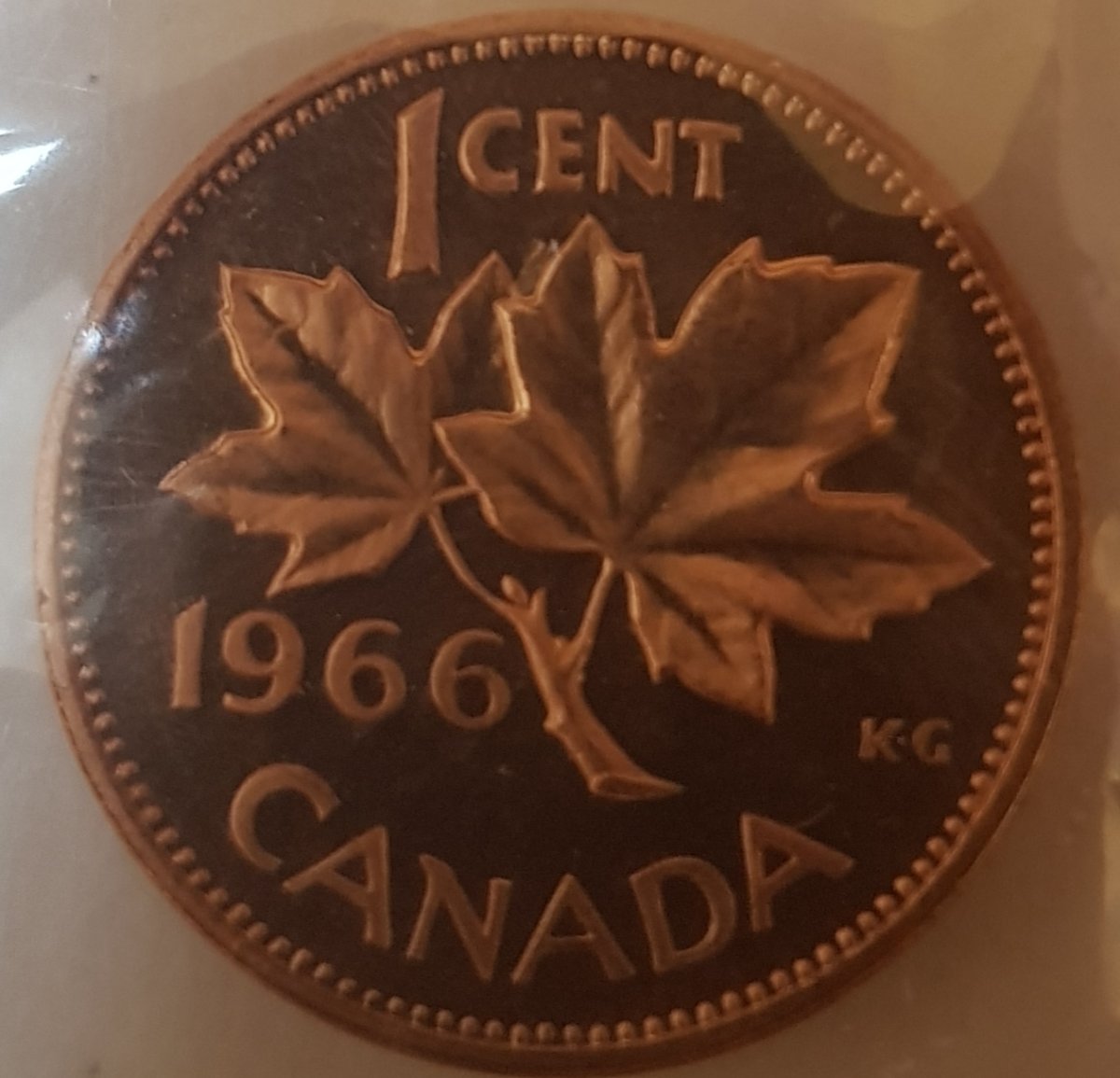 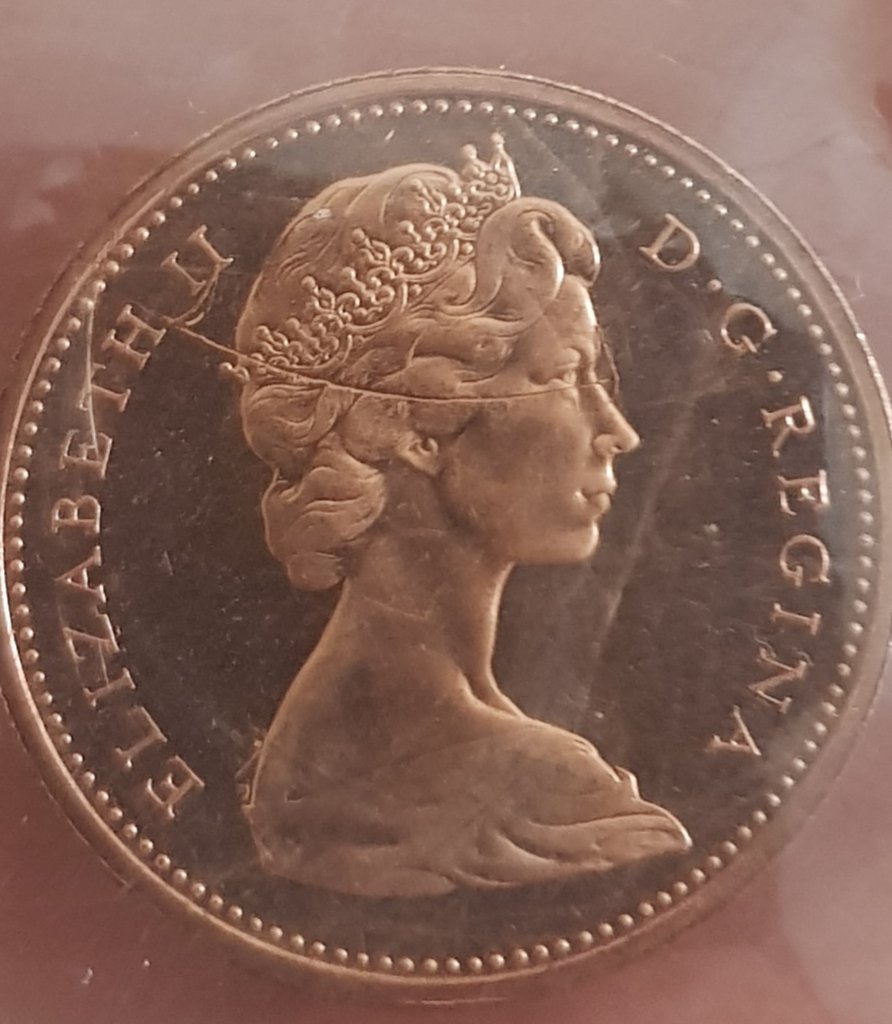 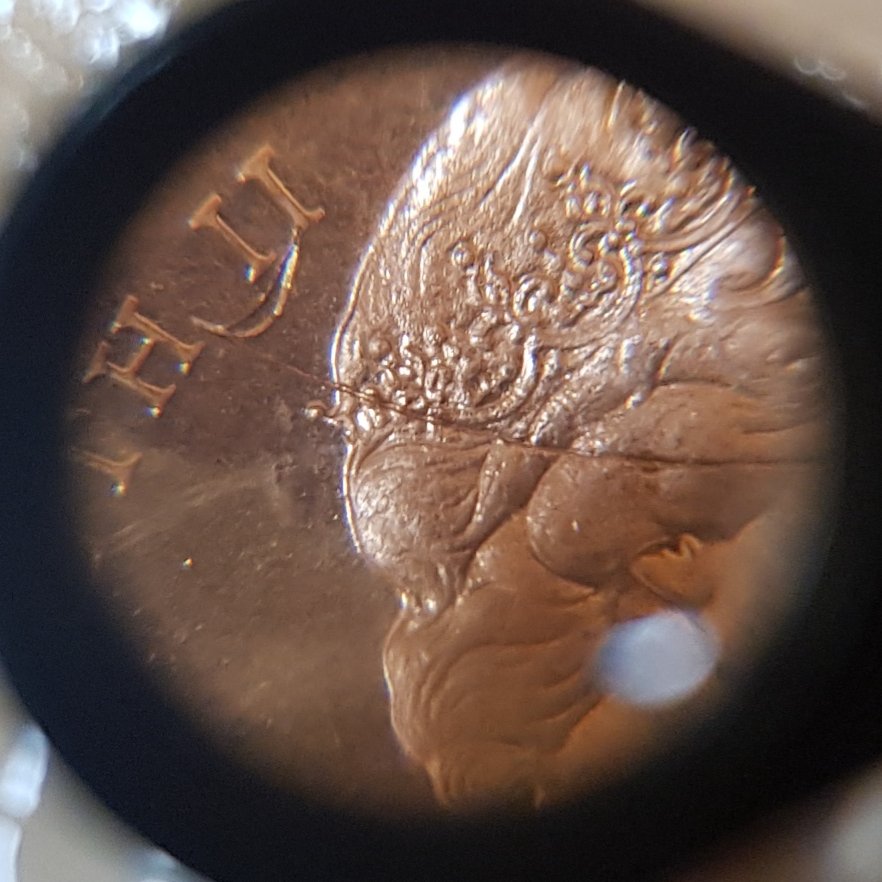 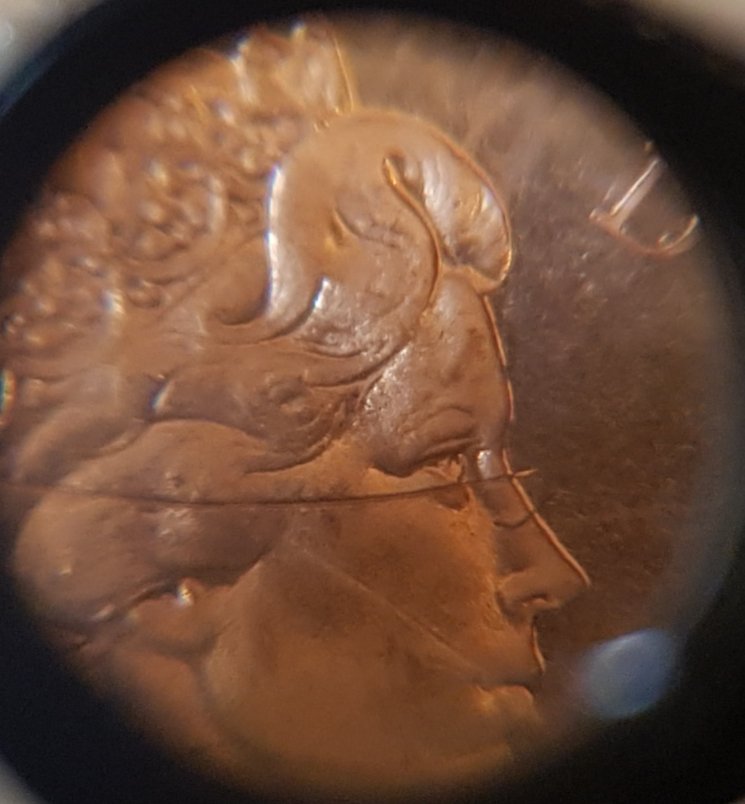 |
|
|
|
Pillar of the Community
 Canada
5609 Posts |
Is it raised or recessed?
|
|
Pillar of the Community
Canada
891 Posts |
Nice strike through , maybe wire or a copper shaving  |
|
Valued Member
 United Kingdom
179 Posts |
|
|
Valued Member
United Kingdom
179 Posts |
okiecoiner, the majority of what you can see avross the face is recessed but at each end their is what looks like copper wire (very thin) sticking out. You can see it on the zoomed pictures.
|
|
Pillar of the Community
Canada
2302 Posts |
Very nice retained strike thru! I would not manipulate the package to get the "wire" to move.....much more desirable with the wire there!
|
|
Pillar of the Community
Canada
6244 Posts |
I do not now what the specialist will say, but on photos overlaps with an coin the course of the wire you say is exact like a coin strike. Then one side is more strait then the other looking to the mark. IMO it is mark of a coin who hit this coin. This can happened after strike when the coins fall in the bin.
|
|
Valued Member
United Kingdom
179 Posts |
Thanks for the advice nickelsguy, I'll make sure to keep it intact.
|
|
Pillar of the Community
Canada
5609 Posts |
I'm not an expert of errors but, to me, it looks like a beep scratch/gouge after the coin was struck. The metal at the end of it was part of the coin that was scraped off as the foreign object scraped over the coin .... or a piece of equipment in the press or ejection mechanism gouged it and piled up the removed metal in back of her head where it ended. The scrape/gouge, to me, looks way too sharp and concise to be caused by a strike-thru.
Edited by okiecoiner
04/09/2022 1:06 pm
|
|
Pillar of the Community
Canada
3328 Posts |
It has the appearance of a stuck through to me. I'm wondering what I'm seeing under the H and II in the ledgand and in from of the Queen's face where the area in question starts and ends. I recently found an American cent that has a similar struck through mut it's mostly in the fields.  |
|
Pillar of the Community
Canada
2302 Posts |
Bill and others.....look between the H and II......see the wire bent up and to the left.......I will now bow to the east (towards Ottawa) for the "OH ROTUND ONE" to confirm retained strike thru.....I want to go golfing....
Edited by nickelsguy
04/09/2022 4:09 pm
|
|
Moderator
 Canada
10471 Posts |
Most definitely legit. Struck through a bronze shaving, which happens with metal sheared by a stiff collar die, partially retained. Quote:
IMO it is mark of a coin who hit this coin. This can happened after strike when the coins fall in the bin. No. And no. You can see some of the bronze shaving retained at each end of the strike-through feature. Secondly, this is a PL strike, and they did not get dumped into any bins. You see this error type through PL sets of the mid 1960s through to the mid 1970s, especially on the 1c, 50c, and nickel dollars. "Discovery follows discovery, each both raising and answering questions, each ending a long search, and each providing the new instruments for a new search." -- J. Robert OppenheimerContent of this post is licensed under a Creative Commons Attribution-NonCommercial 3.0 Unported License. See: http://creativecommons.org/licenses...0/deed.en_USMy eBay store
|
|
Pillar of the Community
Canada
824 Posts |
The pieces under II are obviously from the gouge.
If those remnants are loose and there's an impression under them on the field caused by force of the die, the gouge happened before the strike.
or
If the remnants are imbedded, the gouge happened before the strike.
If the remnants are loose on top of the coin and there is no impression of them on the field under them, the gouge happened after the strike.
|
|
Pillar of the Community
Canada
9879 Posts |
TerryT that makes sense to me.
"Dipping" is not considered cleaning...
-from PCGS website
|
|
Pillar of the Community
Canada
891 Posts |
Terry T doesn't make sense to me, definitely a strike through , nice clean edges
|
|
Pillar of the Community
Canada
824 Posts |
Well oldmike, here's the deal.
I gave the reasoning needed to make a decision, that's all.
There are only 2 possibilities.
Before - If this = this, or
After - If that = that
So you've decided- the remnant is either imbedded or left an impression = this...makes sense to me, so how did I not make sense to you ?
|
| |
Replies: 21 / Views: 4,184 |







 Posted 04/09/2022 09:32 am





