| Author |
 Replies: 15 / Views: 8,518 Replies: 15 / Views: 8,518 |
|
|
Pillar of the Community
Australia
1513 Posts |
|
|
|
|
Pillar of the Community
Australia
1985 Posts |
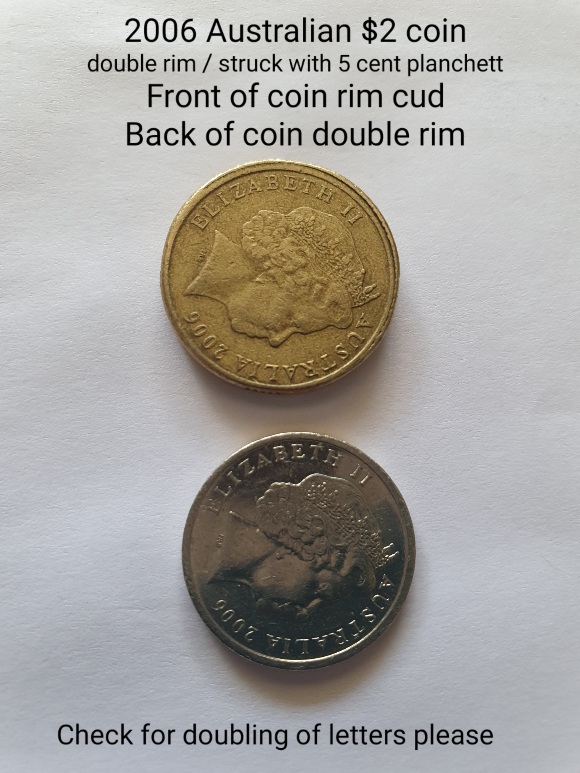
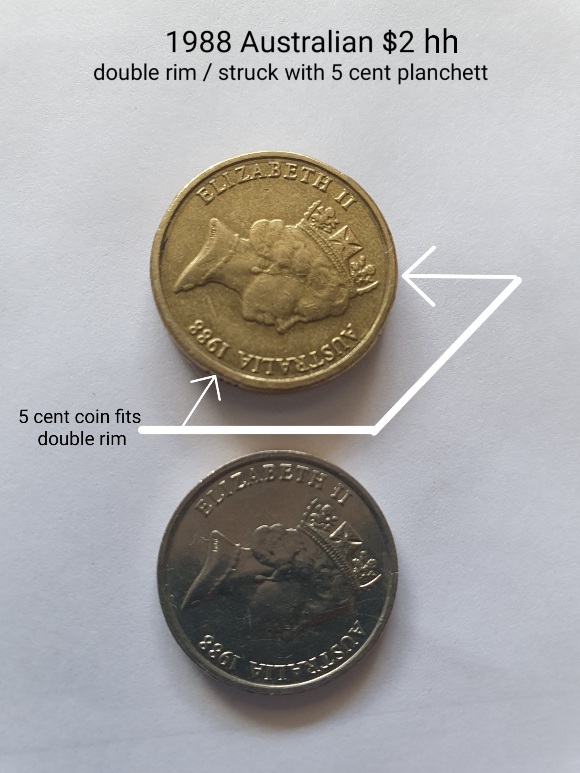
Allcoinage, here is a thread about why those $2 coins ARE NOT mules. http://goccf.com/t/7525As for the 1988 HH coins, there were 160 million of them minted so don't get suckered into thinking they are anything special.  |
|
Pillar of the Community
 Australia
1513 Posts |
Well in saying that 5 cent head of queen
Isn't the same size I actually measured the
Queens head on both with an online ruler and both
Are exactly same size.
|
|
Pillar of the Community
Australia
1513 Posts |
How is it possible that the head of the queen is
Exactly same size enlighten me please.As for
The 1988 hh I was referring to the inner rim indentation
|
|
Pillar of the Community
Australia
1617 Posts |
Quote:
How is it possible that the head of the queen is
Exactly same size enlighten me please.
Having read the linked thread I think it is poorly worded. If it was a genuine $2/5c mule, the size of the queens head on the supposed mule would be exactly the same size as the head on a 5c piece. It is not thus ruling out the possibility of a mule. |
|
Pillar of the Community
Australia
1333 Posts |
hi
i think there have been past discussion about this, however most people believe that it's no mule as is in fact a slightly misaligned die and therefore too common bother with.
Im quite sure you know what a mule is so i'll spare the description. It would I guess come down to weather the Royal Australian Mint just uses the same dies or the dies are close enough that they just use the same one (they might not be due to maybe strike pressures), that being said you should compare it to any old 1988 or 2006, 2 dollar and if there are different kinds then assumable there maybe a case for a mule. As for you exact measuring you probably have to measure down to a very fine accuracy and then you might get in to problem of allowable tolerances with such a small coin.
|
|
Pillar of the Community
Australia
1513 Posts |
Thanks guys all good, I was going through some Australian 5 cent rolls and found something of interest not sure if it has been found already but interesting none the less., I will
Post up shortly.
|
|
Pillar of the Community
Australia
1513 Posts |
Also I have one question how would a 5 cent or ten cent Look like gold I had to re-adjust eyes thought I was seeing gold after gone through some $1 & $2 coin rolls  Oh it's not light reflection because I placed them next to Silver coins. |
|
Pillar of the Community
Australia
2180 Posts |
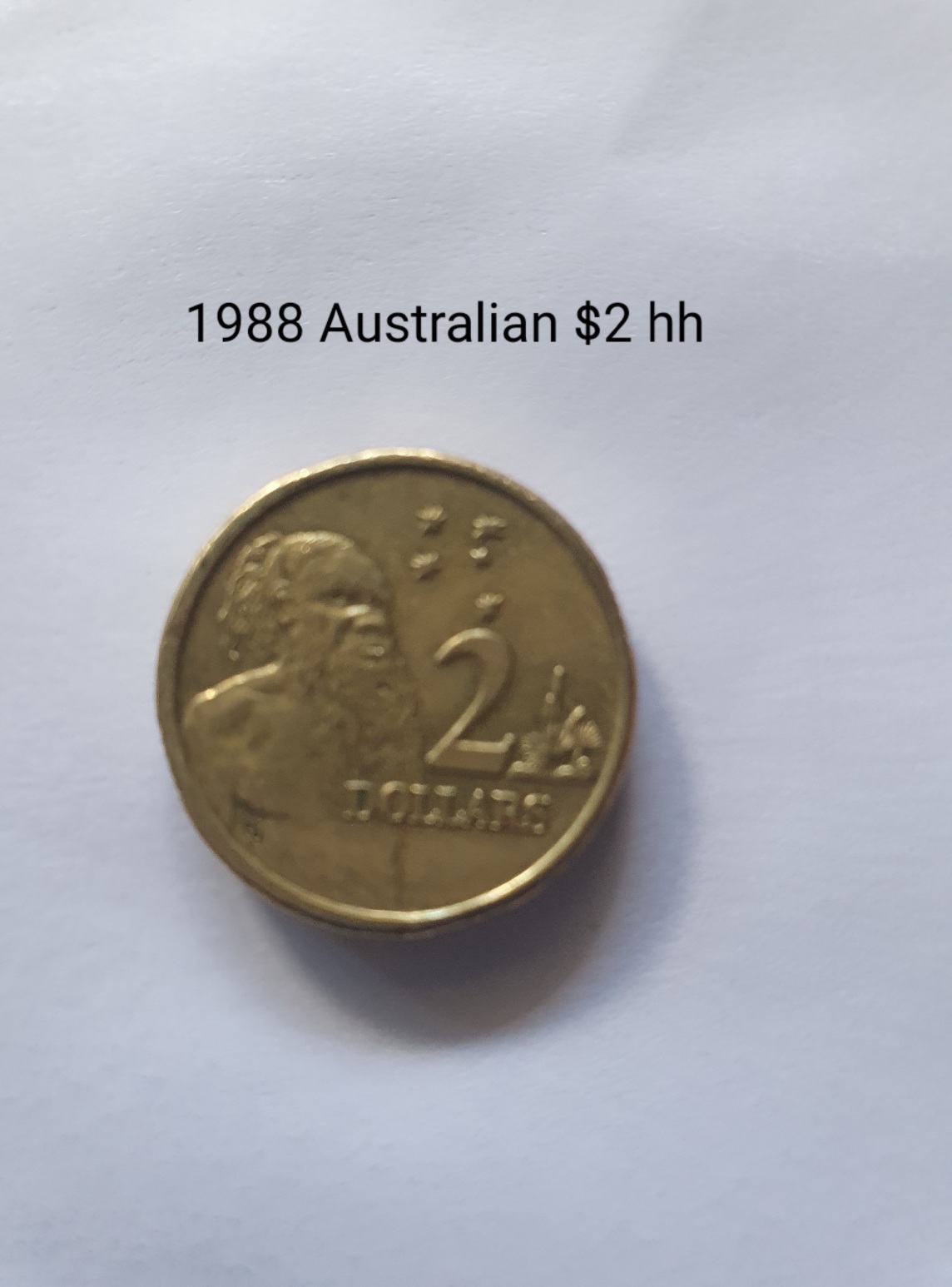
The 1988 $2 has some sort of mark on the coin - the accepted cause is a scrape from a rolling machine.
|
|
Pillar of the Community
Australia
1513 Posts |
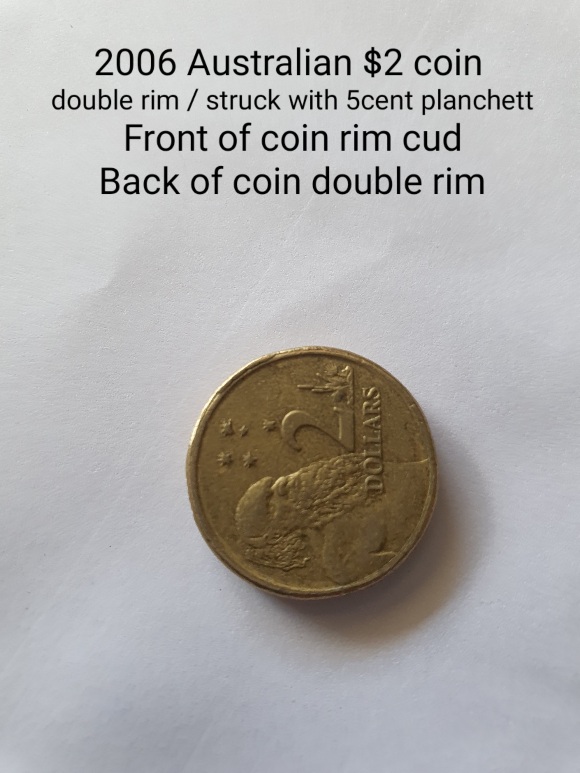
You are right mr T, but the 2006 if it was misaligned then that is a massive gap and there would have been double letters in wording.
|
|
Moderator
 Australia
16963 Posts |
1. Correcting the terminoloy in the OP's pictures. "Planchet" (with only one "t") is the name given to the blank, the round blank piece of metal the raw material that a coin is made from, after it has been put through a milling machine to give it a raised rim. A "mule" doesn't use the wrong planchet. A "mule" uses a wrong die. 2. Quote:
...how would a 5 cent or ten cent Look like gold... All sorts of things could make a cupronickel coin look gold-coloured. - Environmental damage, specifically burying the coin in the ground, can make a cupronickel coin turn brownish colour. Sitting in a chlorinated pool or fountain can also impart a brownish-yellow colour. - Somebody could have plated it. Electroplating or simple chemical plating with a yellowish metal, even with gold, doesn't cost that much. To answer "why", you'd have to ask the people doing it. It's not as common to find plated coins here as it is in America, where mail order mass-marketing companies sell home-plated versions of common circulated coins for hugely inflated prices. Of course, deliberately plating or painting a 5 cent piece to try to make it look like a $2 coin (or plating a 10 cent piece to try to make it look like a $1) is a criminal offence; it's considered "counterfeiting". - It could, conceivably, be a "wrong planchet" error, where a blank intended for a brass-coloured foreign coin accidentally gets used. The Royal Australian Mint no longer makes its own blanks, but sources its blanks in bulk from South Korea, so it's possible the Koreans accidentally put a wrong blank in the barrel before shipping it, and the RAM never noticed the wrong blank as it was fed into their production line. It's really rather rare for this to happen (both the Koreans and the RAM have qualiy control in place to try and prevent this), so this is the least likely explanation. Easiest way to tell the difference is by weight. Get yourself one of those two-decimal-place portable balances. Weigh a bunch of normal 5 cent coins (to check the balance is properly calibrated), then weigh the odd-coloured 5 cents. If it weighs pretty much the same as a normal 5 cents, then it's environmental damage or plated. If it weighs significantly more or less, then it's possible it's a wrong planchet. Don't say "infinitely" when you mean "very"; otherwise, you'll have no word left when you want to talk about something really infinite. - C. S. Lewis
|
|
New Member
Australia
1 Posts |
I have a 1988 $2 coin and a 1988 5cent coin and the queens head(shape, size and features) aswell as the rims match perfectly. All lettering also matches up. Unlucky for some I guess.
|
|
Pillar of the Community
Australia
1045 Posts |
|
|
Pillar of the Community
Australia
1513 Posts |
yes well I got knocked back on this one so I gave the coin too charity.  |
|
Moderator
United States
194602 Posts |
 to the Community, Really u FW! |
|
Pillar of the Community
Australia
1366 Posts |
Really u FW Interesting choice of user name!  |
| |
Replies: 15 / Views: 8,518 |
|











 Posted 04/25/2022 03:30 am


