









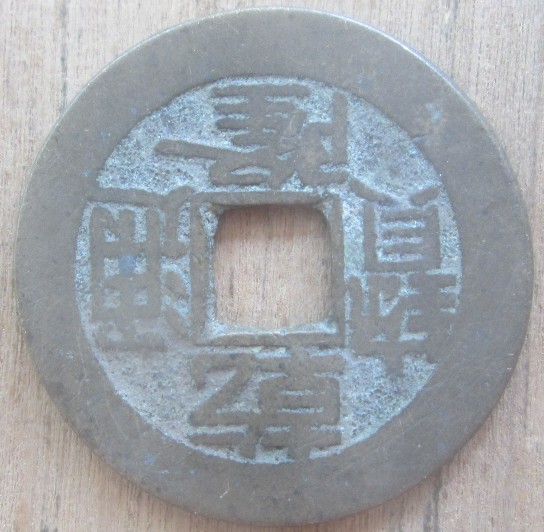
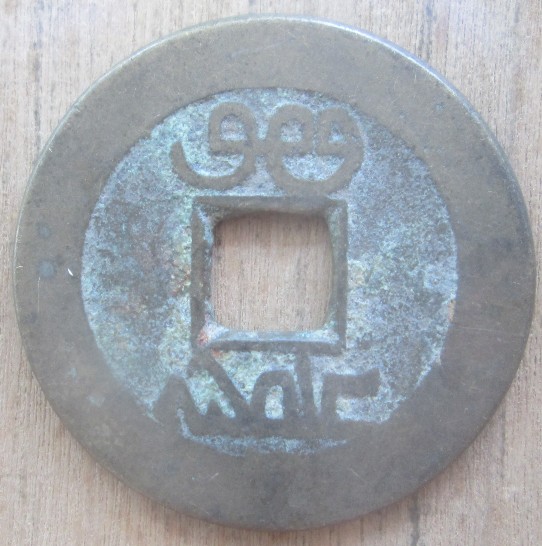


 Posted 06/12/2022 9:42 pm


It looks genuine to me. Despite being over 200 years old, it's not all that valuable. While modern fakes/replicas do exist, quality fakes generally don't, as there is zero profit to be made; both the fakes and the genuine coins tend to sell for around $2 each.
It's "not all that valuable" because it's one of the most common coins ever produced, anywhere, anywhen. The Qianlong emperor reigned for a long time, during which not only was the coinage design mostly unchanged and constant, but China was still mostly wealthy, peaceful and prosperous. Coin production figures that survive indicate that billions of coins were being made just by the central government mint, every year; that's not counting the subsidiary and provincial mints. A figure that's all the more impressive when you realise that each and every one of those billions of coins had to be poured into hand-made moulds and finished off by hand. This rate of coinage production would not be matched until the late 20th century period of mass-production coinage machinery.
It's "not all that valuable" because it's one of the most common coins ever produced, anywhere, anywhen. The Qianlong emperor reigned for a long time, during which not only was the coinage design mostly unchanged and constant, but China was still mostly wealthy, peaceful and prosperous. Coin production figures that survive indicate that billions of coins were being made just by the central government mint, every year; that's not counting the subsidiary and provincial mints. A figure that's all the more impressive when you realise that each and every one of those billions of coins had to be poured into hand-made moulds and finished off by hand. This rate of coinage production would not be matched until the late 20th century period of mass-production coinage machinery.
Don't say "infinitely" when you mean "very"; otherwise, you'll have no word left when you want to talk about something really infinite. - C. S. Lewis


