In 1866, the Mint introduced a new nickel design to replace the older Half-Dimes. People were hoarding precious metals, and it was felt that a move away from silver was necessary to keep coins in circulation. Between that, and the efforts of magnate Joseph Wharton (for whom the famous business school is named), the decision was taken to produce the new coin in nickel.
The Chief Engraver of the Mint,
James Longacre, designed the new coin based upon his Two-Cent piece design, and the mint proceeded to re-learn the lesson taught by the original
Indian Head cent composition:
Nickel doesn't strike easily.
 Shield nickels
 are notorious for cracked dies and relatively poor strikes, even though they're only 25% Nickel by composition. Clean, fully-struck examples tend to sell at a premium for this reason. All the same, they were popular coins in circulation, replacing the despised fractional currency which precious-metal hoarding had forced into being. So, production proceeded furiously - so furiously, in fact, that no Business Strikes were produced in 1877 and 1878 because of the vast number of nickels in circulation.
But I'm not here to talk about the
Shield nickel, I'm just long-winded.
In 1881, Mint Superintendent James Snowden decided to unify the designs of the Cent, 3-Cent and 5-Cent Nickel. He directed his Chief Engraver,
Charles Barber, to develop a unified design. The first two denominations were only ever produced as patterns, but the new 5 Cent piece began Mintage in 1883, which brings us to the coin presented here for your viewing pleasure.
The new 1883
Liberty nickel was the first in a line of less-than-distinguished
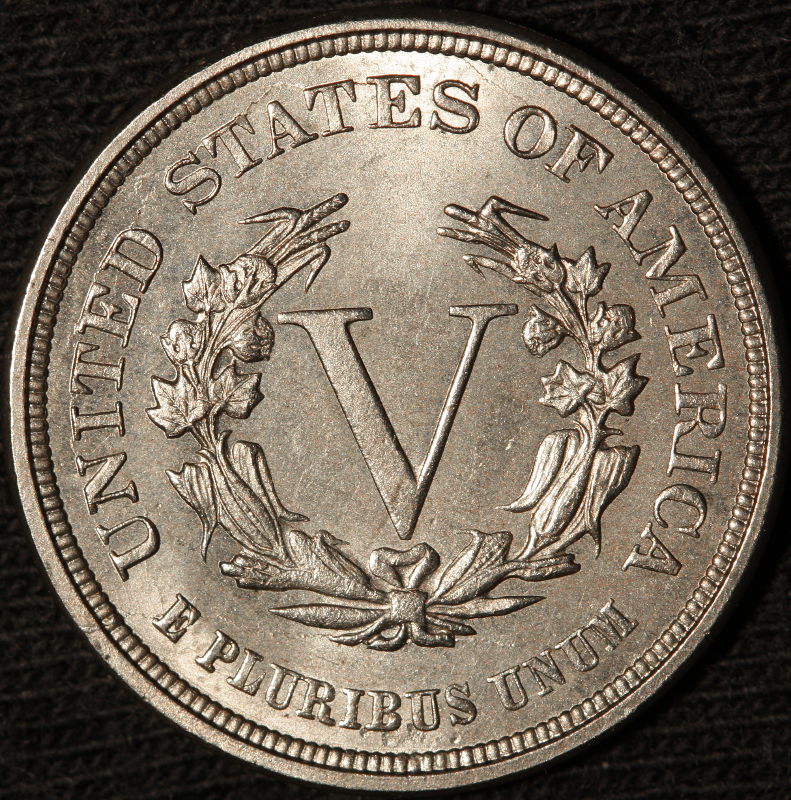
Barber coinage designs. In keeping with the unification design, the denomination was represented by only a roman numeral on the reverse, a curious feature which led to the infamous "Racketeer" Nickels. Enterprising profiteers took the new nickel, gold-plated it, added reeding on the rim to mimic that of real gold coins, and passed them off as five-dollar gold pieces. The unsophisticated merchants of the time accepted them, even though the design bore no resemblance to the current true Half Eagle. They were the same diameter, though, and the obverse was close enough to pass a cursory inspection.
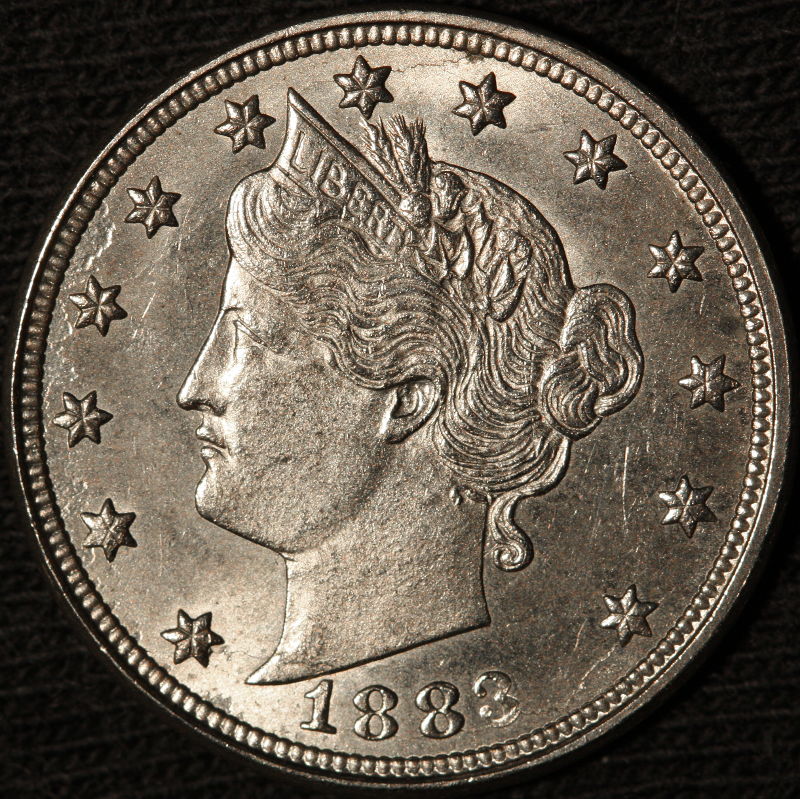
Needless to say, the new nickel design was hastily changed during the 1883 mintage run, leaving us with the 1883 "CENTS" and "NO CENTS" types. Approximately 5.5 million NO CENTS nickels were minted, and about 16 million CENTS types. The coin pictured below is the NO CENTS type. It shows both planchet flaws and the die cracks indicative of the Mint's difficulty working with this relatively new metal composition.




 Posted 02/17/2009 7:16 pm





 If I win the lottery those will be my first purchases!


