| Author |
 Replies: 5,946 / Views: 249,676 Replies: 5,946 / Views: 249,676 |
|
|
|
Moderator
 United States
34562 Posts |
Back to Hungary for me today with this 1590-dated Denar: 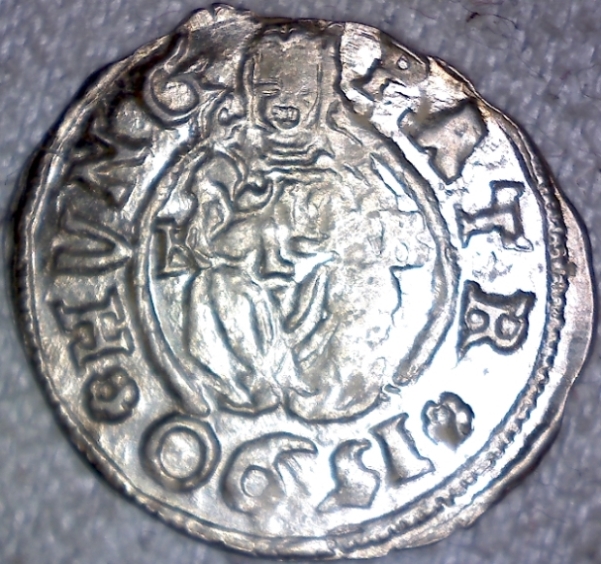 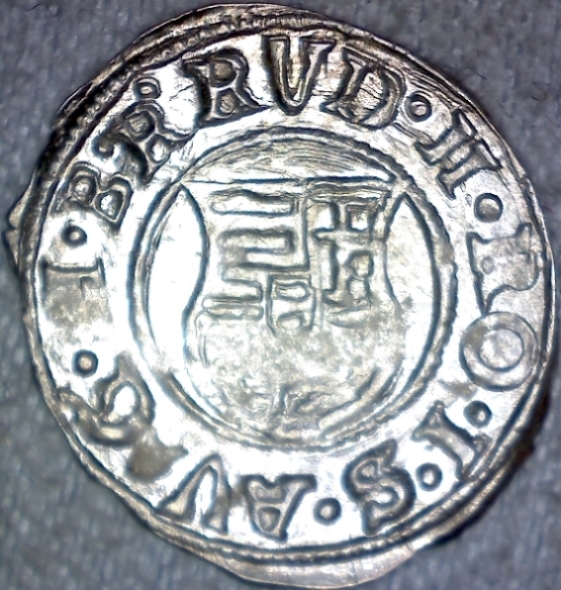 "If you climb a good tree, you get a push."
-----Ghanaian proverb
"The danger we all now face is distinguishing between what is authentic and what is performed."
-----King Adz
|
|
Pillar of the Community
Belgium
1185 Posts |
1590 two jetons that praise the success of Prince Maurice of Orange, who had started his "ten years" The first shows how the town of Breda (like Geertruidenberg an important stronghold just south of the big rivers) was captured by the Anglo-Dutch forces who had just started a succesful campaign that would last for a decade. Breda was taken from the Spanish by an unusual trick. Instead of a long siege with attacks on the walls and city gates, the trick consisted of hiding small number of paratroopers in a small barge that carried peat into the city. Peat was then a commonly used fuel to heat homes in the winter. So even cities that were sieged were allowed to receive a supply of peat for civilians. Maurice tested the trick a first time and as the first vessel was not controlled by the Spanish troops it proved a safe idea to be used again, now with a dozen of hidden soldiers. We see a modern version of the trojan horse strategy to capture a well defended city. https://en.wikipedia.org/wiki/Captu...Breda_(1590) Dugniolle 3255 Dordrecht 'Capture of Breda' OBV: Peat barge with soldiers that go on shore inside sleeping Breda PARATI VINCERE AVT MORI 4 NONAR MARTII REV: BREDA A SERVITVTE HISPANA VIN DICATA DVCTV PRINCIPIS MAV RITII A NASS A CIC IC XC The second jeton praised both freedom of religion in the United Provinces and the installation of Maurits as Stadhouder of the Dutch Republic.  Dugniolle 3256 Dordrecht 'freedom of religion//installation of Maurits as Stadhouder' OBV on a bible rests a column with the hat of liberty; six arms (the six provinces) hold the column LIB ERT RE LIG (freedom of religion) HANC TVEMVR HAC NITIMVR REV six arrows bundled by two hands; surrounded by DEO IVVANTE. legend: CALC SENAT PROVINC VNIT BELGII 1590 HANC TVEMVR HAC NITIMVR ( this (freedom) we defend by supporting on that (the bible)) is text that appeared as legend, together with "Pallas Athenae, aka Miss Liberty" (see jeton of yesterday) who holds the hat of freedom and the bible, on all guilders and parts thereof in the 17th and 18th century. See example this guilder of 1749 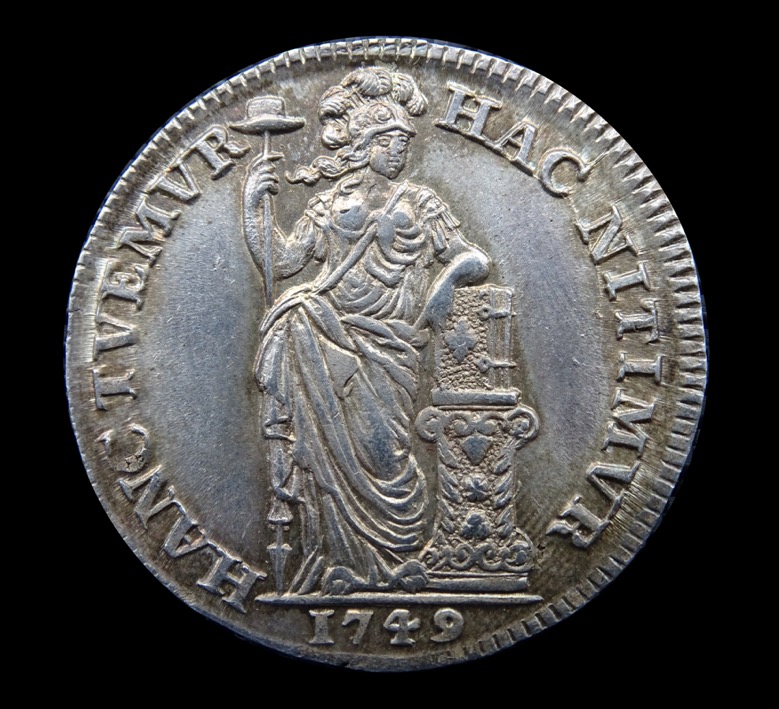 So the obverse side of this jeton Dugn. 3256 shows the prototype of what would be used on all silver guilders (and parts/multiples) between 1659 and 1798 Edited by 1c5d7n5m
11/10/2023 11:35 am
|
|
Pillar of the Community
United States
1709 Posts |
|
|
Pillar of the Community
 United States
8056 Posts |
Quote:
It just amazes me at the condition of many of the early coins in this thread, especially many of these early coppers! Yeah, I think 1c5d might have the "top pop" collection of jetons documenting the Dutch struggle for independence. It's an amazing example of a collection with a specific focus, and his curation is a treat. As an American. it always makes me wonder why we are never taught that that the Dutch gave a blueprint for American independence. For 1590 I am still rather far to the east with a Polish trojak struck in Olkusz. 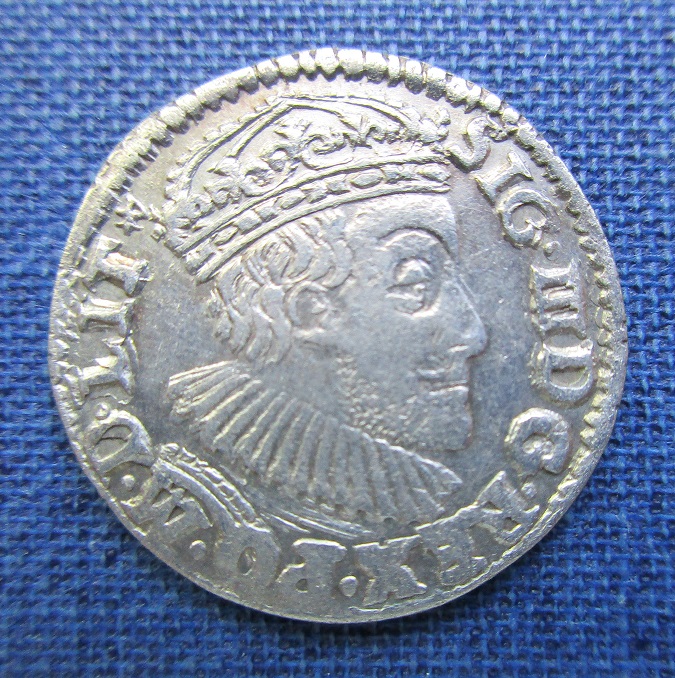 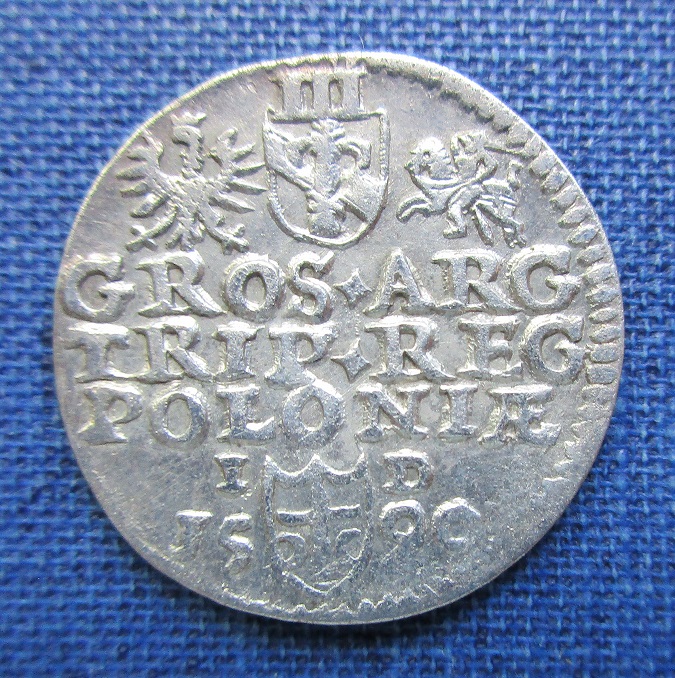 |
|
Pillar of the Community
Belgium
1185 Posts |
thanks AcesKings and tdziemia
what is strange is the element time: approximately the distance in time of now to the American Revolution equals the time back from the American Revolution to the start of the Dutch revolt.
Many aspects of the two revolutions are equal: the underdog (at start) fighting against a superpower, struggle for freedom, declaration of independence to name a few
|
|
Pillar of the Community
United States
8056 Posts |
There was a younger bust of Sigismund for the first two years of his reign. Here is a 1589 trojak struck in Riga: 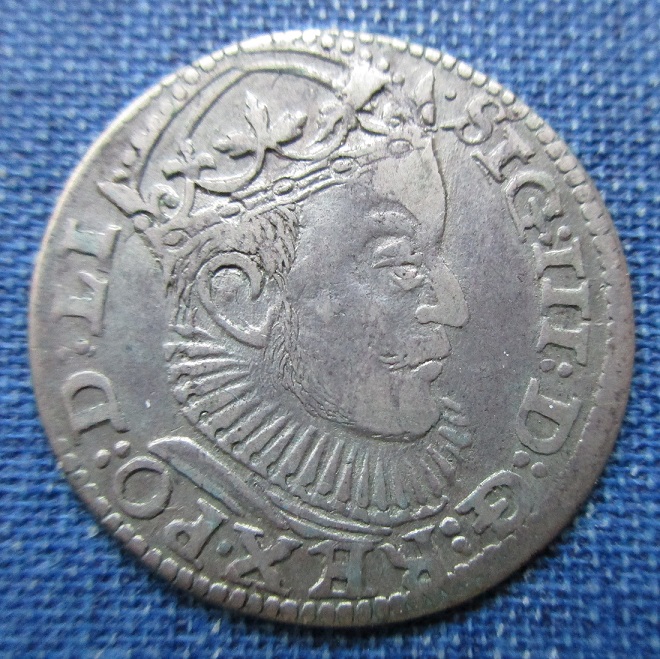 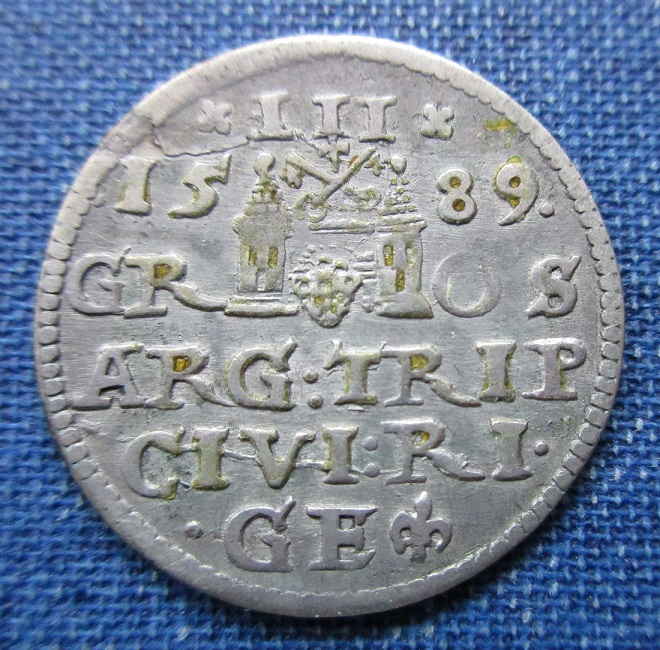 |
|
Pillar of the Community
Belgium
1185 Posts |
1589 This year marks a turning point in the 80-year war: with the defeat of the Spanish armada, on board of some of the ships that vanished in the sea was part of the Spanish army of Flanders together with many pieces of artillery that Alexander Farnese used in his spectacular series of sieges the decade before. Both England and the United Provinces benefited from this turn of events. The jeton below depicts the joy of England to be spared from an invasion of the most powerful army of those times. Queen Elizabeth I is shown being seated on a chariot reading the bible. 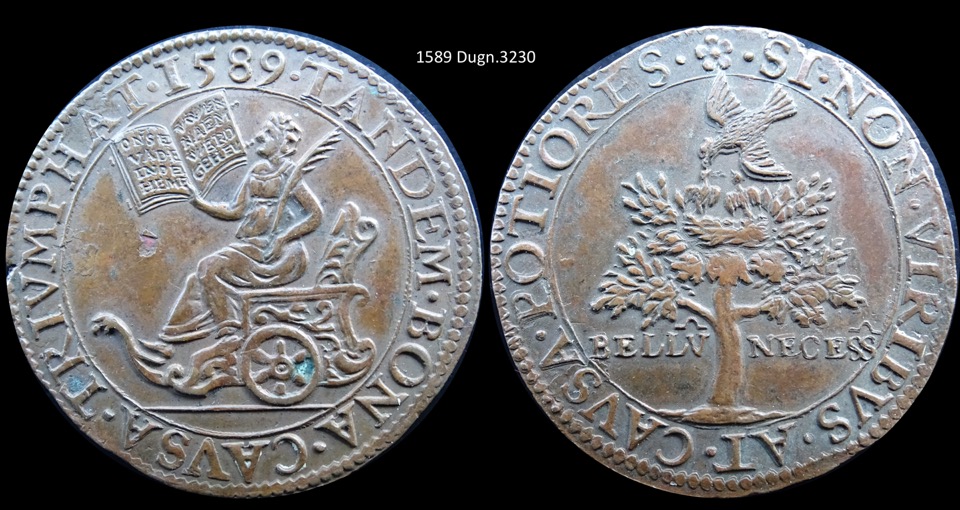 Dugniolle 3230 'Spanish Armada defeated' OBV: The queen on a chariot reading the bible TANDEM BONA CAVSA TRIVMPHAT (the good cause triumphs in the end) REV: bird of prey attacks nest os birds SI NON VIRIBVS AT CAVSA POTIORES (I could not have this done better) On the best preserved surviving pieces one can read the first lines of the holy father (in Dutch) ONSE VADER IN DE HEMEL // UWEN NAAM WORDE GEHEILIGD, which is quite amusing as Elizabeth of course would read a Latin or English version of the bible. Perhaps the pun of this jeton was that the first English translation of the bible was done by William Tyndale, who fled to the Spanish Netherlands, where he was executed on accusation of heresy in 1536. Another interesting detail is a so far unrecognised die variant of the obverse, with a pulling rope in front of the chariot as shown below. This variant is not mentioned by Dugniolle, and perhaps needs to be classified as Dugn. 3230a 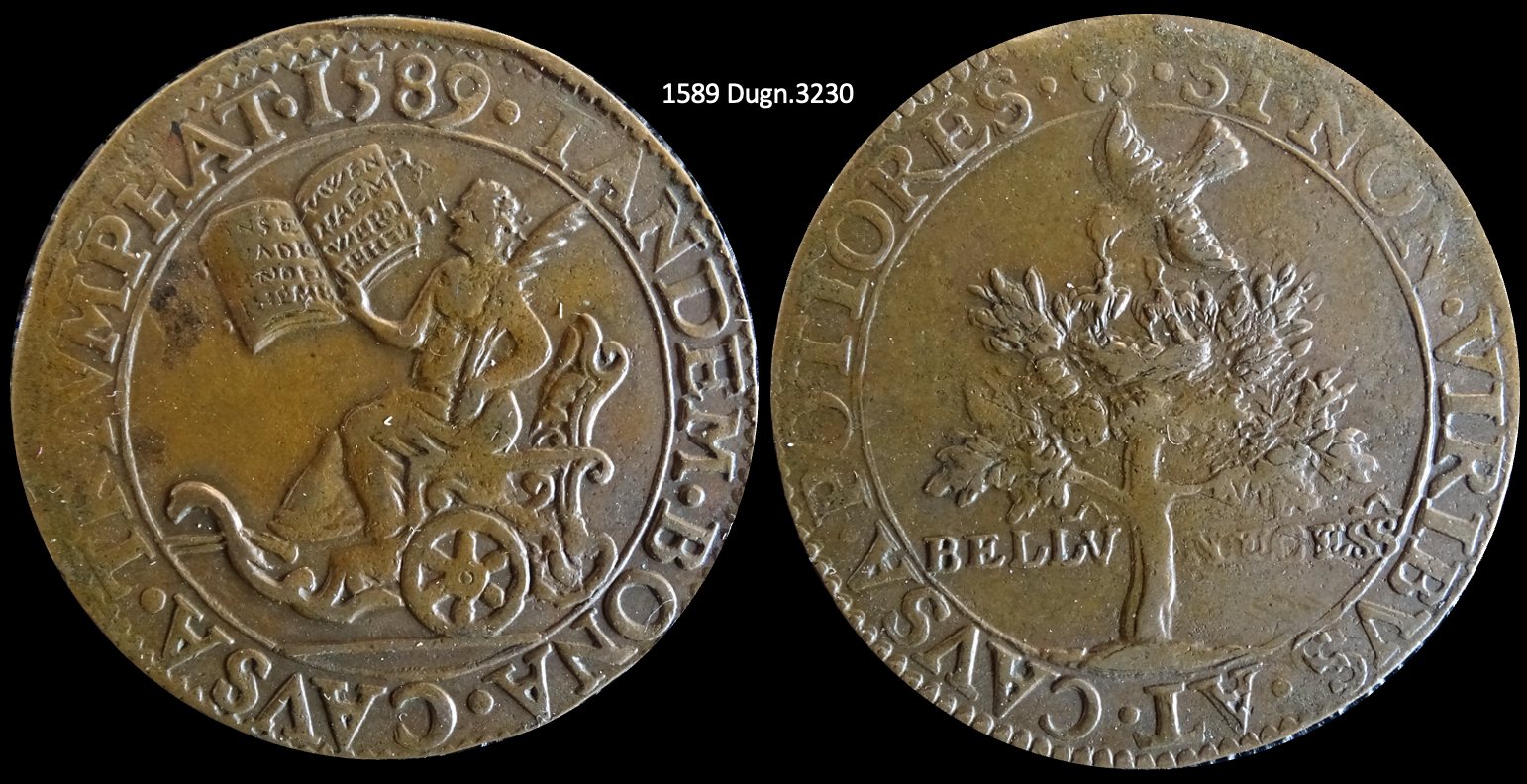 Finally for today, two other jetons from the United Provinces: 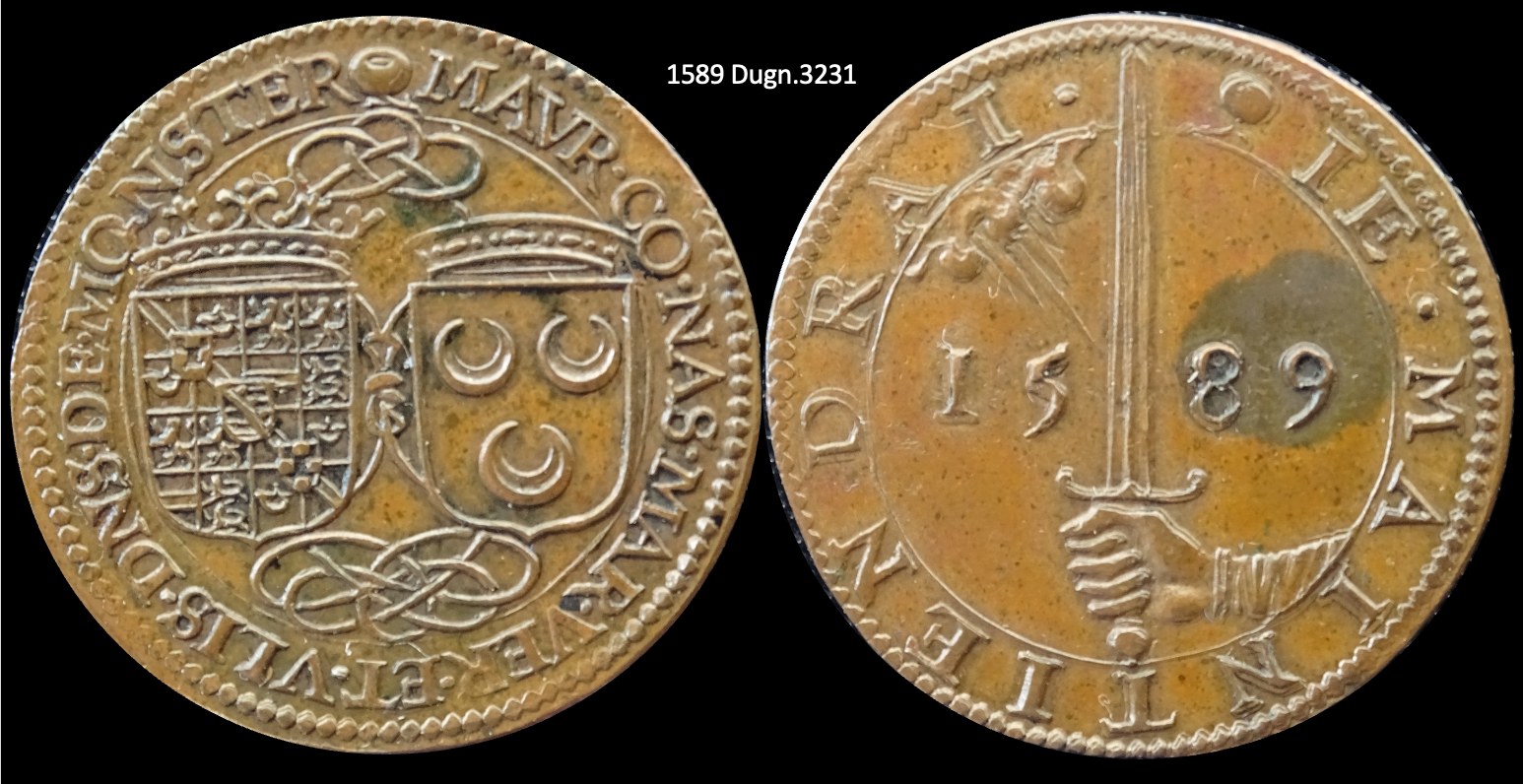 Dugn.3231 Dordrecht 'Maurits as Lord of Monster' OBV: coats of arms of Orange & Monster MAVR CO NAS MAR VER ET VLIS DNS DE MONSTER REV: Arm holds sword IE MAINTIENDRAI // 1589 Monster is the funny name for a village on the Dutch coast, near The Hague. JE MAINTIENDRAI (French for I will persevere) would become two centuries later the adage of the Kindom of the Netherlands. 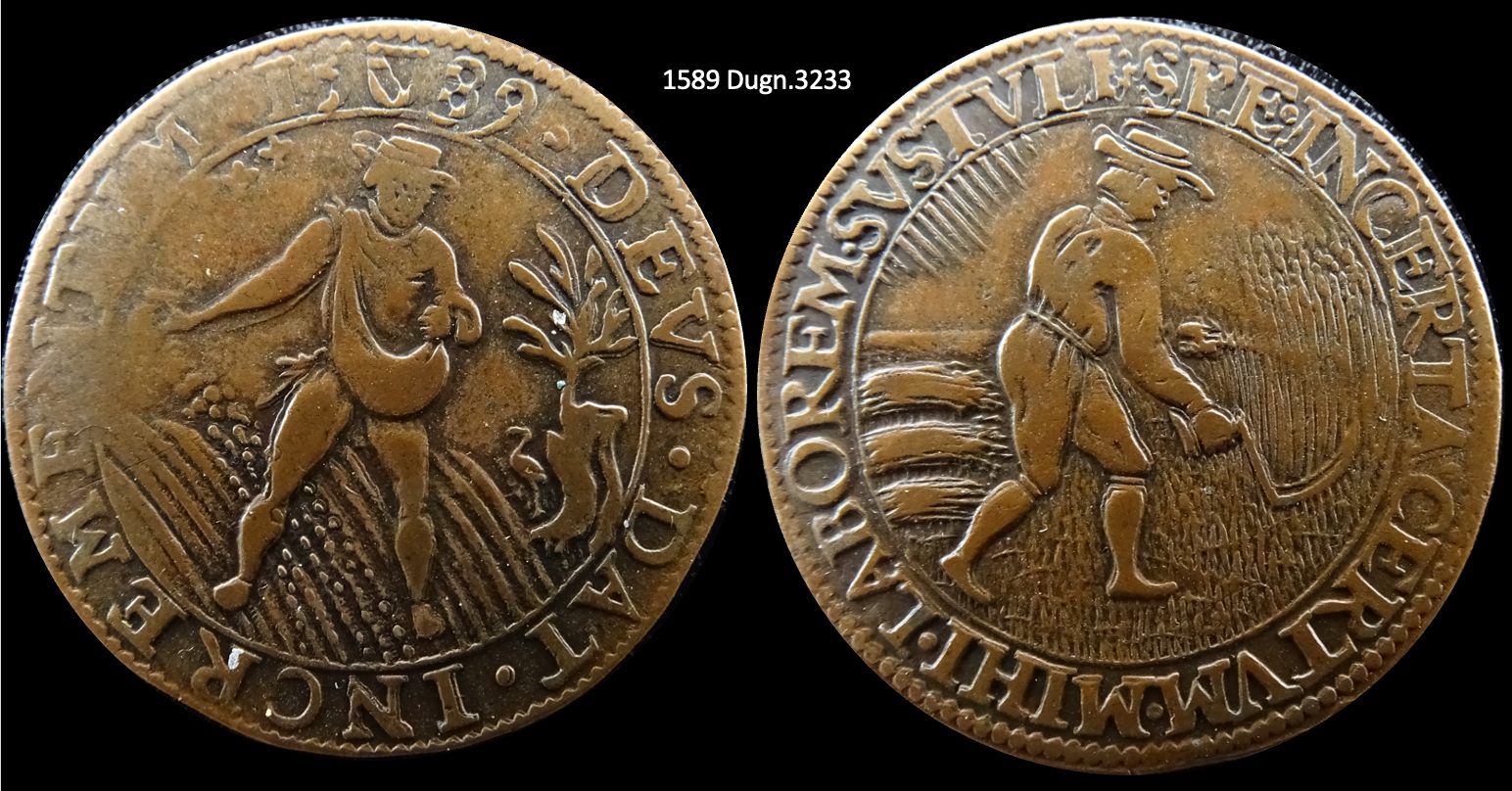 Dugn.3233 Utrecht 'Maurits chosen as Stadhouder' OBV Farmer sowing DEVS DAT INCREMENTVM 1589 REV Farmer harvesting SPE INCERTA CERTVM MIHI LABOREM SVSTVLI the image of the obverse is classical and would be repeated by the design by Roty of the silver coins of the third French Republic 1, 2, and 5 FR "la semeuse" |
|
Moderator
United States
34562 Posts |
Quote:
I think 1c5d might have the "top pop" collection of jetons documenting the Dutch struggle for independence. Agreed--seems like a museum-quality collection. My contribution for the day is this 2 Kreuzer from the German Countship of Pfalz-Simmern.   "If you climb a good tree, you get a push."
-----Ghanaian proverb
"The danger we all now face is distinguishing between what is authentic and what is performed."
-----King Adz
|
|
Pillar of the Community
Belgium
1185 Posts |
1588 Late summer in the year 1588 witnessed the failure of the first Spanish Armada. A large fleet had been assembled the previous months in Spain with the purpose to invade England. The fleet set sail the 28th of May that year in Lisbon and in made its desastrous journey: first through the English Channel and then counterclockwise around the British isles. The first goal was to pick up part of the army of Flanders in the Spanish Netherlands and then sail across the Channel to invade England. However, this plan completely failed because of the combined actions of the English & Dutch navy and weather conditions. When the Spanish fleet was anchored near Calais, the English navy set loose a pack of burning barges loaded with gunpowder that floated with the wind towards the Armada. The Spanish ships needed to cut their own anchors and a strategic crescent formation of the fleet was lost. The next day Dutch and English ships benefited from the chaos among the Spanish ships and inflicted heavy losses during the battle of Gravelines (a town between the harbors of Calais and Dunkirk). The following weeks, unfavorable winds carried the remaining Spanish galleons north, along the eastern British coastline up to the tip of Scotland, then west and finally south along the tricky rocks of Ireland where many ships wrecked because of the storm. The jeton of today remembers the defeat of the Armada. On the obverse one can see a family (Dutch or English - parents and two children), who thank the lord for what had just happened. On the reverse, a big Spanish naval ship is broken in two parts, some soldiers on deck jump or fall into the North sea. 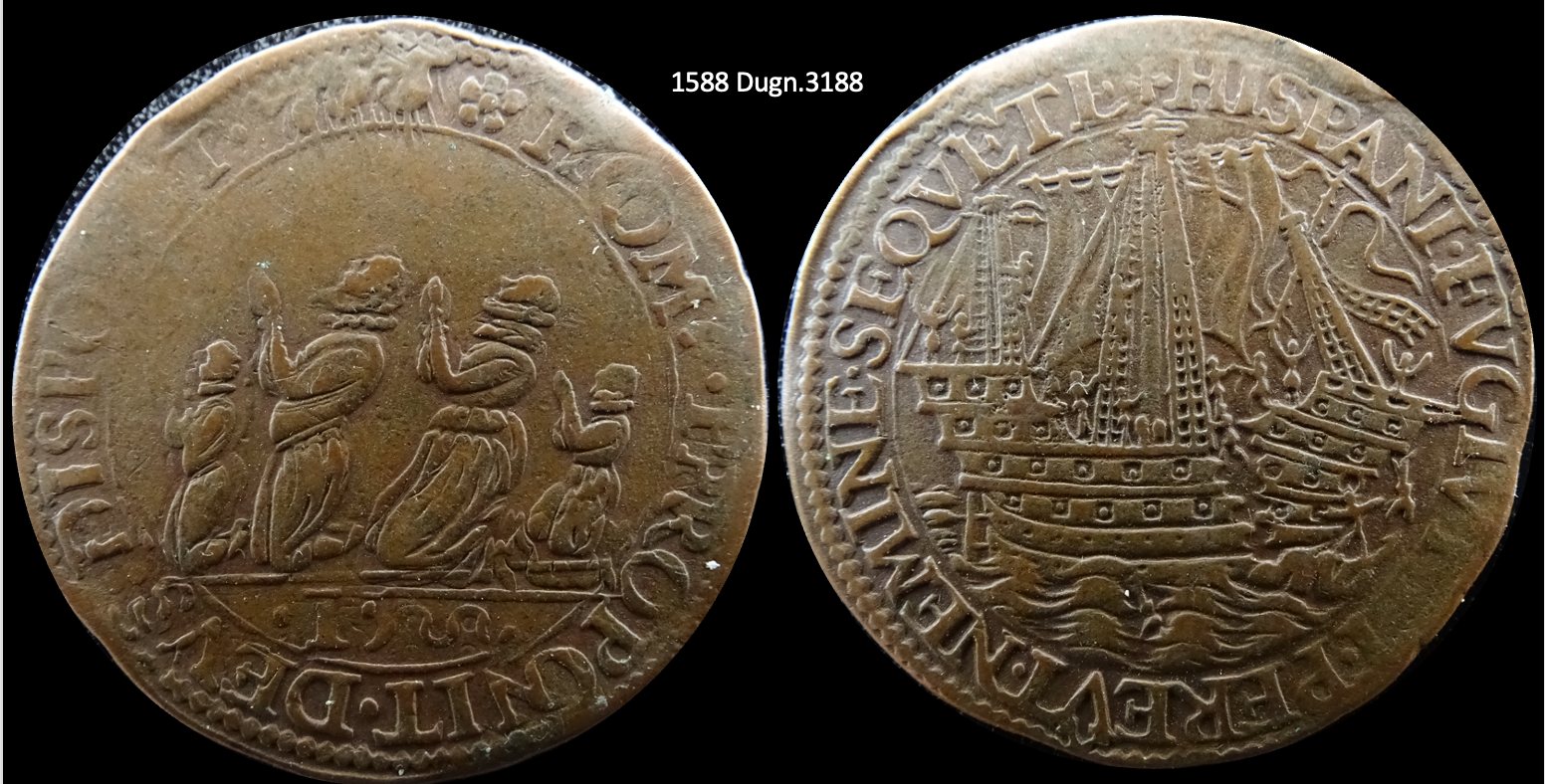 Dugniolle 3188 Dordrecht 'Destruction of the Spanish Armada' OBV: Family (parents and two children) thank God for the turn of events HOMO PROPONIT DEVS DISPONIT 1588 REV: Broken Spanish galleon HISPANI FVGIVT ET PEREVT NEMINE SEQVETES The failure of the 1588 Armada was a turning point in the 80-years war: it arrested a decade of political and military successes of Alexander Farnese (the Duke of Parma) as will be illustrated in this thread the coming week. HOMO PROPONIT DEVS DISPONIT (Man proposes but God decides) (Dutch: De mens wikt, maar God beschikt) is an interesting Legend on the obverse. The man who proposed and decided to carry out a risky plan was King Philippe II of Spain, seen on a Philipsdaalder of Antwerp, 1588, annotated as delm.18). DOMINVS MIHI ADIVTOR (The Lord, my helper, the adage of Philipe) did not work with this operation. 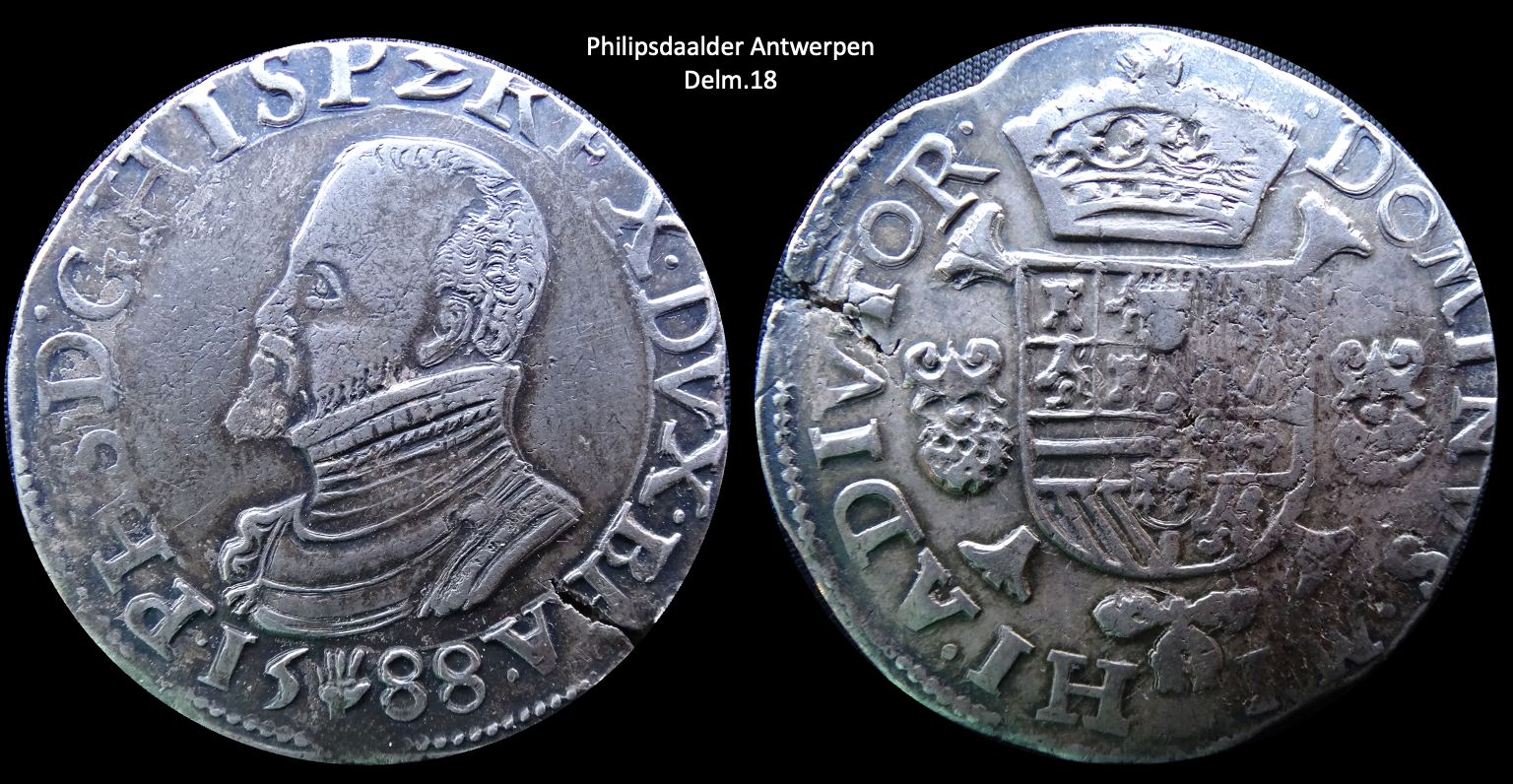 Farnese wept when he heard of the plans to launch an armada with the goal to conquer England. His anticipation turned out to be justified. About 50 ships of the Armada perished in August 1588, and between 10 and 20 thousand Spanish soldiers, many from Farnese's army of Flanders, lost their lifes on sea. A tragedy for the Spanish empire that certainly influenced the time-driven chain of events called history. Edited by 1c5d7n5m
11/12/2023 08:07 am
|
|
Bedrock of the Community
United Kingdom
18904 Posts |
Beautiful items and a wonderful slice of history!  My sole contribution for the 1580s is much more modest - a French 'double tournois' that has seen better days! 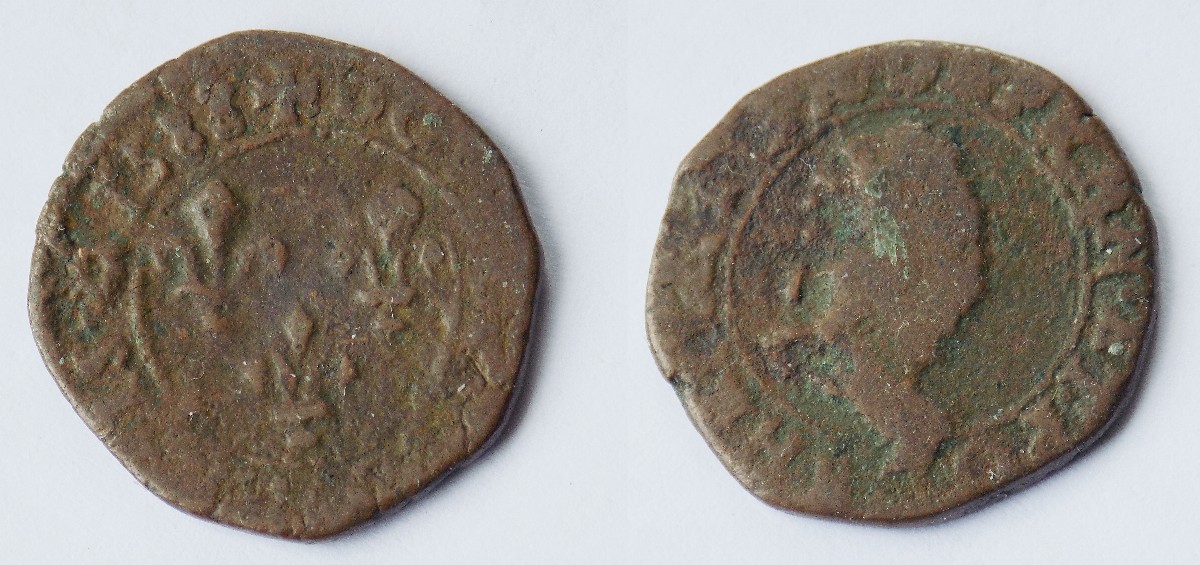 |
|
Pillar of the Community
Belgium
1185 Posts |
thanks, Numisrob here another example of the same jeton, of lesser quality, except for the date, which is poorly readible in the example above 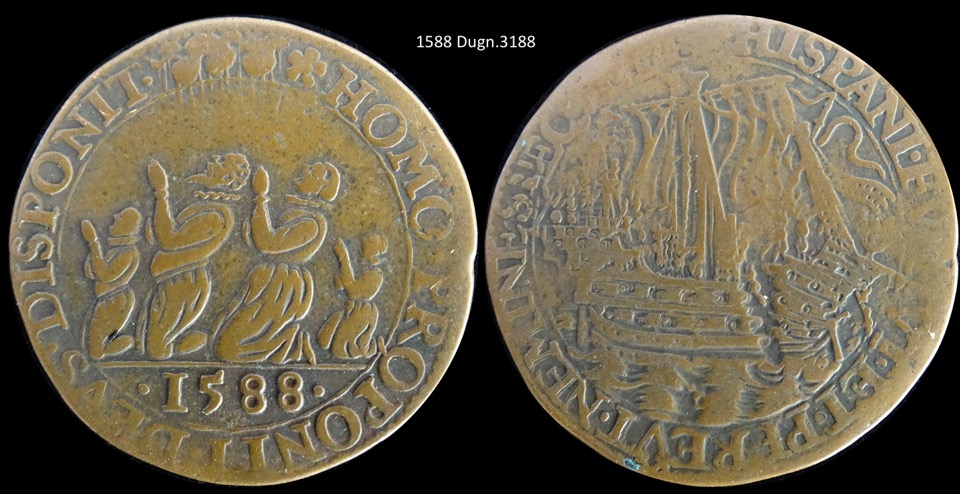 finally a painting of the Armada in problems near Calais because of the fire barges unleashed by the English 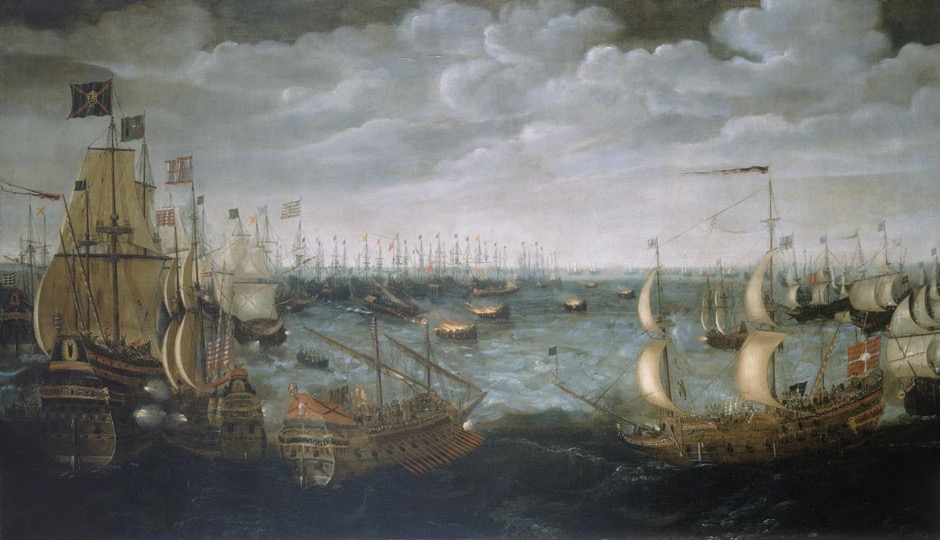 |
|
Moderator
United States
34562 Posts |
This 1/2 Batzen was minted about 50 km west of my previous contribution (in Pfalz-Veldenz): 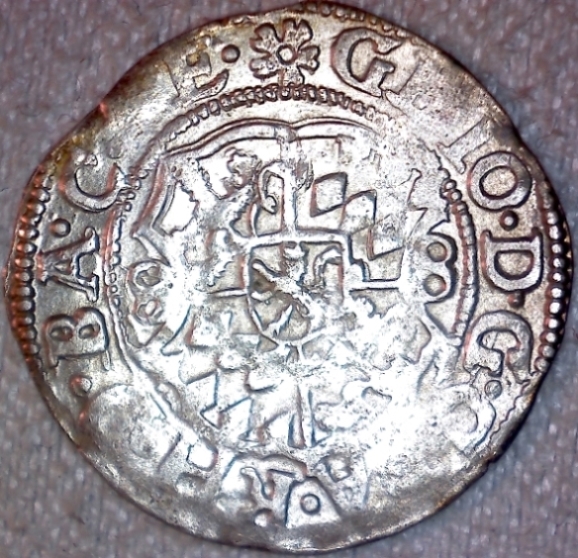 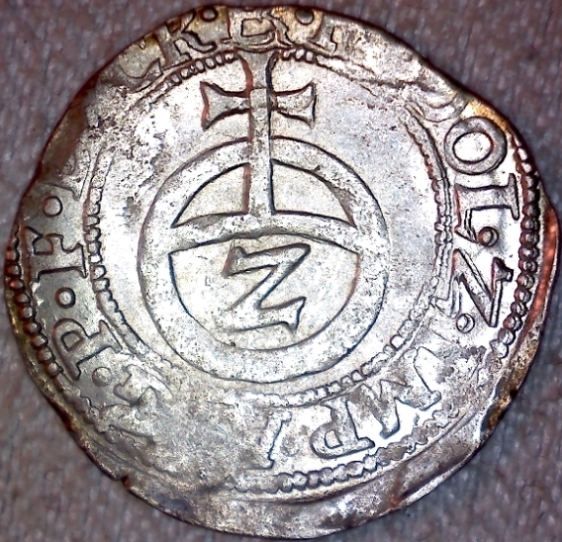 "If you climb a good tree, you get a push."
-----Ghanaian proverb
"The danger we all now face is distinguishing between what is authentic and what is performed."
-----King Adz
|
|
Pillar of the Community
United States
6879 Posts |
1587 Austria Thaler minted in Kremnitz 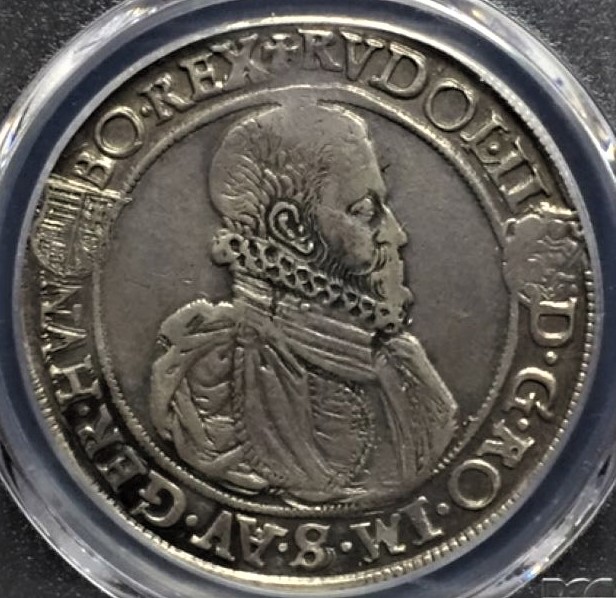 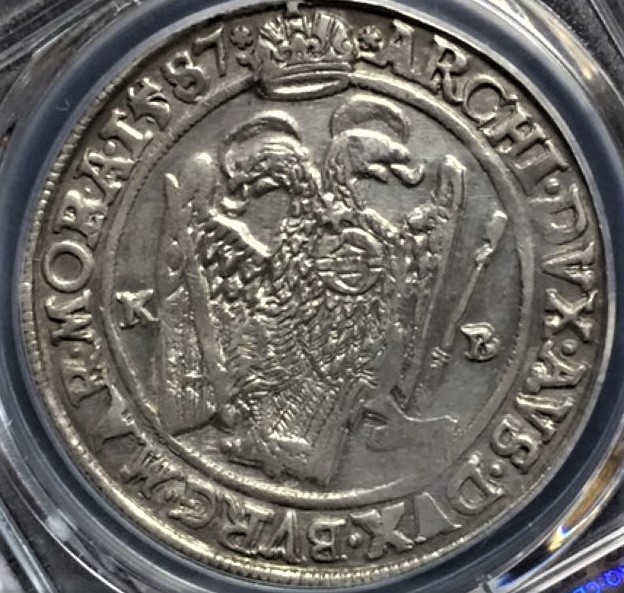 |
|
Pillar of the Community
Sweden
2124 Posts |
Navarre/Bearn 1587, 1/4 ecu, Henry II, Pau mint.  The Navarrese province of Bearn minted its own coins, with the same design as the coins of Navarre, but with modified coat of arms and slightly modified inscriptions. Henry was Lord Henry II of Bearn and at the same time he was king Henry III of Navarre. In 1589, as head of the house of Bourbon when his cousin Henry III of France died without children, he also inherited the throne of France. Consequently, he became Henry IV of France and Navarre. On the coins from Bearn, Henry's lordship is signified by the letters DB - Dominus Bearnie - after his regal title (REX NAVARRAE D B). As the seat of origin for the French kings, Bearn kept its privilege to mint coins with its own coat of arms and the D B title until 1791. |
|
Pillar of the Community
Belgium
1185 Posts |
1587 To tell a story backwards is a challenge ... but I'll keep trying to make a coherent story. It was not known this year that the defeat of the Armada (August 1588) would implicate the end of the presence/influence of Alexander Farnese in the low countries. As we saw last weeks, his activities moved to Northern France. His succes the past decade in the Spanish Netherlands had been impressive. Between 1579 and 1588 he recaptured many towns and cities in the Southern Provinces of the low countries and thereby accomplished the creation of borders that more or less define the current countries of the Netherlands and Belgium. Farnese departed from largescale chaos after the fury of Antwerp (1576) that created the "third revolt" against Spain. Farnese could convince many in the Spanish Netherlands to remain loyal to the king and he undertook a well conceived military operation against the rebels. The situation of the revolting United Provinces became more precarious after the assassination of its leader William of Orange (1584). The Dutch needed new leadership and help was asked from England. Queen Elizabeth I responded with financial support and sent Robert Dudley, the Earl of Leicester to the Netherlands. Leicester came to the Netherlands in 1587 and remained in charge for military operations only for two years: he failed on many points, especially on the East border (the IJssel towns Deventer and Zutphen were lost to Spain). A numismatic trace back to this period are the beautiful Leicester-daalders and Leicester-realen, taler-sized silver pieces that were created with great care in the United Provinces (Holland, Zeeland, Gelderland, Utrecht and Friesland) (Overijssel would follow later). These hand-cut and -hammered pieces are of great design and among the best of silver pieces produced in that period. Below an example from the mint of Dordrecht, province of Holland: 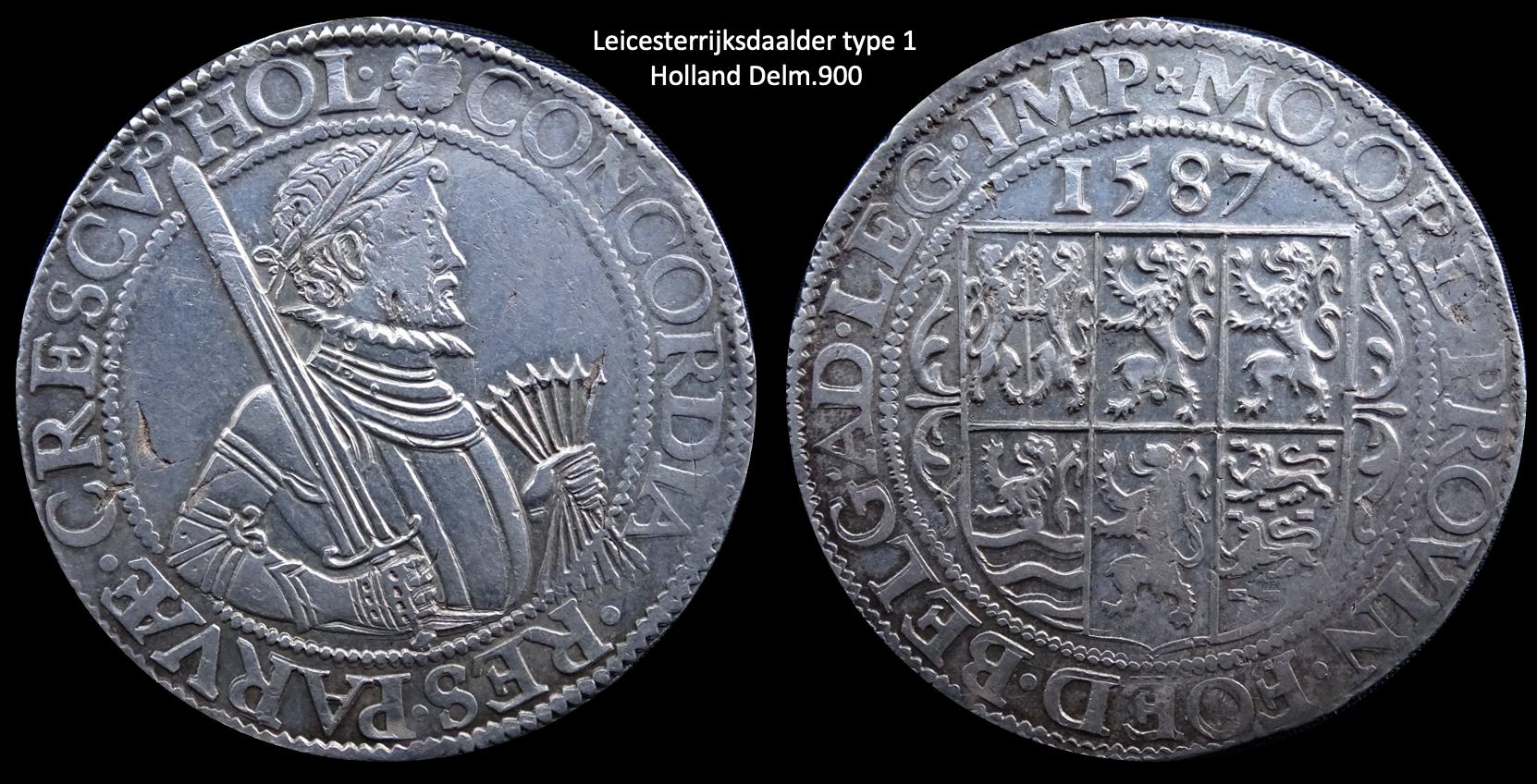 Leicesterdaalder type 1 Holland 1587, Delm. 900 OBV: earl of Leicester holds sword and bundle of six arrows CONCORDIA RES PARVAE CRESCV HOL REV: coat of arms of the six united provinces 1587. MO ORD PROVIN FOED BELGA AD LEG IMP Also from Dordrecht is the jeton below annotated as Dugn.3143. It is a piece of propaganda of the Northern Provinces as it opposes on the one hand a situation of hunger and poverty in the Netherlands under Spanish rule and on the other hand abundance in the Northern revolting provinces. 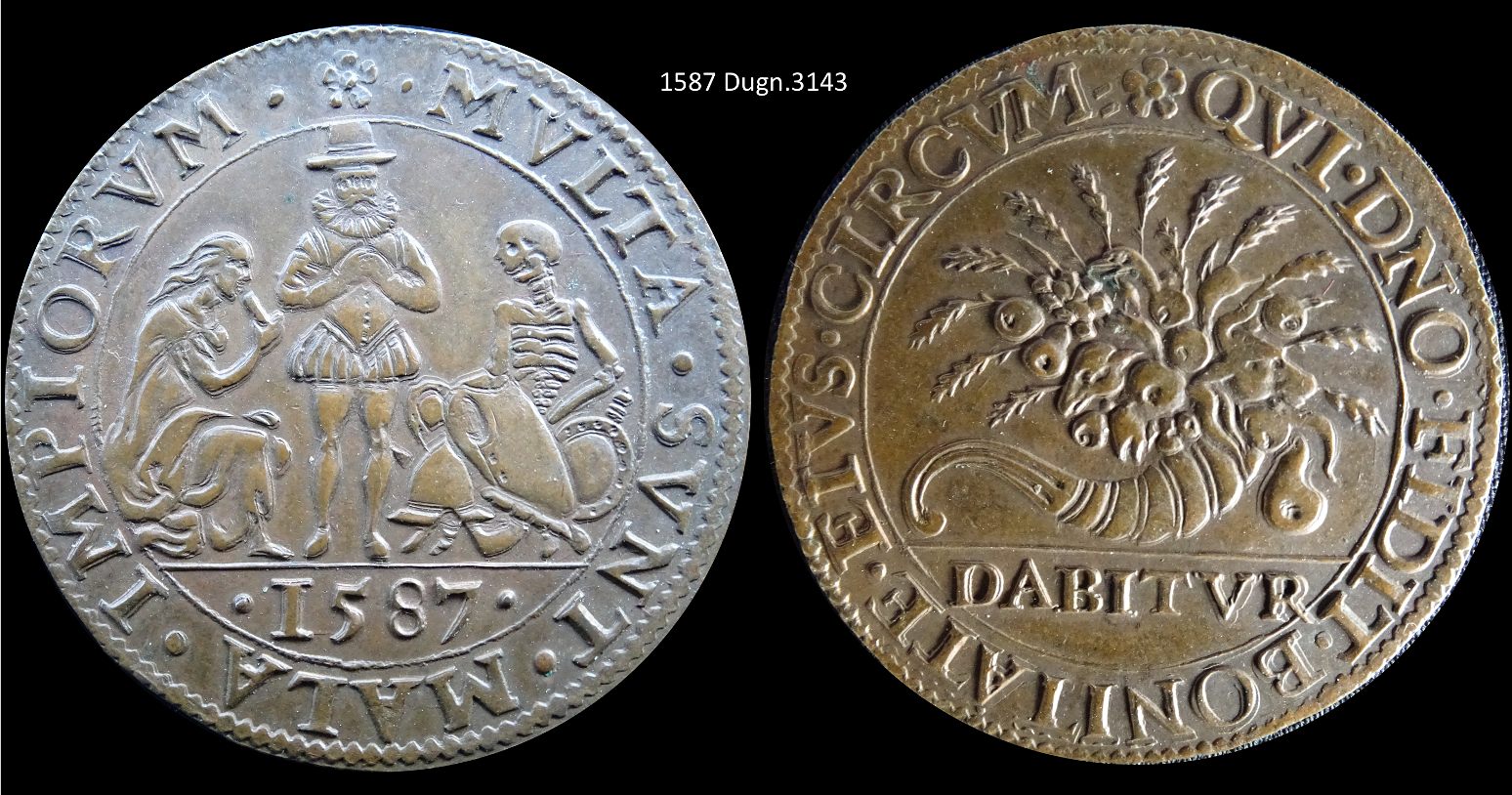 Dugniolle 3143 Dordrecht 'Poverty and hunger in Artois' OBV: Spanish soldier stands between the allegoric figures Hunger & Death 1587 legend: MVLTA SVNT MALA IMPIORVM (there are many evils of the wicked) REV: Horn of abundance DABITVR (it will be given) legend: QVI DNO FIDIT BONITATE EIVS CIRCVM (he that trusteth in the Lord, shall have goodness around him) Edited by 1c5d7n5m
11/13/2023 10:33 am
|
| |
Replies: 5,946 / Views: 249,676 |






 First Page
 Previous Page


 Posted 11/10/2023 11:32 am


