| Author |
 Replies: 5,946 / Views: 249,673 Replies: 5,946 / Views: 249,673 |
|
|
|
Moderator
  United States
196264 Posts |
Quote:
Also from Dordrecht is the jeton below annotated as Dugn.3143. A really nice looking example!  |
|
Pillar of the Community
Belgium
1185 Posts |
thanks jbuck great 1587 silver pieces from Kremnitz and Navarra/Bearn today |
|
Moderator
United States
34562 Posts |
This small silver Pfennig comes from the German Free City of Regensberg. Those crossed keys are common on the coins of this city. 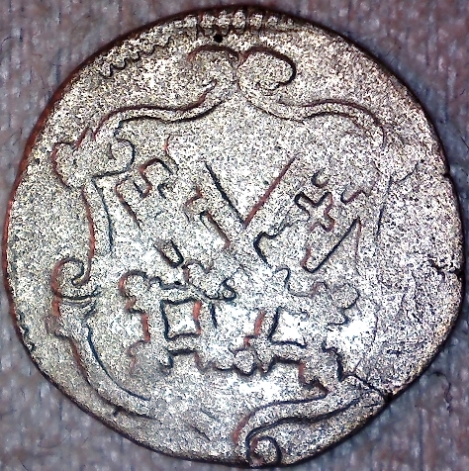 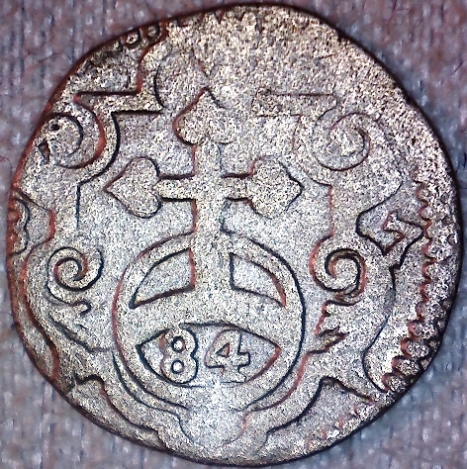 "If you climb a good tree, you get a push."
-----Ghanaian proverb
"The danger we all now face is distinguishing between what is authentic and what is performed."
-----King Adz
|
|
Pillar of the Community
United States
6879 Posts |
1587 France 1/8 Ecu - Henri III 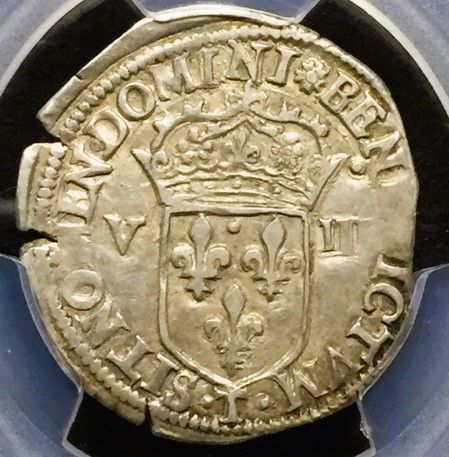 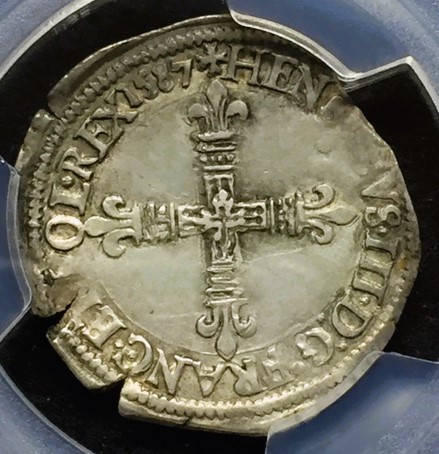 Edited by Keith67
11/13/2023 4:21 pm
|
|
Pillar of the Community
Belgium
1185 Posts |
1586 Two pieces that link to the presence of Robert Dudley, earl of Leicester, favorite of queen Elizabeth I, in the Northern Provinces: * First a Leicesterreaal, a heavyweight silver piece like the Philipsdaalder. This example is from the mint of Middelburg, province of Zeeland. 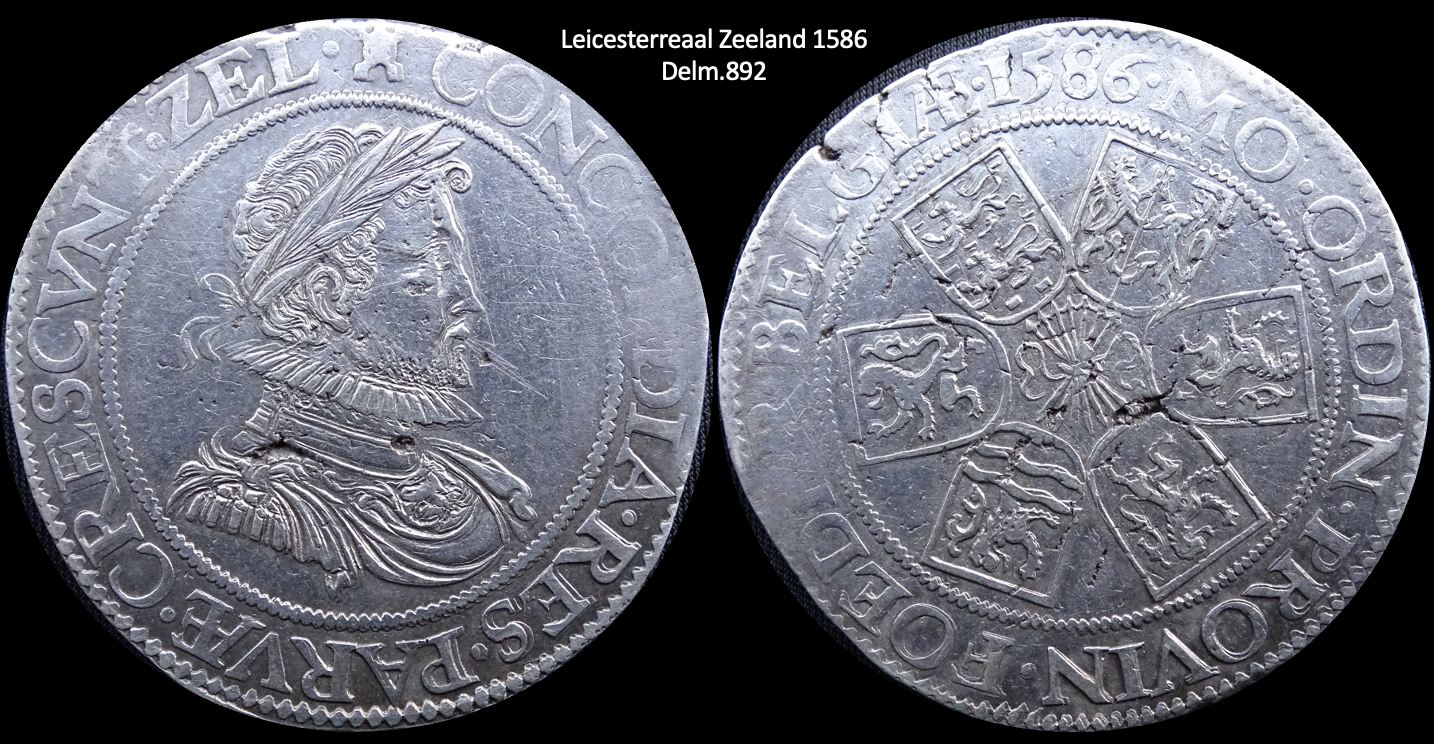 The design is comparable to the Leicesterdaalder of yesterday (protrait of the earl on the obverse, coats of arms of the six provinces on the reverse) but there are some differences in layout. Moreover this piece is 10% heavier and therefore unfavorable when exchanged for regular daalders. So the reaal was only minted for one year in small quantities. ** Second a jeton that shows on the reverse that queen Elizabeth sends Leicester (standing on the left) to the Netherlands, as was requested by the Dutch nobility (kneeling persons). 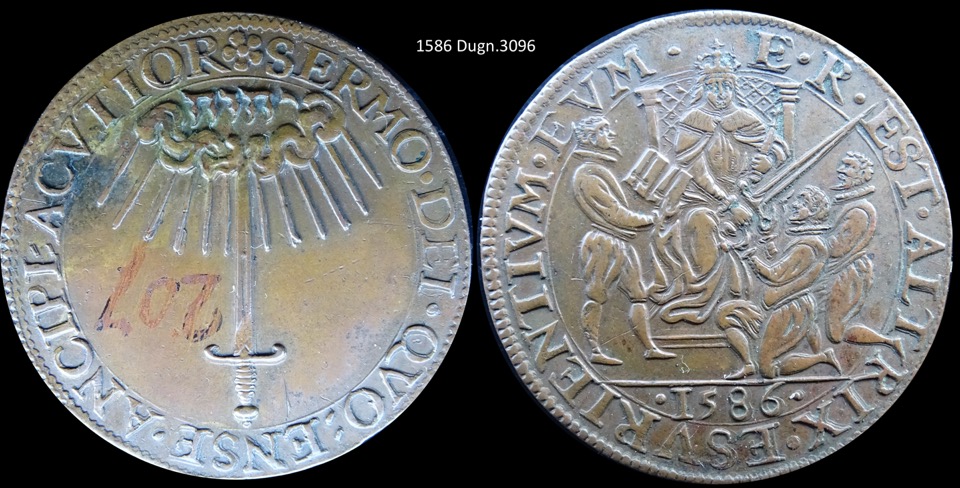 1586 Dugn.3096a Dordrecht 'Aid from the earl of Leicester' OBV: Sword under intense light and tetragrammaton SERMO . DEI . QVO : ENSE . ANCIPI . ACVTIOR rose REV: Elizabeth offers a sword to the Dutch (kneeling), Leicester (standing) E . R . EST . ALT RIX . ESVRIENTIVM . EVM 1586 between points The second jeton of today is from the Spanish Netherlands were military successes piled up, the most important of which was the recent capture of Antwerp (1585) after a spectacular siege. Antwerp was of great economic importance to the low countries, and the conquest of the city from the rebels by Farnese was an important fact.  Dugniolle. 3110 Brabant 'Vigilance of Alexander Farnese" OBV: Stork 'on watch' standing on a plow VIGILIA ET LABORE 1586 REV: coat of arms Habsburg G POVR LA CHAMB D COMPT EN BRA Edited by 1c5d7n5m
11/14/2023 08:55 am
|
|
Moderator
United States
34562 Posts |
@1c5, when I think about the imagery associated with a stork, I think childbirth (the stork delivering new babies). Is that the case with your last Jeton, or is it something else? Also, I assume that the "LABORE" part of the inscription means working the fields rather than the effort required to give birth, but could it be a double-entendre? Maybe I'm reading too much into it. Here is a uniface Zweier (2 Pfennig) from the Austrian State of Salzburg: 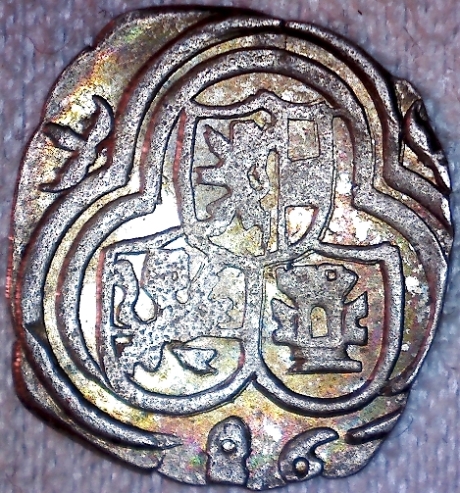 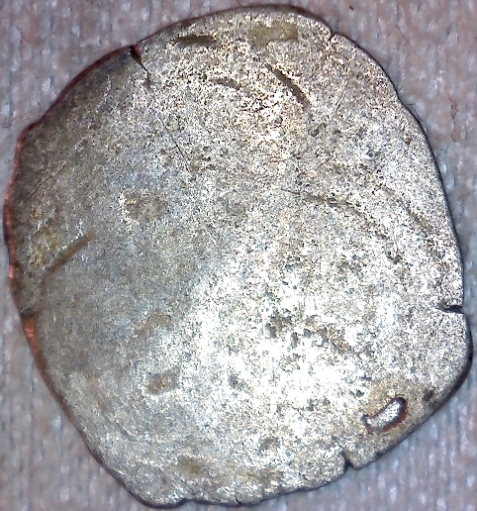 "If you climb a good tree, you get a push."
-----Ghanaian proverb
"The danger we all now face is distinguishing between what is authentic and what is performed."
-----King Adz
|
|
Pillar of the Community
Belgium
1185 Posts |
@spence, your point is well taken: the connection in Europe of storks to fertility, monogamy, childbirth, is older than 1586 Quote:
could it be a double-entendre? perhaps it does make sense, these jetons are often open to more than one interpretation but the most direct interpretation of VIGILIA ET LABORE (be watchful and work) is to tell the people of the Spanish Netherlands to follow the virtues of Alexander Farnese. |
|
Pillar of the Community
 United States
8056 Posts |
Spectacular Leicesterreal!  (and I love the balancing stork, though not quite to the same extent numismatically) To the east, Sigismund has not yet been envisioned as a possible king, but we have Stefan Bathory on the throne, a Transylvania prince who married Anna Jagiellon in 1576, last in the previous Polish-Lithuanian reigning family (so we might see him here for a week and a half). Here is a 1586 trojak struck in Riga 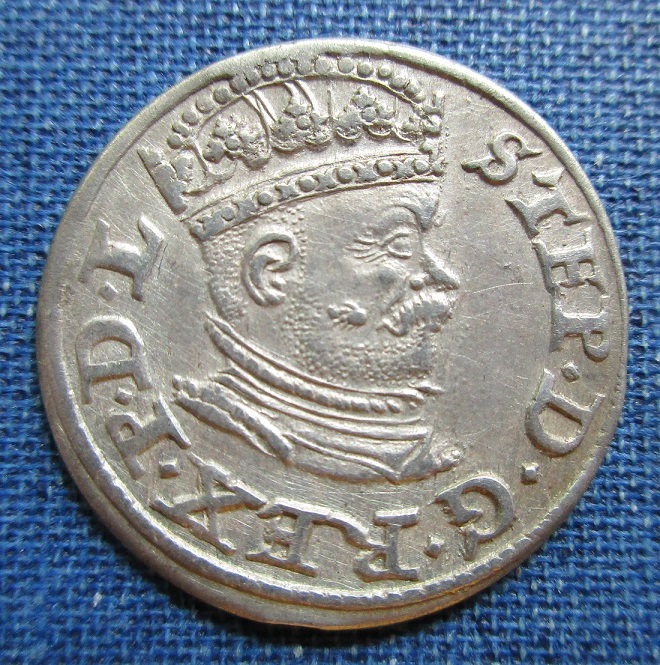 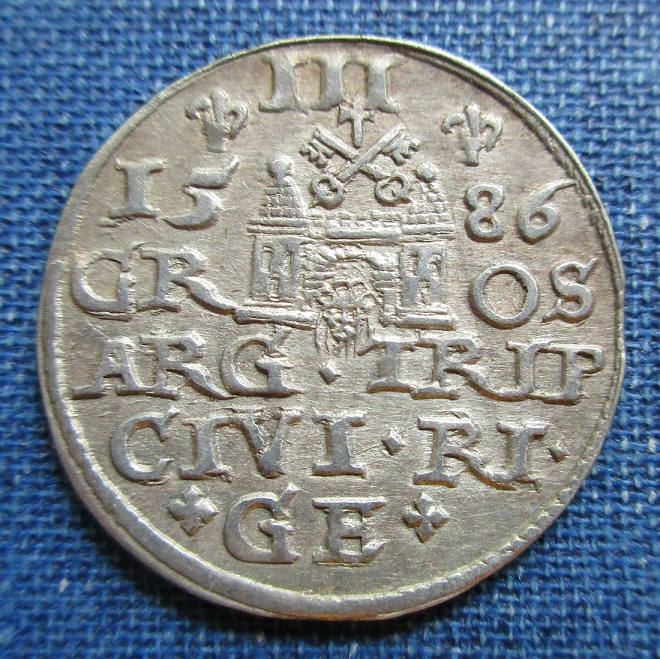 Edited by tdziemia
11/14/2023 7:13 pm
|
|
Moderator
United States
34562 Posts |
Ted, what is on that dude's cheek? Is it a hairy mole? Portraits of him seem to feature a tuft of hair on his right cheek. That plus the pimple on his nose add quite a bit of realism to this portrait. For today, I've got a Half Batzen from the German Countship of Pfalz-Zweibrüken dated 1585 AD: 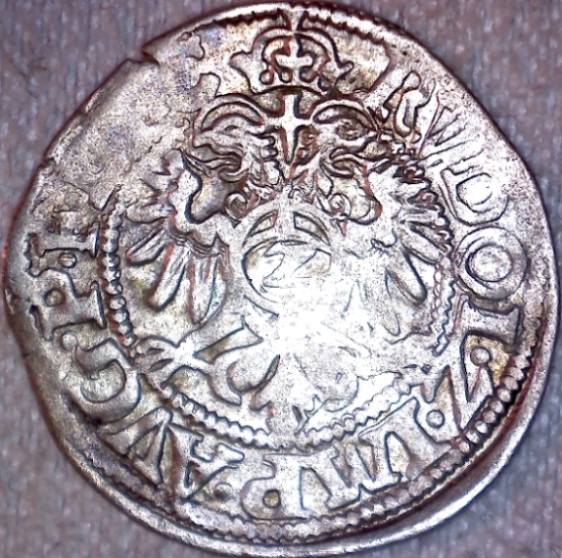 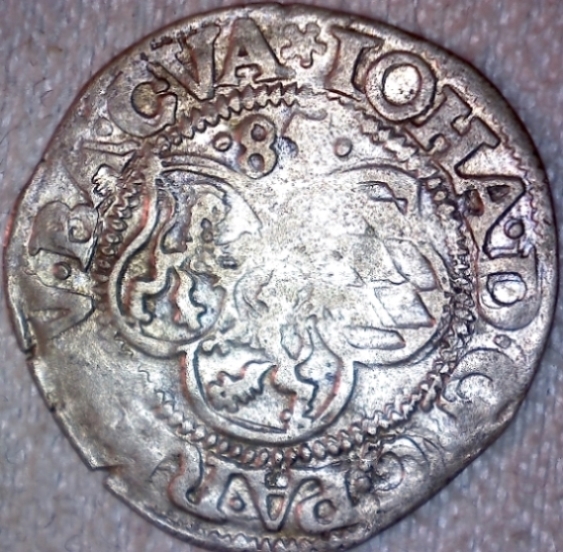 "If you climb a good tree, you get a push."
-----Ghanaian proverb
"The danger we all now face is distinguishing between what is authentic and what is performed."
-----King Adz
|
|
Pillar of the Community
United States
8056 Posts |
Quote:
Ted, what is on that dude's cheek? Is it a hairy mole? I think that's right. I get the impression he was not terribly vain. Those 1586 Riga trojaks must have been minted in high quantities; they are not all that expensive for a 440 year old type. Same king different mint and engraver (Poznan) for 1585 (photos courtesy of D. Marciniak aucion house): 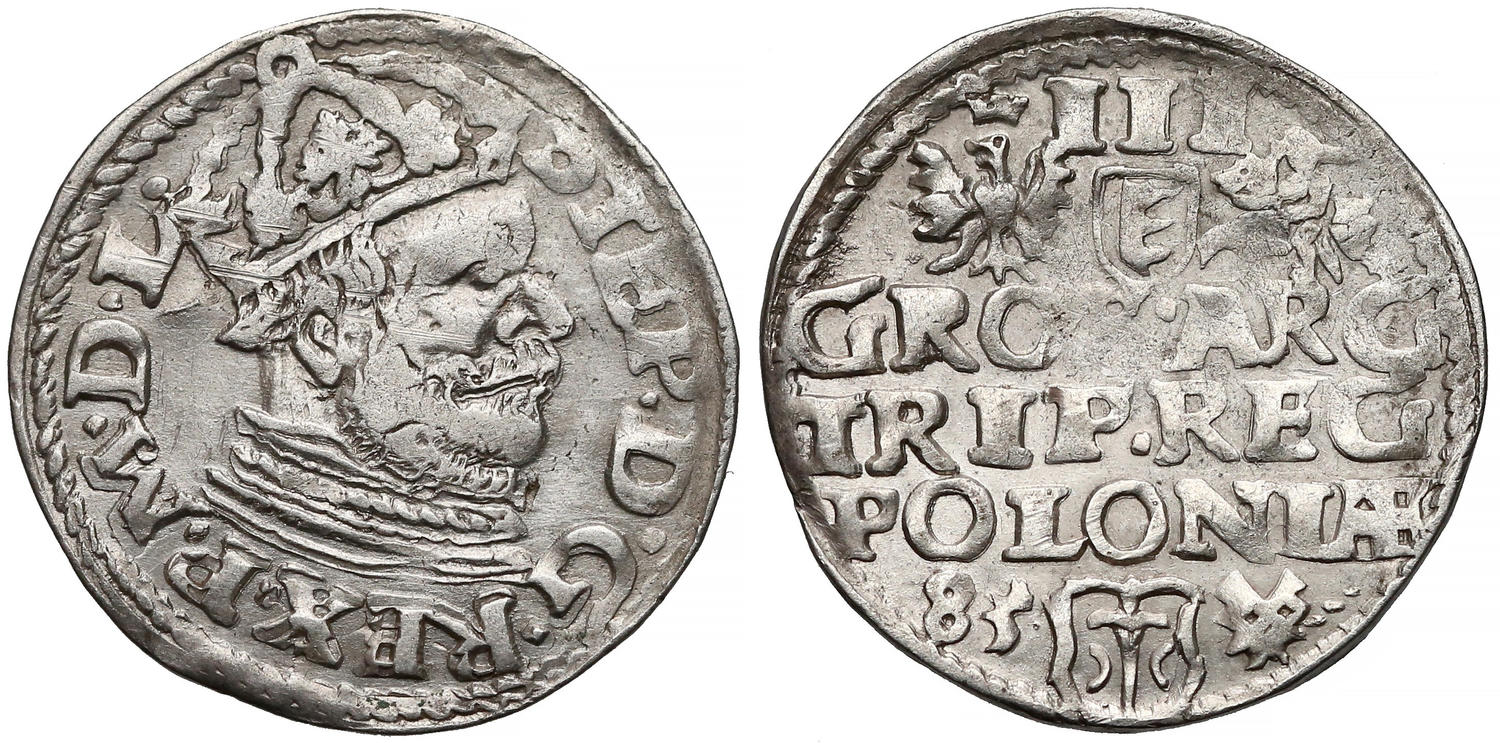 |
|
Pillar of the Community
Belgium
1185 Posts |
@tdziemia, nice coin with vivid and sharp portrait of Stefan Bathory, interesting details e.g. much more attention to show imperfections like the mole than the right eye
|
|
Pillar of the Community
Belgium
1185 Posts |
1585 Like in 1588, the most important event of the present year took place in August, when the metropole Antwerp surrendered, after more than a year of siege, to the army of Flanders led by Alexander Farnese. The city was well defended by strong walls and the defence was supported by the courage of its citizens and the leadership of Filips van Marnix, lord of Sint-Aldegonde who also was chief adviser of William of Orange during the first 15 years of the war. However, Farnese succeeded in completely sealing off the city from outside supplies and support, and under such cicumstances it is only a matter of time, surrender being sure. The most impressive part of the enclosure of Antwerp was a pontoon brigde closing the Scheldt river close to Antwerp (see woodcut print below), prevening any ouside help from the Dutch rebels to the starving city 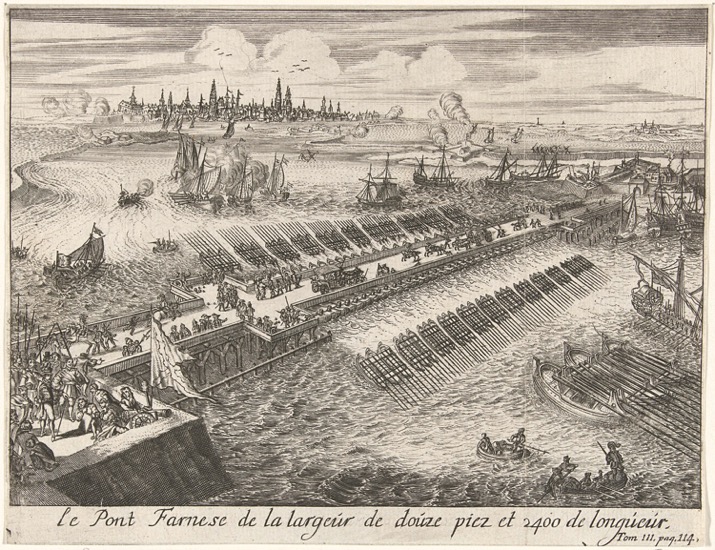 When every attempt of the Dutch rebels to blow up or burn the pontoon failed, Antwerp had to surrender. The agreement for the surrender was that all protestants should leave the city within two years and they were allowed to do so unharmed. We'll see the coming weeks examples of much less merciful conditions of surrender. The massive exodus from citizens of Antwerp to the north (and the blockade of the downstream Scheldt for 2 centuries by the Dutch) created both the economic decline of Antwerp and the rise of Amsterdam which was not the most important town of Holland before 1585. Below a half daalder from Antwerp under siege. This 'Robustus' half daalder is unlike regular siege money (these were square or lozenge shaped and stamped on one side only). This half daalder shows the coat of arms of Brabant on one face and the bravery of the defending citizens on the other. The legend CONFORTARE ET ESTO ROBVSTVS (have comfort and be strong) gave piece of silver its name. 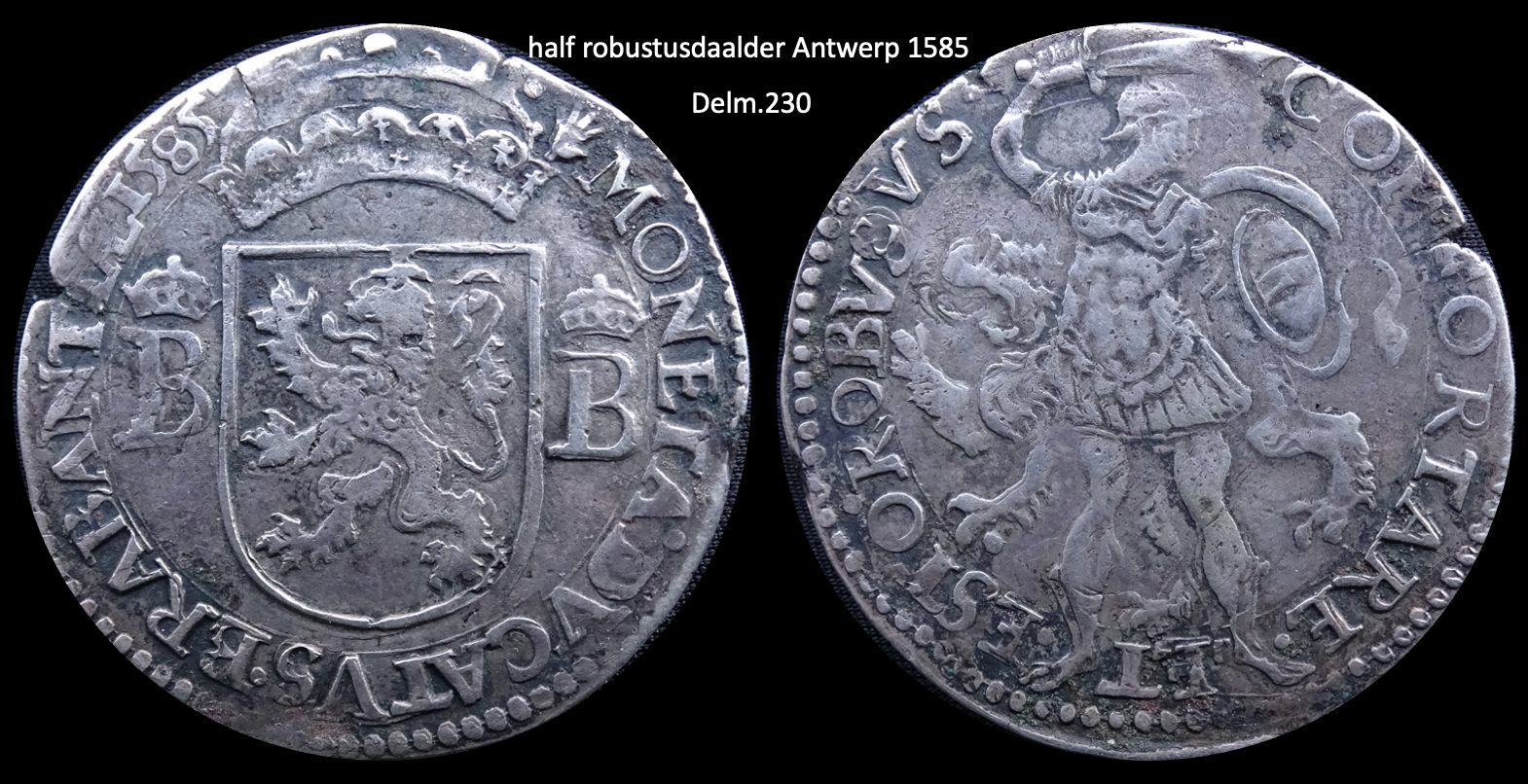 The jeton of today also memorizes the fall of Antwerp (together with the city of Nijmegen south of the Waal river) as seen from the side of the Dutch rebels. The obverse shows Spanish masters that muzzle a donkey (Nijmegen) and a horse (Antwerp). The reverse alludes to the aid given by Elizabeth I of England to the rebels of the Dutch republic. The fall of Antwerp and the assassination of William of Orange the year before, made the cause of the revolt against Spain most precarious. Clearly, help from England (and France) was needed to win the war. We see the sympathy of the queen for the Dutch cause. This sympathy was officialized by the treaty of Nonsuch; the military aid that followed has very likely stimulated Phillipe II for his plan to build an Armada (see 1588). 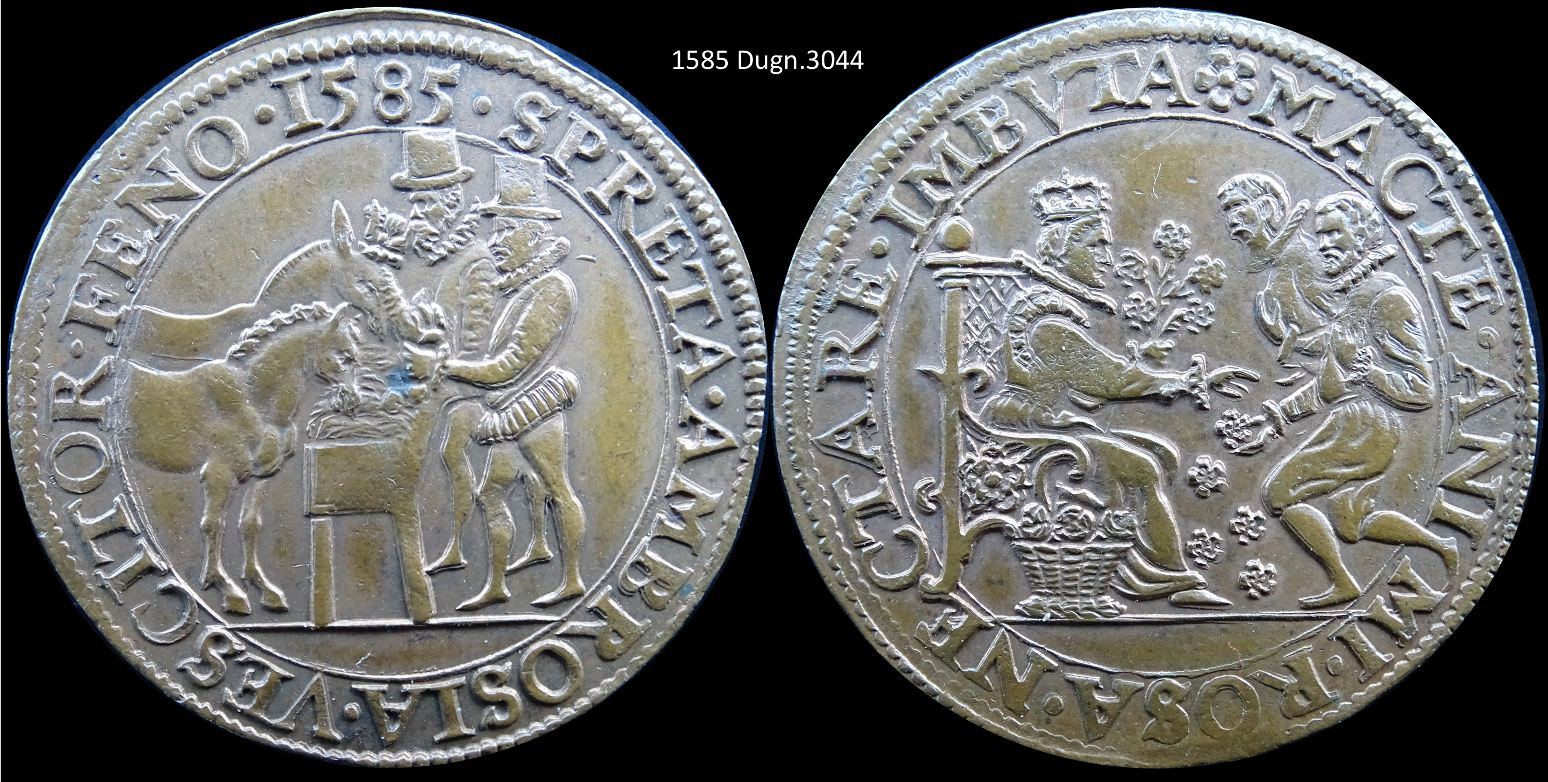 Dugniolle 3044 Dordrecht 'Surrender of Antwerp and Nijmegen//treaty of Nonsuch' OBV: Two Spanish soldiers put a muzzle on a horse (Antwerpen) the donkey (Nijmegen) already has a muzzle SPRETA AMBROSIA VESCITOR FENO (ambrose removed - now you'll eat hay) 1585 REV: Queen Elizabeth gives roses to Dutch nobles MACTE ANIMI ROSA NECTARE IMBVTA (let your mind be influenced by nectar of roses) This is one of the most iconic propaganda jetons of the 80-year war with nectar and ambrose in the legends. It became immediately a collectors item, so quite a few survving pieces are well preserved. Edited by 1c5d7n5m
11/15/2023 11:47 am
|
|
Moderator
United States
34562 Posts |
This Pfennig was minted in the German Free City of Regensberg in 1584 AD: 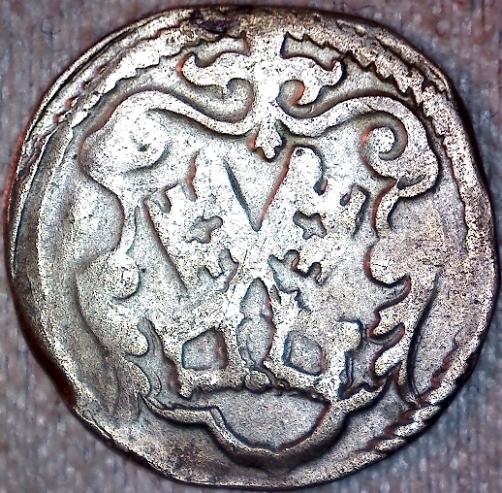 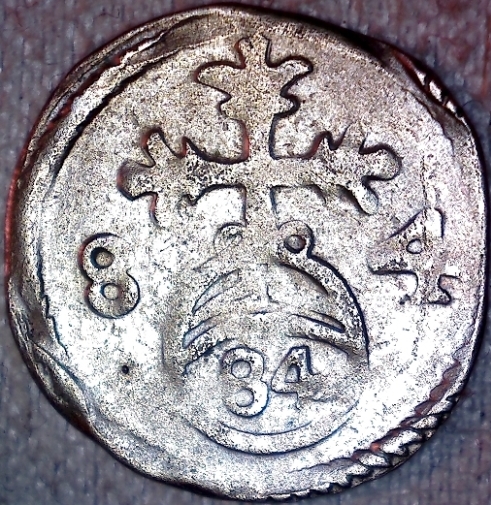 "If you climb a good tree, you get a push."
-----Ghanaian proverb
"The danger we all now face is distinguishing between what is authentic and what is performed."
-----King Adz
|
|
Pillar of the Community
Sweden
2124 Posts |
Quote:
The most impressive part of the enclosure of Antwerp was a pontoon brigde closing the Scheldt river close to Antwerp (see woodcut print below), prevening any ouside help from the Dutch rebels to the starving city I appreciate all the dramatic moments out of history that you present, 1c5d7n5m! France 1584, 1 franc, Henry III, Toulouse (M). In 1578, Henry III reformed the French monetary system and introduced the ecu and franc as denominations with fixed values of 60 respectively 20 sous tournois. 1 and ½ ecus were gold coins and 1 franc (= 1/3 ecu) was the largest silver coin (the largest coin, in fact, with its 35 mm diameter). The reform lasted until 1602, then Henry IV decided to go back to the more flexible (for the crown) system of assigning values to ecus and francs, that is, declare them worth as many sous as he saw fit at any given time. |
|
Pillar of the Community
Belgium
1185 Posts |
1584 This is the year of the assassination of William of Orange, resulting in a deep shock and power vacuum in the Northern Provinces. The father of the United Provinces was dead. The two jetons below memorize the assassination. Dugn.2995 shows on the obverse that Baltazar Gerardts (the man who murdered Orange by a bulled fired at very close range) was instructed to do so by King Philippe II of Spain. Dugn.2997 praises his leadership in the rebellion against Spain. 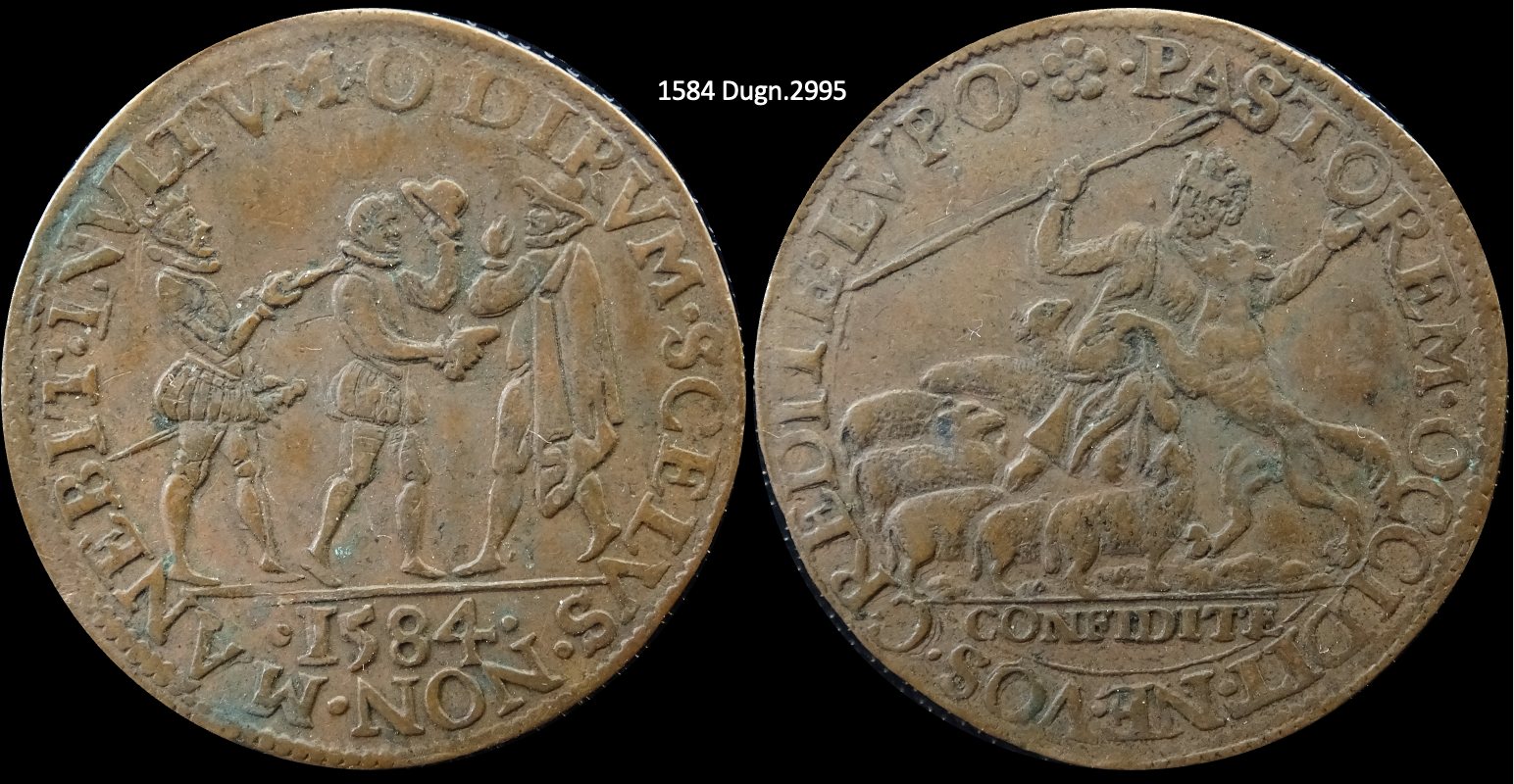 Dugn.2995 Dordrecht 'Assassination of William of Orange' OBV: Balthasar Gerards is commanded by Philips II to shoot William of Orange O DIRVM SCELVS NON MANEBIT INVLTVM 1584 REV: shepherd admidst his sheep killed by a wolf PASTOREM OCCIDIT NE VOS CREDITE LVPO / CONFIDITE 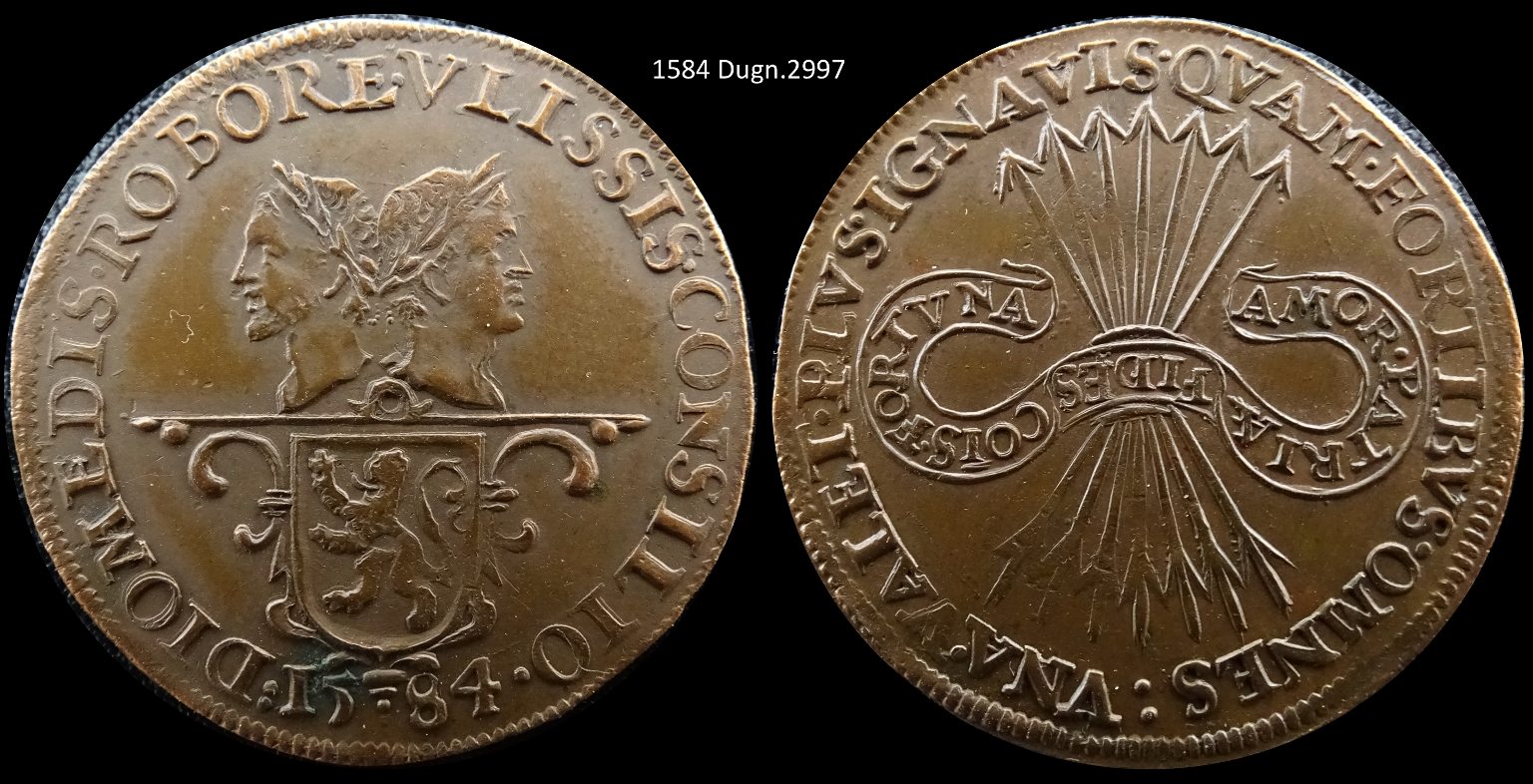 Dugn.2997 (var); 'Qualities of William of Orange'. OBV: Laureled heads of Ulysses & Diomedes anbove coat of arms United Provindes. DIOMEDIS ROBORE VLISSIS CONSILIO 1584 REV: Bundle of arrows held together with band on which is written AMOR PATRIA FIDES COIS FORTVNA legend: VNA VALET PLVS IGNAVIS QVAM FORTIBVS OMNES In the Spanish Netherlands Alexander Farnese (the duke of Parma) was taking further control over the cities that rebelled. The following jeton memorizes that he took the city of Dunkirk (Duinkerken) a strategic place to control the trade route through the English Channel and a place that has been in the eye of the storm of war so many times in history. 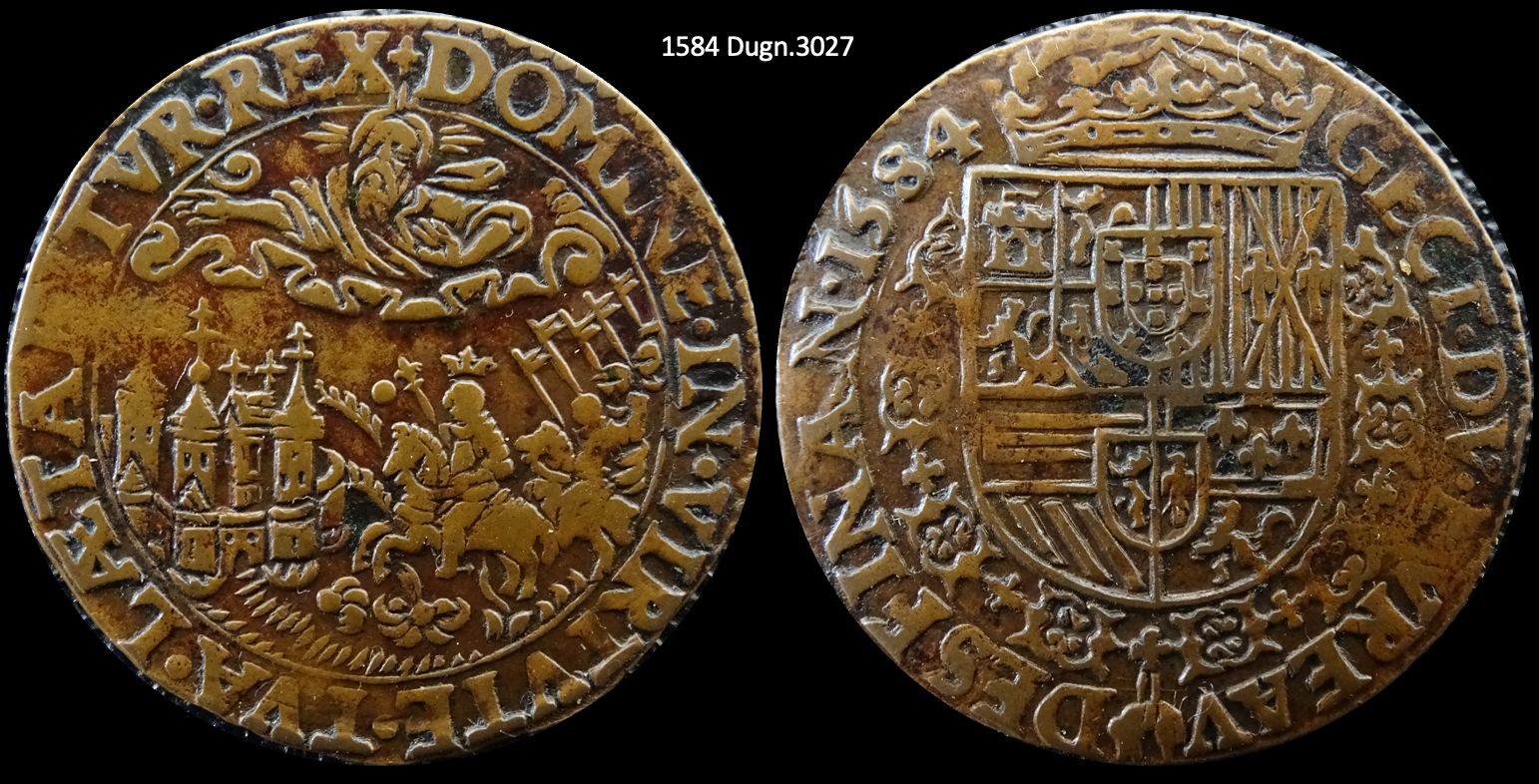 Dugn.3027 Spanish Netherlands 'Parma captures Duinkerken' OBV: Spanish army near Duinkerken DOMINE IN VIRTVTE TVA LAETABITVR REX REV: Coat of arms Habsburg GECT DV BVREAV DES FINAN 1584 |
| |
Replies: 5,946 / Views: 249,673 |







 First Page
 Previous Page


 Posted 11/13/2023 12:39 pm





