1583
The low countries were divided in three parts at this stage of the war:
1) the Northern provinces who had united by the Union of Utrecht (1579) and who had abdicated from king Philip
2) the most Southern provinces (Arras, Hainaut, Namur) who in reaction to the above had united by the Union of Atrecht (1579)
3) the "in-between" provinces of Brabant, Flanders, Ghelders where political chaos (instability, different leaders) was prominent.
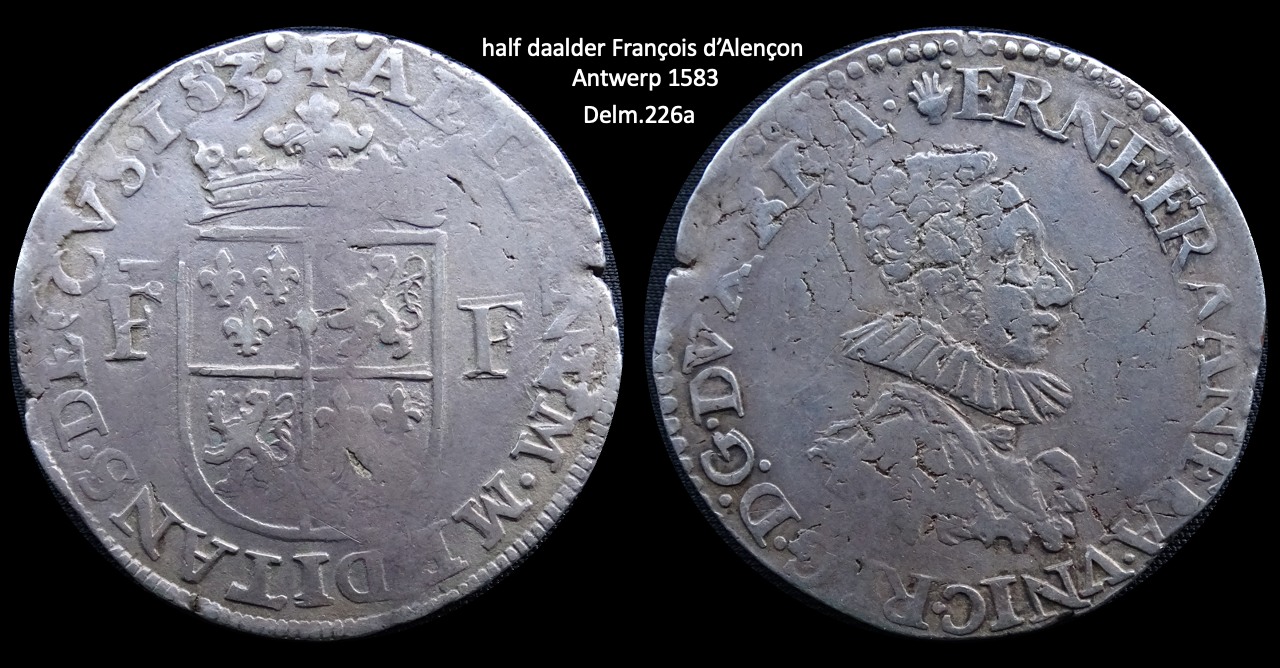
The pieces of today all related to third region and illustrate the instability, in particular related to the presence of the governor, François-Hercule de Valois-Angoulême, duc d'Alençon, duke of Anjou (1555-1584), youngest son of Catherine de' Medici and Henri II of France and the younger brother of king Henri III of France.
The first piece is a half Daalder minted with the portrait of François d'Alençon called Anjou from now on. These half daalders were minted in Antwerp and Bruges only in small quantities and these are rare today. The obverse shows the coat of arms of Anjou and his (not very modest) adage AETERNUM. MEDITANS. DECUS (aspiring to eternal glory). The reverse shows a very sharp hand (mintmark of Antwerp), a weak portrait and the legend FRN · F · FRAAN · FRAN · VNIC · REG · D·G · DUX · BRA (François de France , Only King?, by the grace of God, Duke of Brabant). Anjou was a tragicomic figure who experienced failure after failure in his short life. The idea of a wedding with queen Elizabeth I of England did not work out (the queen refused); his leadership in Flanders was a disaster, starting with a treacherous attack on Antwerp. Shortly after his brief lordship in Flanders he died in France from tuberculosis.
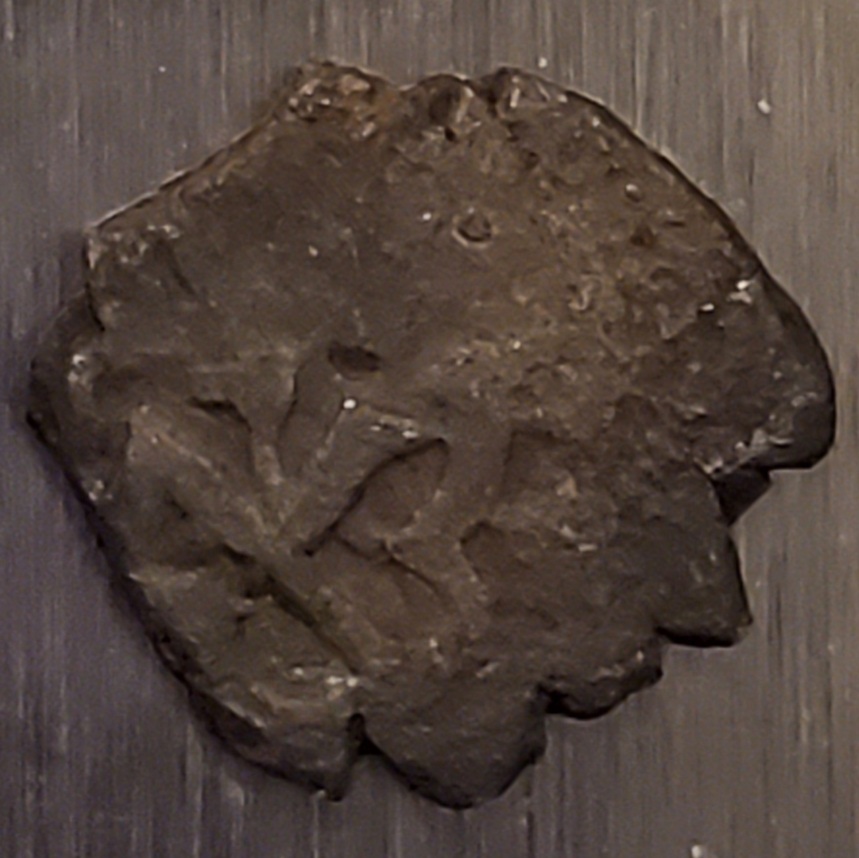
The three jetons below also allude to the presence of Anjou in Brabant & Flanders. The first is from Bruges, memorising the failed attempt of Anjou to take the city of Antwerp by military force.
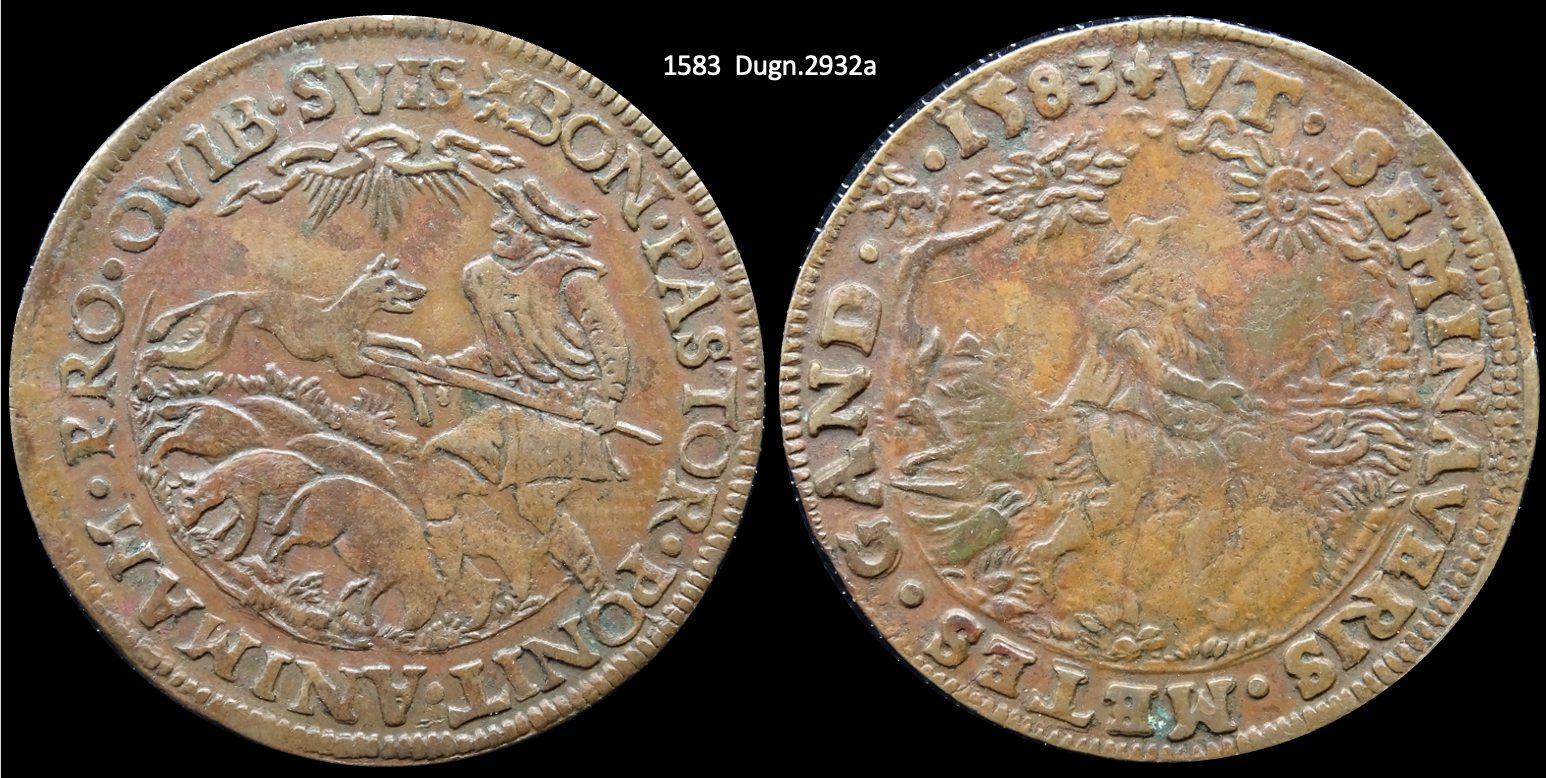
Dugn.2932var Bruges 'Failure of the attack of Anjou on Antwerp'.
OBV: Shepherd protects his sheep against a wolf BON PASTOR PONIT ANIMAM PRO OVIB SVIS
REV: Farmer sowinf VT SEMINA VERIS METES GAND 1583
mintmarks: lion OBV & REV lilly REV
The second is typical for the propaganda-type jetons of Holland. Anjou is depicted as a puppet executing the plan of Philippe II of Spain.
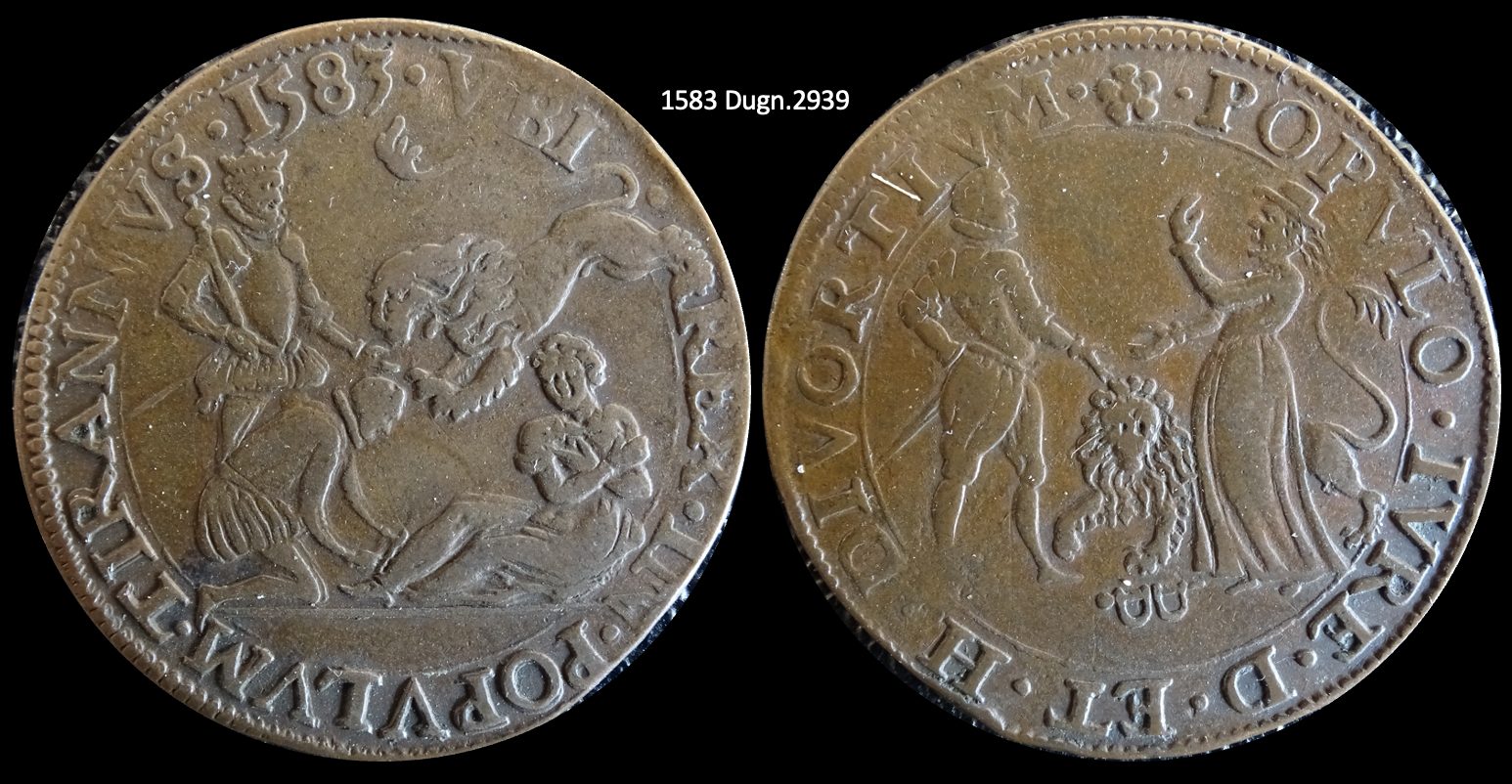
Dugn.2939 Dordrecht 'People of Ghent turn away from Anjou'
OBV: Virgin (Flanders) is chained at the feet by the duke of Anjou king Philips II is watching ; the Flanders lion is roaring
legend VBI REX IN POPVLVM TIRANNVS 1583
REV Virgin (Flanders), free from the chains, carries hat of liberty and takes wedding ring from Ajou; the lion is at peace POPVLO IV..RE D ET H DIVORTIVM
Ghent had chosen the more radical direction, away from Anjou who could not be trusted. Instead of accepting the more moderate course advocated by William of Orange (who supported religious freedom) Ghent turned to radical calvinism under leadership of Jan van Hembyse (1517-1584). The revolting people of Ghent discovered however that Hembyse negociated in secrecy with Alexander Farnese (who laid siege to the city). So on 23 march 1584 Hembyse was beheaded in the city on charge of treason.
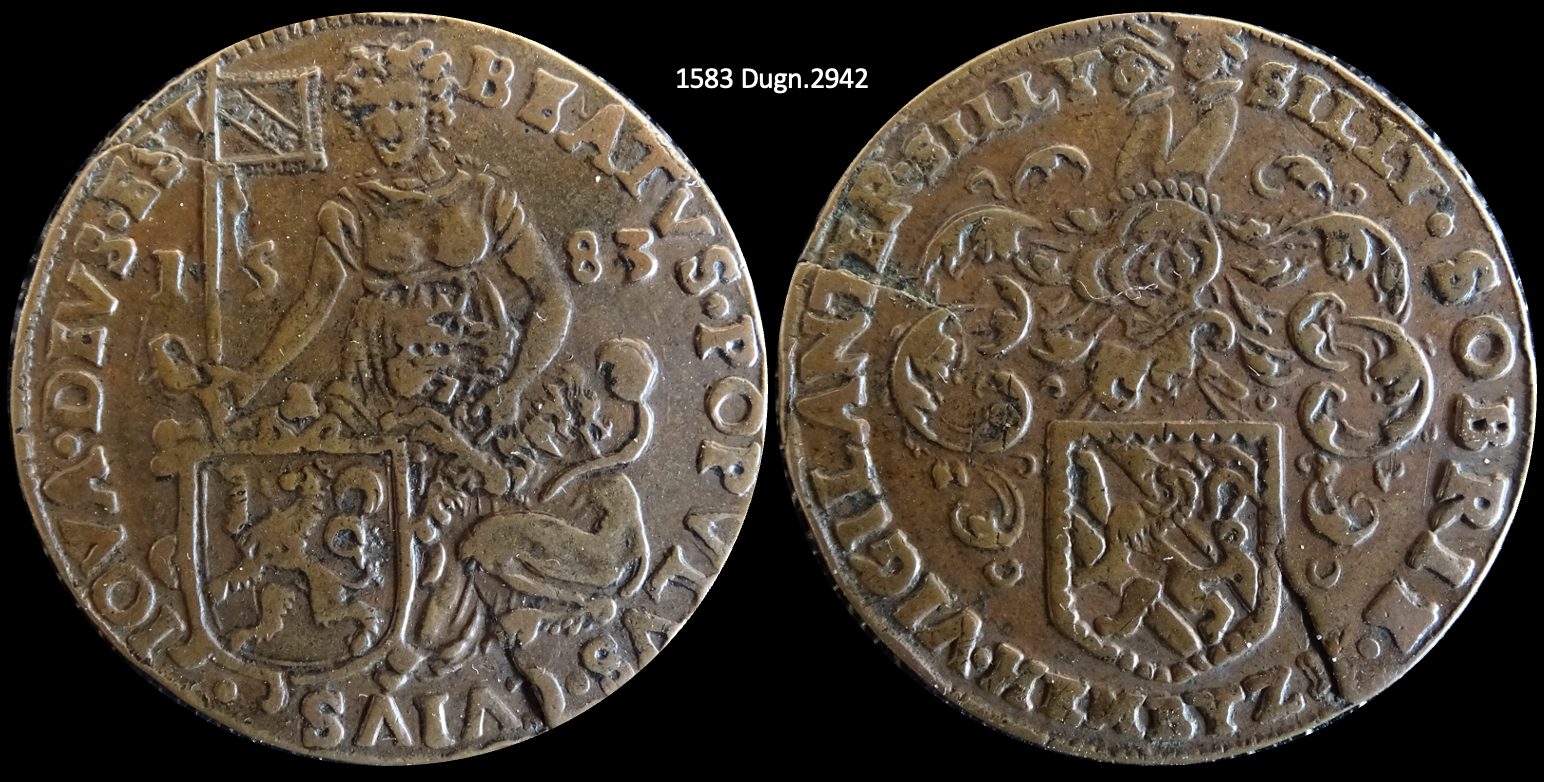
Dugn.2942 'Return of exiled Jan van Hembyse to Ghent'
OBV Virgin & lion - coat of arms Flanders, on the flag SPQG (senatus populusque Gandavensis).
legend BEATVS POPVLVS CVIVS IOVA DEVS EST 1583 (blessed the people whose god is Jehova).
REV above: SILLY, SILLY (battle cry of the family) and SOBRIE VIGILANLANTER (modest and vigilant) - below: coat of arms HEMBYZE
telling the story of unfortunate Hembyse, who doublecrossed his city and its radical religious cause, SILLY, SILLY gets a different meaning than a battle cry.






 First Page
 Previous Page




 Posted 11/16/2023 12:48 pm


 .
.